
You’re petting your cat, minding your own business, and suddenly you feel it: a tiny hook snagging your sweater. Or maybe you’ve noticed little clicking sounds every time your cat walks across the kitchen floor. Both are your cat’s claws telling you something, and the answer is almost always the same. It’s trim time.
Nail trims aren’t glamorous, but they’re one of the simplest ways to keep your cat comfortable and your furniture (and skin) intact. The tricky part is nobody hands you a schedule when you bring a cat home. So let’s settle the “how often” question for good, and cover exactly what nudges that timeline earlier or later for your particular cat.
- Most cats need a nail trim every 2 to 4 weeks.
- Indoor cats need trims more often because they don’t wear their claws down on rough outdoor surfaces.
- Senior cats often need more frequent trims too, since their claws thicken and grow more slowly with age.
- Overgrown claws can curl into the paw pad, causing real pain and a higher risk of infection.
- Scratching posts help keep claws in shape, but they don’t fully replace trimming.
How Often Do Cats Need Their Nails Trimmed?
Most cats need a nail trim every 2 to 4 weeks. That’s the general rule vets and groomers give for the average adult cat, indoor or outdoor. Cat claws grow in layers, and old layers shed as new ones come in underneath, but they still need a little help from you to stay a safe, comfortable length.
That 2 to 4 week window isn’t one-size-fits-all, though. Some cats genuinely need a trim every other week. Others can coast for closer to five or six weeks without any trouble. The right frequency depends on how your cat lives, how old she is, and how active she is day to day, which is exactly what we’ll break down next.
What Affects How Often Your Cat’s Nails Need Trimming?
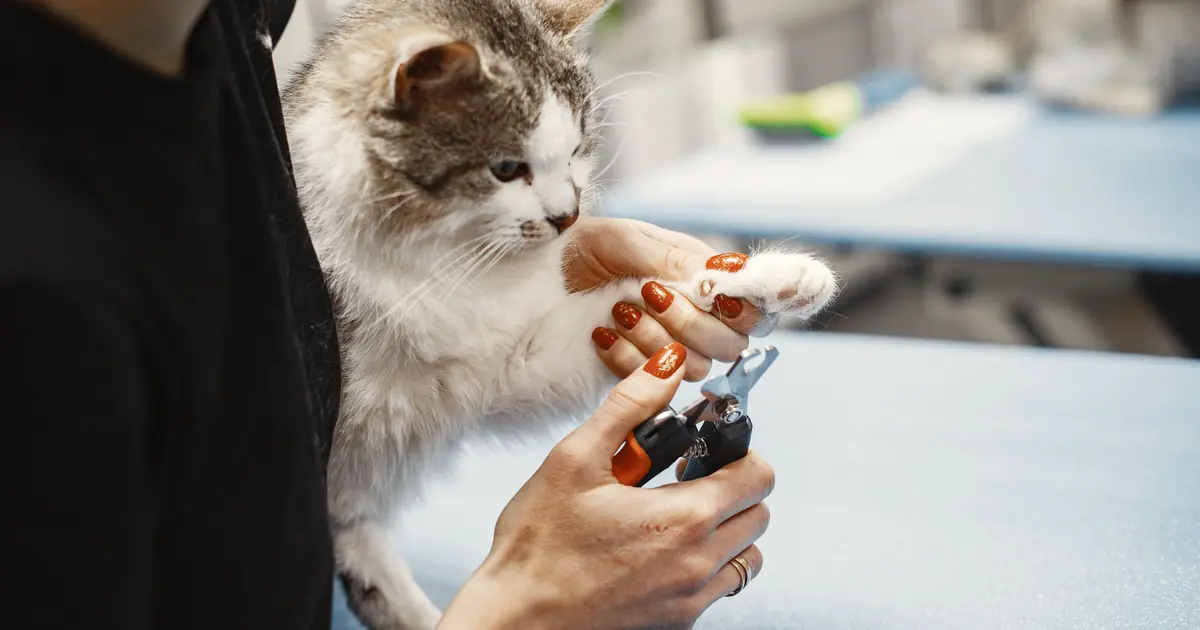
A cat’s nail-trim schedule depends on a handful of things: whether she goes outside, her age, how active she is, whether she uses a scratching post, her breed, and her general health. Here’s how each one shifts the timeline.
- Indoor vs. outdoor lifestyle: Outdoor cats naturally file their claws down on trees, fences, and pavement. Indoor cats don’t get that friction, so their claws grow long faster.
- Age: Kittens grow claws quickly and often need light trims every 1 to 2 weeks. Senior cats also need more frequent checks, since older claws thicken and grow unevenly.
- Activity level: A cat that climbs, chases toys, and uses a scratching post daily wears her nails down more than a cat who mostly naps.
- Scratching post use: Regular scratching removes the dead outer layer of the claw and keeps the tip blunter, which can stretch out the time between trims.
- Breed and nail growth rate: Most breeds grow claws at a similar pace, but larger or more heavily boned breeds, like Maine Coons, can have thicker nails that some owners find easier to keep trimmed on a strict schedule.
- Health conditions: Arthritis, obesity, or any condition that makes movement or grooming harder can mean a cat scratches less and needs more frequent human help with her claws.
| Cat Type | Typical Nail Trim Frequency |
|---|---|
| Indoor adult cat | Every 2 to 3 weeks |
| Senior cat (indoor or outdoor) | Every 1 to 2 weeks, with weekly nail checks |
| Kitten | Every 1 to 2 weeks (light trims of the sharp tips) |
| Active outdoor cat | Every 4 to 6 weeks, still worth checking regularly |
Why Do Indoor and Senior Cats Need More Frequent Nail Trims?
Indoor and senior cats need more frequent nail trims mainly because they don’t wear their claws down the way an active outdoor cat does. Indoor surfaces like carpet, hardwood, and couch cushions offer almost no resistance, so claws just keep growing.
Senior cats have a second issue working against them: arthritis. As joints get stiff and sore, older cats scratch less and groom themselves less thoroughly, both of which normally help wear claws down and shed the dead outer sheath. According to International Cat Care, aging cats that become less mobile can develop claws that overgrow and curl into their own paw pads if nobody steps in to trim them. That’s genuinely painful, and it’s avoidable with a quick check every week or two.
If your cat is a senior, get in the habit of gently pressing each paw pad to extend the claws and looking them over weekly, even if you’re not trimming every time. Catching one overgrown claw early beats dealing with an infected paw later.
How Can You Tell It’s Time to Trim Your Cat’s Nails?
You’ll know it’s time to trim when the nail tips feel sharp, click audibly on hard floors, or start snagging on carpet, blankets, or you. A cat’s claw is naturally curved and comes to a fine point as it grows, and that point is what does the damage.
Look for these specific signs:
- You hear a light clicking sound when your cat walks across tile or wood floors.
- The tip feels needle-sharp when you touch it, instead of smoothly rounded.
- Claws catch on carpet fibers, sweaters, or the couch and your cat has to tug free.
- Your cat accidentally scratches you or another pet during normal play or a headbutt.
- The nail visibly curves and starts pointing back toward the paw pad instead of straight down.
- You notice a thicker, almost overgrown look to one or more claws, common in senior cats.
If you want a full walkthrough on holding the paw, finding the quick, and clipping safely, our guide on how to cut cat nails covers the step-by-step technique in detail.
What Happens If You Don’t Trim Your Cat’s Nails?
Skipped trims lead to overgrown claws, and overgrown claws cause real problems. The most serious one: the claw keeps curving until it grows straight into the paw pad, which is painful and can quickly become infected. This shows up most in senior cats and cats who can’t scratch enough to keep up on their own.
Short of that worst-case scenario, untrimmed nails also mean:
- More snagging injuries, where a claw catches on fabric or carpet and tears partway.
- Accidental scratches to you, kids, or other pets during normal play.
- More damage to furniture, curtains, and bedding from sharper-than-needed claws.
- Harder, more stressful trims later, since an overgrown quick makes the nail tricky to clip safely.
The Cornell Feline Health Center notes that regular trimming reduces damage from sharp claws and lowers the odds of a nail growing into the footpad. It’s a small habit that prevents a genuinely painful outcome.
Do Outdoor Cats Need Their Nails Trimmed Too?
Yes, outdoor cats still need occasional nail trims, just less often than indoor cats. Walking, climbing, and scratching on rough natural surfaces wears their claws down naturally, so many outdoor cats can go 4 to 6 weeks between trims.
Don’t skip checking altogether, though. Dewclaws (the claw set higher on the leg that never touches the ground) don’t get any wear from walking, indoors or out, and can overgrow on any cat regardless of lifestyle. Give your outdoor cat’s paws a once-a-month once-over, even if a full trim isn’t due yet.
Do Scratching Posts Replace Nail Trims?
No, a scratching post helps but doesn’t fully replace trimming. Scratching sharpens the claw and pulls off the worn, dead outer sheath, which is exactly why cats do it. But scratching doesn’t shorten the nail the way a trim does. A cat with a great scratching habit still grows claws that need to be clipped back periodically, just maybe a little less often than a cat who never scratches at all.
If your cat scratches furniture instead of her post, that’s worth solving on its own, both for your couch and for her claw health. Our guide on why cats scratch walls and furniture digs into redirecting that instinct to a better spot.
Curious how the mechanics work? Cat claws are semi-retractable, meaning cats pull them back into a protective sheath when relaxed and extend them on purpose for climbing, gripping, or scratching. You can read more in our piece on how cats retract their claws. And no, trimming the sharp tip doesn’t stop a claw from growing back. Our article on whether cat claws grow back explains what actually happens to the nail after a trim.
How Can You Make Nail Trims Easier?
Short, calm, frequent sessions beat one long wrestling match every time. Trim one or two nails at a time if your cat gets squirmy, offer a treat afterward, and never force a struggling cat through a full set of ten claws in one sitting. A good pair of clippers designed for cats makes a real difference too; check our roundup of the best cat nail trimmers if you’re still using an old set of human clippers.
For the full step-by-step technique, including exactly where the quick is and how to avoid it, head to our guide on how to cut cat nails. And if your cat fights you every single time, or her claws feel unusually thick, don’t force it. The ASPCA recommends asking a vet or professional groomer to step in when trimming becomes too stressful for you or your cat to handle safely at home.
This article is meant to help you build a good nail-care routine, not replace a vet’s advice. If you ever notice a swollen paw, a nail that’s cracked or bleeding, or a claw that’s already grown into the pad, get your cat to a vet rather than trying to fix it yourself at home.
Frequently Asked Questions
Q: How often should I trim my cat’s nails?
Most cats need their nails trimmed every 2 to 4 weeks. Indoor and senior cats often need it closer to every 1 to 2 weeks, while active outdoor cats may go 4 to 6 weeks between trims.
Q: Do indoor cats need more frequent nail trims than outdoor cats?
Yes. Indoor cats don’t get the natural wear that rough outdoor surfaces like trees and pavement provide, so their claws grow longer, faster, and typically need trimming every 2 to 3 weeks.
Q: Why do senior cats need their nails trimmed more often?
Senior cats often develop arthritis, which makes scratching and thorough self-grooming harder. Their claws also thicken with age, so they need weekly nail checks and more frequent trims to avoid overgrowth.
Q: What happens if a cat’s nails get too long?
Overgrown nails can curl and grow directly into the paw pad, causing pain, limping, and a risk of infection. They also snag more easily on fabric and carpet, which can tear the nail or the paw.
Q: Can scratching posts keep my cat’s nails trimmed on their own?
Not fully. Scratching sharpens claws and removes the dead outer sheath, but it doesn’t shorten the nail like a trim does. A cat with a great scratching post still needs periodic trims, just possibly less often.
Q: How do I know if my cat’s nails are too long?
Listen for clicking on hard floors, feel for a needle-sharp tip, and watch for claws snagging on carpet or fabric. If a nail curves back toward the paw pad, it’s overdue for a trim.
Q: Do kittens need their nails trimmed too?
Yes. Kittens grow claws quickly and benefit from light trims of just the sharp tip every 1 to 2 weeks. Starting early also helps kittens get comfortable with paw handling as adults.
Q: What if my cat won’t sit still for nail trims?
Trim just one or two nails per session instead of all ten at once, reward with a treat afterward, and try again another day for the rest. If your cat still resists or her claws look overgrown, a vet or professional groomer can safely handle it for you.

Hello and welcome to The Ideal Cat!
We are some passionate cat owners from different professions. We love our cats and have a lot of experience in how to care for our pets. We are incredibly excited to share our knowledge, experience, and research with you. So you can take good care of your loving cat. We will answer most of the common questions about owning cats, taking care of them, etc. If you have any question contact with us. Thanks for visiting! Enjoy the content.
