Your vet just said the words “feline leukemia,” and your heart sank. Maybe your new rescue tested positive. Maybe a routine visit turned into news you weren’t ready for. Take a breath.
A FeLV diagnosis is scary, and I won’t pretend otherwise. But it’s not the end of the story. Plenty of FeLV-positive cats go on to live happy, comfortable lives for years with the right care. Here’s exactly how feline leukemia is treated and managed, what the honest outlook looks like, and how to give your cat the best shot.
This article is educational and isn’t a substitute for veterinary care. FeLV is a serious diagnosis, so work closely with your own veterinarian on a plan for your cat.
- Feline leukemia (FeLV) is a contagious retrovirus spread cat-to-cat through saliva, grooming, shared bowls, and bites; it is not contagious to humans or dogs.
- There is no cure for FeLV, but supportive care and early treatment of secondary infections help cats live longer, more comfortable lives.
- FeLV is diagnosed with an ELISA screening test, then confirmed with an IFA or PCR test, often retested 6 to 12 weeks later.
- Median survival after diagnosis is about 2.5 years, though cats with regressive infections can live near-normal lifespans.
- A FeLV vaccine (80 to 93% effective) protects at-risk cats, and testing before adoption keeps positive and negative cats safely apart.
What is feline leukemia (FeLV)?
Feline leukemia is a viral infection caused by the feline leukemia virus, a retrovirus that attacks a cat’s bone marrow and immune system. FeLV is one of the most common infectious diseases in cats, affecting roughly 2 to 3% of cats in the US, and more in sick or high-risk groups. Over time the virus can weaken the immune system, cause anemia, and trigger cancers like lymphoma.
Here’s the part that trips people up: feline leukemia isn’t “leukemia” in the everyday human sense. It’s a virus. The name comes from the blood cancers it can cause, but the root problem is a lifelong viral infection that leaves a cat vulnerable to other illnesses.
Is FeLV the same as FIV?
No. FeLV and FIV are both retroviruses that weaken a cat’s immune system, but they’re different diseases with different outlooks. FIV (feline immunodeficiency virus) works more slowly and spreads mainly through deep bite wounds, while FeLV spreads more easily through everyday close contact and tends to be more aggressive. Many FIV-positive cats live long, near-normal lives. If you’re caring for a cat with the other virus, our guide to living with an FIV-positive cat walks through that side.
| Feature | FeLV (Feline Leukemia) | FIV (Feline Immunodeficiency) |
|---|---|---|
| Virus type | Retrovirus attacking bone marrow | Retrovirus attacking the immune system |
| Main spread | Saliva, grooming, shared bowls, bites, mother to kitten | Mostly deep bite wounds from fighting |
| Contagiousness | More contagious in close-contact homes | Less contagious in calm households |
| Typical outlook | Median survival about 2.5 years after diagnosis | Often near-normal lifespan |
| Vaccine available | Yes (80 to 93% effective) | Limited, not widely used |
| Risk to humans/dogs | None | None |
How does feline leukemia spread?
FeLV spreads cat-to-cat through bodily fluids, mostly saliva. Infected cats shed the virus when they groom each other, share food and water bowls, share litter boxes, or bite during a fight. A mother cat can also pass it to her kittens in the womb or through nursing. The virus is fragile and dies quickly outside a cat’s body, so it needs fairly close, ongoing contact to spread.
One thing worth saying loudly, because it worries so many people: feline leukemia is not contagious to humans. No person has ever been known to catch FeLV, and it does not spread to dogs, rabbits, or other non-cat pets. You can cuddle, kiss, and care for a FeLV-positive cat safely. The only cats at risk are other cats sharing close quarters.
What are the signs of feline leukemia?
Feline leukemia signs are wide-ranging because the virus weakens the whole immune system, so many symptoms come from secondary infections rather than the virus alone. Early on, a FeLV-positive cat may look completely healthy. As the disease progresses, watch for these common signs:
- Gradual weight loss and a poor, unkempt coat
- Pale gums (a sign of anemia)
- Loss of appetite and low energy
- Persistent or recurring infections (skin, respiratory, urinary)
- Enlarged lymph nodes
- Fever that keeps coming back
- Inflamed gums and mouth sores
- Ongoing diarrhea or digestive upset
- Eye problems, and sometimes seizures or behavior changes
Because these signs overlap with so many other conditions, they’re easy to miss or misread. A cat with repeated, hard-to-shake infections is a classic pattern. If your cat keeps getting sick, or you notice worrying vomiting alongside weight loss, ask your vet about testing.
How is feline leukemia diagnosed?
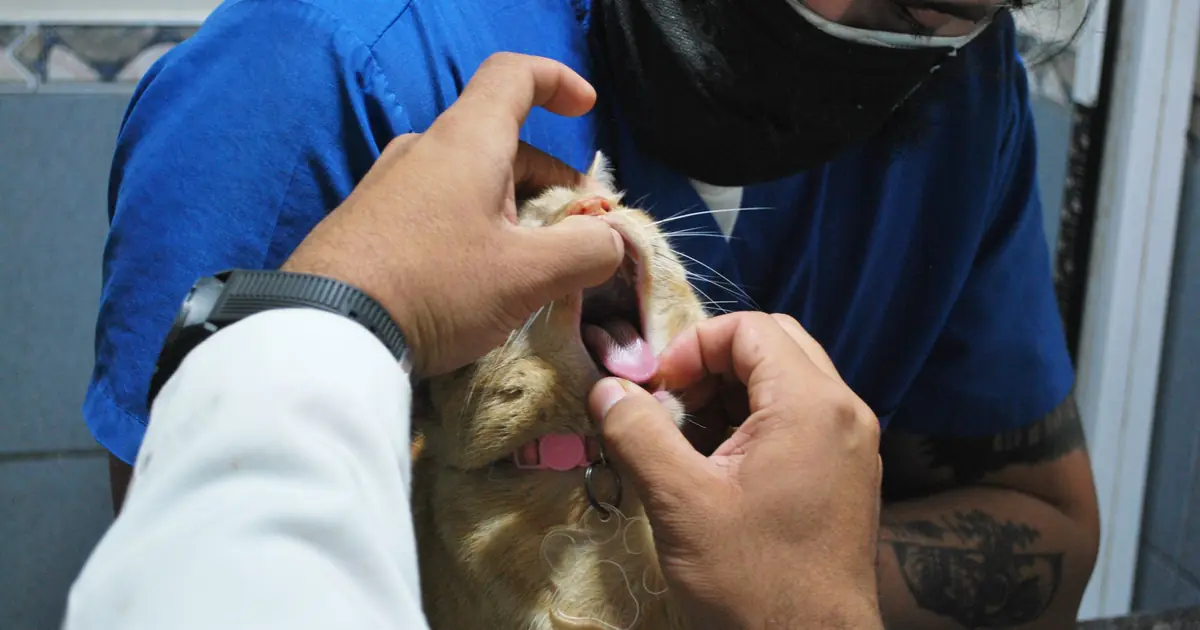
Feline leukemia is diagnosed with a blood test, usually a two-step process. Your vet starts with an ELISA test, a quick in-clinic screen that detects FeLV proteins in the blood. A positive ELISA is then confirmed with a second test, either an IFA (indirect immunofluorescent antibody) test or a PCR test, run at a lab.
Why two tests? Because a single positive result isn’t the whole picture. Some cats fight the virus off, so vets often retest 6 to 12 weeks later to see what’s really happening. That follow-up sorts cats into two very different groups, and this is where the outlook splits.
Progressive vs regressive infection
Not every FeLV-positive cat has the same disease. In a progressive infection, the virus takes hold in the bone marrow, the cat stays persistently positive, and health problems tend to follow. In a regressive infection, the cat’s immune system pushes the virus into a dormant state, the cat often clears the bloodstream test, and many of these cats live near-normal lives. Confirming which type your cat has is exactly why that repeat testing matters. According to the Cornell Feline Health Center, most positive tests should be followed up weeks later to tell these two paths apart.
How is feline leukemia treated and managed?
There is no cure for feline leukemia, so treatment focuses on supportive care and keeping your cat as healthy as possible for as long as possible. That means treating secondary infections quickly and aggressively, feeding well, reducing stress, and seeing the vet more often than a healthy cat would. The Merck Veterinary Manual notes there’s no definitive cure, so management, not elimination, is the goal.
Good news worth holding onto: FeLV-positive cats often respond well to treatment when problems are caught early. The whole strategy is to stay ahead of illness rather than react to it. Here’s what a solid management plan usually includes.
| Care step | Why it matters |
|---|---|
| Vet checkups every 6 months | Catches infections, anemia, and cancer early, when they’re most treatable |
| Treat infections promptly | A weakened immune system means small problems escalate fast |
| Keep your cat indoors | Limits exposure to new germs and protects other neighborhood cats |
| Feed a complete, balanced diet | Good nutrition supports the immune system and maintains weight |
| Skip raw meat and unpasteurized food | Raw diets carry bacteria and parasites a FeLV cat can’t fight off well |
| Stay current on parasite control | Fleas, worms, and ticks hit an immunocompromised cat harder |
| Keep vaccines and dental care up to date | Prevents common secondary infections your vet can help schedule |
Supportive care and nutrition
Supportive care is the heart of feline leukemia management. Feed a high-quality, complete diet and avoid raw or undercooked food, since a FeLV cat’s immune system can’t handle the bacteria and parasites raw diets can carry. Keep fresh water available and monitor your cat’s weight closely, because gradual loss is often the first red flag. Older FeLV cats may do well on an easy-to-digest, nutrient-dense senior cat food. Staying on top of routine parasite prevention matters more than ever, since an immunocompromised cat has less defense against fleas and worms.
Medications your vet may discuss
Beyond supportive care, some vets discuss antiviral or immunomodulator medications, though the evidence for them is mixed and they’re not a cure. These may include drugs aimed at slowing the virus or supporting immune function, always chosen and dosed by your veterinarian. If your cat needs daily medication, our guide on how to give medicine to a cat makes the routine less stressful for both of you. Never give any human medication without your vet’s go-ahead.
Managing FeLV-related cancer and anemia
Feline leukemia can lead to lymphoma and severe anemia, and both are treatable to a degree. Lymphoma is often managed with chemotherapy, which many cats tolerate better than owners expect and which can buy comfortable time. Severe anemia may need blood transfusions and close monitoring. These are advanced steps you’ll weigh with your vet or a veterinary oncologist, balancing your cat’s quality of life at every stage.
What is the prognosis and lifespan for a cat with FeLV?
The median survival time after a feline leukemia diagnosis is about 2.5 years, but that single number hides a wide range. Cats with regressive infections can live nearly normal lifespans, while cats with progressive infections often decline faster from anemia or cancer. Studies have shown roughly half of cats pass within about 2 to 3 years of diagnosis, but “average” is not “always.”
Kittens have the toughest outlook, since their immune systems are still developing. But an adult cat with a regressive infection, an indoor life, great nutrition, and regular vet care can genuinely thrive for years. The care you give truly moves the needle here. That’s the honest picture: serious, yes, but far from hopeless.
How can you prevent feline leukemia?
You can prevent feline leukemia by testing new cats, vaccinating at-risk cats, and keeping positive and negative cats apart. Prevention is far easier than treatment, and it protects every cat in your home.
- Test before you introduce. Have every new cat or kitten tested for FeLV before they meet your resident cats. It’s a simple blood test that prevents a lot of heartache.
- Vaccinate at-risk cats. The FeLV vaccine is 80 to 93% effective and is recommended as core for all kittens, then boosted based on your cat’s lifestyle and exposure risk. Ask your vet whether your adult cat needs it.
- Keep cats indoors. Indoor cats simply don’t cross paths with the outdoor, fighting, roaming cats that spread FeLV.
- Separate positive and negative cats. In a mixed household, keep FeLV-positive cats in their own space with separate bowls and litter boxes to protect the others.
- Spay and neuter. Fixed cats fight and roam less, which cuts the bites and contact that pass the virus along.
Even the vaccine isn’t 100%, which is why testing and indoor living matter alongside it. Layered together, these steps make feline leukemia one of the more preventable serious cat diseases.
Feline leukemia FAQ
Q: Can feline leukemia be cured?
No, there is currently no cure for feline leukemia (FeLV). Treatment focuses on supportive care, treating secondary infections early, good nutrition, and regular vet monitoring. With this care, many FeLV-positive cats live comfortable lives for years.
Q: How long can a cat live with feline leukemia?
The median survival after diagnosis is about 2.5 years, but it varies widely. Cats with regressive infections can live near-normal lifespans, while cats with progressive infections, and kittens, often have a shorter outlook.
Q: Is feline leukemia contagious to humans or dogs?
No. Feline leukemia only spreads between cats. No human has ever been known to catch FeLV, and it does not infect dogs, rabbits, or other non-cat pets. You can safely care for and cuddle a FeLV-positive cat.
Q: How do cats catch feline leukemia?
FeLV spreads cat-to-cat through saliva and other fluids, mainly by mutual grooming, sharing bowls and litter boxes, and bite wounds during fights. A mother cat can also pass it to her kittens in the womb or through nursing.
Q: Should a FeLV-positive cat live with other cats?
Ideally, a FeLV-positive cat should be kept separate from FeLV-negative cats to prevent spread. If cats must share a home, vaccinate the negative cats, use separate bowls and litter boxes, and talk to your vet about the safest setup.
Q: Is the feline leukemia vaccine worth it?
Yes, for at-risk cats. The FeLV vaccine is 80 to 93% effective and is considered core for all kittens. Whether an adult cat needs it depends on lifestyle and exposure, so ask your vet. The vaccine doesn’t cure an already-infected cat.
Q: What should you feed a cat with feline leukemia?
Feed a complete, balanced, high-quality cat food and avoid raw or undercooked meat, since it can carry bacteria and parasites a FeLV cat can’t fight off well. Keep fresh water available and watch weight closely, since gradual loss is an early warning sign.
Q: Can a cat recover from feline leukemia?
Some cats mount a strong immune response and develop a regressive infection, where the virus goes dormant and they clear the bloodstream test. These cats can live near-normal lives, but the virus is never fully eliminated, so lifelong monitoring is important.
A feline leukemia diagnosis changes your cat’s care, but it doesn’t erase the good years ahead. Focus on what you can control: regular checkups, quick treatment of infections, great food, and a calm indoor life. Lean on your vet, love your cat, and take it one comfortable day at a time.

Hello and welcome to The Ideal Cat!
We are some passionate cat owners from different professions. We love our cats and have a lot of experience in how to care for our pets. We are incredibly excited to share our knowledge, experience, and research with you. So you can take good care of your loving cat. We will answer most of the common questions about owning cats, taking care of them, etc. If you have any question contact with us. Thanks for visiting! Enjoy the content.
