
Picture this: you’re tidying up your cat’s face with the grooming scissors, and those long whiskers poking out at odd angles look messy. Snip them into shape, right? Please don’t. It’s one of the most common grooming mistakes cat parents make, usually without realizing the damage it does.
Whiskers might look like fancy fur, but they’re built completely differently and they do a job that fur can never do. Trim them and you’re not tidying your cat up, you’re taking away one of their main ways of reading the world. Here’s exactly why that matters, and what to do instead.
- Cat whiskers, called vibrissae, are rooted three times deeper in the skin than regular fur and are wired directly into the nervous system.
- Whiskers have no nerve endings in the shaft itself, so cutting the hair doesn’t hurt like cutting skin would, but the loss of sensory input still causes real stress.
- A cat’s whiskers roughly match the width of their body, helping them judge whether a gap is safe to squeeze through.
- Trimmed whiskers grow back, but it can take a few months for them to return to full length and function.
- A groomer should never cut a cat’s whiskers, and most professional groomers know to leave them alone entirely.
Should You Trim a Cat’s Whiskers?
No. You should never trim, cut, or shape a cat’s whiskers for any reason, including grooming, haircuts, or making your cat “look neater.” Whiskers aren’t decorative fur that grows unevenly and needs a trim. They’re specialized sensory hairs, and cutting them interferes with how your cat safely moves through the world.
Even if a whisker looks bent, frizzy, or oddly long, leave it be. It’s doing a job you can’t see from the outside.
What Are Cat Whiskers, Exactly?
Cat whiskers, known scientifically as vibrissae, are thick, stiff hairs rooted far deeper in the skin than ordinary fur, surrounded by blood-filled sacs and packed with nerve endings. According to Cornell Feline Health Center, these specialized hairs connect directly to the nervous system, sending real-time signals to your cat’s brain about their surroundings.
You’ll find whiskers above the eyes, on the cheeks, above the upper lip, and on the backs of the front legs. Most cats have around 24 whiskers on their muzzle alone, split evenly on each side, plus the smaller sets elsewhere on the face and legs.
What Do Cat Whiskers Actually Do?
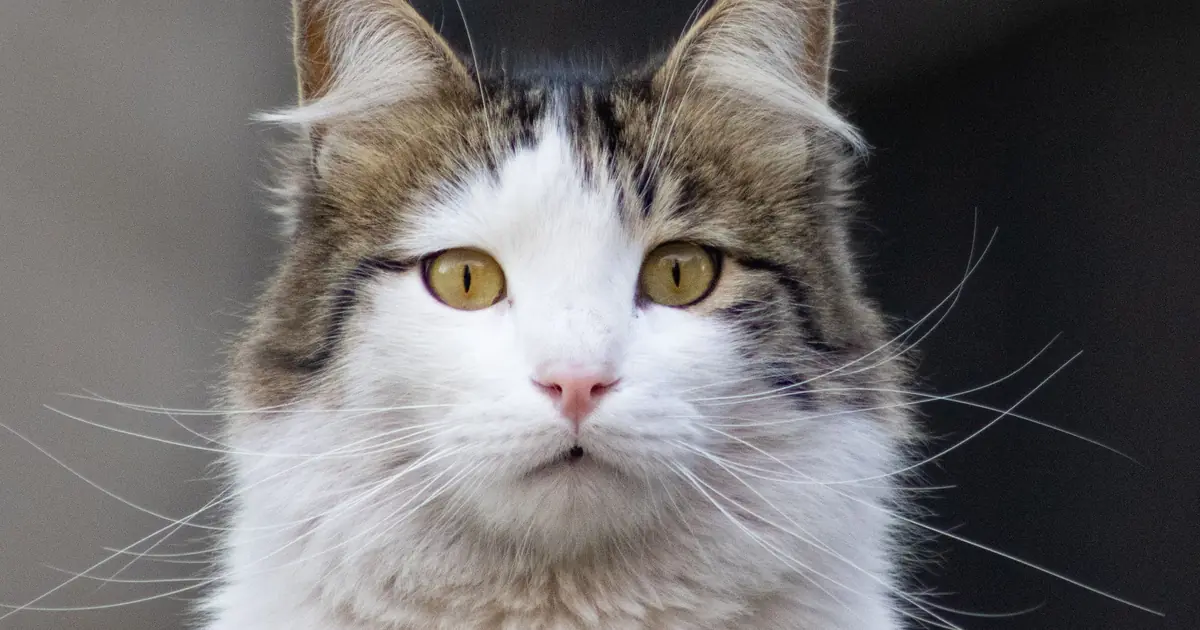
Cat whiskers act like a built-in radar system, helping cats judge distances, sense nearby objects, and navigate in low light. Every twitch of a whisker tip sends information to the brain about air currents, nearby surfaces, and the size of a gap before your cat commits to squeezing through it.
- Judging tight spaces: whisker width roughly matches body width, so cats use them to decide if they’ll fit through a space before trying.
- Moving in the dark: whiskers detect subtle changes in air currents, helping cats “feel” their way around furniture and walls even in near-total darkness.
- Catching prey and toys: whiskers near the mouth help a cat sense the exact position of something close up, since a cat’s eyes can’t focus well on objects right in front of their nose.
- Judging jumps: whiskers help gauge distance and depth, which is part of why a confident jump onto the counter relies on more than just eyesight.
- Showing mood: relaxed whiskers sit out to the sides, pulled-back whiskers often signal fear, and forward-pointed whiskers usually mean your cat is alert or curious.
What Happens If You Cut a Cat’s Whiskers?
Cutting a cat’s whiskers leaves them temporarily disoriented, clumsy, and more anxious, because they’ve lost a major source of spatial information overnight. You might notice your cat bumping into furniture, hesitating before jumps they’d normally make without a second thought, or seeming unusually jumpy and unsettled.
This isn’t dramatic or permanent, but it’s genuinely unfair to put a cat through. International Cat Care notes that whiskers are essential to how cats interpret their environment, and removing that input, even temporarily, can affect a cat’s confidence and comfort at home.
Does Trimming a Cat’s Whiskers Hurt?
Cutting the whisker shaft itself doesn’t cause physical pain, similar to trimming the tips of regular fur, because the hair itself has no nerve endings. The real problem sits below the skin: the whisker follicle is deeply rooted and richly supplied with nerves and blood vessels, so the follicle is sensitive even though the shaft is not.
So no, your cat won’t yelp when the whisker is cut. But the sudden loss of sensory feedback is where the actual harm happens, not at the moment of cutting.
Do Cat Whiskers Grow Back?
Yes, cat whiskers grow back after being trimmed or shed, though it typically takes a few months for them to return to full length. Cats naturally shed individual whiskers now and then as part of normal turnover, just like they shed regular fur, and a new one grows in to replace it. For a full breakdown of the timeline and what’s normal shedding versus a problem, see our guide on how long it takes for cat whiskers to grow back and our explainer on whether cats shed whiskers naturally.
What About Grooming and “Messy” Whiskers?
Whiskers never need grooming, trimming, or tidying, no matter how uneven or long they look. Unlike fur, they don’t mat, tangle, or need maintenance of any kind. If you’re working on your cat’s overall coat care routine, it helps to know which areas actually benefit from a gentle touch, like the guidance in our how to groom a cat at home guide, and which areas, like whiskers, should be left completely alone.
A professional groomer should never cut a cat’s whiskers either. If you ever book a grooming appointment, it’s worth mentioning out loud that whiskers are off-limits, just so there’s no confusion.
| Feature | Whiskers (Vibrissae) | Regular Fur |
|---|---|---|
| Root depth | About 3 times deeper than fur, surrounded by blood and nerve supply | Shallow, rooted in the upper skin layers |
| Function | Sensory: judges space, detects movement and air currents | Insulation and protection for the skin |
| Nerve connection | Directly wired to the nervous system | No direct sensory function |
| Should you trim it? | Never | Occasional trimming for mats is fine with proper tools |
| Regrowth after cutting | Grows back, but takes months to reach full length | Grows back within weeks |
A Quick Note Before You Reach for the Scissors
Never let anyone, including a professional groomer, trim your cat’s whiskers. It’s not a cosmetic issue and there’s no scenario where cutting them helps your cat. You should call your vet instead if you notice broken or bleeding whisker follicles, sudden or widespread whisker loss, or swollen and sore-looking whisker pads. Normal shedding means losing one whisker here and there, not clumps at once, so a sudden bald patch around the muzzle is worth getting checked out. Feline acne, allergic reactions, and skin infections can all affect the whisker pad area, and a vet can rule out or treat the underlying cause. For general context on facial sensory features, our piece on whether cats have eyelashes covers a related question cat parents often ask alongside this one.
This article is educational and isn’t a substitute for veterinary care. If something about your cat’s whiskers or whisker pads looks off, a licensed vet is the right call, not a wait-and-see approach. And if you’re curious how whiskers fit into your cat’s other senses, our guide on whether cats can see in the dark explains how whiskers and night vision work together.
Frequently Asked Questions
Q: Should you trim cat whiskers if they look too long?
No, whiskers should never be trimmed regardless of length. A cat’s whiskers are meant to be as long as they naturally grow, since that length matches their body width and helps them judge spaces accurately.
Q: Does cutting a cat’s whiskers hurt them?
The whisker shaft has no nerve endings, so cutting it isn’t physically painful in the moment. The harm comes from losing sensory input, which can leave a cat disoriented and anxious for a while afterward.
Q: How long does it take for a cat’s whiskers to grow back?
It usually takes a few months for a trimmed or shed whisker to grow back to full length. The exact timeline varies by cat, similar to how regular fur regrowth speed can differ from cat to cat.
Q: Is it normal for cats to lose whiskers on their own?
Yes, cats naturally shed individual whiskers occasionally as part of normal turnover, just like they shed fur. Losing one whisker at a time is normal; losing several at once or noticing bald patches is not.
Q: Can a groomer trim my cat’s whiskers during a haircut?
A groomer should never trim a cat’s whiskers, even during a full grooming session. If you’re booking a groomer, it’s a good idea to mention that whiskers should be left completely untouched.
Q: What happens if my cat’s whiskers get accidentally cut?
An accidentally cut whisker will grow back over the following months, and your cat may seem briefly clumsy or hesitant around jumps and tight spaces in the meantime. There’s no need for panic, just give them time and a little extra patience.
Q: Why does my cat’s whiskers pad look swollen?
A swollen or sore whisker pad can point to feline acne, an allergic reaction, or a skin infection near the follicles. This is something to have a veterinarian look at rather than treating at home.
Q: Do whiskers actually help cats see in the dark?
Whiskers don’t help cats see, but they do help cats navigate in low light by detecting air currents and nearby objects. This sensory feedback works alongside a cat’s naturally strong night vision to help them move confidently in dim rooms.

Hello and welcome to The Ideal Cat!
We are some passionate cat owners from different professions. We love our cats and have a lot of experience in how to care for our pets. We are incredibly excited to share our knowledge, experience, and research with you. So you can take good care of your loving cat. We will answer most of the common questions about owning cats, taking care of them, etc. If you have any question contact with us. Thanks for visiting! Enjoy the content.
