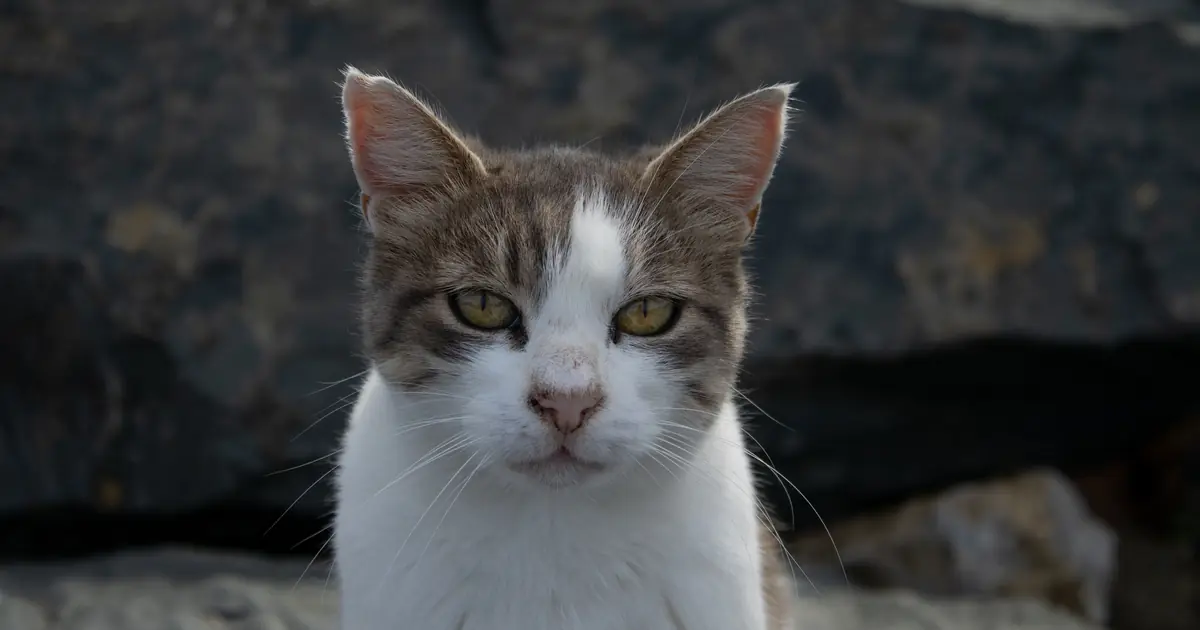
You’re sitting on the couch, half asleep with your cat curled up next to you, when one ear suddenly flicks toward the hallway. No head movement, no eyes opening, just that one small twitch. It’s a little uncanny how much your cat can pick up without even trying.
Here’s the thing: cat ears are basically tiny, independent radar dishes. Most twitching is just your cat’s ears doing their job, listening, adjusting, reacting to the world around them. But every so often, twitching means something is actually bothering your cat’s ear, and that’s worth knowing how to spot.
- Cats have about 32 muscles in each ear and can rotate them up to 180 degrees, far more range than the human ear.
- Cats twitch and swivel their ears mainly to locate sound and communicate mood, not because something is automatically wrong.
- Flattened, pinned-back “airplane ears” usually signal fear, irritation, or overstimulation rather than a physical problem.
- Ear mites and bacterial or yeast infections (otitis) are the most common medical causes of frequent, restless ear twitching.
- Constant twitching paired with scratching, head shaking, redness, or dark discharge means it’s time to call the vet.
Why do cats’ ears twitch?
Cats twitch their ears mainly to catch and locate sound, and to signal how they’re feeling in the moment. A cat’s ear works almost like a tiny satellite dish, constantly making small adjustments to catch every rustle, squeak, and footstep nearby. On top of that, ear position is one of the clearest windows into a cat’s mood, so a twitch can mean “I heard that” or “back off” depending on the rest of the body language around it.
Most of the time this twitching is nothing more than your cat’s senses doing exactly what they evolved to do. Cats are natural hunters, and being able to catch the faintest sound gave their wild ancestors a real survival edge. Your indoor cat still carries all that same wiring, even if the “prey” is just a crinkled snack bag in the next room.
What makes cat ears so good at moving like that?
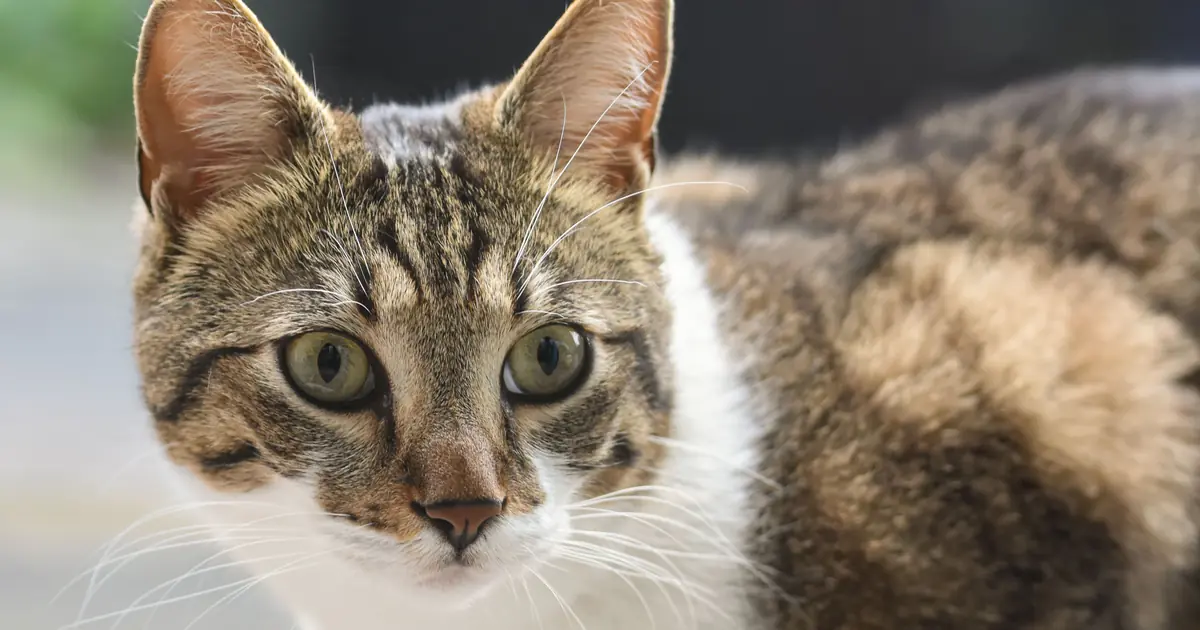
Cat ears are built with roughly 32 individual muscles per ear, compared to only about 6 muscles in a human ear. That’s what lets cats rotate each ear up to 180 degrees and move each one independently of the other. One ear can point forward while the other rotates backward, letting your cat monitor two different directions at the same time.
This muscle setup is controlled by the pinna, the visible outer part of the ear, which funnels sound down into the ear canal toward the eardrum. According to the VCA Hospitals guide to feline ear anatomy, this design is part of why cats have such a sharp sense of hearing compared to many other household pets. The twitching you see is simply those muscles firing in quick, tiny adjustments.
How do ear twitches help cats pinpoint sound?
Ear twitching lets a cat triangulate exactly where a sound is coming from, almost like an internal GPS for noise. When a sound reaches one ear a split second before the other, your cat’s brain uses that tiny timing gap to calculate direction and distance. The independent swiveling means your cat doesn’t need to turn its whole head just to “look” toward a noise with its ears.
Cats can hear frequencies up to about 64,000 Hz, well beyond the roughly 20,000 Hz limit of human hearing and even higher than most dogs. That range is tuned for picking up the high-pitched squeaks of rodents and insects. If you’ve ever wondered whether your cat can hear things you can’t, the honest answer is yes, easily, and their ears are built specifically to find where those sounds are coming from.
What does it mean when a cat’s ears twitch out of mood, not sound?
Ear twitching and positioning are a direct readout of your cat’s emotional state, separate from anything they’re hearing. Ears pointed forward and slightly out usually mean a relaxed, curious, or content cat. A single quick flick can mean mild annoyance, like a fly landing on your arm and you shrugging it off. Rapid, repeated twitching combined with a swishing tail often means your cat is getting overstimulated, especially during a petting session that’s gone on a bit too long.
Then there’s the look every cat parent recognizes: ears flattened sideways or backward against the head, sometimes called “airplane ears.” That’s a clear sign of fear, irritation, or a cat that’s ready to defend itself. If you understand the fuller picture of cat body language, ear position paired with tail movement and posture tells you far more than any single signal on its own.
Why do cats’ ears twitch while sleeping?
Ears twitch during sleep because cats keep monitoring sound even while dozing, and their ears may also move during dream activity. Cats sleep 12 to 16 hours a day, but a lot of that is light, easily interrupted sleep rather than a deep, dead-to-the-world nap. An ear that flicks at a distant sound while your cat’s eyes stay shut is that built-in radar staying partly “on” even at rest.
During deeper REM sleep, you might also notice whiskers, paws, or ears twitching together, which many researchers believe is linked to dreaming activity in the brain. It’s one of those small, funny things cat parents notice: your cat looking totally checked out, one ear rotating anyway, like it’s still on the clock.
What medical problems cause a cat’s ears to twitch too much?
Frequent, restless ear twitching that doesn’t settle down is usually caused by ear mites, an ear infection, allergies, or something physically irritating the ear canal. Unlike the quick, occasional twitch of a healthy cat, these causes tend to come with near-constant fidgeting, scratching, or head shaking.
- Ear mites (Otodectes cynotis): Tiny parasites that live in the ear canal and cause intense itching. Learn more in our guide on how to get rid of cat ear mites and what cat ear mites actually look like up close.
- Ear infections (otitis externa): Bacterial or yeast infections that inflame the ear canal, often with odor and discharge. Our full cat ear infection guide covers causes and treatment.
- Allergies: Food or environmental allergies can inflame the ear lining, leading to itching and twitching.
- Fleas: Flea bites near the ears can cause localized irritation and twitching.
- Foreign objects: A grass seed, bit of debris, or insect trapped in the canal can trigger sudden, persistent twitching.
- Ear polyps: Benign growths in the ear canal or middle ear that can cause discomfort and head tilting.
- Neurological issues: Less commonly, nerve or balance problems can cause unusual, involuntary ear or head movement.
The Merck Veterinary Manual notes that otitis externa is one of the most common ear conditions vets see in cats, and it rarely clears up without treatment.
What other signs mean it’s time to see a vet?
A vet visit is warranted when ear twitching shows up alongside scratching, head shaking, discharge, odor, redness, or a head tilt. Any one of these on its own is worth watching. Two or more together usually means something is actively bothering your cat’s ear, not just background noise catching their attention.
| Sign | Normal ear twitching | Possible ear problem |
|---|---|---|
| Frequency | Occasional, brief flicks | Constant or near-constant twitching |
| Other behavior | Relaxed, normal eating and grooming | Scratching at ears, head shaking, pawing at face |
| Ear appearance | Clean, pink, no odor | Redness, swelling, dark or waxy discharge, odor |
| Head position | Level, ears move independently | Head tilt to one side |
| What to do | Nothing needed, just enjoy the show | Schedule a vet visit for an exam and diagnosis |
How can you check and clean your cat’s ears safely?
You can check your cat’s ears safely by gently lifting the flap and looking for redness, odor, or dark debris, then cleaning only the visible outer ear with a vet-approved solution. Healthy ear tissue is pale pink, clean, and close to odorless. Dark, coffee-ground-like debris is a classic sign of ear mites, while a yeasty smell often points to infection.
- Gently lift the ear flap and look inside using good light.
- Check for redness, swelling, discharge, or a strong odor.
- If the ear looks clean, you can wipe the visible folds of the outer ear with a cotton ball dampened in a vet-approved cat ear cleaner.
- Never insert a cotton swab or anything else deep into the ear canal.
- If you see debris, redness, or your cat resists strongly, stop and book a vet visit instead of pushing further.
For a full step-by-step walkthrough, our guide on how to clean cat ears covers technique and product recommendations in more detail. And if your cat’s ears also feel warm to the touch, that’s a separate but related question we cover in why are my cat’s ears hot.
A quick, gentle note: this article is educational, not a substitute for veterinary care. If your cat’s ears are constantly twitching along with scratching, head shaking, discharge, or a noticeable odor, that pattern points to something like mites or an infection, and it needs a vet’s eyes on it. Don’t try to treat it yourself with home remedies, and never stick anything deep into the ear canal. A quick exam and the right diagnosis usually gets your cat comfortable again fast.
Frequently Asked Questions
Q: Why does my cat’s ear twitch when I’m not making any noise?
Cats can hear sounds up to about 64,000 Hz, far beyond human hearing, so their ears often react to noises you can’t detect at all, like pipes, insects, or activity outside. This kind of isolated twitch is usually completely normal.
Q: Is it normal for a cat’s ears to twitch a lot while sleeping?
Yes. Cats sleep 12 to 16 hours a day, and their ears often stay partly alert even during light sleep, twitching at nearby sounds. Twitching during deeper sleep may also be tied to dream activity in the brain.
Q: How many muscles does a cat use to move its ears?
Each cat ear has roughly 32 individual muscles, compared to only about 6 in a human ear. That extra muscle count is what allows cats to rotate each ear independently and up to 180 degrees.
Q: What does it mean when a cat’s ears go flat and twitch fast?
Flattened, sideways or backward “airplane ears” combined with rapid twitching usually signal fear, irritation, or overstimulation. It’s often a warning sign that your cat wants space or has had enough of an activity like petting.
Q: Can ear mites cause a cat’s ears to twitch constantly?
Yes. Ear mites are a common parasite that live in the ear canal and cause intense itching, which often leads to constant twitching, scratching, and dark, coffee-ground-like debris in the ear.
Q: When should I take my cat to the vet for ear twitching?
See a vet if twitching is constant and paired with scratching, head shaking, redness, swelling, discharge, odor, or a head tilt. These signs together usually point to an infection, mites, or another condition that needs proper treatment.
Q: Can I clean my cat’s ears myself if they’re twitching a lot?
You can gently wipe the visible outer ear with a vet-approved cleaner if it looks clean and your cat tolerates it. But never insert anything into the ear canal, and if you see debris, redness, or resistance, stop and let a vet take a look instead.
Q: Do all cats twitch their ears the same amount?
No. Individual personality, environment, and hearing sensitivity all play a role. A cat in a noisy household may show more frequent twitching than one in a quiet home, and that’s usually just a difference in stimulation, not a health issue.

Hello and welcome to The Ideal Cat!
We are some passionate cat owners from different professions. We love our cats and have a lot of experience in how to care for our pets. We are incredibly excited to share our knowledge, experience, and research with you. So you can take good care of your loving cat. We will answer most of the common questions about owning cats, taking care of them, etc. If you have any question contact with us. Thanks for visiting! Enjoy the content.
