
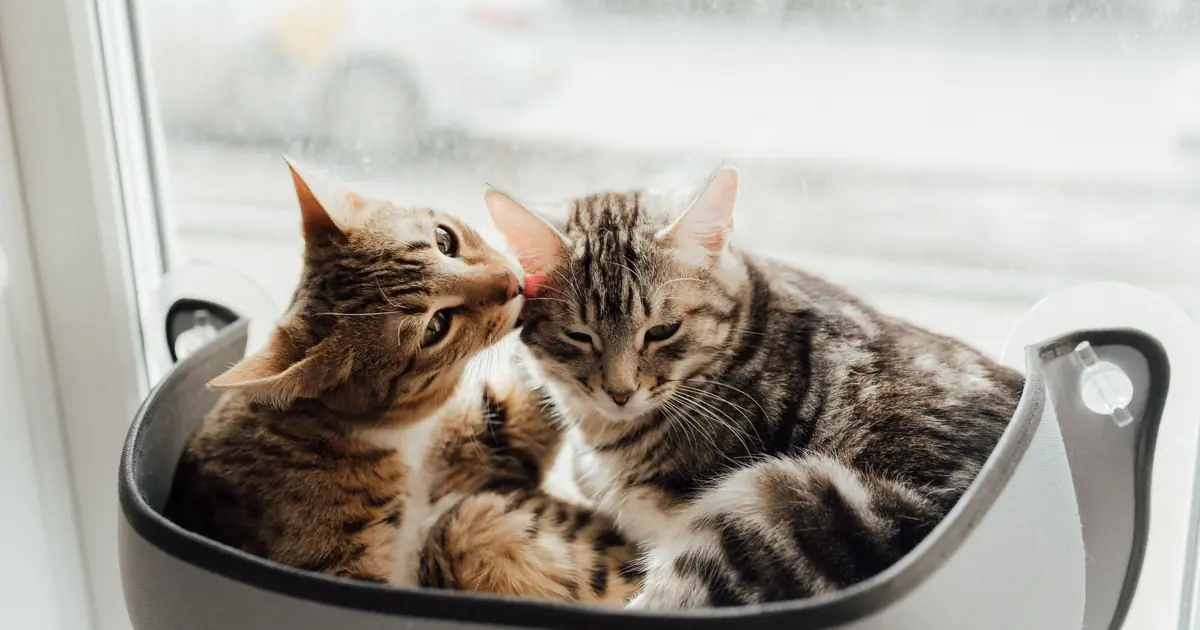
Two cats are blissfully licking each other one second, then wrestling and swatting the next. It looks like a betrayal, but this groom-then-grapple routine is a very normal part of cat relationships.
Here’s what’s really going on when grooming flips to fighting.
- Mutual grooming (allogrooming) is a bonding, scent-sharing behavior between friendly cats.
- Grooming can flip to a scuffle from overstimulation, a shift into play, or a boundary reset.
- Often the “fight” is playful or a mild “that’s enough” swat, not true aggression.
- It’s usually normal between bonded cats and part of their social dynamic.
- Watch for real aggression: hissing, screaming, injuries, or one cat always losing.
Why do cats groom each other and then fight?
Cats groom each other and then fight because grooming can tip into overstimulation, spill into play, or end with a quick boundary or status reset. Mutual grooming (allogrooming) is a friendly bonding behavior, but a cat can suddenly reach its limit, get worked up, or decide it’s done, triggering a swat, wrestle, or chase. Much of the time this after-groom scuffle is playful or a mild “okay, enough” message rather than genuine hostility. Between bonded cats, the groom-then-tussle cycle is usually a normal part of their relationship.
What is allogrooming and why do cats do it?
Allogrooming is the term for cats grooming one another, and it’s a sign of trust, bonding, and social connection. Cats lick each other, especially around the head and neck (spots they can’t easily reach themselves), to strengthen relationships and mingle their scents into a shared “group smell.” It’s most common between cats that get along, related cats, or those raised together. So when your cats groom each other, they’re reinforcing their bond, similar to how social groups of cats cooperate, covered in do cats form packs.
Why does the grooming turn into a scuffle?
The flip from grooming to fighting usually comes down to a few triggers. Common ones:
- Overstimulation: the grooming becomes too much and one cat reacts with a swat.
- Shift into play: the excitement rolls naturally into wrestling and chasing.
- Boundary setting: a cat signals “that’s enough” with a nip or bat.
- Status reset: a brief reminder of the social pecking order.
- Redirected energy: pent-up energy releases as a quick tussle.
Telling playful tussling from real conflict matters, and it helps to know when cats genuinely dislike each other, as in why a cat hates other cats.
Playful tussle vs a real fight
Here’s how to tell normal roughhousing from true aggression.
| Playful / normal | Real aggression |
|---|---|
| Quiet, no hissing or screaming | Hissing, growling, or screaming |
| Takes turns, roles switch | One cat always the aggressor |
| Claws in, no injuries | Claws out, bites, or injuries |
| Relaxed bodies, quick to reset | Puffed fur, flat ears, tense standoff |
| They settle and coexist after | One cat hides, avoids, or is stressed |
When should you step in or worry?
Step in and take it seriously if the fighting is genuinely hostile or one-sided. Warning signs include hissing, growling, or screaming, fur flying, injuries, or one cat repeatedly hiding, avoiding the other, or seeming stressed, these point to real conflict rather than friendly play. Don’t punish or physically break up a serious fight with your hands (use a distraction like a loud clap or a toss of a cushion nearby); instead, separate the cats and reintroduce them slowly. This article is educational; for persistent aggression, rule out pain with your vet and consider a behaviorist, and see whether cats can seriously hurt each other and how to introduce cats properly. Trusted guidance comes from the ASPCA and International Cat Care.
Frequently Asked Questions
Q: Why do my cats groom each other then fight?
Grooming can tip into overstimulation, roll into play, or end with a “that’s enough” swat or quick status reset. Often the after-groom scuffle is playful, not hostile. Between bonded cats, this groom-then-tussle cycle is usually normal.
Q: What is allogrooming in cats?
Allogrooming is cats grooming each other, a bonding, scent-sharing behavior that shows trust. Cats lick each other’s head and neck, spots they can’t reach themselves, to strengthen relationships and create a shared group scent.
Q: Is it normal for cats to groom then wrestle?
Yes, it’s common and usually normal between cats that get along. The grooming builds a bond, and the wrestling is often playful or a mild boundary signal. As long as there’s no real aggression, it’s part of their social dynamic.
Q: How do I know if it’s play or a real fight?
Play is quiet, takes turns, keeps claws in, and the cats reset quickly. Real aggression has hissing, growling, or screaming, puffed fur, flat ears, bites or injuries, and one cat consistently attacking or hiding afterward.
Q: Should I stop my cats from fighting after grooming?
Not if it’s playful. If it turns hostile, don’t use your hands, distract them with a loud clap or a nearby noise, then separate and reintroduce slowly. For ongoing real aggression, rule out pain with your vet and consider a behaviorist.
Q: Why does one cat groom the other then bite?
Often overstimulation or a “that’s enough” signal, the licking builds up and the cat ends it with a nip. It can also shift into play-biting. A gentle nip is usually normal; hard bites causing injury or fear are not.

Hello and welcome to The Ideal Cat!
We are some passionate cat owners from different professions. We love our cats and have a lot of experience in how to care for our pets. We are incredibly excited to share our knowledge, experience, and research with you. So you can take good care of your loving cat. We will answer most of the common questions about owning cats, taking care of them, etc. If you have any question contact with us. Thanks for visiting! Enjoy the content.
