
Picture this: you tear off a sheet of foil to cover leftovers, and your cat bolts out of the kitchen like you set off a fire alarm. You didn’t do anything scary. You just crinkled some foil.
Here’s the thing: your cat isn’t being dramatic. Foil hits several senses at once, and cats read touch, sound, and sight more intensely than we do. Once you know what’s happening in those paws and ears, the whole “foil phobia” makes a lot more sense.
- Cats hate aluminum foil mainly because of its crinkly sound, unfamiliar texture, and shiny, reflective surface, not because of one single trigger.
- A cat’s hearing can pick up sounds beyond 60 kilohertz, far past the roughly 20 kilohertz limit of human hearing, so foil’s crinkle can register more intensely for a cat than for you.
- Foil aversion varies by cat. Some cats walk across it without a second thought, especially cats that grew up around it.
- Foil is sometimes used as a homemade deterrent to keep cats off counters or furniture, but it only works short-term and isn’t the safest option.
- Foil isn’t food-safe for cats to chew or swallow. Loose pieces can cause choking or a dangerous intestinal blockage.
Why Do Cats Hate Aluminum Foil?
Cats hate aluminum foil because it overwhelms several senses at once: an unfamiliar texture under the paws, a sharp crinkling sound, and a shiny, light-bouncing surface that doesn’t behave like anything else in the house. Any one alone might seem mildly odd. Together, on one flimsy, unpredictable sheet, they add up to a sensory pileup most cats would rather avoid, which is why so many freeze, flatten their ears, or do a dramatic sideways hop the first time they meet it.
Why Does Foil Feel So Strange Under a Cat’s Paws?
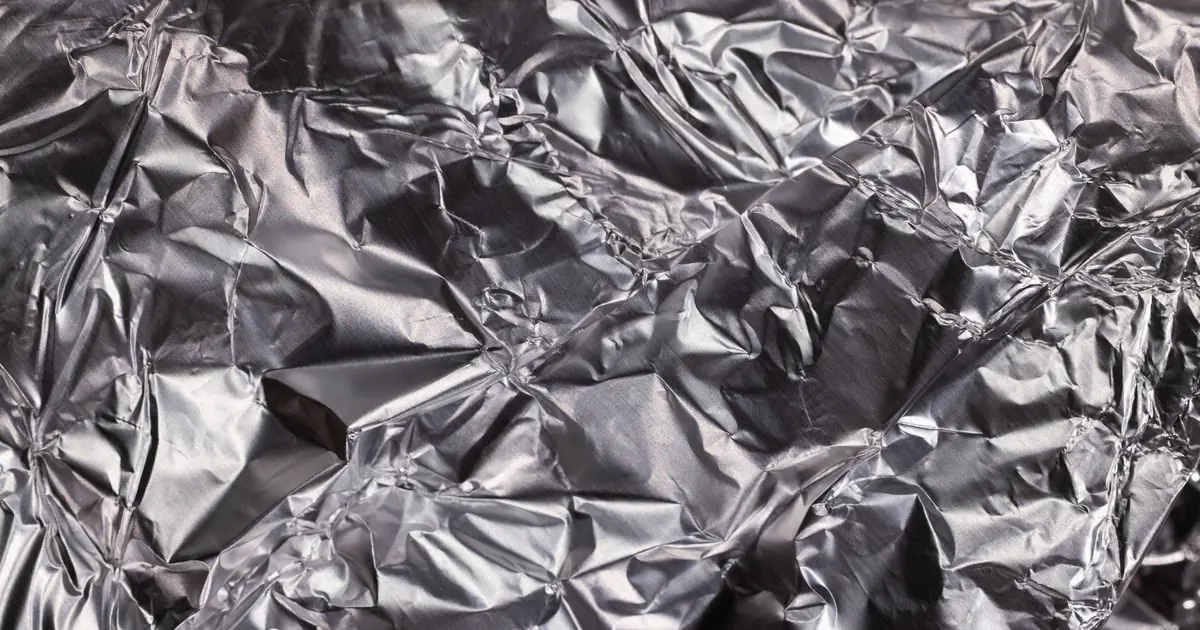
Foil feels strange to cats because their paw pads are packed with nerve endings built to detect texture, pressure, and vibration in fine detail. Unlike a rug or countertop, foil shifts, wrinkles, and gives way unevenly under weight, so every step feels different from the last one and gives a cat no reliable feedback about what’s underfoot.
For an animal that relies on its paws to judge a surface before committing to a jump, that unpredictability reads as a small threat, the same instinct behind why some cats suddenly scratch at walls or other unfamiliar textures.
Why Does the Crinkling Sound Bother Cats So Much?
The crinkling sound bothers cats because their hearing is far more sensitive than ours, and foil produces sharp, high-pitched frequencies every time it moves. According to the Cornell Feline Health Center, a cat’s hearing range extends up to roughly 60 kilohertz, well beyond the roughly 20 kilohertz ceiling of human hearing. A crinkle that sounds like mild static to you can land as a sharper, more jarring noise to your cat.
Cats also evolved to notice sudden, unfamiliar sounds fast, since in the wild that could mean a predator or prey nearby. A crackling sound with no obvious source triggers that same alert system, much like why cats startle at the pop of a balloon. A sudden, sharp sound without warning gets treated as a threat first.
Does the Shiny, Reflective Surface Bother Cats Too?
Yes, the shiny surface can bother cats too. Foil catches and bounces light unevenly, creating flickers that shift every time it moves or someone walks by. Cats have sharp motion detection built for spotting prey, so those erratic flashes can register as movement worth watching, or avoiding.
Static electricity may play a small part as well. Foil can hold a slight charge, and a faint shock or metallic smell could add one more strike against it. None of this is dangerous, it’s just another unfamiliar input stacked on an already strange object, similar to the wary reaction some cats have to cucumbers left on the floor: an unexpected object appearing where nothing usually is.
Do All Cats Hate Foil, or Is It Just Some?
No, not every cat hates aluminum foil. Aversion varies quite a bit from cat to cat, and some will walk right over it, bat it around as a toy, or ignore it completely. Kittens raised around foil, confident cats, and cats who are simply less sound-sensitive tend to react less dramatically, if at all.
Personality matters too. A cat that startles easily at new noises in general, the kind that might seem scared out of nowhere at other everyday sounds, is more likely to react strongly to foil as well. If your cat couldn’t care less about it, that’s normal, and it just means foil won’t work as a deterrent for that particular cat.
Can You Use Aluminum Foil to Keep Cats Off Counters and Furniture?
Yes, some cat parents line countertops or furniture edges with foil to discourage jumping, and it can work for a while. The cat jumps up, doesn’t like the feel or sound, and learns to avoid that spot. It’s cheap and no-fuss, which is why the trick has stuck around for years.
The catch is it usually stops working once a cat gets used to it, and it only tells your cat what not to do, not what to do instead. A cat that keeps jumping up is often chasing something specific, a sunny spot, a view, or food, and fixing that reason (a cat tree by the window, consistent feeding times) works better long-term. If foil isn’t cutting it, a dedicated cat repellent built for indoor surfaces is a more reliable next step. And if your cat keeps knocking things off that counter once it’s up there, it helps to know why cats knock things over in the first place.
Is Foil Safe to Use Around Cats, and What Are Better Alternatives?
Foil is generally safe as a temporary deterrent, but it’s not risk-free, so never leave it where a cat can chew on or swallow it. Loose foil can be an appealing chew toy, and swallowed pieces can cause choking or, in serious cases, an intestinal blockage that needs emergency care. VCA Animal Hospitals notes that swallowed foreign objects can lodge in a cat’s digestive tract and, if they don’t pass on their own, may need surgical removal. The American Veterinary Medical Association also lists everyday household items among the common hazards worth cat-proofing against.
Keep foil flat, supervised, and temporary if you use it, never scrunched into something chewable. Honestly, there are more effective and more humane options if you want a lasting fix. Here’s how the common ones stack up.
| Deterrent | How It Works | Pros / Cons |
|---|---|---|
| Aluminum foil | Odd texture, sound, and shine discourage cats from stepping there | Cheap and instant, but wears off fast and poses a chewing/swallowing risk if left loose |
| Double-sided tape | Sticky feel on paws is unpleasant without being harmful | Reliable and cat-safe, but needs replacing as it loses stickiness or collects hair |
| Citrus scent (sprays or peels) | Cats generally dislike strong citrus smells | Pleasant for people too, but scent fades quickly and needs frequent reapplication |
| Motion-activated spray or sound deterrent | Startles the cat with a burst of air, sound, or light when they approach | Works well hands-free, but can startle other pets or people too if not placed carefully |
| Scat mat (static-free plastic mat) | Sharp, uncomfortable (but harmless) nubs discourage paws from landing there | Long-lasting and purpose-built, but takes an upfront purchase |
The best long-term move is a combination: use a deterrent to protect the spot you don’t want your cat on, and give them an appealing alternative nearby, like a cat tree or window perch. Cats are much easier to redirect than to punish.
Frequently Asked Questions
Q: Why does my cat freak out over a piece of aluminum foil?
Your cat is reacting to foil’s crinkly sound, shifting texture, and shiny surface all at once. Cats have far more sensitive hearing and paw pads than people do, so a sensory mix that seems harmless to you can feel genuinely unsettling to them.
Q: Is it cruel to use aluminum foil to keep my cat off the counter?
Foil isn’t cruel when used briefly and supervised, but it’s not the kindest or most effective long-term option. It just startles your cat rather than teaching them what to do instead of jumping up there.
Q: Can cats get sick from eating aluminum foil?
Yes, swallowed foil can cause choking or, in serious cases, an intestinal blockage that needs veterinary treatment. Never leave loose or scrunched foil where a cat can chew or swallow it, and call your vet right away if you suspect your cat ate any.
Q: Why do some cats not care about aluminum foil at all?
Some cats simply aren’t bothered by unfamiliar sounds and textures the way others are, especially confident cats or kittens raised around foil early on. Aversion comes down to individual personality and past experience, not something every cat shares equally.
Q: Does the sound or the texture of foil bother cats more?
Most cats react to both at once, since sound and texture happen together every time foil shifts under a paw. Cats hear frequencies well above human range, so the crinkling noise likely plays the bigger role.
Q: What can I use instead of foil to keep my cat off furniture?
Double-sided tape, a scat mat, or a motion-activated deterrent spray all work more reliably than foil and carry less risk. Pair any deterrent with an appealing alternative spot, like a cat tree or window perch, for the best long-term results.
Q: Do cats hate foil because of static electricity?
Static may play a small role for some cats, since foil can hold a slight charge, but it’s not the main reason. The bigger factors are the crinkling sound, the shifting texture underfoot, and the shiny surface.
Q: Will my cat eventually get used to aluminum foil?
Many cats do get used to foil over time, especially confident cats exposed to it repeatedly in a low-stress setting. That’s exactly why foil tends to stop working as a long-term deterrent, since cats habituate to sounds and textures that don’t actually harm them.

Hello and welcome to The Ideal Cat!
We are some passionate cat owners from different professions. We love our cats and have a lot of experience in how to care for our pets. We are incredibly excited to share our knowledge, experience, and research with you. So you can take good care of your loving cat. We will answer most of the common questions about owning cats, taking care of them, etc. If you have any question contact with us. Thanks for visiting! Enjoy the content.
