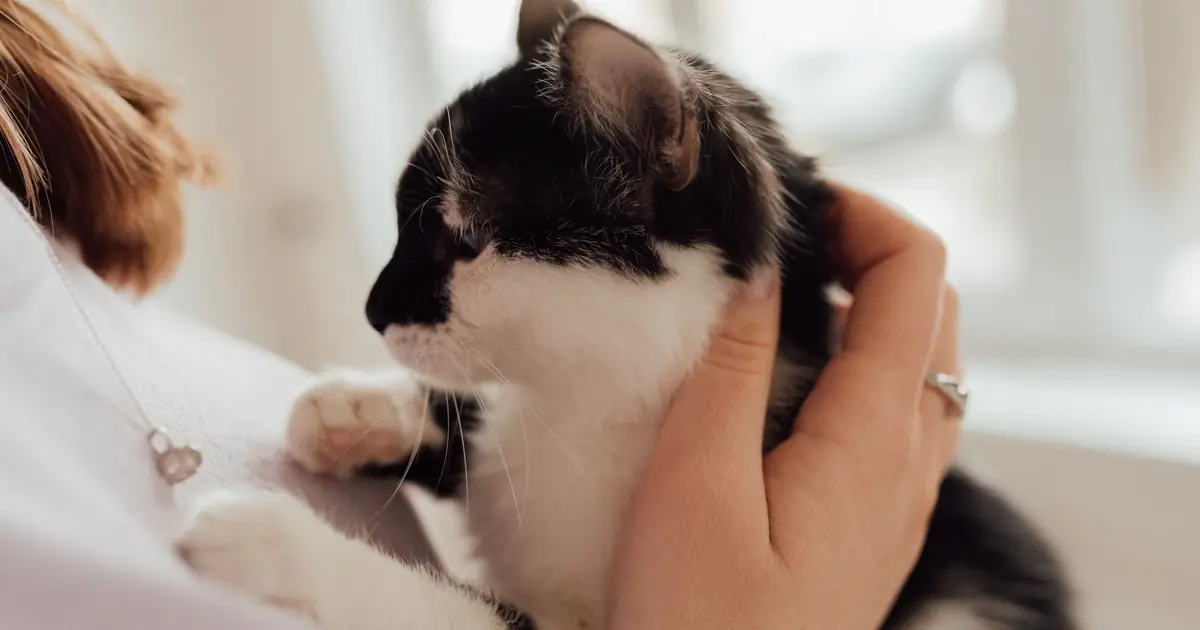
You walk into a room full of people, and every cat in the house beelines for you. Even the shy one who’s been hiding under the couch all party comes out, sniffs your ankle, and hops into your lap like you’ve known each other for years. Meanwhile the person who’s been cooing “here kitty kitty” for twenty minutes gets nothing but a cold stare from across the room.
If this sounds familiar, you’re not imagining it. Some people really are cat magnets, and it usually has nothing to do with loving cats the most. It’s about how you move, how you smell, and whether a cat reads you as safe. Let’s get into exactly what’s going on.
- Cats gravitate toward calm, unhurried people because sudden movement and loud noise read as threats in feline body language.
- A slow blink is a real feline signal of trust, and returning one can make a cat more comfortable around you within seconds.
- Cats often approach people who ignore them because a lack of direct staring feels non-threatening rather than predatory.
- Cats rely heavily on scent, so your smell, including deodorant, lotion, and even other pets on your clothes, shapes their first impression of you.
- A 2019 Oregon State University study found cats are just as capable of forming secure attachments to their favorite person as dogs and human infants.
Why Do Cats Like Me So Much?
Cats like you so much because your body language, voice, and scent tell them you’re safe to be around. Cats are both predator and prey in the wild, which makes them wired to notice threats fast. A person who moves slowly, speaks softly, and doesn’t loom over them signals “no danger here” almost instantly. That single impression does more to win a cat over than treats, toys, or how much you insist you love cats.
It’s not really about effort either. Some people just naturally carry themselves in a way cats find calming: quieter voices, smaller gestures, less direct eye contact. If you’ve ever been told you’re “good with animals,” this is probably why. You’re likely doing several of these things without even realizing it.
Why Do Cats Like People Who Ignore Them?
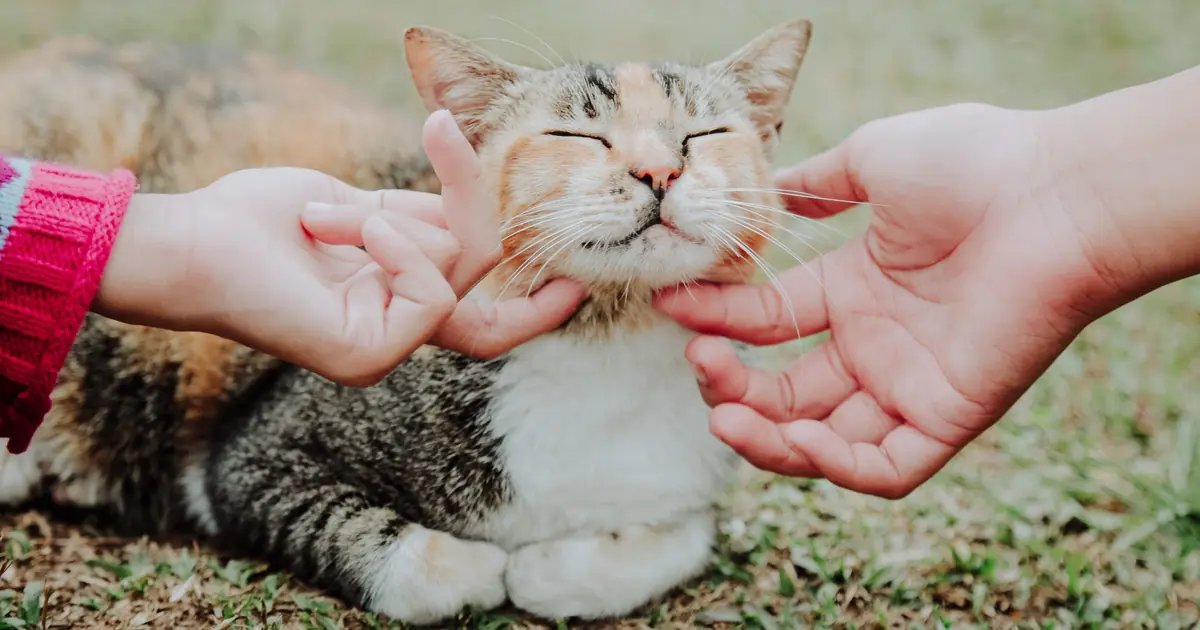
Cats often like people who ignore them because a lack of direct attention feels low-pressure instead of pushy. Picture the classic scene: a room full of cat lovers reaching out, cooing, trying to pet every cat in sight, and one bored guest scrolling their phone in the corner. The cat climbs into that person’s lap every time.
Here’s the thing: in cat body language, a direct approach with outstretched hands can look a lot like a predator closing in. Someone who isn’t reaching for the cat, staring at it, or talking baby talk removes all of that pressure. The cat gets to approach on its own terms, sniff you out, and decide you’re safe, and that decision feels a lot more secure to a cat than being chased down for affection. International Cat Care notes that letting a cat initiate contact, rather than reaching toward its face, is one of the fastest ways to earn its trust.
What Calm Energy and Body Language Make Cats Trust You?
Cats trust people whose body language reads as slow, low, and predictable. A few specific signals make a real difference:
- Slow blinking: Closing your eyes slowly and reopening them tells a cat you’re relaxed and not watching them as prey. Cats often slow blink back, and researchers at the University of Sussex found that returning a cat’s slow blink actually makes them more likely to approach you.
- Sideways posture: Turning your body slightly away, rather than facing a cat head-on, feels less confrontational.
- Getting low: Sitting or crouching so you’re not towering over the cat removes a lot of the intimidation factor.
- A soft, low voice: Sudden loud talking or shrieking “aww” is startling. A quiet, even tone is soothing.
- Offering a finger, not a hand: Letting a cat sniff one extended finger mimics how cats greet each other nose to nose, which reads as far friendlier than a full hand reaching for their head.
If you want a deeper breakdown of what different tail positions, ear angles, and postures actually mean, our guide to reading cat body language covers the full picture.
Does My Scent Make Cats Like Me?
Yes, your scent plays a big role in whether a cat warms up to you. Cats have roughly 200 million scent receptors in their nose, compared to about 5 million in humans, and they use smell to gather far more information than we do. A calm, familiar scent puts a cat at ease, while strong artificial fragrances, unfamiliar cologne, or the smell of another animal on your clothes can make a cat cautious.
This is also why cats sometimes seem to prefer people who don’t fuss over them: less handling means less unfamiliar scent transfer, at least until the cat has had a chance to check you out on its own terms. If a cat headbutts you or rubs against your legs, that’s actually the cat marking you with its own scent glands, a sign it’s decided you belong to its circle of trust.
Why Do Other People’s Cats Like Me So Much?
Other people’s cats like you because you read feline signals well and don’t force interaction, even with a cat you’ve just met. Cats that live with someone else already have their routines and their favorite humans, so when a strange cat singles you out, it’s usually because you’re giving off the right signals: quiet movement, no direct staring, patience while the cat decides whether to approach.
Shy or nervous cats especially respond to this. A guest who ignores them, sits quietly, and lets them make the first move often gets more attention from a skittish cat than the actual cat owner does. It’s a strange kind of compliment: the less you try, the more the cat trusts you.
Do Cats Have a Favorite Person?
Yes, cats do have favorite people, and it’s usually the person who feeds them, plays with them, and respects their boundaries most consistently. A 2019 study from Oregon State University found that cats form secure and insecure attachment styles to their caregivers, very similar to the attachment patterns seen in dogs and human infants. In other words, this isn’t just a cute idea, it’s measurable behavior.
Cats tend to bond most with whoever is calm, predictable, and lets them set the pace for affection, rather than whoever showers them with the most attention. If you’re wondering whether your own cat has picked you as their person, our article on how to tell if your cat loves you walks through the specific signs to look for. And if your cat seems to want to be near you constantly, that’s a slightly different pattern worth understanding too, which we cover in our guide to why cats get clingy.
How Can I Become a Cat’s Favorite Person?
You can become a cat’s favorite person by staying consistent, letting the cat approach first, and pairing yourself with good things like food, play, and calm affection. Here’s how to build that trust on purpose:
- Let the cat come to you instead of reaching for it first.
- Get down to the cat’s level rather than looming over it.
- Offer a finger for the cat to sniff before attempting to pet it.
- Practice slow blinking when the cat makes eye contact with you.
- Keep your voice low and your movements unhurried around the cat.
- Feed or offer treats consistently, since cats bond quickly with a reliable food source.
- Respect the cat’s exit. Never chase or corner it, even out of affection.
Do this consistently and most cats, even wary ones, will start seeking you out. For cats that follow this a step further and trail you room to room, check out our piece on why cats follow their favorite person everywhere.
| What “Cat People” Do | What Pushes Cats Away |
|---|---|
| Let the cat approach first | Reaching straight for the cat’s head or body |
| Move slowly and speak softly | Loud talking, sudden movement, or squealing |
| Slow blink and glance away | Staring directly into the cat’s eyes |
| Sit or crouch at the cat’s level | Towering over or looming above the cat |
| Offer a finger to sniff first | Picking up or restraining an unfamiliar cat |
| Stay consistent over repeat visits | Only showing attention once, then ignoring the cat entirely |
Cats that get plenty of positive interaction like this often develop a strong bond with the humans in their life, and it shows in daily behavior, right down to how they enjoy being pet once they trust you. If you’re starting from scratch with a nervous or new cat, our guide on how to earn a cat’s trust breaks the process down step by step.
Frequently Asked Questions
Q: Why do cats like me more than other people?
Cats usually like one person more because that person’s body language, voice, and scent feel the safest and most predictable. Calm movement, a soft voice, and letting the cat approach first all matter more than how much affection you try to give.
Q: Why do cats that aren’t mine always come up to me?
Strange cats often approach people who avoid direct staring and don’t rush toward them, since that reads as non-threatening. If you tend to sit still and let a cat sniff you out first, you’re giving off exactly the signals cats look for in a trustworthy stranger.
Q: Is it true cats like people who ignore them?
Yes, this holds up in practice. Cats often approach people who aren’t actively trying to engage them because there’s no pressure and no direct staring involved, both of which feel safer to a cat deciding whether to trust someone.
Q: Do cats choose one favorite person?
Many cats do form a strongest bond with one person, usually whoever feeds them, plays with them, and handles them gently and consistently. Research from Oregon State University in 2019 found cats form real attachment styles to their favorite caregiver, much like dogs and young children do.
Q: Can my scent really affect whether a cat likes me?
Yes, scent matters a lot to cats since they rely on smell far more than humans do, with around 200 million scent receptors compared to our roughly 5 million. Strong perfumes, unfamiliar smells, or the scent of other animals on your clothes can make a cat more cautious around you at first.
Q: What does it mean when a cat slow blinks at me?
A slow blink is a cat’s way of telling you it feels relaxed and safe in your presence, since closing its eyes means it isn’t watching you as a threat. Slow blinking back at a cat, sometimes called a “cat kiss,” can make the cat more likely to approach you.
Q: Why does my cat like strangers more than me sometimes?
This usually comes down to pressure and familiarity, not affection. A stranger who sits calmly and doesn’t fuss over the cat can feel less demanding than an owner who reaches for cuddles constantly, even though the cat is still deeply bonded to its owner overall.
Q: How long does it take for a cat to decide it likes you?
Some cats warm up in minutes if your body language reads as calm and safe, while shy or previously mistreated cats can take weeks or months of consistent, low-pressure interaction. Patience and repetition matter more than any single gesture.

Hello and welcome to The Ideal Cat!
We are some passionate cat owners from different professions. We love our cats and have a lot of experience in how to care for our pets. We are incredibly excited to share our knowledge, experience, and research with you. So you can take good care of your loving cat. We will answer most of the common questions about owning cats, taking care of them, etc. If you have any question contact with us. Thanks for visiting! Enjoy the content.
