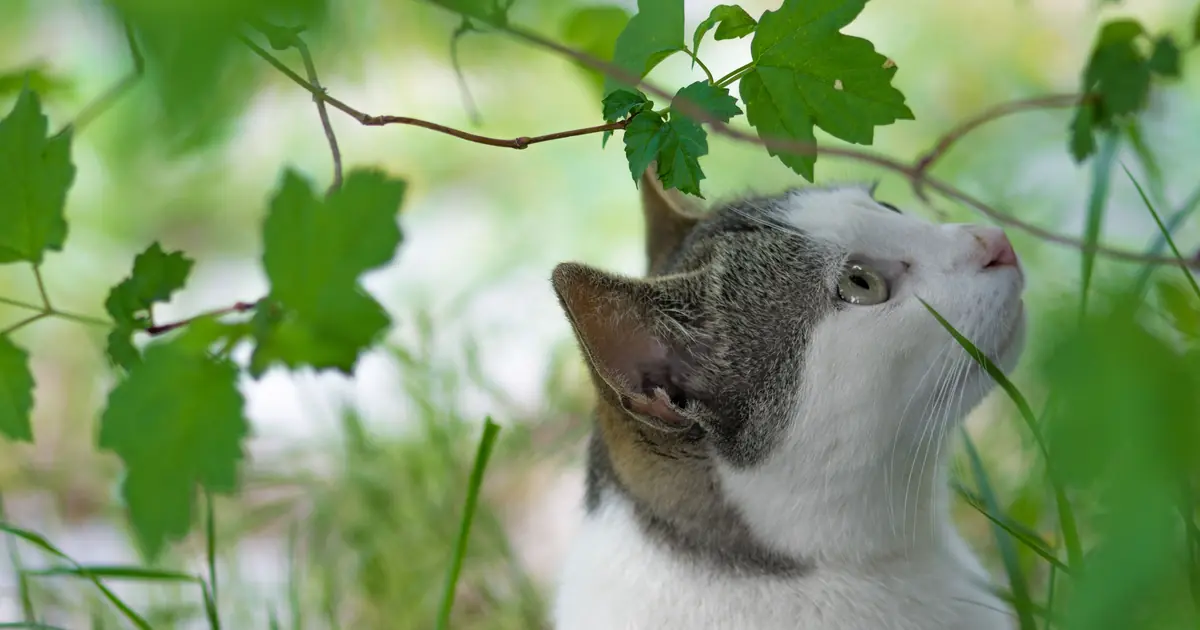
You catch your cat headbutting a mint plant on the windowsill like it just told the funniest joke in the world. Or maybe your cat sniffs your toothpaste, gets weirdly interested, then wanders off looking mildly betrayed. Either way, you’re left wondering: what is it about mint that gets cats going?
Here’s the thing: the answer is part biology, part botany, and part “it’s complicated.” Some mints are basically a party favor for cats. Others can make them genuinely sick. Let’s sort out which is which, so you can let your cat enjoy the good stuff and steer clear of the bad stuff.
- Catnip (Nepeta cataria) is a member of the mint family, which is why cats often react to other minty plants and scents.
- The compound nepetalactone in catnip triggers the euphoric catnip response in roughly 50 to 70% of cats.
- Silvervine is a mint-family alternative that works even on cats who don’t respond to catnip.
- True mints, like peppermint and spearmint, and mint essential oils are not the same as catnip and can be toxic to cats in concentrated form.
- Mint gum and candy often contain xylitol, which is dangerous for cats and dogs alike.
Why do cats like mint?
Cats like mint because the plant family it belongs to, Lamiaceae, includes catnip, and both share aromatic oils that grab a cat’s attention fast. Cats have an incredibly sharp sense of smell, somewhere around 14 times stronger than ours, and mint’s sharp, volatile scent compounds practically shout at their nose. For some cats, that scent triggers actual pleasure. For others, it’s just plain interesting, the same way a new smell on your shoe gets a sniff-and-investigate.
It also helps that cats are naturally curious about anything with a strong, unfamiliar smell. Mint checks that box instantly.
Is catnip actually a type of mint?
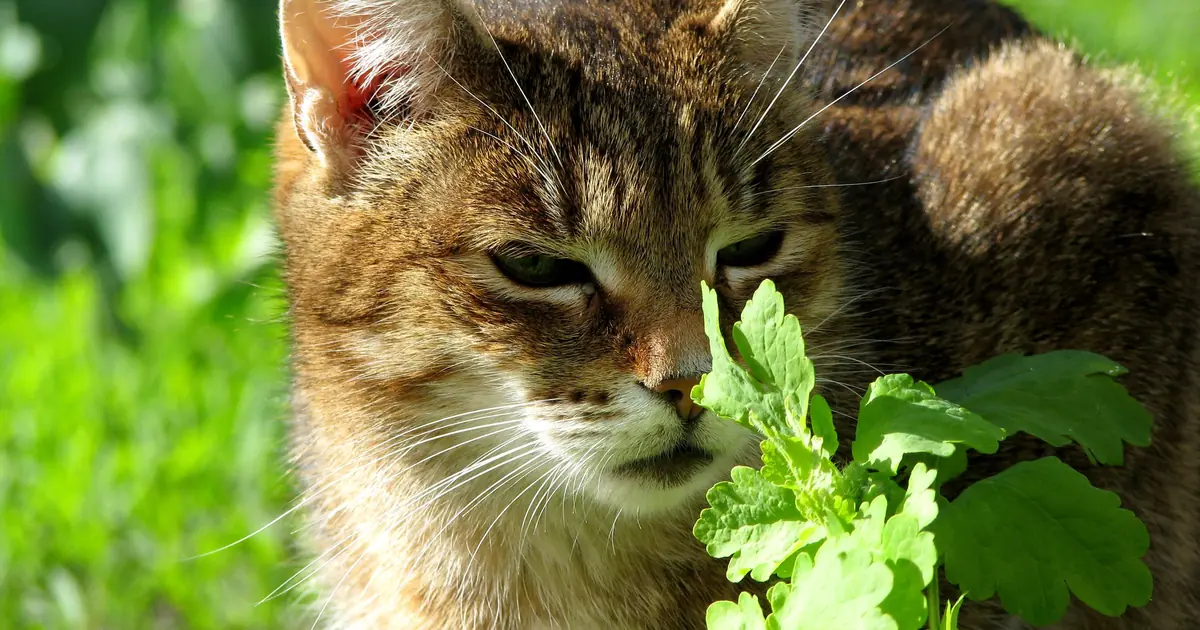
Yes. Catnip, scientifically known as Nepeta cataria, is a true member of the mint family. That family connection is exactly why cats sometimes show interest in other mint-family plants, even ones that aren’t catnip at all. The magic ingredient in catnip is a compound called nepetalactone, which binds to receptors in a cat’s nose and triggers a short burst of euphoria: rolling, rubbing, drooling, the works. According to International Cat Care, this response usually lasts about 10 to 15 minutes before a cat needs a break to reset.
Not every cat gets the memo, though. The catnip response is genetic, so kittens under about three months old and roughly a third of adult cats simply don’t respond to it at all.
What exactly are cats reacting to when they smell mint?
Cats are reacting to the aromatic oils and volatile compounds that give mint-family plants their smell, not to “mint” as a flavor or food. These compounds bind to scent receptors in a cat’s nose and in the vomeronasal organ (the extra scent organ behind their front teeth, the one that makes them do that funny open-mouth “flehmen” face). For catnip specifically, nepetalactone is the star player. For other true mints, it’s compounds like menthol and menthone. Cats can’t tell your toothpaste apart from a garden herb by smell alone, they’re just responding to whatever those chemical compounds trigger in their brain. Scent runs both directions, too. If you’ve ever wondered why your own cat smells so good to you, it comes down to the same sharp feline sense of smell working in reverse.
Which mints are safe for cats to enjoy?
Catnip, catmint, and silvervine are the mint-family plants that are genuinely safe and enjoyable for cats. Here’s a quick rundown of the good guys:
- Catnip: The classic. Safe in dried, fresh, or spray form, and fine to offer a few times a week.
- Catmint (Nepeta mussinii): A close cousin of catnip, often grown as an ornamental plant, and just as safe.
- Silvervine (Actinidia polygama): Not technically a mint, but worth mentioning here because it produces a similar euphoric response and works on many cats who ignore catnip.
- Valerian root: Another catnip alternative, also not a true mint, but commonly grouped with these “cat highs” since it triggers a comparable reaction.
Some cats will also nibble a small piece of fresh true mint leaf, like spearmint from your herb garden, with no issue. It’s not the same euphoric trigger as catnip, but a tiny nibble typically isn’t dangerous. There’s just no real reason to encourage it.
Which mints and mint products are not safe for cats?
Peppermint, spearmint, and pennyroyal in concentrated forms, especially as essential oils, are not safe for cats and can cause real toxicity. Cats process compounds very differently than we do, and mint essential oils are one of the categories that trip them up hardest. Large amounts of even fresh true mint leaves can cause stomach upset, vomiting, or diarrhea. And anything minty made for humans, gum, candy, breath strips, is off the table because of added ingredients, not the mint itself.
| Mint Type | Safe for Cats? | Note |
|---|---|---|
| Catnip | Yes | Safe fresh, dried, or as a spray; triggers euphoria in 50 to 70% of cats. |
| Silvervine | Yes | Not a true mint, but a safe catnip alternative that works on non-responders. |
| Fresh true mint leaf (small amount) | Usually, in moderation | A nibble is typically fine; large amounts can cause GI upset. |
| Mint essential oil | No | Concentrated oils can be toxic; cats lack the liver enzymes to break them down safely. |
| Mint gum, candy, or breath strips | No | Often contain xylitol, which is dangerous for cats and dogs. |
Why are mint essential oils dangerous for cats?
Mint essential oils are dangerous for cats because their livers lack enough of a specific enzyme, glucuronyl transferase, to break down and clear certain plant compounds efficiently. Essential oils, including peppermint and wintergreen, are packed with concentrated versions of these compounds. What’s a mild whiff to us can build up in a cat’s system and cause real harm. The ASPCA Animal Poison Control Center lists several essential oils as hazardous to cats, and this includes concentrated mint oils used in diffusers, cleaning products, and topical “natural” flea treatments.
Don’t run essential oil diffusers with mint or menthol blends in a room your cat can’t leave, and never apply diluted or undiluted mint oil to your cat’s skin or fur.
Can cats eat fresh mint leaves?
A small nibble of fresh mint leaf is generally not dangerous for cats, but it isn’t something they need either. Unlike catnip, true mint doesn’t reliably deliver the euphoric response cats are chasing, so there’s not much upside to offering it. If your cat likes to graze on your herb garden, a leaf or two of spearmint probably won’t cause a problem. Just watch the portion. A cat that eats a large amount of any unfamiliar plant, mint included, can end up with an upset stomach, vomiting, or diarrhea.
How can you safely give your cat a “mint” fix?
The safest way to give your cat a mint-family thrill is to stick with catnip, catmint, or silvervine instead of true mint or mint products. Here’s how to do it right:
- Offer dried catnip sprinkled on a scratching post or toy, not a whole handful at once.
- Try a silvervine stick or powder if your cat doesn’t react to catnip.
- Grow catmint in a pot your cat can safely access indoors or in a secure outdoor space.
- Skip essential oil diffusers, sprays, or candles with mint or menthol scents in rooms your cat spends time in.
- Keep human mint products, gum, mints, toothpaste, tucked away where curious paws and noses can’t get to them.
If your cat is already a fan of strong, aromatic plants, it’s worth checking whether lavender is safe for them too, since it’s another herb owners often wonder about. And if you’re curious what’s actually happening in your cat’s brain during a catnip episode, our guide on what catnip does to a cat breaks down the science in more detail.
What are the signs of mint toxicity in cats?
The main signs of mint or essential oil toxicity in cats are drooling, vomiting, diarrhea, and lethargy, usually showing up within a few hours of exposure. Some cats also show wobbliness, difficulty breathing, or skin irritation if the oil was applied topically. If you notice any of these signs after your cat was exposed to a mint essential oil, a diffuser, or a large amount of a minty product, call your vet or an animal poison control hotline right away. The Pet Poison Helpline is available for exactly these situations.
This article is meant to help you understand your cat’s behavior, not to replace advice from a licensed veterinarian. If your cat seems unwell after any mint exposure, don’t wait it out. Get them checked.
Safety note
Catnip and catmint are safe, well-studied, and genuinely fun for most cats. True mints and mint essential oils are a different story: never give your cat mint essential oils, menthol-based products, or mint gum and candy, since gum in particular often contains xylitol. Large amounts of true mint leaves can cause stomach upset even though a small nibble usually isn’t an emergency. If your cat drools excessively, vomits, has diarrhea, or seems unusually lethargic after any mint exposure, contact your vet.
Frequently Asked Questions
Q: Is peppermint toxic to cats?
Peppermint essential oil is toxic to cats because their livers can’t process the concentrated compounds efficiently. A small taste of a fresh peppermint leaf is unlikely to cause serious harm, but concentrated oils, diffusers, and topical applications should be avoided entirely.
Q: Why does my cat go crazy for mint plants?
Your cat likely reacts to mint plants because they share the Lamiaceae plant family with catnip, and both produce strong aromatic oils. If the plant is catnip or catmint specifically, the nepetalactone compound is what triggers the rolling, rubbing, and rubbing-your-face-in-it excitement.
Q: Can cats have mint essential oil diffused in the house?
No, mint essential oil diffusers are not recommended in homes with cats. Cats lack the liver enzymes needed to break down many essential oil compounds, and inhaling diffused mint oil over time can lead to respiratory irritation or toxicity.
Q: Is spearmint the same as catnip?
No, spearmint and catnip are different plants, even though both belong to the mint family. Catnip (Nepeta cataria) contains nepetalactone, the compound responsible for the euphoric catnip reaction, while spearmint does not reliably trigger that same response in cats.
Q: What should I do if my cat eats mint gum?
Contact your vet or an animal poison control hotline right away if your cat eats mint gum, since many gums contain xylitol, a sweetener that’s dangerous for cats. Watch for vomiting, weakness, or lethargy in the meantime.
Q: Why does my cat like the smell of my toothpaste?
Your cat is likely drawn to the mint and menthol compounds in toothpaste, which smell similar to compounds found in catnip and other mint-family plants. It’s fine for your cat to sniff toothpaste from a distance, but they shouldn’t be allowed to eat it, since ingredients like fluoride and xylitol can be harmful. If you’re curious whether cats crave sweetness the same way they’re pulled toward mint, we cover why cats seem to like sweets in a separate guide.
Q: Do all cats react to mint the same way they react to catnip?
No, not all cats react the same way. Roughly 50 to 70% of cats show the classic catnip response, and that reaction is specific to nepetalactone, not mint scent in general. Many cats show mild curiosity toward true mint without any of the rolling or rubbing behavior seen with catnip.
Q: Is silvervine safer than catnip for cats?
Silvervine and catnip are both considered safe for cats when used appropriately, so one isn’t inherently safer than the other. Silvervine is simply a useful alternative for the roughly 30 to 50% of cats who don’t respond to catnip at all.

Hello and welcome to The Ideal Cat!
We are some passionate cat owners from different professions. We love our cats and have a lot of experience in how to care for our pets. We are incredibly excited to share our knowledge, experience, and research with you. So you can take good care of your loving cat. We will answer most of the common questions about owning cats, taking care of them, etc. If you have any question contact with us. Thanks for visiting! Enjoy the content.
