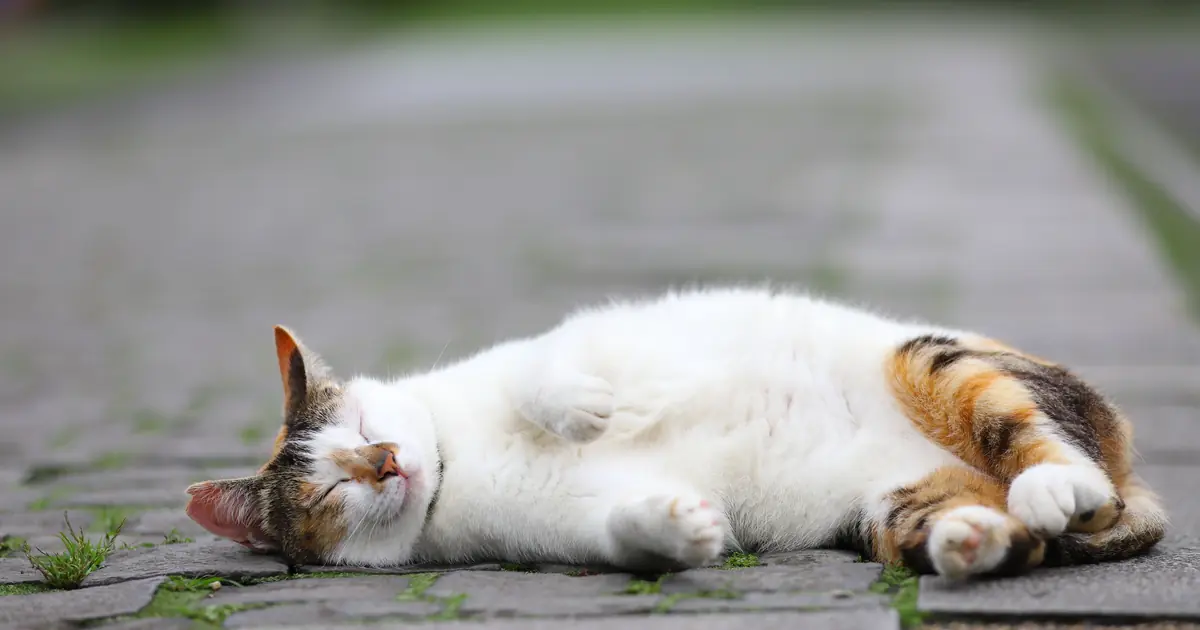
Your cat dramatically flops onto its side and goes still, and for a second your heart skips. Is it playing dead? Usually it’s just being a cat, but it’s worth knowing the difference.
Here’s what “playing dead” really is in cats, and the times stillness is serious.
- Cats don’t genuinely play dead as a defense, that’s an opossum behavior, not a feline one.
- Most “playing dead” is a cat flopping to relax, invite play, or show trust.
- Going limp when scruffed is an automatic reflex, not the cat pretending.
- Some cats can be trained to “play dead” as a trick with rewards.
- Real, sudden collapse, fainting, or unresponsiveness is a medical emergency, see a vet now.
Why do cats play dead?
Cats don’t truly play dead as an instinct, so what looks like it almost always has another explanation. Most often, a cat flops onto its side or back to relax, stretch, or invite interaction, not to fake death. Going limp when picked up by the scruff is a reflex, and some cats learn to “play dead” as a trained trick for treats. True playing dead as a survival tactic belongs to opossums, not cats. So a healthy cat flopping over is usually just being comfortable, or being dramatic.
Is my cat actually pretending to be dead?
No, cats don’t consciously fake death to fool predators. When threatened, cats fight, flee, freeze, or hide, they don’t drop and play dead like an opossum does. What people call a cat “playing dead” is typically a relaxed flop, a play invitation, or a reflexive limpness, none of which are the cat pretending. If you’ve seen a possum truly play dead, that involuntary “death feint” is a different animal’s defense entirely, which we cover in do cats attack possums.
What’s really happening when a cat flops and goes still?
A cat that flops and lies still is usually relaxed, playful, or trusting. Common explanations:
- Relaxation: flopping onto the side or back to rest and stretch.
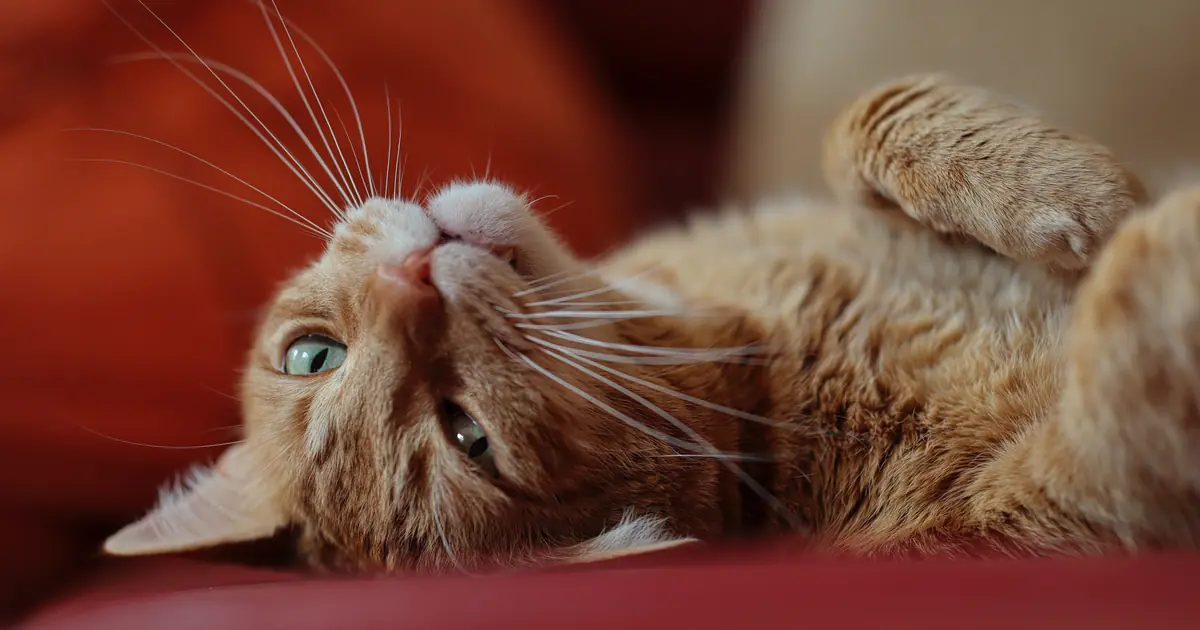
- Play invitation: rolling over to engage you, often belly-up.
- Trust display: exposing the belly shows the cat feels safe.
- Scruff reflex: going limp when held by the neck (automatic, not fear).
- A learned trick: some cats are trained to “play dead” on cue.
The dramatic flop-down is often a happy greeting, closely related to why cats flop down in front of you, and the limpness when scruffed is explained in why cats freeze when grabbed by the neck.
Normal flopping vs a medical emergency
Here’s how to tell a happy flop from a true collapse.
| Normal (relaxed or playful) | Emergency (see a vet now) |
|---|---|
| Flops over but is alert and responsive | Sudden collapse or fainting |
| Relaxed body, may purr or wiggle | Unresponsive, limp, or unconscious |
| Gets up normally when it wants | Difficulty breathing or pale gums |
| Happens during play or rest | Weakness, twitching, or seizure |
When is stillness a serious sign?
A cat that truly collapses, faints, or becomes unresponsive is having a medical emergency, not playing. Real fainting (syncope) or collapse can result from heart problems, low blood sugar, breathing trouble, poisoning, or other serious conditions, and it needs immediate veterinary care. Warning signs include sudden weakness, unresponsiveness, labored breathing, pale or blue gums, twitching, or seizures. This article is educational and not a substitute for veterinary care; if your cat genuinely collapses or won’t respond, treat it as an emergency and get to a vet right away. For related concerns, see why a cat is limping. Trusted guidance on feline emergencies comes from the ASPCA and VCA Hospitals.
Frequently Asked Questions
Q: Do cats really play dead?
Not as an instinct. Cats don’t fake death to fool predators, that’s an opossum behavior. What looks like playing dead is usually a relaxed flop, a play invitation, a scruff reflex, or a trained trick. True collapse, though, is an emergency.
Q: Why does my cat flop over and lie still?
Usually to relax, stretch, invite play, or show trust by exposing its belly. A responsive, comfortable cat flopping over is normal and often a happy greeting. It’s only a concern if the cat is truly unresponsive or collapses.
Q: Why does my cat go limp when I pick it up by the neck?
That’s an automatic reflex called pinch-induced behavioral inhibition, the same one that keeps kittens still when their mother carries them. It’s not the cat playing dead or being afraid. Still, avoid scruffing adult cats; support their body instead.
Q: Can cats be trained to play dead?
Yes. With patience and treats, many cats can learn “play dead” as a trick, rolling onto their side on cue. It’s a taught behavior for rewards, not a natural instinct, and a fun way to engage a food-motivated cat.
Q: When is my cat lying still an emergency?
When it’s a true collapse: sudden fainting, unresponsiveness, limpness, labored breathing, pale or blue gums, twitching, or seizures. These signal serious problems like heart or breathing issues and need immediate veterinary care, don’t wait.
Q: Do cats play dead when scared?
No. Scared cats typically fight, flee, freeze, or hide rather than dropping and playing dead. The “death feint” defense belongs to opossums. A frightened cat that suddenly collapses is a medical emergency, not a defensive act.

Hello and welcome to The Ideal Cat!
We are some passionate cat owners from different professions. We love our cats and have a lot of experience in how to care for our pets. We are incredibly excited to share our knowledge, experience, and research with you. So you can take good care of your loving cat. We will answer most of the common questions about owning cats, taking care of them, etc. If you have any question contact with us. Thanks for visiting! Enjoy the content.
