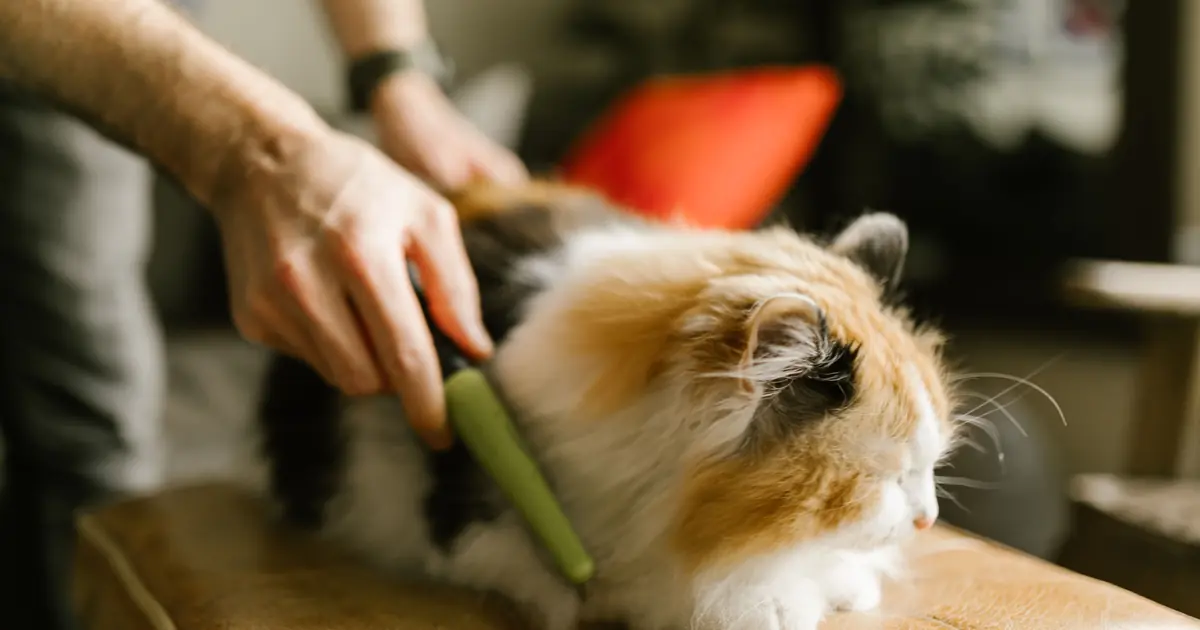
If you’ve ever woken up to your cat nibbling, licking, or full-on chewing your hair, you’re not alone, and you’re probably a little weirded out. Why does my cat eat my hair, you wonder, and is it even safe? Here’s the reassuring news first: most of the time, when your cat eats your hair, it’s a quirky sign of love, not a crisis. But sometimes it points to stress, boredom, or a health issue worth checking. Let’s untangle exactly what’s going on.
- Allogrooming, social grooming between bonded cats, is the most common reason a cat licks and gently eats your hair, and it usually means affection.
- Stress, boredom, and attention-seeking can all turn hair-chewing into a repeated habit, especially in indoor-only cats.
- Pica is the compulsive eating of non-food items like hair, fabric, and plastic, and it can have behavioral or medical causes.
- Cats cannot digest human hair, so a cat that swallows it repeatedly risks hairball trouble or an intestinal blockage that may need surgery.
- See a vet if hair-eating is new, frequent, or compulsive, or if it comes with vomiting, weight loss, or appetite changes.
This article is educational and not a substitute for veterinary advice. If your cat is actually swallowing hair often or seems unwell, your veterinarian is the right person to check things out.
Why does my cat eat my hair in the first place?
Your cat eats your hair most often because of allogrooming, the social grooming cats do to bond with family members they trust. In the wild and in multi-cat homes, cats lick and nibble each other to share scent and strengthen relationships. When your cat grooms your hair, your cat is basically treating you like another cat it loves. Sweet, if slightly slobbery.
That said, hair-eating isn’t always about affection. Cats also chew hair out of stress, boredom, curiosity, attention-seeking, or a deeper compulsion called pica. The trick is reading the rest of your cat’s body language and habits. A relaxed, purring cat gently grooming you is very different from a tense cat compulsively swallowing strands.
What are the most common reasons cats eat human hair?
Cats eat human hair for seven common reasons, ranging from pure affection to medical conditions. Here’s a quick comparison so you can spot which one fits your cat, followed by a closer look at each.
| Reason | What it usually means |
|---|---|
| Allogrooming (affection) | Your cat sees you as family and is bonding through grooming. Harmless when it stays at licking. |
| Comfort and self-soothing | Grooming releases calming signals, so your cat uses it to relax, much like kneading or sucking on blankets. |
| Stress or anxiety | Changes at home or too little stimulation can trigger repetitive hair-chewing as a coping behavior. |
| Boredom or play | Long, dangling hair looks like a toy, especially to kittens and energetic young cats. |
| Attention-seeking | Your cat learned that hair-nibbling reliably wakes you or gets a reaction, so it keeps doing it. |
| Early weaning | Kittens separated from mom too soon may keep suckling and chewing habits into adulthood. |
| Pica (eating non-food items) | A compulsive urge to swallow non-food things, sometimes linked to a medical cause. Needs a vet. |
1. Affection and allogrooming
Allogrooming is the number one reason cats eat human hair, and it’s a genuine sign of trust. Cats groom the family members they feel safe with, transferring scent and reinforcing the bond. If your cat licks and lightly nibbles your hair while purring and relaxed, you’re getting the cat version of a hug.
2. Comfort and self-soothing
Grooming is self-soothing for cats, so some chew hair to calm themselves down. The rhythmic licking releases a settled, sleepy feeling, which is why many cats do it at bedtime or while curled against you. It’s similar to why cats knead soft blankets or your lap.
3. Stress or anxiety
Stress can turn occasional hair-licking into a repeated chewing habit. Cats are sensitive to change, and a new pet, a move, a noisy household, or too little enrichment can leave a cat looking for ways to cope. When hair-chewing becomes frequent and frantic rather than calm, anxiety is worth considering.
4. Boredom and play
Boredom drives a lot of hair-chewing, because long hair looks and moves like a teaser toy. Kittens and high-energy young cats are the usual culprits here. If your cat pounces on your hair, bats it, then mouths it during the day, you’re probably looking at an under-stimulated cat who needs more playtime.
5. Attention-seeking
Cats repeat hair-eating when it reliably gets your attention. If nibbling your hair has ever made you wake up, laugh, push the cat away, or give it a treat to stop, your cat has learned the behavior works. Even “negative” attention counts as a payoff to a bored cat.
6. Early weaning
Kittens weaned too early may carry suckling and chewing habits into adulthood. Kittens that leave their mother before about 12 weeks of age sometimes redirect that unmet suckling instinct onto soft, hair-like textures, including your hair, wool, or blankets. The habit can linger for life even after the cat is otherwise healthy.
7. Pica
Pica is the compulsive eating of non-food items, and hair is a common target. Pica goes beyond a playful nibble: the cat actively chews and swallows non-food material like hair, fabric, plastic, or cardboard. Pica can be purely behavioral, but it can also point to a medical issue, so a cat showing real pica should see a vet.
Is it normal for cats to eat hair, or should I be worried?
Occasional hair-licking is normal and harmless, but repeatedly swallowing hair is not, and that’s the line to watch. A cat that grooms your hair now and then, mostly licking with the odd nibble, is just being affectionate. Worry creeps in when your cat actively chews off and swallows strands, does it compulsively, or pairs it with other symptoms.
The reason swallowing matters: cats cannot digest human hair. Hair has no nutritional value and can clump in the stomach or, in a worst case, lodge in the intestines and cause a blockage that may need surgery. So a quick groom is fine; a cat eating mouthfuls of hair is a vet conversation.
Red flags that mean call your vet
Certain signs alongside hair-eating mean you should book a vet visit promptly. Don’t panic, but don’t wait it out either if you notice:
- Repeated vomiting, gagging, or retching, especially after hair-chewing.
- Loss of appetite, or the opposite, a suddenly ravenous appetite with weight loss.
- Straining to poop, no stool, or hair visible in the stool.
- Lethargy, hiding, or a tense, painful belly.
- Compulsive, frantic hair-eating your cat can’t seem to stop.
Straining, vomiting, refusing food, and lethargy together can signal an intestinal blockage, which is an emergency. When in doubt, call your vet or an emergency clinic right away.
Can eating hair actually hurt my cat?
Yes, eating hair can hurt your cat if it happens often, because swallowed hair can cause hairballs, stomach upset, or a dangerous intestinal blockage. A single groomed strand is no big deal. The risk builds when a cat regularly swallows enough hair to form a mass the digestive system can’t move along.
Long human hair is especially risky because, like string or tinsel, it can act as a linear foreign body. That means it can bunch up and saw against the intestines, which is a serious surgical emergency. This is the main reason vets take frequent hair-eating seriously rather than brushing it off as a cute habit.
Why does my cat eat my hair when I’m sleeping?
Cats often eat your hair while you sleep because that’s when your hair is spread out, still, and right next to a relaxed cat. Nighttime cuddling puts your scent-soaked hair inches from your cat’s face, which invites grooming. Many cats also feel calmest at rest, so bedtime grooming doubles as self-soothing.
Some cats also chew hair at night specifically to wake you, especially if a 5 a.m. nibble has ever earned breakfast or attention. If your cat eats your hair when you sleep, look at whether it’s calm affection or a wake-up tactic, because the fix is different for each. More on stopping it below.
Which cats are most likely to eat hair?
Indoor-only cats, kittens, early-weaned cats, and a few specific breeds are the most likely to eat hair. Pica and repetitive chewing show up more in cats with less to do and fewer outlets for natural behavior, which is why understimulated indoor cats top the list.
Breed genetics play a role too. Oriental breeds such as the Siamese, Burmese, and Oriental Shorthair are reported to have a higher tendency toward pica and wool- or hair-chewing than other cats. If you share your home with one of these chatty, intense breeds, a little extra enrichment goes a long way.
How do I get my cat to stop eating my hair?
You stop a cat from eating your hair by making hair less available, adding enrichment, and redirecting the behavior, never by punishing. Punishment raises stress and often makes hair-chewing worse. Work through these steps instead:
- Rule out medical causes first. If the hair-eating is new, frequent, or compulsive, get a vet check to rule out pica-linked conditions before treating it as a habit.
- Make your hair hard to reach. Tie your hair up, wrap it in a scarf or sleep cap, or wear a hat during cuddle time so there’s nothing to grab.
- Boost daily play. Two or three interactive play sessions a day, especially a vigorous one before bed, burns off energy that would otherwise go into your hair.
- Add enrichment. Puzzle feeders, food-dispensing toys, window perches, and rotating toys give a bored cat better things to do.
- Offer a legal chew option. Cat-safe dental treats, silvervine sticks, or cat grass redirect the urge to chew onto something safe.
- Don’t reward it. If your cat chews hair for attention, calmly get up and walk away instead of reacting, so the behavior stops paying off.
- Reduce stress triggers. Keep routines steady, add hiding spots and vertical space, and consider a feline pheromone diffuser if anxiety seems to be the driver.
For a cat that hair-chews mostly out of boredom, food puzzles and rotating toys make a real difference. A simple treat-dispensing puzzle toy keeps a busy mind occupied and gives the chewing urge somewhere healthier to go. These are a good fit for indoor-only cats who get understimulated during long days alone.
Cat Amazing Interactive Treat Maze & Puzzle Cat Toy
This is a sturdy cardboard maze you hide treats or kibble inside, so your cat has to sniff, paw, and problem-solve to get the reward. It channels a bored, hair-chewing cat into natural foraging instead of nibbling on you. Best for indoor cats who need more mental work during long days at home.
If the behavior is rooted in stress, a vet or a certified feline behaviorist can build a plan tailored to your cat. Anxiety-driven pica rarely fixes itself, so professional guidance saves you a lot of trial and error.
Frequently asked questions about cats eating hair
Q: Why does my cat eat my hair and not anyone else’s?
Your cat eats your hair specifically because it carries your scent and you’re the family member it bonds with most through grooming. Allogrooming is reserved for trusted individuals, so being the chosen one is a compliment. Hair products with appealing smells can also make your hair more tempting than someone else’s.
Q: Is it safe if my cat swallows a little hair?
A small amount of swallowed hair is usually safe and often passes on its own or comes up as a hairball. The concern is repeated or large amounts, since cats can’t digest human hair and it can build up. If your cat regularly swallows hair or vomits afterward, talk to your vet.
Q: Does eating hair mean my cat has a nutritional deficiency?
Eating hair can occasionally signal a nutritional or medical issue, but it’s not the most common cause. Pica is sometimes linked to conditions like anemia, hyperthyroidism, or dietary gaps. A vet exam and bloodwork are the only way to confirm whether nutrition is part of the picture rather than just guessing.
Q: Can hyperthyroidism make a cat eat hair?
Hyperthyroidism can increase a cat’s appetite and may contribute to unusual eating behaviors, including pica. This thyroid disorder is common in older cats, with roughly 10% or more of cats over age 10 affected, according to Cornell. If your senior cat suddenly eats hair plus shows weight loss or a big appetite, ask your vet to check thyroid levels.
Q: Why does my kitten eat my hair so much?
Kittens eat hair mostly out of play, curiosity, and teething, since dangling hair looks like a toy and chewing soothes sore gums. Kittens weaned before about 12 weeks may also keep suckling and chewing habits longer. Most kittens grow out of it with plenty of play and safe chew toys.
Q: How do I stop my cat from eating my hair at night?
To stop nighttime hair-eating, tie your hair up or wear a sleep cap, and give your cat a big interactive play session before bed. A warm cat bed at the foot of your bed encourages your cat to settle there instead. Avoid reacting if the chewing is a wake-up tactic, so it stops working.
Q: Which cat breeds are most likely to eat hair?
Oriental breeds such as the Siamese, Burmese, and Oriental Shorthair are reported to be more prone to pica and chewing on hair, wool, or fabric. Genetics seem to play a role in these breeds. Any cat can develop the habit, though, especially indoor-only cats with limited stimulation.
Q: Should I punish my cat for eating my hair?
No, you should never punish a cat for eating hair, because punishment increases stress and usually makes the behavior worse. Cats don’t connect punishment with the act the way people expect. Redirect calmly, remove access to your hair, and add enrichment instead, and see a vet if the habit is compulsive.
So, why does your cat eat your hair? Usually it’s love, sometimes it’s stress or boredom, and occasionally it’s pica that deserves a vet’s eye. Watch whether your cat just licks or actually swallows, keep an eye out for the red flags above, and lean on your veterinarian whenever the habit feels off. Read your cat, and you’ll know the difference between a furry love language and a problem worth fixing.

Hello and welcome to The Ideal Cat!
We are some passionate cat owners from different professions. We love our cats and have a lot of experience in how to care for our pets. We are incredibly excited to share our knowledge, experience, and research with you. So you can take good care of your loving cat. We will answer most of the common questions about owning cats, taking care of them, etc. If you have any question contact with us. Thanks for visiting! Enjoy the content.
