
If you’ve just brought home a sleek, chatty Siamese kitten, you’ve probably already wondered how many years of conversation you’ve got ahead of you. Good news: this is one breed built to stick around.
Siamese cats aren’t just famous for their striking blue eyes and bossy personalities, as we cover in our full Siamese cat breed guide. They’re also known in the vet world as one of the longest-living cat breeds around. Let’s get into what actually drives that number, what can shorten it, and what you can do about it.
- Siamese cats average 12 to 20 years, longer than the typical cat’s 12 to 15 year lifespan.
- Keeping a Siamese indoors and at a healthy weight adds years to their life expectancy.
- Siamese-linked health issues include dental disease, feline asthma, hepatic amyloidosis, and progressive retinal atrophy (PRA).
- Regular vet checkups, especially twice a year after age 7, catch problems early enough to treat.
- Some Siamese cats have lived into their mid-20s with attentive care.
What Is the Average Lifespan of a Siamese Cat?
A Siamese cat’s average lifespan runs 12 to 20 years, with plenty living well into their late teens. That’s a wide range, and on purpose: genetics, lifestyle, and healthcare all push that number up or down for an individual cat.
What makes Siamese cats stand out is how consistently they land on the high end of that range compared to mixed-breed cats. Vets and breeders alike consider Siamese one of the more genetically robust breeds, partly because they haven’t been bred with the extreme physical traits (flat faces, huge body frames) that shorten life in some other pedigreed cats. A well-cared-for, indoor Siamese reaching 18 or even 20 isn’t rare. It’s expected.
How Does a Siamese Cat’s Lifespan Compare to the Average Cat?
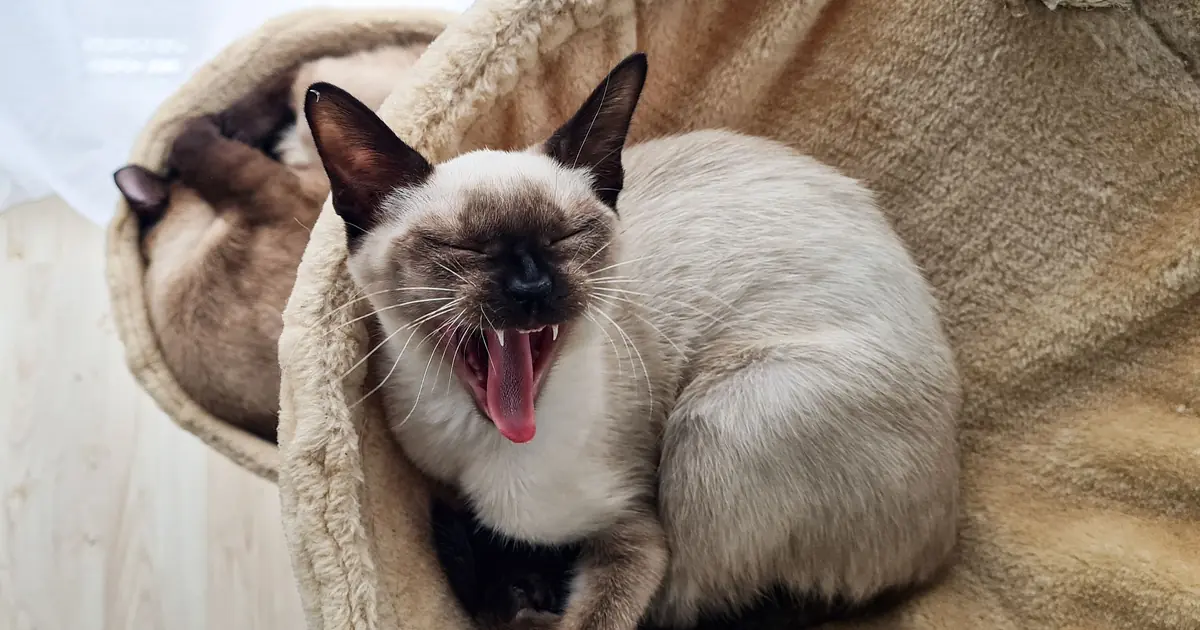
Siamese cats typically outlive the average cat by several years. A mixed-breed domestic cat usually lives 12 to 15 years, while a Siamese commonly reaches 15 to 20.
Purebred status doesn’t automatically mean a shorter life, and Siamese are a good example of that. Their lean, naturally athletic build keeps them from carrying the extra weight that shortens lifespan in heavier breeds. They’re also less prone to the joint and breathing issues that affect flat-faced or large-bodied breeds. If you’re comparing breeds for longevity, Siamese sit near the top of the list alongside Burmese and other slim, active Oriental-type cats.
What Affects How Long a Siamese Cat Lives?
A Siamese cat’s lifespan comes down to six main factors: genetics and bloodline, indoor versus outdoor living, diet and weight, dental care, spay or neuter status, and how consistent you are with vet visits. Stack these in your favor and you’re stacking years onto your cat’s life.
- Genetics and bloodline: Reputable breeders test for hereditary conditions like PRA and heart disease, which reduces the odds of passing along problems that shorten life.
- Indoor versus outdoor living: Indoor Siamese avoid cars, predators, disease, and fights, which is the single biggest lifespan factor you control.
- Diet and healthy weight: A lean, well-fed Siamese has lower odds of diabetes, joint strain, and heart disease.
- Dental care: Siamese are prone to dental disease, and untreated mouth infections can affect the heart and kidneys over time.
- Spay or neuter status: Fixed cats have a lower risk of certain cancers and roam less, which cuts down on injury and disease exposure.
- Regular vet care: Yearly exams (twice yearly for seniors) catch amyloidosis, asthma, and other Siamese-linked conditions while they’re still manageable.
| Factor | Effect on Lifespan |
|---|---|
| Indoor vs. outdoor | Indoor Siamese often live years longer by avoiding traffic, predators, and disease |
| Healthy weight vs. overweight | Lean cats have a lower risk of diabetes, arthritis, and heart strain |
| Dental care vs. neglect | Treated dental disease protects the heart and kidneys long term |
| Regular vet visits vs. skipped visits | Early detection of amyloidosis, asthma, or PRA allows earlier management |
Want the full breakdown of what a healthy Siamese needs to eat and how much? Our guide to Siamese cat diet and feeding needs covers portion sizes and food types by life stage.
Do Indoor Siamese Cats Really Live Longer Than Outdoor Cats?
Yes. Indoor Siamese cats live significantly longer than cats allowed to roam outside, often by several years. Outdoor cats face car strikes, predators, poison, disease from other animals, and fights, none of which an indoor cat has to survive.
Siamese cats are especially well suited to indoor life. They’re intelligent, vocal, and social, which means they actually thrive with the mental stimulation of an indoor setup: window perches, puzzle feeders, and daily play sessions. An outdoor Siamese also runs a higher risk of injury simply because they’re so people-focused and curious, which can lead them into risky situations. Keeping your Siamese indoors isn’t a compromise. It’s genuinely the better setup for this breed.
What Health Conditions Are Linked to Siamese Cats?
Siamese cats are prone to a handful of hereditary and breed-linked conditions, including dental disease, feline asthma, hepatic amyloidosis, progressive retinal atrophy (PRA), and certain cancers. None of these are guaranteed, but knowing about them helps you catch symptoms early.
- Dental disease: Siamese are prone to gum disease and tooth resorption starting at a relatively young age.
- Feline asthma: This breed shows up disproportionately in respiratory studies, with coughing and wheezing as the main red flags.
- Hepatic amyloidosis: A hereditary condition where an abnormal protein builds up in the liver. It’s most documented in Siamese and Oriental Shorthair cats and, according to the Merck Veterinary Manual, can lead to sudden liver rupture and bleeding in affected cats.
- Progressive retinal atrophy (PRA): An inherited group of eye diseases that slowly destroy the retina and cause blindness over one to two years, as explained by International Cat Care. It has no cure, but it isn’t painful, and cats adapt well.
- Certain cancers: Some studies have noted a higher rate of mammary and other tumors in Siamese lines compared to mixed-breed cats.
If you’re buying from a breeder, ask directly whether the parent cats have been tested for PRA and heart conditions. A responsible breeder will have paperwork, not just reassurances.
This article is educational and not a substitute for veterinary diagnosis. If your Siamese shows sudden lethargy, pale gums, labored breathing, or vision changes, get them to a vet the same day. These can be signs of amyloidosis, asthma, or PRA progressing, and early treatment makes a real difference.
How Can You Help Your Siamese Cat Live Longer?
You can add years to your Siamese cat’s life with five habits: feeding a quality diet, keeping them lean, staying on top of dental care, providing daily enrichment, and never skipping vet checkups. None of it is complicated. All of it adds up.
- Feed a quality, age-appropriate diet. Siamese cats are naturally lean and active, so a protein-rich food that matches their life stage keeps them at a healthy weight without guesswork.
- Keep them at a healthy weight. Ask your vet what a lean body condition looks like for your specific cat, and adjust portions rather than eyeballing it.
- Brush their teeth or use dental treats. Even a few brushings a week cuts down on the tartar buildup that leads to costly extractions later.
- Keep them indoors. This alone removes the biggest external risks to a Siamese cat’s life.
- Give them daily play and enrichment. Siamese are smart and bond hard with their people. Bored Siamese get stressed, and stress shows up in the body over time.
- Book annual vet visits (twice yearly after age 7). Bloodwork and physical exams catch amyloidosis, dental disease, and asthma before they become emergencies.
- Spay or neuter your cat. This lowers cancer risk and cuts down on roaming behavior that leads to injury.
Curious whether the breed’s personality actually matches your household? Our guide to whether Siamese cats make good pets walks through what daily life with one is really like.
What Should You Watch For As Your Siamese Cat Reaches Senior Age?
A Siamese cat is generally considered a senior around age 10 to 11, and from that point on, you should watch for weight changes, bad breath, cloudy eyes, and slowing mobility. Catching these early is what turns a manageable condition into a long, comfortable senior life instead of a crisis.
According to the Cornell Feline Health Center, older cats benefit from more frequent vet visits and closer attention to subtle changes, since cats are experts at hiding discomfort. Watch for drinking more water than usual (a possible kidney or thyroid sign), litter box changes, new lumps, or a Siamese suddenly going quiet when they’re normally chatty. Any of these is worth a vet call, not a wait-and-see.
Not sure exactly when your cat crosses into senior territory? Our article on when a cat is considered a senior breaks down the age ranges vets actually use. And if you’re wondering how your Siamese stacks up against cats generally, see our full guide on how long cats typically live.
With attentive senior care, it’s not unusual for a healthy Siamese to sail past 18 or 19 years old, and some documented cases have reached their mid-20s, making them one of the longest-lived domestic cat breeds on record.
Frequently Asked Questions
Q: What is the average lifespan of a Siamese cat?
The average Siamese cat lives 12 to 20 years. Indoor cats with good diets, healthy weight, and regular vet care tend to land on the higher end of that range.
Q: Do Siamese cats live longer than other cat breeds?
Yes, Siamese cats generally outlive the average domestic cat, which typically lives 12 to 15 years. Their lean build and lower rate of extreme physical traits contribute to their longer lifespans.
Q: What is the oldest a Siamese cat has lived?
Some Siamese cats have been documented living into their mid-20s, well beyond the breed’s typical 12 to 20 year range. These cases usually involve indoor cats with lifelong veterinary care and a healthy weight.
Q: Do indoor Siamese cats live longer than outdoor ones?
Yes. Indoor Siamese cats avoid traffic, predators, disease, and fights, which are the leading causes of early death in outdoor cats. Keeping a Siamese indoors is one of the most effective ways to extend their life.
Q: What health problems shorten a Siamese cat’s lifespan?
Dental disease, feline asthma, hepatic amyloidosis, and progressive retinal atrophy (PRA) are the main breed-linked conditions in Siamese cats. Regular vet checkups can catch most of these early enough to manage effectively.
Q: At what age is a Siamese cat considered a senior?
Most vets consider a Siamese cat a senior around age 10 to 11. At this point, twice-yearly vet visits are recommended to catch age-related conditions early.
Q: Does spaying or neutering affect how long a Siamese cat lives?
Yes, spayed and neutered Siamese cats tend to live longer. Fixing your cat lowers the risk of certain cancers and reduces roaming behavior that leads to injury or disease exposure.
Q: How can I help my Siamese cat live a longer life?
Keep your Siamese indoors, feed a quality diet suited to their life stage, maintain a healthy weight, brush their teeth regularly, and schedule annual vet visits. These five habits address the main factors that shorten a Siamese cat’s lifespan.

Hello and welcome to The Ideal Cat!
We are some passionate cat owners from different professions. We love our cats and have a lot of experience in how to care for our pets. We are incredibly excited to share our knowledge, experience, and research with you. So you can take good care of your loving cat. We will answer most of the common questions about owning cats, taking care of them, etc. If you have any question contact with us. Thanks for visiting! Enjoy the content.
