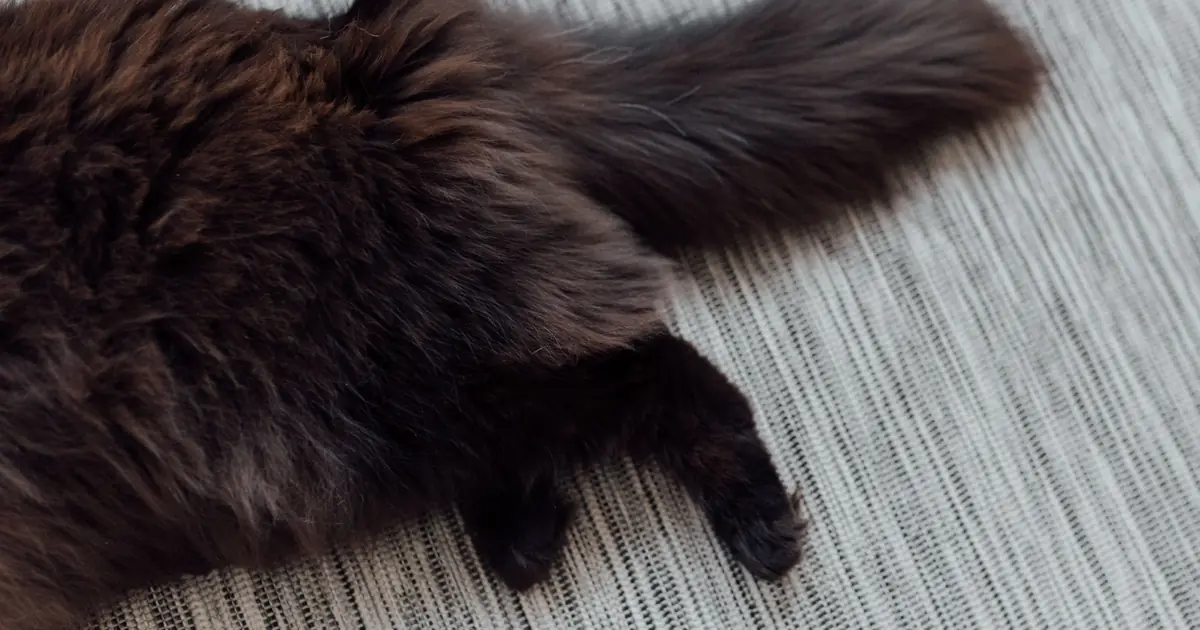
Ever watch your cat’s tail flick while she stares down a bird outside the window? That tail isn’t just along for the ride. It’s doing real work, and your cat is mostly the one steering it.
But not every twitch is a choice. Cats have a mix of deliberate tail moves and quick, almost automatic ones tied straight to their mood. Here’s how to tell the difference, and what it means when a tail stops cooperating altogether.
- A cat’s tail contains roughly 19 to 23 vertebrae, making up about 10% of the cat’s total bones.
- Cats control their tails through a network of muscles, tendons, and nerves that branch off the spinal cord.
- Some tail movements are voluntary and deliberate, like tucking a tail for warmth or wrapping it around a favorite person, while others are involuntary, like a sudden puff or thrash tied to fear or excitement.
- Cats use their tails for balance, especially when jumping, climbing, or walking along narrow ledges.
- A limp, dragging, or suddenly unresponsive tail can signal a nerve or spinal injury and needs a vet’s attention right away.
Do Cats Have Control of Their Tails?
Yes, cats absolutely have control of their tails. The tail is a direct extension of the spine, built from small bones called caudal vertebrae, wrapped in muscle and threaded with nerves that connect straight back to the spinal cord. That setup gives cats the same kind of voluntary control over their tail that they have over a leg or an ear.
Think of the tail as a fifth limb your cat can aim, curl, puff, or hold still on command. A confident cat walking through the house often carries her tail straight up, like a little flag, and that’s a choice, not an accident. At the same time, some tail behavior slips into reflex territory, especially when emotions run high. We’ll get into that split next.
What Is the Anatomy Behind a Cat’s Tail Control?
A cat’s tail control comes down to bones, muscles, and nerves working together as one long, flexible extension of the spine. The tail typically has 19 to 23 caudal vertebrae, decreasing in size from the base to the tip, according to VCA Animal Hospitals. That’s close to 10% of a cat’s entire skeleton living in that one appendage.
Layered around those vertebrae are several sets of muscles, including ones that pull the tail up, down, and side to side, plus muscles that let a cat curl the tip or fluff it out. Nerves branching from the lower spinal cord run the length of the tail, carrying signals both ways: commands from the brain telling the tail to move, and sensory feedback telling the brain where the tail is in space. This is also why cats are so flexible overall; the spine and tail share a similar design built for a wide range of motion.
Are Tail Movements Voluntary or Involuntary?
Cat tail movements are a mix of both. A slow, deliberate swish while watching a toy is voluntary, something your cat is choosing to do, while a sudden puff or violent thrash when startled is closer to a reflex tied to a rush of adrenaline.
Voluntary movements tend to look smooth and controlled: a gentle curl around your leg, a raised tail while trotting over to greet you, or a tip that flicks slowly while your cat decides whether to pounce. Involuntary or reflexive movements look faster and less composed: a full-body puff when a dog barges in, a rapid low-to-the-ground thrash right before a swat, or a quick shiver-twitch when your cat is startled awake. Both types come from the same anatomy, but they’re triggered differently, one from conscious intent and one from the nervous system’s fast emotional response.
What Do Cats Use Tail Control For?
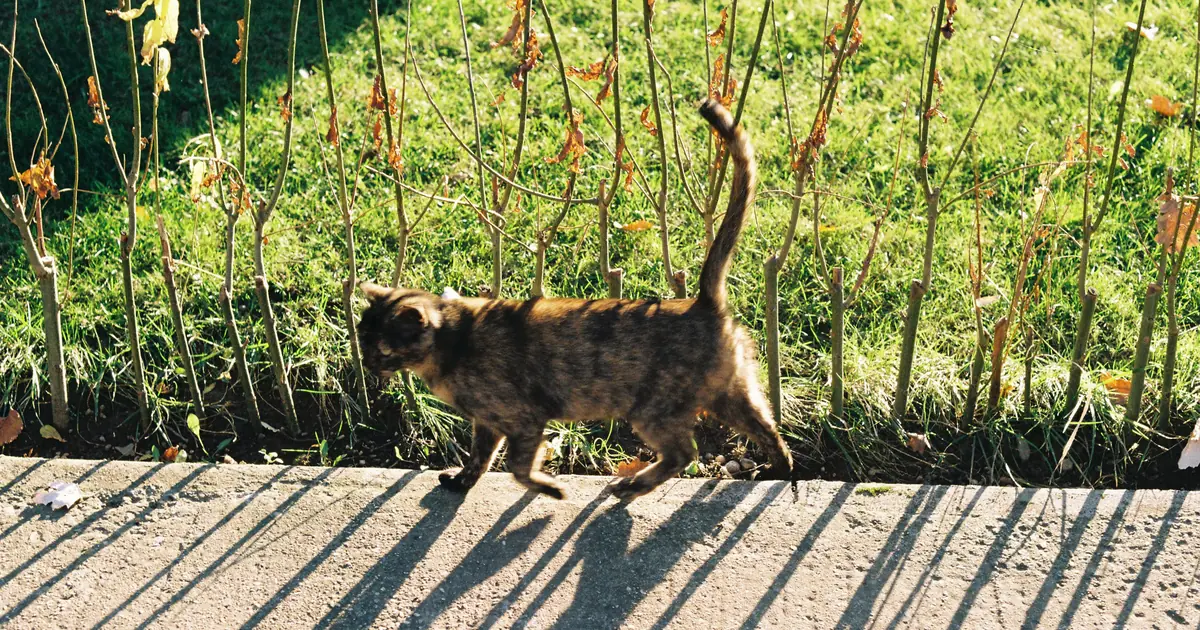
Cats use tail control mainly for balance and for talking to the world around them without saying a word. The tail acts like a built-in counterweight, shifting to keep a cat steady while walking a fence rail, making a tight turn mid-run, or sticking a landing after a big jump.
Balance is only half the story, though. According to International Cat Care, tail position and movement are some of the clearest signals in cat body language. An upright tail with a slight curl at the tip usually means a friendly, confident cat. A low, tucked tail often points to worry or discomfort. A tail wrapped loosely around your arm or another cat can be a sign of affection and trust.
Can a Cat Move Its Tail on Purpose to “Talk”?
Yes, cats can and do move their tails on purpose specifically to communicate. A slow, exaggerated tail wag from a relaxed cat is often a deliberate signal, not an accident, and it usually means something different than a dog’s happy wag.
If you’ve ever wondered what it means when a cat wags its tail, the short version is: it depends on the speed and context. A gentle side-to-side sway can mean your cat is focused or mildly annoyed, while a fast, whip-like wag usually means irritation is building. Some cats also learn that a tail slap gets your attention fast, which is part of why cats slap you with their tail when they want you to notice them, back off, or hurry up with dinner.
Tail Movement Cheat Sheet
| Tail Movement | Voluntary or Reflex | What It Usually Means |
|---|---|---|
| Slow swish or sway | Voluntary | Focused, mildly agitated, or deciding whether to pounce |
| Puffed up (bottlebrush) | Reflex | Fear or a sudden fright, making the cat look bigger |
| Fast thrash or whip | Mostly reflex, escalating | Frustration or anger building toward a swat or bite |
| Wrapped around you or another cat | Voluntary | Affection, comfort, or trust |
| Limp or unmoving | Neither, loss of control | Possible injury or nerve damage, needs a vet check |
What Do Tail Injuries Do to a Cat’s Tail Control?
Tail injuries can partially or fully take away a cat’s control over that part of the body, depending on how much nerve damage occurred. The most serious of these is called a tail-pull injury, or sacrocaudal fracture-luxation, and it happens when a cat’s tail gets caught, stepped on, slammed in a door, or yanked hard enough to stretch or tear the nerves at the base of the spine.
Because the nerves controlling the tail sit so close to the nerves controlling the bladder and bowels, a bad tail-pull injury can cause more than just a limp tail. Cats with this kind of nerve damage sometimes lose bladder or bowel control too, a condition vets call fecal or urinary incontinence. PetMD notes that fractures near the base of the tail carry the highest risk of nerve damage, while breaks near the tip usually heal fine on their own with just a small kink left behind.
When Does a Limp or Unmoving Tail Signal a Problem?
A tail that suddenly hangs limp, drags on the ground, or won’t respond at all is a sign something is wrong, and it’s worth a same-day or next-day vet visit. This is different from a tail that’s simply low because a cat is nervous; a truly limp tail has lost muscle tone and movement, not just position.
Watch for these red flags alongside a limp tail: pain when the base of the tail is touched, dragging the tail while walking, sudden accidents outside the litter box, or a tail that hangs at an odd angle after an obvious incident like getting caught in a door. Any of these point toward possible nerve or spinal injury, and the sooner a vet examines your cat, the better the chances of managing the damage.
A quick, important note: this article is educational, not a substitute for veterinary care. A cat with a suddenly limp, dragging, or unresponsive tail, especially paired with litter box accidents, should see a licensed veterinarian promptly. Only a vet exam, and often imaging, can tell whether nerves are bruised, stretched, or torn, and what recovery might look like.
Frequently Asked Questions
Q: Do cats have full control over their tails?
Cats have strong, deliberate control over most tail movements, since the tail is packed with its own muscles and nerves connected to the spine. Some fast reactions, like a puff of fear, are more reflexive, but the majority of everyday tail positioning is voluntary.
Q: How many bones are in a cat’s tail?
A cat’s tail typically has 19 to 23 small bones called caudal vertebrae. That’s roughly 10% of the cat’s entire skeleton concentrated in the tail alone.
Q: Can a cat lose control of its tail?
Yes, a cat can lose control of its tail if the nerves at the base of the spine are damaged, most often from a tail-pull injury caused by getting the tail caught or yanked. This can leave the tail limp or dragging and sometimes affects bladder or bowel control too.
Q: Why does my cat’s tail twitch when I pet her?
A twitching tail during petting is usually a sign your cat’s patience is running low or she’s overstimulated, not a random reflex with no meaning. It’s a good cue to stop or switch to a spot she likes better, like the head or chin, before things escalate to a nip.
Q: Do cats wag their tails like dogs?
Cats do move their tails side to side, but it means something different than a dog’s happy wag. A slow cat tail sway often signals focus or mild irritation, while a fast wag usually points to frustration building.
Q: Can cats live without a tail?
Yes, cats can live full, active lives without a tail, as seen in naturally tailless breeds like the Manx. They adjust their balance using their spine, legs, and inner ear instead, though very sudden tail loss from injury needs proper vet care to heal safely.
Q: What does it mean when a cat’s tail is puffed up?
A puffed up, or piloerected, tail means a cat is startled, scared, or feeling threatened, and the extra fluff is an automatic reflex meant to make her look bigger to whatever spooked her. It’s an involuntary response, not a deliberate signal like a slow swish.
Q: Is a limp tail always an emergency?
A sudden limp tail isn’t always a life-threatening emergency, but it does need prompt veterinary attention since it can point to nerve or spinal damage. If it’s paired with litter box accidents or obvious pain, treat it as urgent and get your cat seen right away.

Hello and welcome to The Ideal Cat!
We are some passionate cat owners from different professions. We love our cats and have a lot of experience in how to care for our pets. We are incredibly excited to share our knowledge, experience, and research with you. So you can take good care of your loving cat. We will answer most of the common questions about owning cats, taking care of them, etc. If you have any question contact with us. Thanks for visiting! Enjoy the content.
