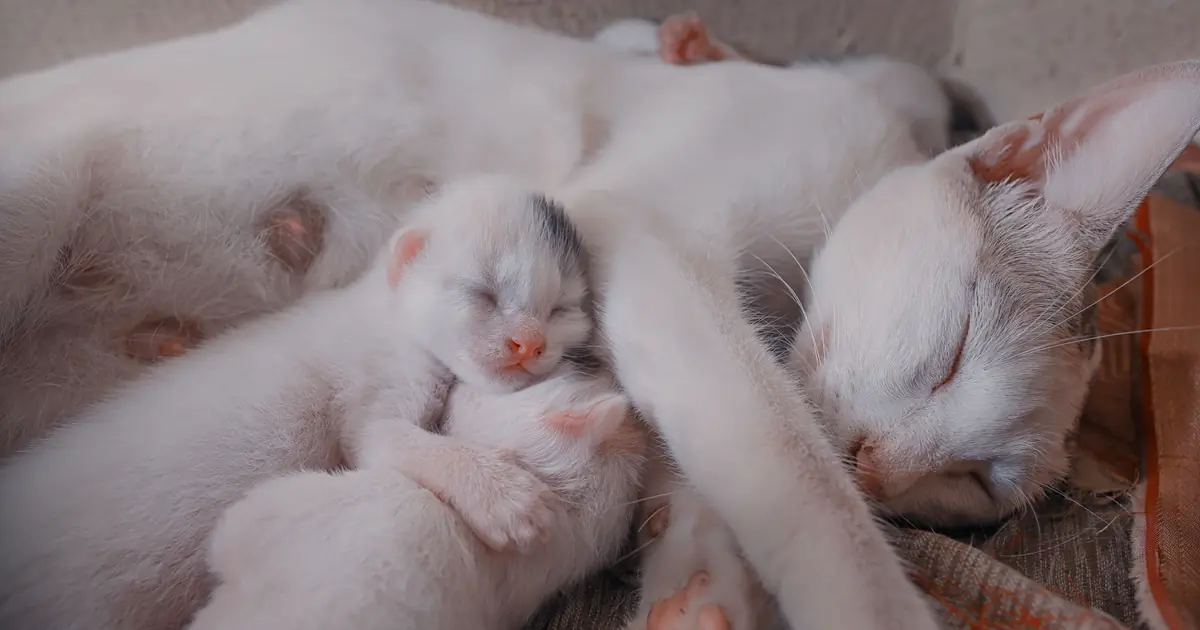
Picture this. It’s the middle of the night, your pregnant cat has disappeared into her nesting box, and suddenly the house fills with these long, mournful yowls. Your heart drops. Is she okay? Is something wrong? You hover outside the door, phone in hand, ready to call an emergency vet.
Take a breath. So do cats make noise when giving birth? Yes, and it’s one of the most normal parts of the whole event. Plenty of queens vocalize through labor, from soft chirps to full-on operatic yowls. The trick is learning the difference between the noise of hard work and the noise of a birth that has actually stalled. That’s exactly what we’ll walk through here.
- Vocalizing during labor is normal for cats; queens commonly meow, yowl, cry, chirp, growl, or trill through contractions.
- Some cats are loud during birth and some stay almost silent, and both patterns are considered normal.
- The first kitten should arrive within about 30 minutes of hard, straining contractions, with later kittens roughly 10 to 60 minutes apart.
- Around 94 to 97% of cat births happen naturally, while roughly 3 to 6% run into complications that need a vet.
- Loud crying combined with 20 to 30 minutes of straining and no kitten, or dark discharge with no kitten, is a reason to call the vet now.
Quick note before we dig in: this article is here to help you understand what’s happening, not to replace your vet. If anything about the birth worries you, call your veterinarian. Cats are usually great at this, but a difficult birth is a real emergency.
Do cats make noise when giving birth?
Yes, cats frequently make noise when giving birth, and most of that noise is completely normal. During labor a queen may meow, cry, yowl, chirp, trill, or even growl as her contractions build and she pushes each kitten out. These sounds are her way of coping with the effort and the pressure, much like the grunts and groans people make during hard physical work.
Birth is intense. Contractions squeeze, kittens move through the birth canal, and your cat is working hard. A little drama is expected. If you’ve followed how long a cat is pregnant and you’re now near day 63 to 65, some vocalizing on delivery day fits right into the normal picture.
What sounds are normal during cat labor?
Normal cat labor sounds shift as the birth moves through its stages. In early labor, when your cat is nesting and pacing, she’s often quiet or softly vocal, with gentle purring, low mews, or chirps. This first stage can last 6 to 12 hours while the kittens line up and her body gets ready.
Once active labor kicks in, the volume can climb. During strong contractions and pushing, many queens let out sharper cries, repeated meows, or a loud yowl, especially as a kitten passes through the birth canal. You may also hear grunting as she bears down. None of that is a red flag on its own.
- Purring: Cats often purr to self-soothe during labor, so purring between contractions is a good sign, not a worrying one.
- Chirps and trills: Soft, chatty sounds, often aimed at you or at the first kittens.
- Meowing and crying: Louder during a contraction, then easing off between pushes.
- Growling or low moaning: A response to pressure and effort, common right as a kitten is being delivered.
Why do cats vocalize when giving birth?
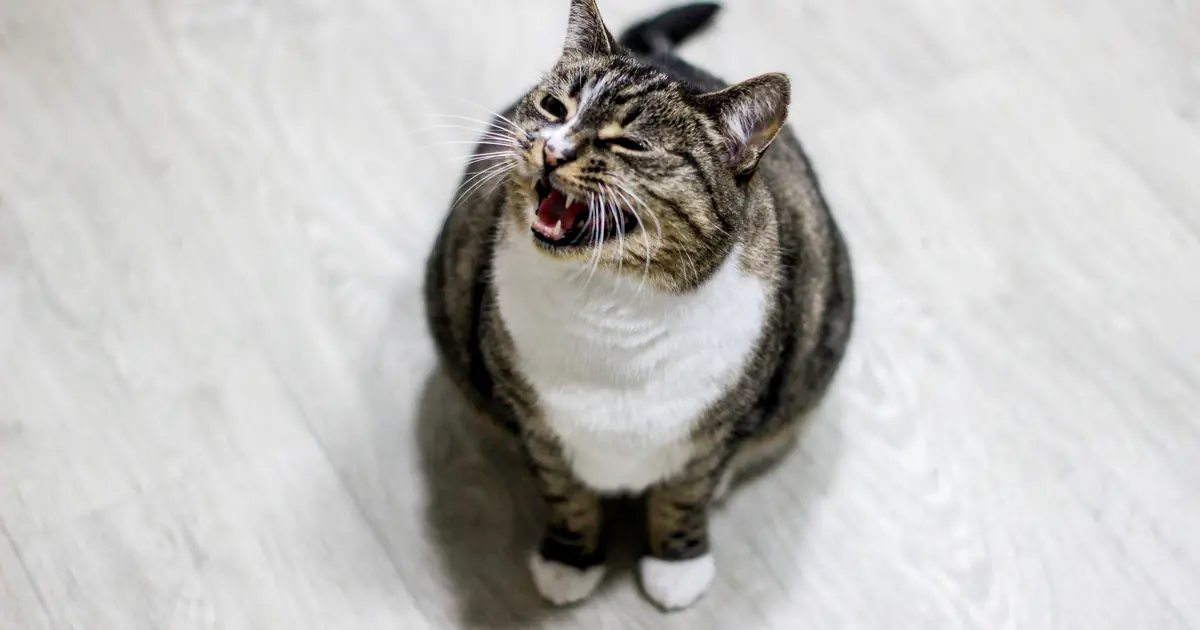
Cats vocalize during birth for a few simple reasons, and none of them mean she’s failing at the job. The biggest driver is plain physical effort. Contractions are powerful, and sound is a natural release valve for that strain, the same way a tennis player grunts on a serve.
Beyond the effort, some queens call out for comfort and reassurance. A cat who trusts you may meow to keep you close, and a first-time mom may sound more anxious simply because the whole thing is new to her. Hormones and adrenaline are surging too, which can crank up how vocal and restless she seems. For a deeper look at feline vocal behavior and body language around big life events, VCA Animal Hospitals has solid, vet-reviewed background.
Are quiet cats during birth normal too?
Yes, a quiet birth is just as normal as a loud one. Plenty of queens deliver a whole litter with barely a sound, slipping off to a hidden corner and getting on with it while you sleep. A silent, calm cat is not a sign that something is wrong, and it doesn’t mean she’s in less discomfort than a noisy cat.
Personality plays a huge part here. Some cats are naturally chatty about everything, from their dinner to their favorite sunny spot, so of course they narrate their labor too. Others are stoic and private. Honestly, the amount of noise tells you very little on its own. What matters far more is her progress: is she producing kittens, and is she doing it in a reasonable timeframe? That’s the real signal, and it’s worth reading up on how many kittens to expect so you know roughly how long she’ll be at it.
When does birth noise signal a problem?
Birth noise signals a problem when it comes with obvious distress and stalled labor rather than steady progress. The sound itself is rarely the emergency; the sound plus the wrong pattern is what should get your attention. A cat crying out in what looks like real pain, then straining hard for 20 to 30 minutes with no kitten appearing, may be dealing with dystocia, which means a difficult birth.
Dystocia is uncommon but serious. It happens in roughly 3 to 6% of feline births, and it can put both mom and kittens at risk, so it counts as a medical emergency. The table below sorts the normal effort noises from the distress signs that mean it’s time to pick up the phone.
| Normal labor vocalizing | Distress signs (call the vet) |
|---|---|
| Yowls or cries during a contraction, then settles between pushes | Constant crying in obvious pain with no let-up |
| Grunting while pushing, kittens arriving on schedule | Hard straining for 20 to 30 minutes and no kitten |
| Purring and chirping between kittens | Crying while weak, limp, or collapsed |
| Vocal but still alert, focused, and mothering | Crying with dark, green, bloody, or foul discharge and no kitten |
| Noise easing as the litter is delivered | A kitten visibly stuck in the birth canal |
How can you support a cat giving birth?
The best way to support a cat giving birth is to stay calm, keep the room quiet, and mostly leave her alone. Set up a warm, private nesting box in a low-traffic spot days ahead of her due date, line it with soft towels, and let her get comfortable there. Most queens want dim light, peace, and space, not an audience.
- Keep the environment calm. Lower the lights, hush the household, and keep other pets and curious kids out of the room.
- Stay nearby but hands-off. Watch quietly from a distance. Your presence can reassure her, but constant handling can stress her out and even pause labor.
- Have supplies ready. Clean towels, your vet’s number, and an emergency clinic number within reach beats scrambling later.
- Let her handle the kittens. She’ll usually clean each one, chew the cord, and start nursing on her own. Step in only if she clearly ignores a newborn that isn’t breathing.
- Track timing and count. Note when each kitten arrives so you can spot a stall early, and count placentas against kittens.
For a full walk-through of the birthing process, the folks at International Cat Care offer clear, welfare-focused guidance worth bookmarking.
When should you call the vet urgently?
Call your vet urgently if the noise comes with any sign that labor has stalled or that your cat is in real trouble. Trust your gut here. If something feels wrong, a phone call costs you nothing and can save lives. The Cornell Feline Health Center is a reliable place to read up on feline reproductive health, but a live vet is who you want during an active problem.
Get help right away if you see any of these red flags:
- Strong, straining contractions for 20 to 30 minutes with no kitten appearing.
- More than 1 to 2 hours between kittens while she’s still straining or clearly distressed.
- Crying out in obvious, unrelenting pain rather than easing between contractions.
- Green, dark, bloody, or foul-smelling discharge before the first kitten arrives.
- A kitten visibly stuck in the birth canal, or one only partly out.
- Extreme weakness, collapse, heavy bleeding, or nonstop vomiting.
- Stage one labor dragging past 24 hours with no kitten.
Once the kittens are here, keep an eye on mom’s recovery too, since some bleeding and discharge afterward is normal for a while. You can read what’s typical in our guide to how long cats bleed after giving birth. And if you’d rather not go through birthing season again, learning what to do when your cat is in heat and talking spaying with your vet is the kindest long-term move.
Frequently asked questions
Q: Is it normal for a cat to cry loudly during labor?
Yes, loud crying during labor is normal for many cats. Queens often yowl or cry during strong contractions and ease off between pushes. Loud noise only becomes a concern when it comes with hard straining for over 20 to 30 minutes and no kitten, or with obvious pain and weakness.
Q: Why is my cat growling while giving birth?
A cat growling during birth is usually responding to the pressure and effort of a contraction, especially as a kitten passes through the birth canal. It’s a normal effort sound. Growling only worries vets when it’s paired with distress signs like prolonged straining, weakness, or a stuck kitten.
Q: Do cats give birth silently?
Yes, some cats give birth almost silently. A quiet, calm delivery is just as normal as a noisy one and often comes down to personality. A silent birth doesn’t mean your cat is in less discomfort. What matters most is steady progress, meaning kittens arriving in a reasonable timeframe.
Q: How long does cat labor take?
Early labor (nesting and mild contractions) can last 6 to 12 hours. Once active labor starts, the first kitten should arrive within about 30 minutes of hard straining, and later kittens follow roughly 10 to 60 minutes apart. Straining for 20 to 30 minutes with no kitten warrants a vet call.
Q: Should I stay with my cat while she gives birth?
You can stay nearby, but keep your distance and stay hands-off. Most queens prefer a quiet, private, dimly lit space. Watch quietly so you can spot problems and time the kittens, but avoid constant handling, since too much fussing can stress her and even slow labor down.
Q: What does distress sound like versus normal birth noise?
Normal birth noise rises during a contraction, then settles between pushes, and comes with kittens arriving on schedule. Distress sounds constant and pained, with no let-up, and pairs with stalled labor, weakness, or discharge without a kitten. The pattern matters more than the volume.
Q: Do first-time mother cats make more noise?
First-time queens can seem more vocal and anxious simply because birth is new to them. Extra meowing or restlessness in a first-timer is common and usually normal. Still, judge her by her progress and behavior, not the noise alone, and call your vet if labor stalls.
Q: How common are birth complications in cats?
Birth complications are uncommon in cats. Roughly 94 to 97% of feline births happen naturally without help, while about 3 to 6%, or around one in twenty, run into a complication like dystocia that needs veterinary care. That’s why knowing the red flags matters.

Hello and welcome to The Ideal Cat!
We are some passionate cat owners from different professions. We love our cats and have a lot of experience in how to care for our pets. We are incredibly excited to share our knowledge, experience, and research with you. So you can take good care of your loving cat. We will answer most of the common questions about owning cats, taking care of them, etc. If you have any question contact with us. Thanks for visiting! Enjoy the content.
