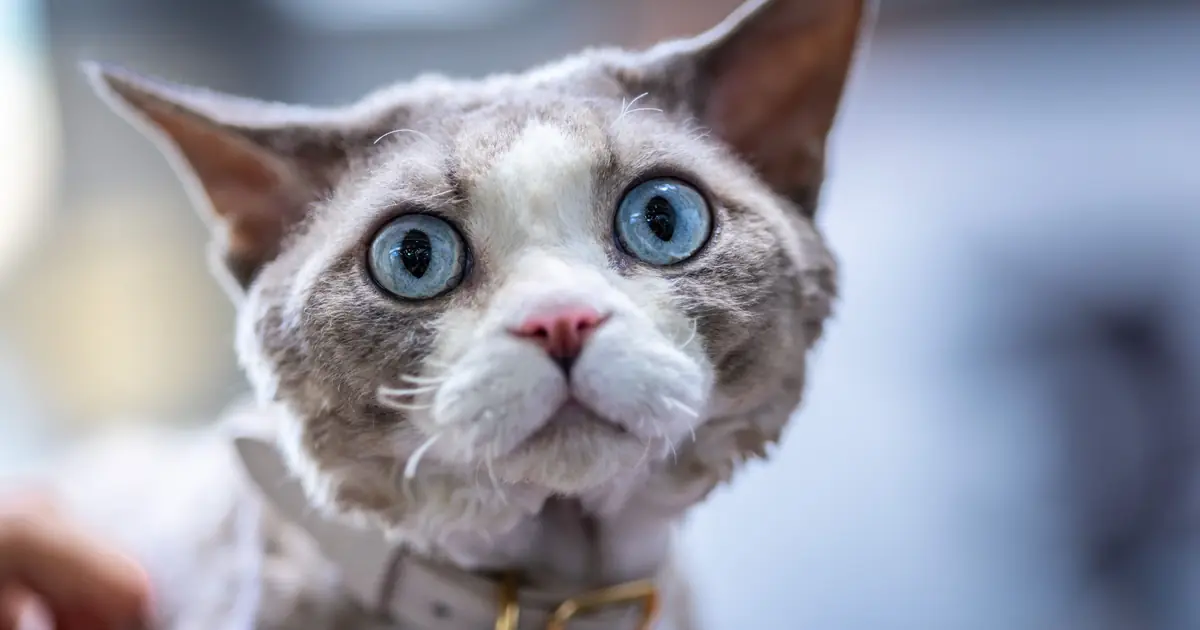
Picture this. The vacuum roars to life, a car backfires outside, or the neighbor’s dog barges through the door. Your cat bolts under the bed, and then you spot it: a little puddle right where she was sitting. If you’ve ever wondered why do cats pee when scared, here’s the short version. It isn’t naughtiness, and it definitely isn’t revenge. It’s a body doing exactly what a frightened body does.
Cats are wired for survival. When terror hits, adrenaline floods the system and the bladder muscles can let go on their own. Your cat has zero say in it. That changes how you should respond, because the fix is comfort and calm, not a scolding.
- Fear-induced peeing is an involuntary fight-or-flight reflex, not deliberate behavior or spite.
- Common triggers include fireworks, vacuums, dogs, strangers, rough handling, and vet visits.
- Kittens and senior cats have weaker bladder control and are more prone to fear accidents.
- Chronic stress can cause a real urinary disease called feline idiopathic cystitis (FIC).
- Punishment backfires and raises stress, so never scold a cat for fear peeing.
Why do cats pee when they get scared?
Cats pee when scared because extreme fear activates the fight-or-flight response, and the surge of stress hormones can cause the bladder to empty involuntarily. This is a reflex, not a choice your cat makes. In a moment of terror, the body prioritizes escape and survival, and holding urine simply isn’t a priority. It’s also why a scared cat sometimes pees on you while you are holding her.
Under enough fear, bladder control slips for many animals, and cats are no exception. A sudden startle or a full-blown panic can both do it. Your cat isn’t emptying her bladder to make a point. She’s reacting the way her wild ancestors did when a predator appeared out of nowhere.
Two things make it more likely. Kittens and older cats have weaker bladder muscles, so they leak more easily under stress. And a cat who’s already anxious sits closer to the edge, so it takes less to tip her over. Learning to read the earliest signs of stress in cats, like flattened ears, a tucked tail, or crouching low, helps you step in before fear ever reaches puddle level.
What triggers fear peeing in cats?
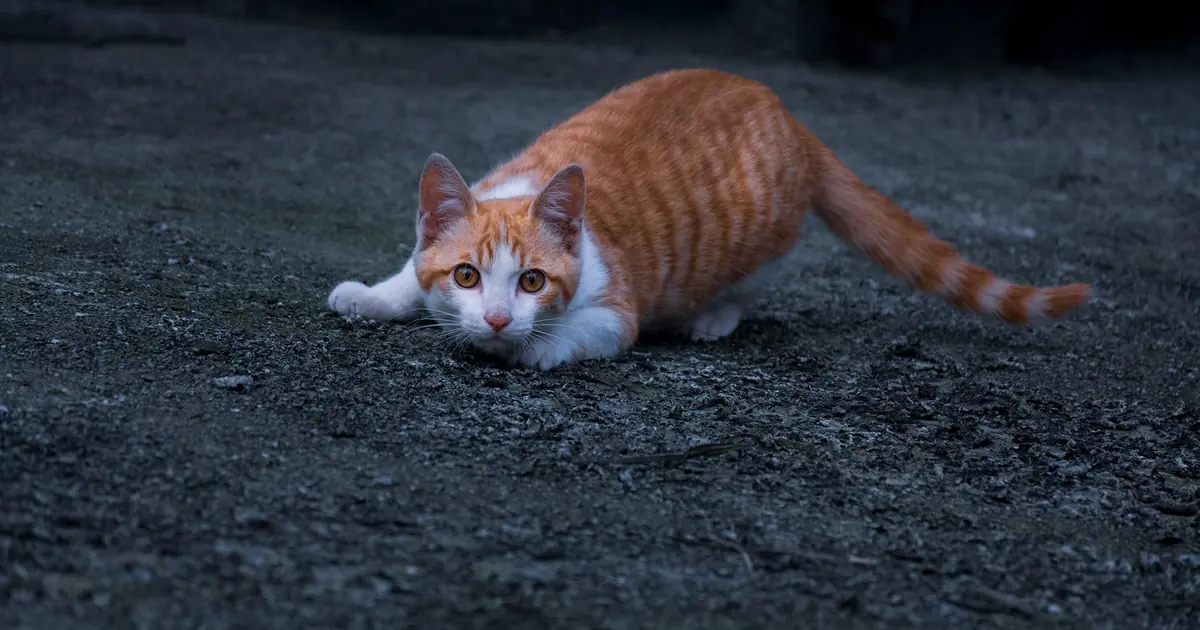
Fear peeing is triggered by anything that overwhelms a cat’s sense of safety, from sudden loud noises to a threatening encounter. The trigger is usually fast, intense, and out of your cat’s control. Cats feel safest when their world is predictable, so a jolt to that predictability is often the culprit.
Here are the usual suspects behind a scared-cat accident:
- Loud, sudden noises: fireworks, thunderstorms, the vacuum, a slammed door, or a car backfiring.
- A scary encounter: a barking dog, an unfamiliar person, or a hissing standoff with another cat.
- Being cornered or handled roughly: grabbed for medicine, pulled out from a hiding spot, or held down when she wants down.
- Vet visits and car rides: the carrier, the strange smells, and the exam table are a lot for one small cat.
- Ongoing household stress: a new baby, a move, construction noise, or tension between resident cats.
In multi-cat homes, there’s a social layer too. A frightened cat sometimes pees during a confrontation as a submissive signal, a way of saying “I’m not a threat, please back off.” That’s different from spraying to mark territory, though both can look similar on your floor. The ASPCA has a helpful breakdown of the common behavior issues behind cat accidents if you want to tell the two apart.
Is my cat peeing on purpose or out of spite?
No, your cat is not peeing out of spite, and cats don’t do revenge. Fear peeing is an automatic physical reaction, and even deliberate out-of-box peeing is a signal of stress or a medical problem, never a grudge. Cats simply don’t hold resentment and plot payback the way the “spite” myth suggests.
This matters because the spite myth leads straight to punishment, and punishment is the worst possible move. Yelling, rubbing her nose in it, or spraying her with water only teaches your cat that you’re one more scary, unpredictable thing to fear. That raises her baseline stress and makes future accidents more likely, not less.
If your cat is peeing outside the box in calmer moments too, that’s worth investigating rather than blaming. There’s usually a reason behind a cat peeing everywhere, and it’s almost always solvable once you find it. Approach it as detective work, not discipline.
Can stress and fear cause a real urinary problem?
Yes, stress can cause a genuine urinary illness in cats called feline idiopathic cystitis (FIC), a painful inflammation of the bladder linked to an exaggerated stress response. FIC is one of the most common reasons cats pee outside the box, and stress is its main driver. So fear doesn’t just cause a one-off accident, it can trigger real disease over time.
Cats with FIC tend to strain to urinate, pee small amounts often, cry in the litter box, or leave blood-tinged urine around the house. According to International Cat Care, cats prone to FIC have an overactive stress response, and flare-ups often follow changes like a move, a new pet, or ongoing household tension. A urinary tract infection (UTI) can cause similar signs but comes from bacteria instead.
Here’s the important part. You can’t tell fear peeing, FIC, and a UTI apart just by looking at the puddle. That’s why frequent, unexplained, or painful-looking accidents always deserve a vet visit. In male cats especially, straining with little or no urine can signal a life-threatening blockage that needs emergency care the same day.
How do I stop my cat from peeing when scared?
You stop fear peeing by lowering your cat’s overall stress and removing or softening the triggers, not by correcting the accident. Since the peeing is involuntary, the only real fix is helping your cat feel safe. Build a calmer world, and the accidents fade on their own.
Here’s what actually helps:
- Give her guaranteed safe spaces. A high perch, a covered bed, or a quiet room she can always retreat to. Never drag her out of a hiding spot.
- Soften the big triggers. During fireworks or a vacuum session, close the blinds, turn on soft background noise, and keep her in her safe room.
- Handle her gently and on her terms. Let her come to you. Skip the grabbing, cornering, and forced cuddles when she’s tense.
- Try calming pheromones. A plug-in that mimics a cat’s natural facial pheromones can take the edge off a jumpy household. A good cat pheromone diffuser is an easy, low-effort place to start.
- Keep routines steady. Feed, play, and clean at consistent times. Predictability is deeply reassuring to cats.
- Add litter box options. More boxes, in quiet low-traffic spots, give an anxious cat a safe place to go.
For a scared cat who’s already worked up, slow, quiet reassurance beats any quick fix. Our guide on how to calm a scared cat walks through the moment-to-moment moves that help her settle.
How should I clean up so my cat doesn’t pee there again?
Clean fear-pee accidents with an enzyme-based cleaner, because ordinary cleaners leave scent markers that pull your cat back to the same spot. Cats have a powerful sense of smell, and any lingering urine odor reads as an invitation to go there again. Proper cleanup is half the battle in preventing repeat accidents.
Skip the ammonia-based products entirely, since ammonia smells like urine to a cat and makes the problem worse. Blot up as much as you can first, then saturate the area with an enzyme cleaner and let it work fully before drying. Our step-by-step on getting rid of cat pee smell covers carpet, bedding, and hard floors so nothing gets missed.
| Do this | Not this |
|---|---|
| Comfort and give a safe space | Yell, scold, or “rub her nose in it” |
| Use an enzyme cleaner on accidents | Use ammonia-based cleaners |
| Remove or soften the trigger | Force her out of hiding |
| Vet check for frequent accidents | Assume it’s spite and ignore it |
| Keep routines calm and predictable | Punish after the fact |
When should you see a vet?
This article is educational and isn’t a substitute for veterinary care. See a vet if fear peeing becomes frequent, if your cat strains, cries, or passes blood, or if accidents keep happening with no obvious scare behind them. Those signs point to a possible UTI or feline idiopathic cystitis rather than a one-time fright. A male cat straining with little or no urine is a same-day emergency, since a blockage can turn fatal fast. When in doubt, the Cornell Feline Health Center is a trusted place to learn more, but your own vet is always the right first call.
Frequently asked questions
Q: Do cats pee when they’re scared on purpose?
No. Fear peeing is an involuntary reflex triggered by the fight-or-flight response, so your cat has no control over it. Stress hormones cause the bladder to release automatically during intense fear or a sudden startle.
Q: Should I punish my cat for peeing when scared?
Never. Punishment increases your cat’s stress and makes future accidents more likely, since fear peeing isn’t a choice. Comfort her, remove the trigger, and clean the spot with an enzyme cleaner instead.
Q: Can stress alone cause a cat to pee outside the litter box?
Yes. Chronic stress can trigger feline idiopathic cystitis (FIC), a painful bladder inflammation that causes cats to pee outside the box. FIC is one of the most common causes of inappropriate urination in cats.
Q: Why does my kitten pee when frightened more than my adult cat?
Kittens have weaker bladder control than adult cats, so they leak more easily under stress or excitement. Most kittens grow out of fear peeing as their bladder muscles and confidence develop.
Q: How can I tell fear peeing apart from a UTI?
You often can’t tell them apart by sight alone. Fear peeing usually follows an obvious scare, while a UTI or cystitis brings straining, frequent small amounts, crying, or blood in the urine. A vet check with a urine test is the only way to know for sure.
Q: Do calming pheromone diffusers actually help scared cats?
They can help many cats. Pheromone diffusers release a synthetic copy of a cat’s natural calming facial pheromones, which can lower anxiety in a stressful home. They work best alongside safe spaces, steady routines, and fewer triggers.
Q: My cat peed on me when I picked her up. Why?
Being lifted or held when frightened can trigger involuntary bladder release through the fight-or-flight response. Set her down gently, give her space, and let her approach you on her own terms next time.
Q: Will fear peeing go away on its own?
Often yes, once you reduce the fear and remove the triggers behind it. If accidents keep happening despite a calmer environment, see your vet to rule out feline idiopathic cystitis or a urinary tract infection.

Hello and welcome to The Ideal Cat!
We are some passionate cat owners from different professions. We love our cats and have a lot of experience in how to care for our pets. We are incredibly excited to share our knowledge, experience, and research with you. So you can take good care of your loving cat. We will answer most of the common questions about owning cats, taking care of them, etc. If you have any question contact with us. Thanks for visiting! Enjoy the content.
