
Cats spend a huge chunk of their day grooming, and that busy little tongue is a surprisingly sophisticated cleaning tool. Here’s exactly how a cat keeps itself spotless with nothing but a lick.
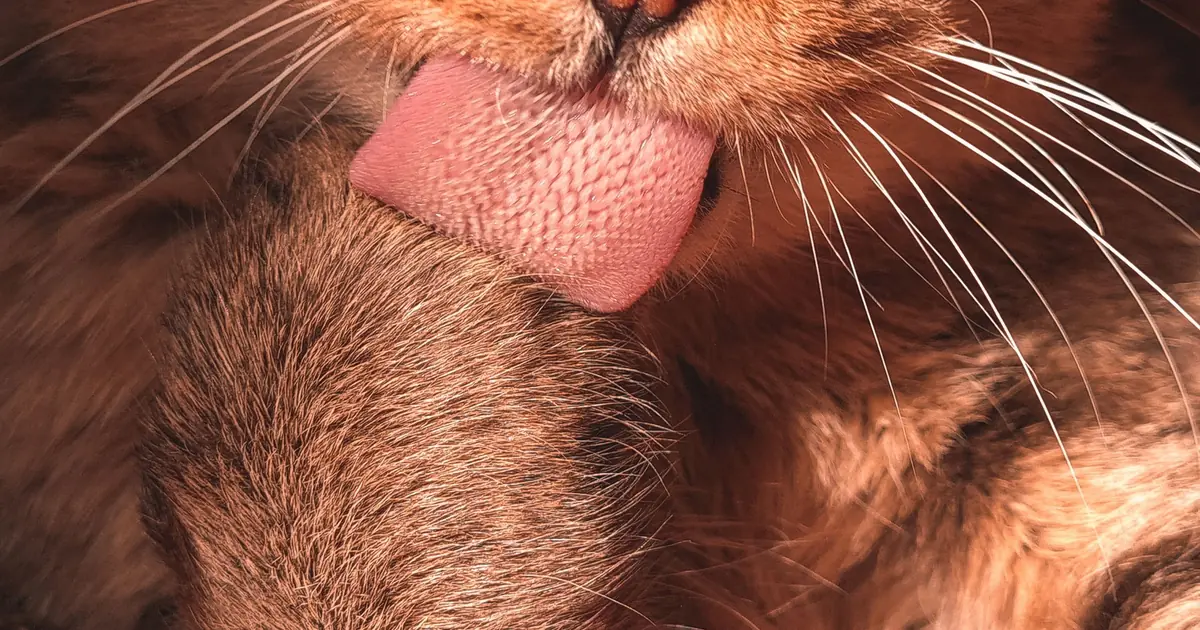
- A cat’s tongue is covered in tiny barbed spines (papillae) that work like a built-in comb.
- Licking removes dirt, loose fur, and debris, and spreads cleansing saliva and skin oils.
- Grooming keeps the coat clean, smooth, waterproofed, and free of tangles.
- Cats spend up to about half their waking hours grooming, it’s a major daily activity.
- A sudden drop in grooming, or over-grooming, can signal a health or stress problem.
How do cats clean themselves by licking?
Cats clean themselves by licking their fur with a specially designed rough tongue. The surface is covered in hundreds of tiny, backward-facing, hook-shaped spines called papillae, made of keratin (like our nails). As the cat licks, these spines act like a comb, snagging loose hair, dirt, and debris, distributing saliva to lift away grime, and spreading the skin’s natural oils through the coat. The result is a clean, smooth, conditioned coat, achieved entirely with the tongue, no water needed.
What does a cat’s barbed tongue do?
A cat’s barbed tongue is the key tool that makes self-cleaning so effective. The papillae are curved backward and even slightly scooped, so they hold and channel saliva deep into the fur and drag out loose hair and dirt in one motion. This is why grooming feels sandpapery when a cat licks you. The design also helps cats remove tangles and parasites and keeps the coat lying neatly. Because the tongue is so efficient (and cats swallow the hair they remove), grooming also leads to hairballs, a normal byproduct of all that licking.
Why do cats groom so much?
Cats groom constantly because licking serves several important purposes beyond cleanliness. The main ones:
- Cleaning: removing dirt, food, loose fur, and parasites.
- Coat health: spreading natural oils to condition and waterproof the fur.
- Temperature control: saliva evaporates to help cool the cat in heat.
- Comfort and stress relief: grooming is soothing and self-calming.
- Wound care and circulation: licking cleans minor scrapes and stimulates skin.
Cats also groom each other and even lick their people as bonding, related to why cats lick your face, and impressively, their systems handle all that self-licking safely, explained in how cats don’t get sick from licking themselves.
How much time do cats spend grooming?
Cats spend a remarkable amount of time grooming, up to roughly 30 to 50 percent of their waking hours. This dedication keeps their coat in top condition and is deeply instinctive, starting when a mother cat grooms her kittens. Most of this grooming happens in little sessions throughout the day, often after eating, napping, or using the litter box. So if it seems like your cat is always licking itself, that’s completely normal, meticulous grooming is a hallmark of a healthy, content cat.
When is grooming a concern?
Grooming becomes a concern when it changes noticeably, either too little or too much. A cat that suddenly stops grooming and looks unkempt, greasy, or matted may be unwell, in pain, overweight, or stressed, since illness often reduces grooming. On the flip side, over-grooming, licking so much it causes bald patches, redness, or sores, can signal allergies, parasites, skin problems, pain, or anxiety. Either extreme warrants a vet visit. This article is educational and not a substitute for veterinary care. For excessive licking, see why cats over-groom, and for post-activity grooming, why cats clean themselves after eating. Trusted grooming and skin guidance comes from the ASPCA and Cornell Feline Health Center.
Frequently Asked Questions
Q: How do cats clean themselves without water?
With their rough, barbed tongue. The tiny backward-facing spines (papillae) comb through fur, snagging dirt and loose hair while spreading cleansing saliva and natural oils. This grooms the coat clean and smooth, no water required.
Q: Why is a cat’s tongue so rough?
Because it’s covered in hundreds of keratin spines called papillae, which are hooked and slightly scooped. They act like a comb to remove debris and channel saliva into the fur. That structure is what makes a cat’s lick feel like sandpaper.
Q: Do cats need baths if they groom themselves?
Usually not. Most cats keep themselves impeccably clean by licking and rarely need baths. Exceptions include very dirty, greasy, long-haired, overweight, or ill cats, or those that get into something harmful. Otherwise, self-grooming does the job.
Q: Why do cats get hairballs from grooming?
Because the barbed tongue pulls out loose hair, which the cat swallows during grooming. Most passes through, but some collects in the stomach and is coughed up as a hairball. It’s a normal byproduct of grooming, though frequent hairballs warrant a vet check.
Q: How much do cats groom each day?
A lot, roughly 30 to 50 percent of their waking hours. Grooming happens in short sessions throughout the day, often after meals, naps, or the litter box. This constant self-cleaning is normal and a sign of a healthy, content cat.
Q: Is it bad if my cat stops grooming?
Yes, it can be. A cat that suddenly grooms less and looks unkempt or greasy may be unwell, in pain, overweight, or stressed, since illness often reduces grooming. A noticeable drop in grooming warrants a vet visit.

Hello and welcome to The Ideal Cat!
We are some passionate cat owners from different professions. We love our cats and have a lot of experience in how to care for our pets. We are incredibly excited to share our knowledge, experience, and research with you. So you can take good care of your loving cat. We will answer most of the common questions about owning cats, taking care of them, etc. If you have any question contact with us. Thanks for visiting! Enjoy the content.
