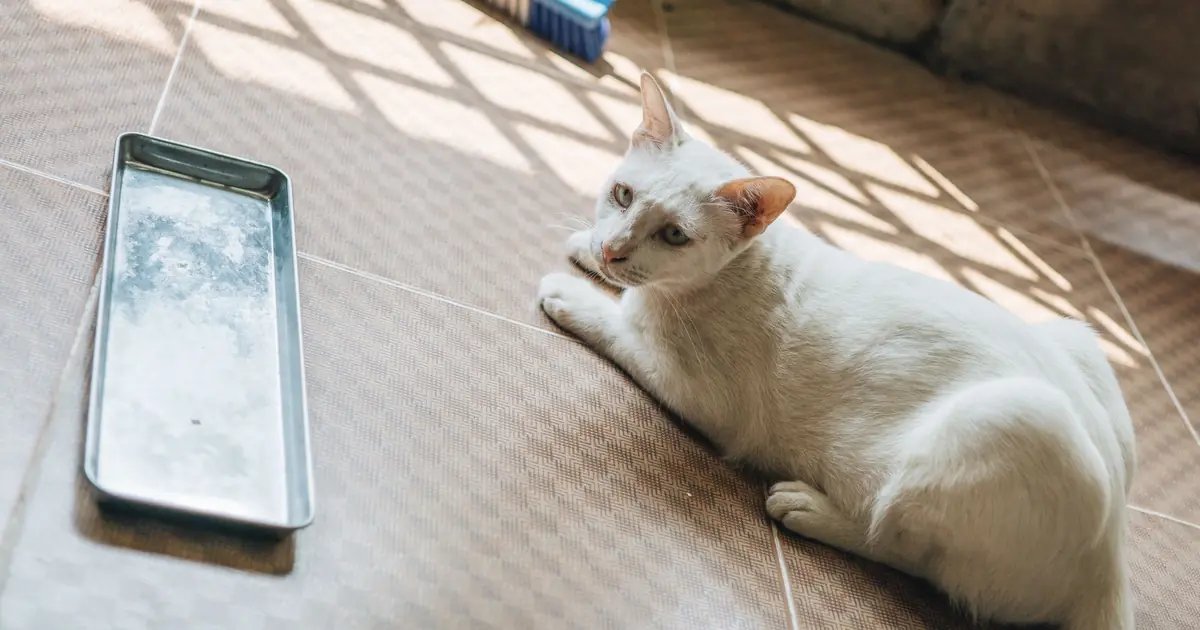
If your plastic litter box smells no matter how often you scrub it, you’re not imagining things. Plastic soaks up odors over time, and no amount of elbow grease fully fixes it. That’s exactly the problem a stainless steel litter box is built to solve.
Here’s what makes stainless steel different, where it’s worth the money, and the couple of downsides to know before you switch.
- Stainless steel is non-porous, so it doesn’t absorb urine, odor, or bacteria the way plastic does.
- It won’t develop the micro-scratches that trap smells in old plastic boxes.
- A quality stainless box can last 10-plus years, versus 1 to 2 years for plastic.
- The trade-offs are a higher upfront cost and more noise when your cat digs.
- It still needs daily scooping; stainless resists odor but doesn’t eliminate cleaning.
What is a stainless steel cat litter box?
A stainless steel cat litter box is simply a litter tray made from smooth, food-grade metal instead of plastic. The surface is non-porous and scratch-resistant, which is the whole point: nothing soaks in, and there’s nowhere for odor or bacteria to hide. Many come with rounded corners and higher sides to make scooping easier and reduce litter scatter.
Think of it like the difference between a plastic cutting board and a stainless mixing bowl. One picks up stains and smells over years of use; the other wipes clean and looks new for a decade.
Is a stainless steel litter box better than plastic?
For odor and hygiene, a stainless steel litter box is better than plastic, which is why it’s grown so popular with multi-cat homes. Plastic develops tiny scratches from digging and scooping, and those grooves let urine and bacteria settle in below the surface. Even a deep clean can’t fully reach them, so old plastic boxes hold onto smell.
Stainless steel doesn’t have that problem. Its non-porous surface doesn’t absorb moisture, so odors rinse away and the box sanitizes easily. There’s also a materials angle: plastic boxes can degrade and potentially leach compounds over time as they meet concentrated cat urine, a concern stainless steel avoids entirely.
| Factor | Stainless steel | Plastic |
|---|---|---|
| Odor absorption | None (non-porous) | High over time |
| Scratches that trap smell | Resists scratching | Develops micro-scratches |
| Lifespan | 10+ years | 1 to 2 years |
| Ease of sanitizing | Excellent | Harder as it ages |
| Upfront cost | Higher | Lower |
| Noise when digging | Can be louder | Quieter |
None of this replaces good habits. Whatever box you use, scoop daily and choose a litter that controls odor well. Our guides to the best cat litter and the best cat litter for odor control pair perfectly with a stainless box.
What are the downsides of stainless steel litter boxes?
The main downsides of stainless steel litter boxes are cost and noise. They cost more upfront than a basic plastic tray, though the 10-plus year lifespan usually makes them cheaper in the long run since you’re not replacing a plastic box every year or two.
The other issue is sound. Litter hitting metal, and a cat scratching the sides, can be louder than plastic. Most cats adjust quickly, and a good layer of litter muffles it. A few more things to weigh:
- Weight and feel: Metal boxes are sturdier but can feel cold; this rarely bothers cats.
- Fewer covered options: Many stainless boxes are open-top, so if your cat likes privacy, pair it with a litter box enclosure.
- Transition time: Some cats need a few days to accept any new box.
How do I switch my cat to a stainless steel litter box?
Switch your cat to a stainless steel box gradually so they accept it without protest. Cats are creatures of habit, and a sudden change in something as personal as the litter box can lead to accidents. Take it slow:
- Place the new box beside the old one in the same trusted spot.
- Use the same litter your cat already likes, at the same depth.
- Add a scoop of used litter to the new box so it smells familiar.
- Give it a few days. Once your cat is using the stainless box, remove the old one.
If your cat starts avoiding the box or going elsewhere, don’t force it; back up a step. Sudden litter box avoidance can also signal a health issue, so read up on why cats stop using the litter box and pooping outside the box if the problem sticks around. For general litter box setup and hygiene, International Cat Care is a trusted, vet-backed resource.
Stainless steel cat litter box FAQ
Q: Do stainless steel litter boxes really reduce odor?
Yes. Because stainless steel is non-porous and doesn’t scratch easily, it won’t absorb urine or trap odor the way aging plastic does. You still need to scoop daily, but the box itself won’t hold onto smell.
Q: Are stainless steel litter boxes worth the money?
For most owners, yes. The higher upfront cost is offset by a lifespan of 10-plus years and far better odor control, versus replacing a plastic box every year or two.
Q: Are stainless steel litter boxes safe for cats?
Yes. Food-grade stainless steel is non-toxic and doesn’t leach chemicals, which is part of its appeal over plastics that can degrade in contact with cat urine over time.
Q: Will my cat be scared of a metal litter box?
Most cats adjust within a few days. Introduce it slowly beside the old box with familiar litter. A good layer of litter also reduces the metallic noise some cats notice at first.
Q: Can I use any litter in a stainless steel box?
Yes, stainless boxes work with clumping, non-clumping, and most other litters. Choose the litter based on your cat’s preference and odor control, not the box material.
Q: How do I clean a stainless steel litter box?
Scoop daily, then wash periodically with mild soap and water. Because the surface is non-porous, it rinses clean and dries fast, with no lingering smell soaked into the material.
Bottom line: if odor and hygiene are your top priorities, a stainless steel litter box is a genuinely smart long-term buy. Pair it with daily scooping and a solid odor-control litter, introduce it slowly, and you’ll likely wonder why you put up with smelly plastic for so long.

Hello and welcome to The Ideal Cat!
We are some passionate cat owners from different professions. We love our cats and have a lot of experience in how to care for our pets. We are incredibly excited to share our knowledge, experience, and research with you. So you can take good care of your loving cat. We will answer most of the common questions about owning cats, taking care of them, etc. If you have any question contact with us. Thanks for visiting! Enjoy the content.
