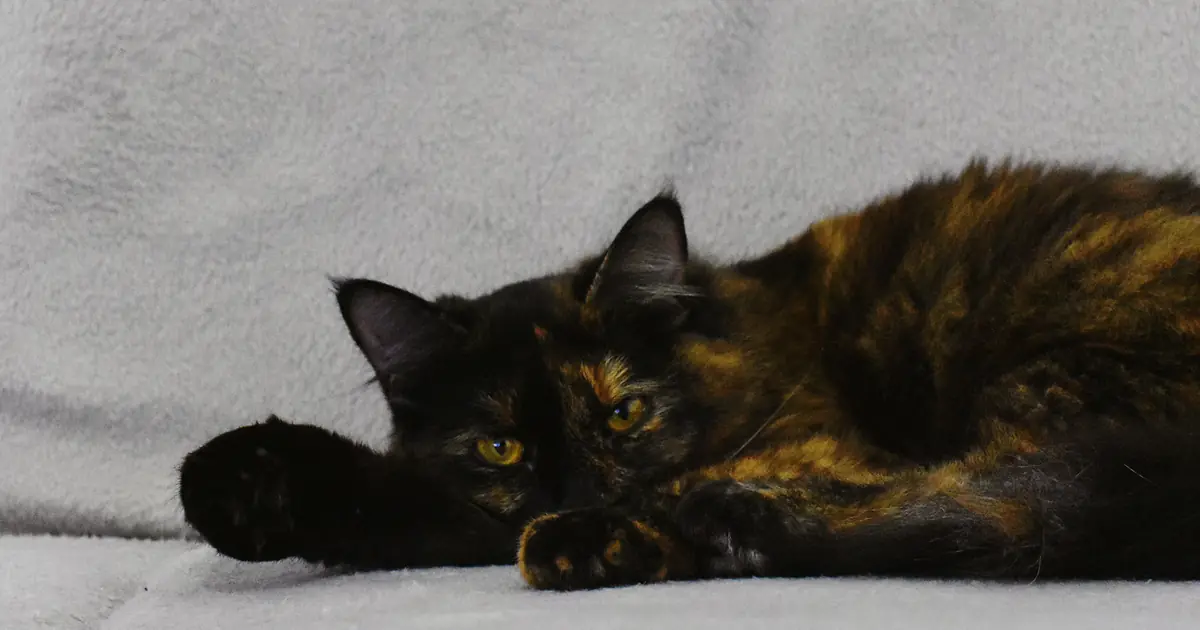
Ever spotted a cat with a soft, smoky patchwork coat, gray-blue mixed with warm cream, and wondered if she’s some rare designer breed? She’s not. She’s a dilute tortie, and honestly, she’s one of the coolest genetic accidents in the cat world.
A regular tortoiseshell cat wears bold, high-contrast black and orange. A dilute tortie wears the same pattern in watercolor. Same genetic story, softer palette. Let’s get into what makes her that way, how she’s different from a calico, and why she’s almost guaranteed to be a girl.
- Dilute torties show blue-gray and cream instead of the bold black and orange of a standard tortoiseshell.
- A recessive dilution gene (nicknamed “d,” tied to the MLPH gene) softens both colors at the same time.
- Like all tortoiseshell cats, dilute torties are almost always female because the coat-color gene sits on the X chromosome.
- Dilute tortoiseshell is a coat color pattern, not a breed, and shows up in purebreds and mixed-breed cats alike.
- Male dilute torties are extremely rare and, when they do turn up, are usually sterile.
What Is a Dilute Tortie Cat?
A dilute tortie is a tortoiseshell cat whose coat colors have been lightened by a recessive gene. A standard tortoiseshell mixes black and orange fur in a mottled, no-white pattern. A dilute tortie has that same mottled mix, but the black reads as blue-gray and the orange reads as cream, giving her coat a hazy, pastel look instead of a sharp, high-contrast one.
Breeders sometimes call this coloring “blue-cream.” It’s the exact same tortoiseshell genetics underneath, just filtered through one extra gene that mutes the pigment. If you want the full rundown on standard tortie coloring first, our guide to what a tortoiseshell cat is covers the base pattern this article builds on.
What Genetics Create a Dilute Tortie’s Muted Colors?
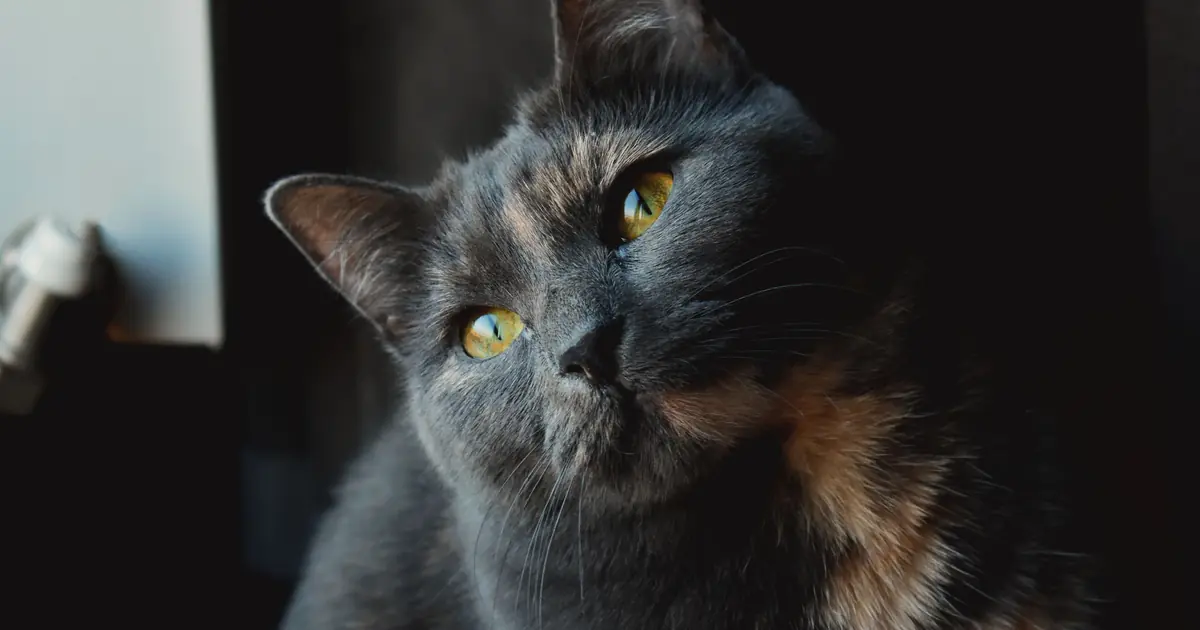
A single recessive gene at what geneticists call the dilution locus is responsible. According to the UC Davis Veterinary Genetics Laboratory, this gene affects a protein called MLPH, and a cat needs two copies of the recessive “d” version to show dilute coloring. One copy (D/d) and she stays full-colored but carries the trait. Two copies (d/d) and her black pigment turns gray-blue while her orange pigment turns cream.
Here’s the part that trips people up: the dilution gene is separate from the gene that makes a cat tortoiseshell in the first place. The tortie pattern comes from having two different color instructions, one for black-based fur and one for orange-based fur, sitting on her two X chromosomes. The dilution gene just decides how intense those colors look once they’re already there. Put both together and you get a dilute tortie.
Dilute Tortie vs. Tortoiseshell vs. Calico: What’s the Difference?
A tortoiseshell has blended black and orange with no white, a dilute tortie has the same blend in softened blue-gray and cream, and a calico adds white patches to either version. These terms get mixed up constantly, so here’s how they actually break down.
| Pattern | Colors | Key Feature |
|---|---|---|
| Tortoiseshell | Black and orange | Colors blend and mottle together, no white |
| Dilute Tortoiseshell | Blue-gray and cream | Same blended pattern, softened by the dilution gene |
| Calico | Black, orange, and white | Colors sit in distinct patches rather than blending, plus white |
| Dilute Calico | Blue-gray, cream, and white | A softened calico with the same distinct patching |
There’s also a fun bonus variant worth knowing: a “torbie.” That’s a tortie (or dilute tortie) with faint tabby striping showing through the patches. A blue-cream torbie has soft gray-and-cream patches with a little tabby ghost-striping mixed in. If you’re curious how the white-patch version works in more depth, check out our full guide to calico cats, and if you’re bringing one home as a kitten, our calico kitten guide walks through what to expect in the early months.
Why Are Almost All Dilute Torties Female?
Dilute torties are almost always female because the gene controlling orange versus black fur sits on the X chromosome, and a cat needs two different X chromosomes to show both colors at once. Female cats have two X chromosomes (XX), so one X can carry the instruction for black-based fur and the other can carry the instruction for orange-based fur. Early in development, each cell randomly shuts off one of those X chromosomes, which is why the colors show up in patches instead of blending into brown, according to the The International Cat Association.
Male cats have just one X chromosome (XY), so they normally only get one color instruction, not two. A male tortie or calico can happen, but only if he’s born with an extra X chromosome (XXY instead of the usual XY), a rare genetic condition. Per the Merck Veterinary Manual, that same extra chromosome usually leaves these rare males sterile. If you’re wondering whether female patchwork cats breed normally despite the unusual genetics, our article on whether calico cats can get pregnant covers that in full.
Is a Dilute Tortie a Cat Breed?
No, dilute tortoiseshell is a coat color pattern, not a breed. It can show up in purebred cats like the American Shorthair, British Shorthair, Persian, Maine Coon, and Cornish Rex, and it shows up just as often in mixed-breed domestic shorthairs and longhairs from shelters and back alleys everywhere. Any cat whose genetics carry the tortie pattern plus two copies of the dilution gene can end up with this coloring, regardless of pedigree.
Some coat colors are genuinely uncommon (solid brown or “chocolate” cats, for instance, are one of the rarer colors out there, as we cover in our piece on whether brown cats are rare), but dilute tortoiseshell isn’t one of the unusual ones. It’s a well-documented, fairly common variation on a pattern that’s been around in domestic cats for a long time.
Do Dilute Torties Really Have “Tortitude”?
The short answer is nobody’s proven it. “Tortitude” is the nickname cat lovers use for the sassy, strong-willed, independent streak tortoiseshell and dilute tortie cats supposedly have more than other cats. It’s a fun label, and plenty of tortie owners will swear by it. But it’s folklore, not science. No peer-reviewed study has confirmed that coat color predicts personality in cats.
What actually shapes a cat’s temperament is a mix of genetics from her specific parents, her early socialization, and her individual life experience, not the pigment in her fur. So don’t be surprised if your dilute tortie turns out mellow as can be, or if your solid gray tabby is the sassiest cat you’ve ever met. Coat color is a fun conversation starter, not a personality guarantee.
Do Dilute Torties Need Special Care?
No, dilute torties need the exact same care as any other cat of their coat length and breed background. Her coloring doesn’t affect her health, diet, grooming needs, or lifespan in any way. A short-haired dilute tortie needs the grooming routine of any short-haired cat; a longhaired one needs more brushing to manage mats, same as any other longhaired cat.
The one thing worth knowing: if she came from a purebred line, follow that breed’s specific health screening recommendations. Otherwise, regular vet checkups, a balanced diet, and normal grooming cover it. This article is educational, not a substitute for veterinary care, so if you ever notice a change in her coat, skin, or behavior, it’s always worth a call to your vet rather than guessing.
Frequently Asked Questions About Dilute Tortie Cats
Q: Is a dilute tortie the same thing as a regular tortoiseshell?
No. Both have the same blended black-and-orange tortoiseshell pattern underneath, but a dilute tortie carries an extra recessive gene that softens the black to blue-gray and the orange to cream.
Q: Are dilute tortoiseshell cats rare?
Not especially. Dilute coloring is a well-documented, naturally occurring variation of the tortoiseshell pattern and turns up regularly in both purebred and mixed-breed cats.
Q: What is a dilute calico cat?
A dilute calico is a calico cat whose black and orange patches have been softened by the dilution gene, so her coat shows blue-gray, cream, and white in distinct patches instead of black, orange, and white.
Q: Can a dilute tortie be male?
It’s very rare. A male tortie or calico needs an extra X chromosome (an XXY genotype instead of the usual XY) to show both colors, and cats with this rare condition are almost always sterile.
Q: Do dilute tortie cats have a special personality?
Many owners describe tortoiseshell and dilute tortie cats as feisty or strong-willed, a trait nicknamed “tortitude.” It’s a popular anecdote among cat lovers, but no scientific study has confirmed a real link between coat color and personality.
Q: What eye colors do dilute tortie cats have?
Dilute torties can have green, gold, copper, or hazel eyes, the same range you’d see in most non-pointed domestic cats, since eye color is controlled by separate genes from coat color. Our guide to what eye colors cats can have breaks down why that range happens.
Q: How much does a dilute tortie cat cost?
Since dilute tortoiseshell is a color, not a breed, cost depends on where she comes from. Adopting a mixed-breed dilute tortie from a shelter typically runs far less than a similarly colored purebred kitten. Our breakdown of how much calico cats cost gives a useful price range for patchwork-coated cats in general.
Q: Is a “torbie” the same as a dilute tortie?
Not quite. A torbie is a tortoiseshell (or dilute tortoiseshell) cat that also carries faint tabby striping under the patches. A dilute torbie shows soft blue-gray and cream patches with subtle tabby markings mixed in.

Hello and welcome to The Ideal Cat!
We are some passionate cat owners from different professions. We love our cats and have a lot of experience in how to care for our pets. We are incredibly excited to share our knowledge, experience, and research with you. So you can take good care of your loving cat. We will answer most of the common questions about owning cats, taking care of them, etc. If you have any question contact with us. Thanks for visiting! Enjoy the content.
