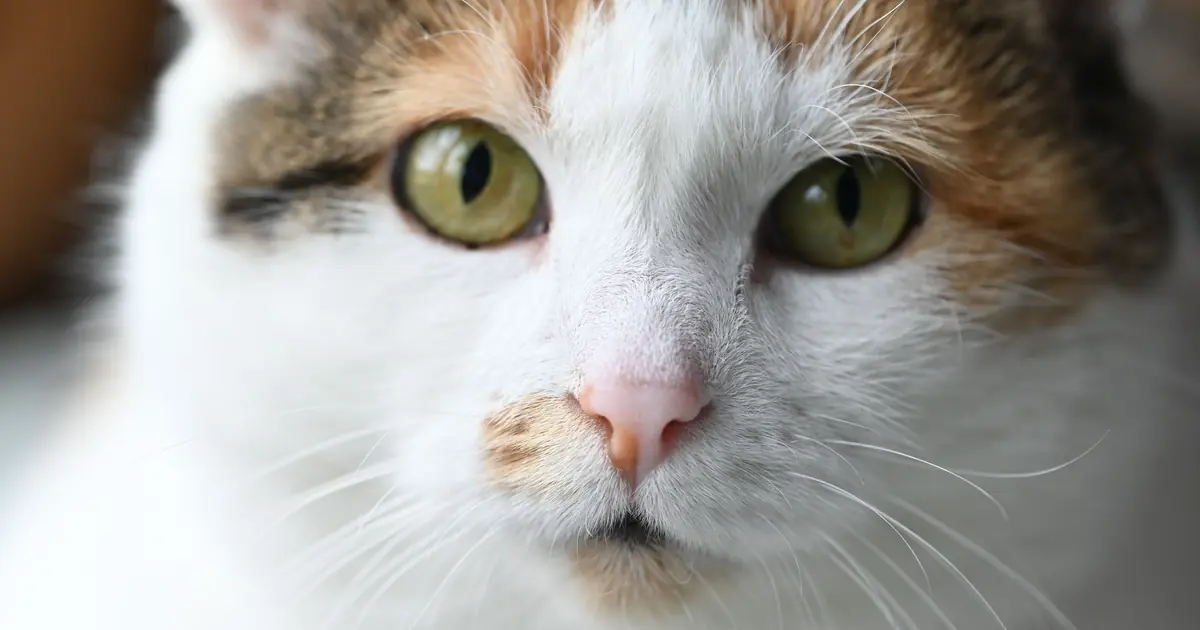
Picture this. Your sweet patchwork girl, all orange, black, and white, starts rolling around the floor, yowling at 2am, and pressing herself against the doorframe like she’s auditioning for something. You start wondering: wait, can calico cats even get pregnant? Or is there something special about that pretty tri-color coat that changes the rules?
Here’s the short version. Yes, she can. And honestly, she can do it very easily. That famous calico coloring comes with a fun genetics story, but it doesn’t make her any less fertile than the tabby down the street. If your calico isn’t spayed and she’s mingling with intact males, kittens are absolutely on the table.
- Female calico cats are normally fully fertile and can get pregnant, give birth, and nurse kittens like any other female cat.
- Calico is a coat pattern (patches of orange, black, and white), not a breed, so many breeds can be calico.
- Roughly 99.9 percent of calicos are female because the orange and black color genes ride on the X chromosome, and it takes two X chromosomes to make a calico.
- Male calico cats are extremely rare, about 1 in 3,000, and are almost always sterile due to an XXY (Klinefelter-like) chromosome pattern.
- Unless you plan to breed responsibly, spaying your calico is the smart, healthy choice.
Can female calico cats get pregnant?
Yes, female calico cats can get pregnant, and they usually have no trouble at all. A female calico has two X chromosomes and a normal, fully functional set of reproductive organs. She goes into heat, she can mate, and she can carry and deliver a litter just like a solid black, tabby, or tortoiseshell cat.
There’s an old myth floating around that female calicos are sterile. That one’s just not true. The confusion comes from mixing up female calicos with the rare male calico, which usually is sterile. If your cat is a calico and she’s a she (and she almost certainly is), assume she’s fertile. Cats can also get pregnant surprisingly young, so if you’re curious how young cats can get pregnant, the answer might surprise you.
Why are almost all calico cats female?

Almost all calico cats are female because the genes for orange and black coat color sit on the X chromosome, and it takes two X chromosomes to display both colors at once. Female cats are XX, so they can carry an orange gene on one X and a black gene on the other. That’s what creates those signature patches.
Male cats are XY. With only one X chromosome, a typical male can be orange or black, but not both in the calico patchwork way. So the tri-color pattern lands on females about 99.9 percent of the time. It’s one of the most charming quirks in cat genetics, and it’s backed by solid science on X chromosome inactivation. The Cornell Feline Health Center and other feline experts describe this same X-linked color inheritance.
Is calico a breed or just a color?
Calico is a color pattern, not a breed. A calico cat is any cat with a coat of white plus patches of both orange and black (or their diluted versions, cream and gray). That pattern can show up in many breeds, from the everyday domestic shorthair to Maine Coons, Persians, and Japanese Bobtails.
Because calico describes the coat and not the breed, there’s no single “calico body type” or “calico personality.” What they share is that eye-catching tri-color coat and the genetics behind it. And since the pattern isn’t tied to a breed, calico fertility follows normal cat rules, not breed-specific ones.
Can male calico cats get pregnant or father kittens?
Male calico cats cannot father kittens in nearly all cases, because they are almost always sterile. A male calico exists only through a rare genetic hiccup that gives him two X chromosomes plus a Y (XXY), a pattern similar to Klinefelter syndrome in humans. That extra X lets him show the calico coat, but it usually disrupts sperm production.
Male calicos are rare, roughly 1 in 3,000 calico cats. Because of the XXY makeup, most can’t reproduce at all. A tiny fraction may have some fertility, but it’s the exception, not the rule. So if you’re lucky enough to meet a male calico, he’s a genetic rarity, and he almost certainly can’t sire a litter.
| Trait | Female Calico (XX) | Male Calico (XXY, rare) |
|---|---|---|
| How common | About 99.9% of calicos | About 1 in 3,000 calicos |
| Chromosomes | XX (normal female) | XXY (Klinefelter-like) |
| Fertility | Normally fully fertile | Almost always sterile |
| Can have or father kittens? | Yes | Almost never |
How does pregnancy work for a calico cat?
Pregnancy for a calico cat works exactly like it does for any female cat, because her coat color has nothing to do with her reproductive cycle. She’ll go into heat (often more than once in a season), and if she mates with an intact male, she can conceive. Cat pregnancy is short and busy.
Most cats are pregnant for around 63 to 65 days, so if you want the full timeline, here’s a guide on how long a cat is pregnant. First-time litters tend to run a little smaller, and you can read more about how many kittens your cat may have the first time. The kittens’ colors, by the way, won’t all be calico. Coat color depends on the genes each kitten inherits, and the calico pattern still needs those two X chromosomes to appear.
Should you spay your calico cat?
Yes, you should spay your calico cat unless you have a serious, well-planned reason to breed her. Since your calico is almost certainly a fertile female, spaying prevents unplanned litters and offers real health perks. It lowers her risk of uterine infections and mammary tumors, and it ends the yowling, restlessness, and escape attempts that come with heat cycles.
Spaying is a routine, safe procedure, and many vets recommend it before the first heat. If you’d like to know what to expect, here’s a walkthrough on spaying or neutering a female cat. Groups like the ASPCA and International Cat Care strongly encourage spaying and neutering to keep cats healthier and reduce the number of homeless kittens.
A quick note: This article is for general education and isn’t a substitute for veterinary care. If you think your calico may be pregnant, or you’re weighing spaying, talk to your own vet for advice tailored to your cat.
Frequently asked questions about calico cats and pregnancy
Q: Can calico cats have kittens?
Yes, female calico cats can have kittens. They have normal, fully functional reproductive systems, so they can go into heat, mate, and carry a litter like any other female cat. Only the extremely rare male calico usually cannot reproduce.
Q: Are female calico cats sterile?
No, female calico cats are not sterile. That’s a common myth. Female calicos are XX and normally fully fertile. The sterility issue applies to the rare male calico, which typically has an XXY chromosome pattern that disrupts fertility.
Q: Will a calico cat’s kittens be calico too?
Not necessarily. Kitten coat colors depend on the genes each kitten inherits from both parents. Since the calico pattern needs two X chromosomes carrying different color genes, only some female kittens in a litter are likely to be calico, and males rarely are.
Q: Why are calico cats almost always female?
Calico cats are almost always female because the orange and black color genes ride on the X chromosome, and it takes two X chromosomes to show both colors. Females are XX, so they can display the calico pattern, while typical XY males cannot.
Q: How rare is a male calico cat?
Male calico cats are very rare, occurring in roughly 1 in 3,000 calicos. They result from an unusual XXY chromosome pattern similar to Klinefelter syndrome. This extra X lets them show the calico coat, but it almost always leaves them sterile.
Q: Can a male calico cat father kittens?
In nearly all cases, no. Male calico cats are almost always sterile because their XXY chromosome makeup disrupts sperm production. A tiny fraction may have some fertility, but the vast majority cannot father kittens.
Q: Does being calico affect a cat’s pregnancy?
No, coat color has no effect on pregnancy. A calico cat’s gestation, litter size, and delivery work the same as any other female cat. Most cats are pregnant for about 63 to 65 days regardless of coat pattern.
Q: Should I spay my calico cat?
Yes, spaying is recommended unless you plan to breed responsibly. Since your calico is almost certainly a fertile female, spaying prevents unplanned litters and lowers her risk of uterine infections and mammary tumors. Many vets suggest spaying before the first heat.

Hello and welcome to The Ideal Cat!
We are some passionate cat owners from different professions. We love our cats and have a lot of experience in how to care for our pets. We are incredibly excited to share our knowledge, experience, and research with you. So you can take good care of your loving cat. We will answer most of the common questions about owning cats, taking care of them, etc. If you have any question contact with us. Thanks for visiting! Enjoy the content.
