
Your cat walks up, looks at you, and lets out a quiet little puff of air, almost like a soft “pfft.” No meow, no purr, just this gentle huff. That’s a chuff, and once you notice it, you’ll catch your cat doing it all the time.
It’s one of the sweetest sounds in the cat vocabulary, and it almost always means good things. Here’s what your cat is telling you.
- A chuff is a soft, breathy, closed-mouth puff of air that cats use as a friendly greeting.
- Chuffing signals contentment and trust; it’s the feline version of a relaxed “hello.”
- It’s related to the trill and chirp, all non-aggressive social sounds aimed at people and cat friends.
- Big cats like tigers do a louder version called prusten; house cats do a quieter, similar puff.
- Chuffing is normal, but sudden noisy, wheezy, or labored breathing is different and needs a vet.
What exactly is a chuff?
A chuff is a short, soft, breathy sound a cat makes by pushing air out through the nose or slightly parted lips without vocalizing. It’s quieter than a meow and airier than a purr, more of a gentle “puff” or “huff.” Because it takes no real effort and carries no tension, cats use it in calm, happy moments rather than stressful ones.
Why do cats chuff at you?
Cats chuff at you as a warm, low-key greeting and a signal that they feel safe. It’s the sound equivalent of a relaxed smile. When your cat chuffs as you walk in, sits down, or reach out to pet them, they’re acknowledging you in the friendliest way they’ve got, without demanding anything the way an insistent meow does.
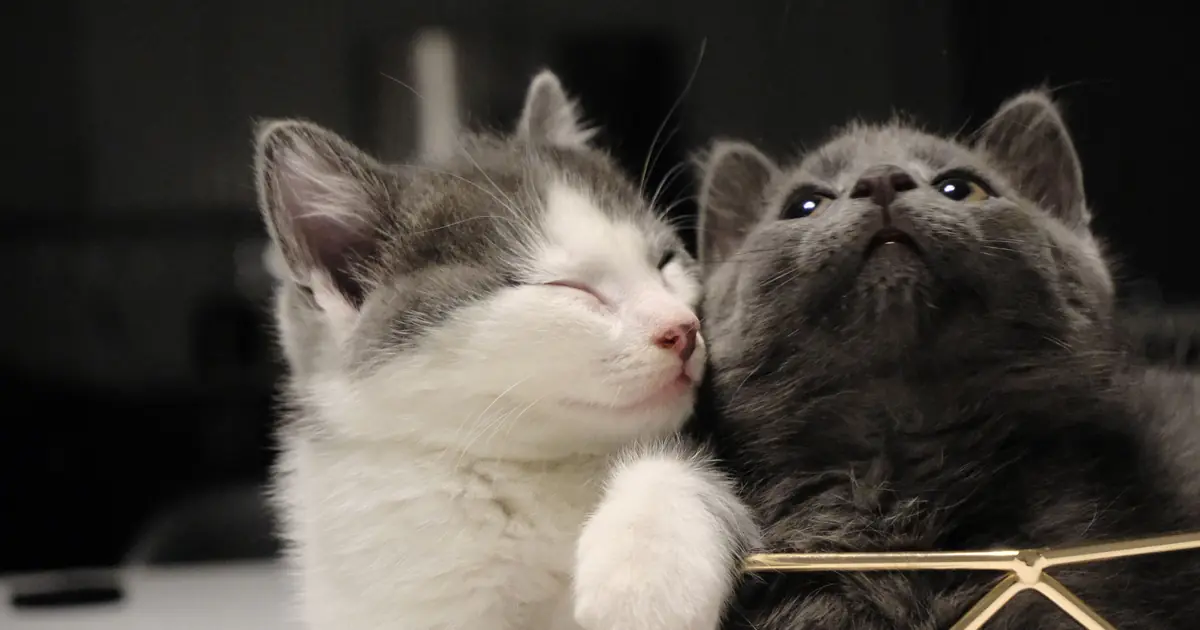
Chuffing often shows up alongside other affection signals: a raised tail, a slow blink, a head bump, or kneading. Read them together and the message is clear: your cat is comfortable and bonded to you. International Cat Care’s guide to feline communication is a great primer on these friendly signals.
Is chuffing the same as chirping or trilling?
Chuffing, chirping, and trilling are all in the same friendly family, but they’re not identical. They share a purpose, greeting and connecting, while sounding a little different. Here’s how they compare.
| Sound | What it’s like | Usual meaning |
|---|---|---|
| Chuff | Soft breathy puff, no voice | Calm, friendly greeting; contentment |
| Trill | Rolling, high “brrrp” | “Hi! Follow me” or excited hello |
| Chirp | Short bird-like tweet | Excitement, often at prey or a person |
| Purr | Continuous low rumble | Contentment (sometimes self-soothing) |
If you want to go deeper on the rumbly one, we break it down in what a cat purring means.
Do big cats chuff too?
Yes, and that’s where the term comes from. Tigers, lions, and other big cats make a louder, more dramatic version called prusten or chuffing, a breathy blowing sound used as a peaceful greeting between animals that can’t purr the way house cats do. Your cat’s soft puff is the small, domestic echo of that same friendly signal.
Which cats chuff the most?
Chuffing varies a lot by personality and breed. Confident, social, people-oriented cats tend to chuff more, while shy or aloof cats may rarely do it. Chatty breeds are often more expressive overall. If your cat has never chuffed, that’s not a problem; not every cat uses every sound. You can learn more about the talkative end of the spectrum in can cats talk.
When is huffing or “chuffing” a health concern?
A relaxed, occasional chuff is normal, but noisy breathing is not. See a vet if the sound becomes frequent, harsh, wheezy, or wet, or if your cat huffs while looking tense, breathes with an open mouth, or seems short of breath. Those can point to asthma, an upper respiratory infection, or another airway issue rather than a happy greeting. This article is educational, not medical advice; when in doubt about your cat’s breathing, call your vet. The ASPCA’s overview of common cat conditions is a helpful starting point, but breathing changes are always worth a professional check.
Frequently Asked Questions
Q: Is a cat chuffing a good sign?
Yes. A soft, relaxed chuff is one of the friendliest sounds a cat makes. It signals contentment, trust, and a peaceful greeting toward you or another animal they like.
Q: What’s the difference between a chuff and a hiss?
They’re opposites. A chuff is a soft, calm, closed-mouth puff meaning “I’m friendly.” A hiss is a sharp, forceful, open-mouth sound meaning “back off.” Body language tells them apart too: relaxed for a chuff, tense and defensive for a hiss.
Q: Why does my cat chuff when I come home?
That’s a greeting. Your cat is happy to see you and is acknowledging your return with the most low-key, friendly sound they have, often paired with an upright tail or a head bump.
Q: My cat never chuffs. Is something wrong?
Not at all. Chuffing is optional in a cat’s vocabulary. Quiet or reserved cats may greet you with a slow blink, a tail flick, or a head bump instead. Personality and breed both play a role.
Q: Can chuffing mean my cat is sick?
A normal chuff is a happy sound, not a sick one. But if the “huffing” becomes frequent, harsh, wheezy, or comes with open-mouth or labored breathing, that’s a breathing problem, not a greeting, and needs a vet.
Q: Do kittens chuff?
Kittens can, though trills and chirps often come first as they learn to communicate. Chuffing tends to become more common as a cat matures and bonds closely with their people.

Hello and welcome to The Ideal Cat!
We are some passionate cat owners from different professions. We love our cats and have a lot of experience in how to care for our pets. We are incredibly excited to share our knowledge, experience, and research with you. So you can take good care of your loving cat. We will answer most of the common questions about owning cats, taking care of them, etc. If you have any question contact with us. Thanks for visiting! Enjoy the content.
