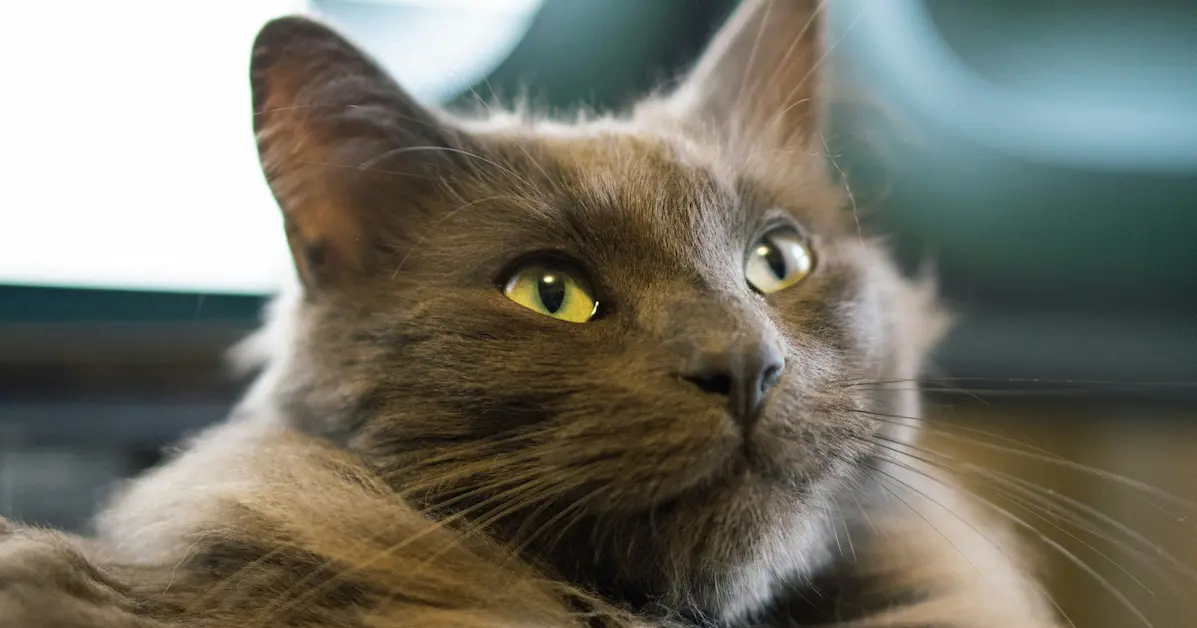
Picture this. You’ve fallen for photos of a glossy, chocolate-brown cat with soft fur and big almond eyes. You type “York Chocolate kitten for sale” into Google, ready to bring one home. A few listings pop up. Prices, breeders, the works.
Here’s the thing nobody tells you upfront: the cat you’re chasing might not exist anymore. Not really. Not as a true, papered breed.
That’s not me being dramatic. It’s the most useful fact about this breed, and almost every guide online buries it under a price tag. So let’s do this properly. By the end, you’ll understand what the York Chocolate cat was, what made it special, and what you can actually adopt if your heart is set on a chocolate cuddle machine.
| Origin | United States (New York), 1983 |
| Weight (Male) | 12 to 18 lbs |
| Weight (Female) | 10 to 16 lbs |
| Lifespan | 13 to 15 years |
| Coat | Semi-long, silky, plush |
| Colors | Solid chocolate, solid lilac, chocolate and white, lilac and white |
| Energy Level | Moderate to High |
| Grooming Needs | Moderate |
| Good With Kids | Yes |
| Good With Other Pets | Yes, with proper intros |
| Average Price | Historically $600 to $1,000 (rarely available today) |
The Story Behind the York Chocolate Cat
This breed didn’t start in a fancy cattery. It started on a goat farm.
Back in 1983, a woman named Janet Chiefari was running a dairy goat farm in Grafton, New York. Two of her farm cats, both ordinary long-haired moggies, had a litter. One kitten came out a deep, rich brown. Janet named her Brownie, and that one cat is where the whole story begins.
Word is that one of Brownie’s parents carried a little Siamese blood somewhere back in the family tree. That hidden gene is what painted Brownie chocolate instead of the usual black or tabby. Pretty lucky roll of the dice.
When Brownie grew up, she had her own litter with another long-haired tom. Two of those kittens kept that gorgeous brown coat. Janet noticed the pattern, liked what she saw, and decided to build a breeding program around it. She named the breed after her home state and that mouthwatering coat color. Cat fanciers in Italy later gave it the nickname “Il Gatto Cioccolato,” which is just a lovely way of saying “the chocolate cat.”
Wait, Is the York Chocolate Cat Extinct?
This is the question that should sit at the top of every York Chocolate guide, so let’s not dance around it.
The honest answer: the breed is widely considered extinct, and has been for roughly a decade.
The numbers tell the story. By 2005, there were only about 60 York Chocolates left in the world. By 2015, just one breeder was still listed. By 2016, no registry carried an active breed standard for it, the breeder websites had gone quiet, and the breed was generally written off as extinct. As of 2026, the most that can honestly be said is that the York Chocolate is either critically rare or already gone.
What happened? A few things piled up. The breed never got the backing of the big registries, so it couldn’t shine at major shows. It had to compete with flashier chocolate cats like the Havana Brown and chocolate Oriental Shorthairs. And the breeder base stayed tiny, so when those few people retired or moved on, there was nobody to carry it forward.
Now, “extinct” is a heavy word, and it deserves a caveat. Cats that look exactly like York Chocolates, with the same chocolate coats and sweet temperaments, almost certainly still exist. They’re just chocolate domestic longhairs without any pedigree paperwork tying them to the original line. So the look isn’t gone. The official breed is.
Keep that distinction in your back pocket. It changes everything about how you shop, adopt, and spend your money later in this guide.
What a York Chocolate Actually Looked Like
If you ever met one, you’d remember the coat first. Semi-long, silky, and so soft you’d struggle to stop petting it. The fur lay close enough to the body to avoid the heavy matting you see in fluffier breeds, but it still had that flowing, plush quality.
The color was the headline act. True York Chocolates came in solid chocolate, solid lilac (a soft, dilute cocoa shade), and bicolor versions of both with white splashed across the chest, belly, paws, or face. Fun detail: kittens often arrived lighter than they’d end up. The color deepened as they grew, with the final shade settling in around 18 months.
Body-wise, this was a big, sturdy cat. Males could tip 18 pounds, sometimes more, with a muscular, athletic frame that gave away those farm cat genes. Add a rounded head, a medium muzzle, a long tapering tail, and tufted feet, and you’ve got a cat that looked both elegant and a little bit wild.
Then there were the eyes. Large, almond-shaped, and ranging from green to gold to hazel. Against that dark chocolate fur, they practically glowed.
Personality and Temperament: The Dog-Like Chocolate Shadow
If the coat was the looks, the personality was the reason people fell hard.
York Chocolates were famous for being velcro cats. They’d trail you from room to room, supervise your every chore, and treat your lap like prime real estate. People often described them as “two-in-one” pets because they acted so dog-like. Loyal, attentive, and always nearby.
They were chatty too, though not in an obnoxious way. Expect soft meows, purrs, and little chirps rather than the relentless yowling some Siamese owners know all too well. Think pleasant background commentary, not a 24-hour talk show.
These cats were smart and curious, which made them genuinely fun. They’d figure out routines, learn tricks, and chase a toy with real enthusiasm. One quirky bonus: many York Chocolates loved water. Don’t be shocked to find a chocolate cat pawing at the faucet or watching your bath with deep professional interest.
The flip side? Some were a touch shy with strangers, and most disliked being left alone for long stretches. This was a cat that wanted to be part of the family, not an ornament.
Is the York Chocolate Right for You?
Let’s be real, since the breed is basically gone, this section is really about whether the type of cat fits your life. Here’s an honest gut-check.
You’ll love this kind of cat if: you want a constant companion, you’re home often, you like a chatty-but-not-screamy cat, and you’ve got room for a big, playful animal to climb and explore.
You might want to look elsewhere if: you work long hours away from home, you prefer an aloof and independent cat, or you can’t commit to weekly grooming for a semi-long coat.
One more honesty check. If you’re specifically hunting a pedigreed York Chocolate with papers, prepare for disappointment and a real risk of getting scammed. If you just want a chocolate-coated cuddler, you’re in great shape, and we’ll cover exactly where to find one.
Health: The Upside of Humble Beginnings
Here’s some good news for a change. Because the York Chocolate came from a wide, random-bred farm cat gene pool rather than heavy inbreeding, it never developed the cluster of inherited diseases that plague some pedigree breeds.
No breed-specific genetic condition was ever firmly pinned to the York Chocolate. That’s rare and genuinely lovely. These cats tended toward solid, robust health and often lived their full 13 to 15 years without breed-linked drama.
That doesn’t mean they were bulletproof. They still faced the everyday stuff any cat can run into: dental disease, obesity if overfed, kidney trouble in old age, and the occasional sensitive stomach. The fixes are the same as for any cat. Annual vet visits, a good diet, dental care, and keeping the weight in check.
If you adopt a chocolate longhair instead, ask the shelter or vet for a basic health workup so you know where you stand from day one.
Grooming and Coat Care
The semi-long coat looks high-maintenance but really isn’t. The fur’s texture resists matting, so you won’t be fighting tangles every day.
A good brushing once or twice a week does the job. It pulls out loose hair, keeps the coat shiny, and cuts down on the fur tumbleweeds drifting across your floors. During spring and fall shedding seasons, you may want to bump that up to a few times a week.
Round out the routine with the basics: nail trims every couple of weeks, a peek in the ears for gunk, and regular teeth brushing if your cat tolerates it. Trust me, your future self will thank you for starting dental care early.
Feeding and Diet
There’s nothing fussy about feeding this kind of cat. No special breed diet required.
The goal is the same one every cat thrives on: a high-protein, meat-first diet. Look for real chicken, turkey, or fish as the leading ingredients, and steer away from foods loaded with fillers. Cats are true carnivores, so the protein isn’t optional, it’s the whole point.
Mixing wet and dry food works well. Wet food keeps your cat hydrated, which is great for kidney and urinary health, while a bit of dry kibble is convenient and can help with crunch. Whatever you choose, keep fresh water available all day, especially if you lean on dry food.
Watch the portions. This is a big, food-motivated cat, and the muscular frame can quietly turn into a chubby frame if you free-feed. Measure meals and skip the constant treat parade.
Exercise and Enrichment
Those farm cat roots run deep. This is an active, athletic cat that needs a job, or at least a really good toy.
Daily play matters. Wand toys, balls, and feather teasers tap into that strong hunting drive, and a laser pointer can turn your living room into a racetrack. Climbing is a big deal too, so a tall cat tree or some wall shelves give all that energy somewhere to go.
Puzzle feeders are a smart move for such a clever cat. They turn dinner into a brain game and slow down fast eaters. Ten to fifteen minutes of focused play, twice a day, will keep a cat like this happy and out of trouble.
Living With Kids, Dogs, and Other Cats
This is where this kind of cat really shines. Friendly, social, and people-loving, it tends to fit beautifully into a busy household.
With kids, it’s usually a gentle, patient companion, as long as the little ones learn to handle a cat kindly. With dogs, the easygoing nature helps a lot, especially if the dog is cat-savvy. And with other cats? Generally fine, given slow, proper introductions rather than a chaotic first-day free-for-all.
The golden rule with any new pet pairing is patience. Separate spaces at first, scent swapping, then short supervised meetings. Do that, and a social cat like this usually wins everyone over fast.
Lifespan and Aging
Expect a good, long run. These cats typically lived 13 to 15 years, and a well-cared-for one could push past that.
The aging playbook is simple. In the kitten and young-adult years, focus on socialization, play, and building good habits. Through the middle years, keep the weight steady and the vet visits regular. In the senior years, watch for stiffness, dental issues, kidney changes, and any drop in appetite or energy.
Senior cats often appreciate small tweaks: a softer bed, a litter box with a lower lip, and ramps or steps to reach favorite perches. Little kindnesses that make the golden years comfy.
How Much Does a York Chocolate Cost?
Back when real ones were around, a York Chocolate kitten ran roughly $600 to $1,000, depending on the breeder, the lineage, and whether the cat was pet or show quality.
But here’s the honest update: that price is mostly a historical footnote now. With the breed considered extinct, there’s no legitimate breeder pipeline producing papered York Chocolate kittens. So any listing you see today deserves serious side-eye.
Red flags to watch for:
- A seller advertising “purebred York Chocolate kittens” with no verifiable pedigree or registry paperwork.
- Prices that feel suspiciously specific and confident for a breed nobody can actually source.
- Pressure to pay deposits fast, especially by wire transfer or gift card.
- Stock-looking photos and a refusal to do a live video call with the actual kitten.
Whatever you bring home, budget for the real ongoing costs of cat ownership too. Food, litter, vet care, and emergencies add up to a few thousand dollars a year. The sticker price is just the beginning.
Where to Find a “York Chocolate” Today
Since you can’t realistically buy a papered one, the smart and kind move is to adopt the look-alike: a chocolate or lilac domestic longhair. Same gorgeous coat, same sweet potential, no scam risk.
Start with shelters and rescues. Brown longhairs turn up more often than you’d think, and rescue staff can describe a cat’s real personality, which matters way more than a label. Petfinder and local rescue groups are your friends here.
If you do go searching for any cat marketed as a York Chocolate, run through this quick verification checklist before spending a cent:
- Ask for the exact registering organization and proof of registration. Vague answers mean walk away.
- Request to see the kitten live on video alongside its mother and littermates.
- Ask for vet records, vaccination history, and any health screening done.
- Visit in person if you can, and trust your gut if anything feels off.
- Remember: a chocolate domestic longhair is a wonderful cat. You don’t need a fancy label to love one.
Similar Breeds to Consider
If the chocolate coat and cuddly nature are what hooked you, these breeds give you a real, available path to something similar:
- Havana Brown: A rich, all-over chocolate cat that’s playful and people-focused, with short, easy-care fur.
- Oriental Longhair: Comes in chocolate shades, with a silky semi-long coat and a chatty, devoted personality.
- Maine Coon: If it was the big, fluffy, dog-like vibe you loved, this gentle giant delivers in spades.
- Ragdoll: For the lap-cat, follow-you-everywhere temperament, with a famously laid-back nature.
- Domestic Longhair (chocolate or lilac): The closest match of all, easy to adopt, and every bit as lovable.
Common Myths and Misconceptions
Myth 1: “York Chocolates are related to wild lynx or jungle cats.” Nope. The wild look is pure marketing romance. These were always domestic farm cats through and through.
Myth 2: “You can easily buy a York Chocolate kitten online.” You really can’t, not a genuine papered one. Most listings are chocolate longhairs wearing a fancier name tag.
Myth 3: “The breed is rare but thriving.” Rare, yes. Thriving, no. It’s widely considered extinct, which is a very different thing.
Myth 4: “Chocolate cats are a separate species.” Chocolate is simply a coat color caused by a recessive gene. Plenty of ordinary cats carry it.
Myth 5: “It’s a major recognized breed.” Only the World Cat Federation ever maintained a standard, and the big names like CFA and TICA never recognized it at all.
Frequently Asked Questions
Q: Is the York Chocolate cat extinct?
Yes, the breed is widely considered extinct. By 2005 only around 60 existed, and by 2016 no registry maintained an active standard and breeding had essentially stopped. Look-alike chocolate longhairs still exist, but not the papered breed.
Q: How much does a York Chocolate cat cost?
When the breed was available, kittens ran about $600 to $1,000. Today there’s no legitimate source for papered York Chocolates, so treat any priced listing with caution.
Q: What colors do York Chocolate cats come in?
Solid chocolate, solid lilac, and bicolor versions of both with white markings. Kittens start lighter and darken as they mature, settling into full color around 18 months.
Q: Are York Chocolate cats good with kids and dogs?
Yes. They were known for being friendly, social, and people-oriented, which made them great in family homes. With slow introductions, they typically got along well with both children and dogs.
Q: Do York Chocolate cats really like water?
Many did. Owners often reported their York Chocolates being fascinated by running taps and water bowls, playing in it rather than avoiding it. Not every individual loved it, but the trait was common.
Q: How big do York Chocolate cats get?
They were a large, muscular breed. Males commonly reached 12 to 18 pounds, sometimes more, while females landed around 10 to 16 pounds.
Q: Was the York Chocolate recognized by the CFA or TICA?
No. Neither the Cat Fanciers’ Association nor The International Cat Association recognized it. It earned championship status with the Cat Fanciers’ Federation in 1992 and the Canadian Cat Association in 1995, and the World Cat Federation kept a standard.
Q: What can I adopt instead of a York Chocolate?
A chocolate or lilac domestic longhair from a shelter is the closest and kindest match. For recognized breeds, look at the Havana Brown, Oriental Longhair, or a Maine Coon if you loved the big, fluffy build.
Final Verdict: Should You Get One?
The York Chocolate is one of those bittersweet stories in the cat world. A happy accident on a New York goat farm became a beloved breed, charmed people across two continents, and then quietly faded out before it ever got its due.
So should you get one? Honestly, you probably can’t, not a real one. And that’s okay. The magic of the York Chocolate was never some secret pedigree. It was a sweet, chatty, water-loving chocolate cat that wanted to be your shadow.
That cat is still out there. It’s curled up in a shelter right now, chocolate coat and all, waiting for someone who did their homework. If this guide nudges you toward adopting that cat instead of chasing a ghost, then the York Chocolate’s legacy lives on in the best possible way: one more happy cat, one more happy home.

Hello and welcome to The Ideal Cat!
We are some passionate cat owners from different professions. We love our cats and have a lot of experience in how to care for our pets. We are incredibly excited to share our knowledge, experience, and research with you. So you can take good care of your loving cat. We will answer most of the common questions about owning cats, taking care of them, etc. If you have any question contact with us. Thanks for visiting! Enjoy the content.
