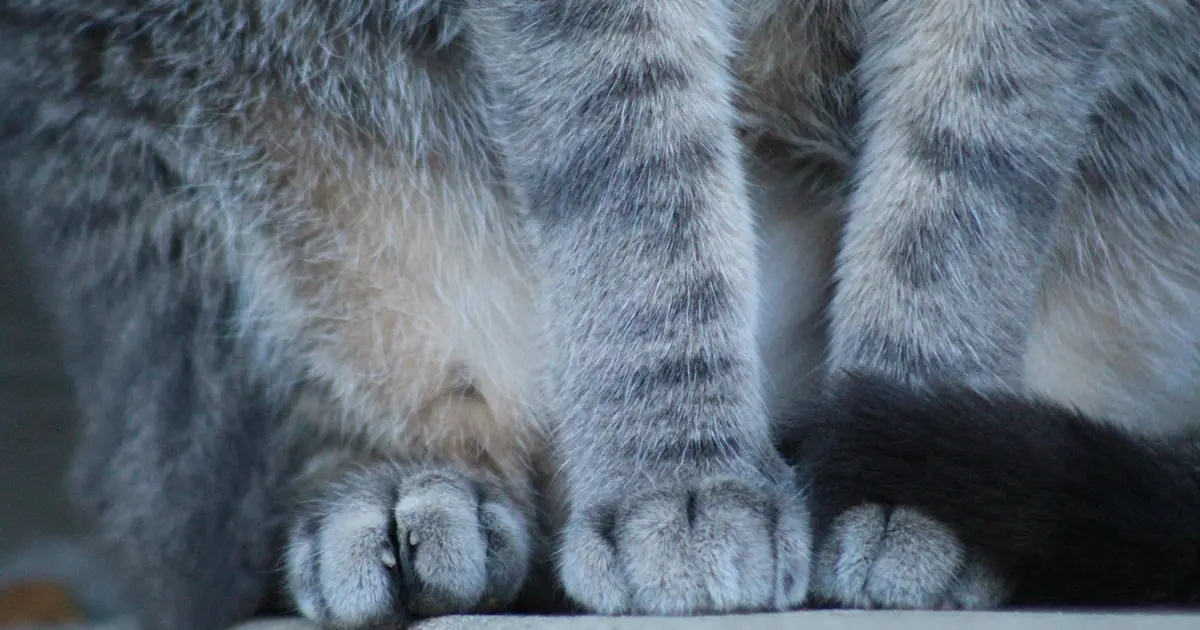
If you’ve ever watched a cat “shake hands” with an extra-wide, mitten-like paw, you already know the double take. Those big, fanned-out toes look almost too big to be real. They are real, and they’ve got a name: polydactyly. It’s a completely different trait from the question of whether cats have thumbs, though people often mix the two up.
So are these cats some kind of rare genetic fluke, or just a quirky trait that pops up more than people realize? Let’s clear that up, because the answer surprises most cat parents.
- A normal cat has 18 toes total: 5 on each front paw and 4 on each back paw.
- Polydactyl cats carry a dominant gene that adds one or more extra toes, usually on the front paws.
- Most polydactyl cats have between 20 and 24 toes, though the trait can appear on the back paws too.
- The world-record polydactyl cat, a Canadian named Jake, had 28 toes.
- Polydactyly is more common in New England, Atlantic Canada, England, and Wales, likely because ship cats carried the gene along old trade routes.
Are polydactyl cats rare?
No, polydactyl cats aren’t rare, they’re just uncommon compared to the average cat. Polydactyly (extra toes) shows up in an estimated 1 in 3,000 or so cats overall, but the odds jump way up in certain coastal populations. In parts of New England and Atlantic Canada, some estimates put the local rate as high as 1 in 40 cats. So whether you’d call it “rare” really depends on your zip code.
The trait isn’t a birth defect or a health condition. It’s a naturally occurring variation, the same way some people are born with an extra finger or toe (a condition called polydactyly in humans too). Cat polydactyly has been documented for centuries and is considered a normal, if uncommon, physical trait, similar in spirit to how white cats are an uncommon but well-documented coat variation rather than anything abnormal.
What causes a cat to be polydactyl?
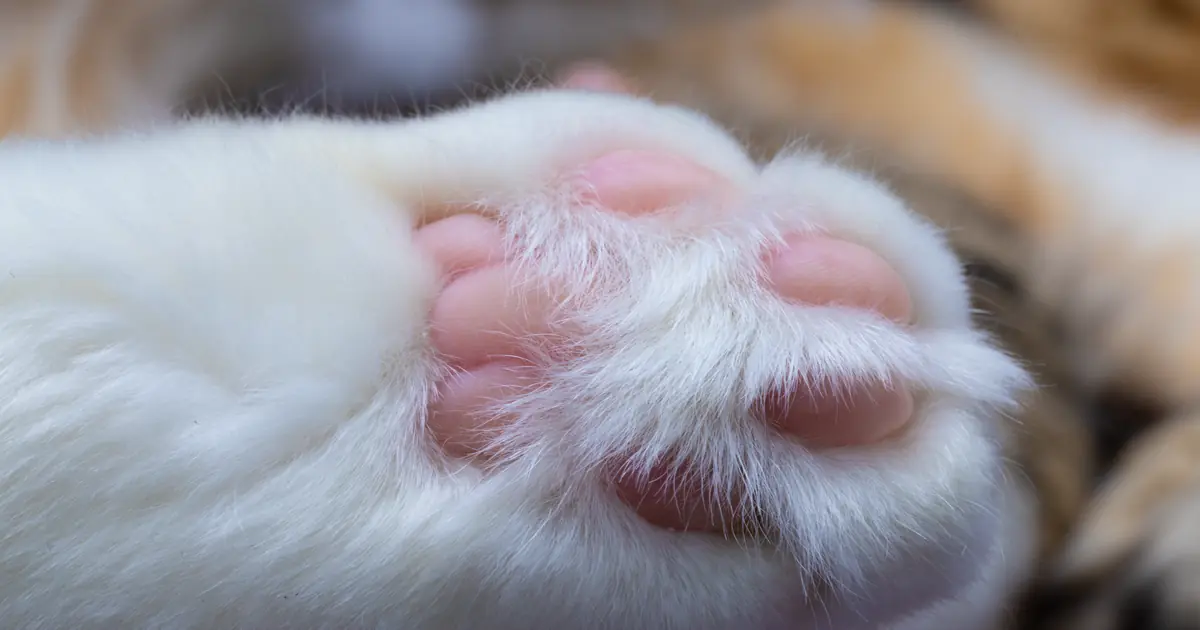
A single dominant gene mutation causes polydactyly, and it affects how many toes form on the paw during development. Because the gene is dominant, a kitten only needs to inherit it from one parent to be born with extra toes. That’s also why polydactyl litters often produce a mix of polydactyl and normal-toed kittens from the same parents.
The extra toes almost always show up on the front paws first. Back-paw polydactyly happens too, just less often. Vets and geneticists consider the trait harmless on its own. According to International Cat Care, the mutation affects the bones of the paw but doesn’t affect a cat’s overall health or lifespan.
How many toes do polydactyl cats have?
A polydactyl cat commonly has 20 to 24 toes, compared to the standard 18. Since the front paws are affected most often, you’ll typically see 6 or 7 toes per front foot instead of the usual 5. Some cats stop at just one extra toe on one paw. Others go all in.
The most extreme case ever recorded belongs to Jake, a Canadian cat confirmed by Guinness World Records to have 28 toes, 7 on each paw. That’s an outlier, not the norm, but it shows just how variable this gene can be.
| Trait | Typical Cat | Polydactyl Cat |
|---|---|---|
| Total toe count | 18 (5 front, 4 back) | Usually 20 to 24, up to 28 on record |
| Cause | Standard feline paw development | Dominant gene mutation affecting paw bone formation |
| Where extra toes appear | N/A | Mostly front paws, sometimes back paws too |
| Care needs | Regular nail trims | Regular nail trims plus extra checks for ingrown or overgrown claws |
| Health impact | None | Generally none, occasional nail or joint monitoring |
Where are polydactyl cats most common?
Polydactyl cats show up most often in New England, Atlantic Canada, England, and Wales. The leading theory ties this straight back to maritime history. Ship’s cats were prized for their mousing skills, and sailors believed the wide, extra-toed paws gave cats better balance on rocking decks, so polydactyl cats were often brought along on voyages.
As ships crossed the Atlantic from England and Wales to port cities along the American Northeast, those cats bred locally and passed the gene down. That’s why you’ll still find noticeably higher rates of polydactyl cats in coastal towns from Massachusetts up through Nova Scotia today.
What’s the connection between Hemingway and polydactyl cats?
Ernest Hemingway is the reason polydactyl cats are sometimes called “Hemingway cats.” A ship’s captain gave the famous author a white polydactyl cat named Snow White back in the 1930s, and Hemingway kept her at his home in Key West, Florida. Snow White’s descendants bred freely on the property for decades.
Today, around 40 to 50 of the roughly 60 cats living at the Hemingway Home and Museum are polydactyl, many of them named after celebrities. It’s one of the most famous concentrations of polydactyl cats anywhere in the world, and it’s a big reason the trait has such a following.
Is being polydactyl a health problem for cats?
No, polydactyly is not a health problem for most cats, it’s just an extra toe or two doing its own thing. Polydactyl cats live full, normal lives and move, climb, and hunt just like any other cat. Some cat parents even say the wider paws make their cats look like they’re wearing little mittens or oven mitts when they walk.
Occasionally an extra toe is only loosely attached or grows at an odd angle, which can lead to irritation. That’s uncommon, and it’s easy to catch with routine paw checks.
Do polydactyl cats need special grooming or nail care?
Yes, polydactyl cats need a bit more attention during nail trims, since extra toes mean extra claws in odd positions. Nails on those bonus toes don’t always get worn down naturally the way nails on a normal paw do, especially if the extra toe doesn’t touch the ground when your cat walks. That can lead to overgrown or ingrown claws if nobody’s checking.
Here’s the routine that keeps things simple:
- Check all the toes on each paw every couple of weeks, not just the usual five.
- Trim any nail that looks long, curled, or close to touching the paw pad.
- Watch for redness, swelling, or limping, which can signal an ingrown claw.
- Call your vet if a toe looks sore, swollen, or if your cat is favoring that paw.
If you’re not confident trimming extra toes yourself, our guide on how to cut cat nails walks through the process step by step, and it applies just as well to polydactyl paws, you’ll just have a few more nails to check.
Are there famous polydactyl cat breeds?
Polydactyly isn’t tied to one specific breed, it can happen in any cat, purebred or mixed. Even so, the trait has a long informal history with the Maine Coon. Big, snowshoe-like paws helped some working Maine Coons handle snow and rough New England terrain, and old-time breeders sometimes considered polydactyl toes part of the “true” working cat look.
Modern breed standards don’t allow it in the show ring, though. The Cat Fanciers’ Association (CFA) disqualifies polydactyl cats from championship competition, since a standard paw shape is part of the breed profile judges look for. Curious what actually defines the breed today? Our Maine Coon cat breed guide covers it in full.
A quick note: extra toes are almost always just a fun quirk, not a red flag. Still, it’s worth a regular paw check, and if a toe ever looks sore, swollen, or your cat starts limping, that’s a good reason to call your vet. This article is for general education and isn’t a substitute for advice from your own veterinarian.
Frequently Asked Questions
Q: How rare is a polydactyl cat?
Polydactyl cats are uncommon rather than truly rare, showing up in roughly 1 in 3,000 cats overall. In polydactyl hot spots like coastal New England, the rate can be as high as 1 in 40 cats.
Q: How many toes does a polydactyl cat have?
Most polydactyl cats have 20 to 24 toes, compared to the standard 18. The record holder, a cat named Jake, had 28 toes, 7 on each paw.
Q: Do polydactyl cats have health problems?
Most polydactyl cats have no health problems at all and live completely normal lives. On rare occasions an extra toe can grow at an odd angle and need monitoring, but the trait itself is not a medical condition.
Q: Why are they called Hemingway cats?
Author Ernest Hemingway was given a polydactyl cat named Snow White in the 1930s, and her descendants still live at his former home in Key West. Around 40 to 50 of the roughly 60 cats at the Hemingway Home today are polydactyl.
Q: Can any cat breed be polydactyl?
Yes, polydactyly can appear in any cat breed or mixed-breed cat, since it comes from a single dominant gene rather than being breed-specific. Maine Coons have a well-known historical link to the trait, but it isn’t limited to them.
Q: Is polydactyl a genetic mutation?
Yes, polydactyly comes from a dominant genetic mutation that changes how the paw bones develop. Because it’s dominant, a kitten needs the gene from only one parent to be born with extra toes.
Q: Do polydactyl cats need extra nail care?
Yes, extra toes often mean extra nails that don’t wear down naturally, especially on toes that don’t touch the ground. Regular paw checks and nail trims help prevent overgrown or ingrown claws.
Q: Are polydactyl cats allowed in cat shows?
No, major registries like the Cat Fanciers’ Association disqualify polydactyl cats from championship competition because it doesn’t match standard paw conformation. They’re still perfectly healthy, adoptable, lovable pets, just not show-ring eligible.

Hello and welcome to The Ideal Cat!
We are some passionate cat owners from different professions. We love our cats and have a lot of experience in how to care for our pets. We are incredibly excited to share our knowledge, experience, and research with you. So you can take good care of your loving cat. We will answer most of the common questions about owning cats, taking care of them, etc. If you have any question contact with us. Thanks for visiting! Enjoy the content.
