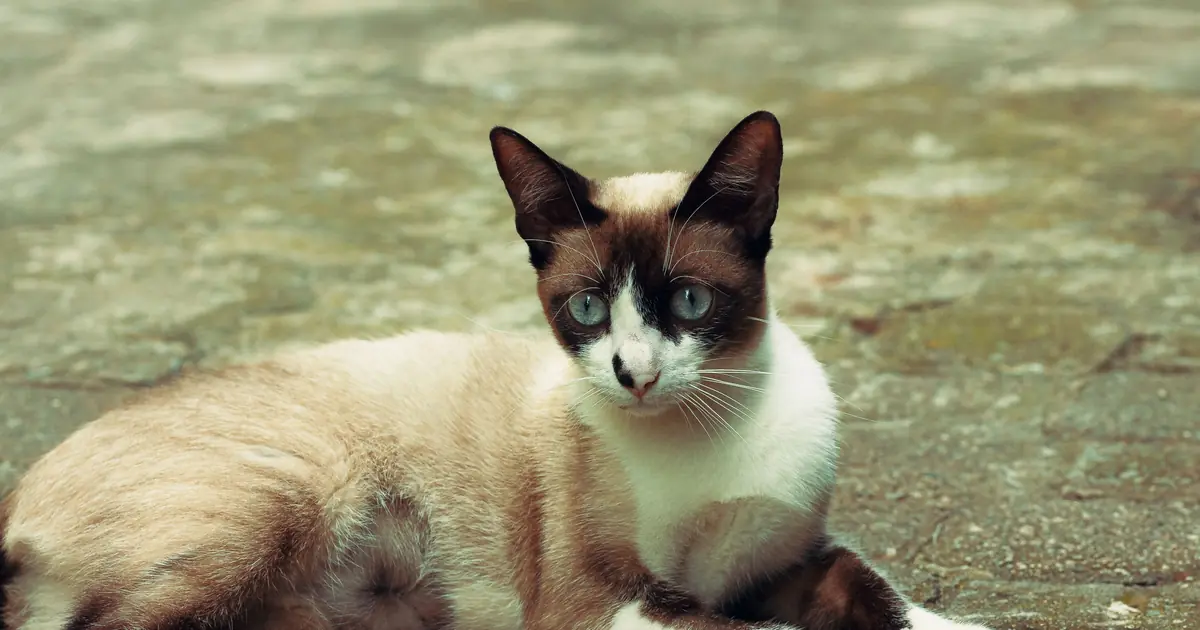
Picture this. You bring home a fluffy white kitten, no markings, just a soft little snowball with blue eyes. A few weeks later, dark “boots” start creeping up the legs. The face fills in with shadow. And one day you realize your cat is wearing a perfect pair of white socks it grew all by itself.
That’s the Snowshoe cat. And here’s the wild part: nobody, not even the breeder, can promise those white feet will turn out right.
This is one of the rarest pointed breeds in the world, and the reason is almost funny. The markings are so hard to get right that even careful breeding produces a lot of cats that miss the mark. So if you want one, you’ll wait. Let’s talk about whether the wait is worth it.
Snowshoe Cat at a Glance
| Origin | United States (Philadelphia), 1960s |
| Weight (Male) | 9 to 12 lbs |
| Weight (Female) | 7 to 10 lbs |
| Lifespan | 12 to 15+ years (some reach 20) |
| Coat | Short, smooth, single coat; pointed with white markings |
| Colors | Seal point and blue point most common; also chocolate, lilac, and more (varies by registry) |
| Energy Level | Moderate to High |
| Grooming Needs | Low |
| Good With Kids | Yes |
| Good With Other Pets | Yes, including cat-friendly dogs |
| Average Price | $1,500 to $3,000 from breeders |
Where Did the Snowshoe Cat Come From?
The Snowshoe cat started with a happy accident in 1960s Philadelphia. A Siamese breeder named Dorothy Hinds-Daugherty had a litter where three kittens showed up wearing white feet. Siamese cats aren’t supposed to have white feet. But these did, and they were gorgeous.
Instead of writing it off, she leaned in. She crossed those oddly-marked Siamese with bicolor American Shorthairs to lock in the look. The breed was almost named “Silver Laces” before she settled on “Snowshoe” for those snowy white paws. Honestly, good call. Silver Laces sounds like a racehorse.
Hinds-Daugherty eventually stepped away from the project. A breeder named Vikki Olander picked it up, wrote the first breed standard, and kept the Snowshoe alive when it nearly fizzled out. That dedication is a big reason the breed exists at all today.
So Is the Snowshoe a Recognized Breed?
Yes, by several registries, but not all of them. The Snowshoe earned championship recognition with The International Cat Association (TICA) in 1993, and it’s also accepted by the Cat Fanciers’ Federation (CFF) and the American Cat Fanciers Association (ACFA). The big holdout is the Cat Fanciers’ Association (CFA), which doesn’t grant the Snowshoe full recognition.
The reason isn’t snobbery. CFA recognition needs a healthy population of cats and active breeders, and the Snowshoe is just too rare to easily meet those numbers. It’s a numbers problem, not a quality problem.
What Does a Snowshoe Cat Look Like?
A Snowshoe is a pointed cat, which means the face, ears, legs, and tail are darker than the body. Think Siamese coloring, but with two signature twists: crisp white feet (the “snowshoes”) and a white inverted-V splashed across the face, between and around the eyes.
The body is medium-sized and surprisingly solid. Pick one up and you’ll feel it. They’re heavier than they look, with the athletic build of the American Shorthair side of the family. The eyes are a striking blue, the coat is short and smooth, and the whole package reads as “Siamese that hit the gym and put on socks.”
Snowshoe Kittens Are Born Pure White
Here’s the part that surprises new owners. Snowshoe kittens are born completely white. No points, no boots, nothing. The color develops over the first few weeks as the points darken and fill in. It’s a slow-motion reveal, and it’s part of the magic.
It’s also the breeder’s nightmare. The white markings are controlled by tricky genetics, and there’s no way to guarantee a kitten will grow into the textbook look. A breeder can plan everything perfectly and still get feet with too much white, or not enough, or a crooked V. That unpredictability is exactly why the breed stays rare.
What Colors Do Snowshoe Cats Come In?
Seal point (a warm dark brown) and blue point (a soft gray) are the two most common Snowshoe colors. Depending on the registry, you’ll also see chocolate, lilac, and a few others. TICA accepts a wide range of point colors, while some registries stick to seal and blue.
The lighter colors like chocolate and lilac are rarer for a practical reason: they don’t contrast as boldly against the white feet, and they take more specialized breeding to produce. The whole appeal of a Snowshoe is that crisp dark-and-white contrast, so seal point tends to be the showstopper.
What Is a Snowshoe Cat’s Personality Like?
If you want a cat that mostly ignores you, keep walking. Snowshoes are velcro cats. They want to be in the room, on your lap, helping you type, supervising your shower. They bond hard with their people and follow you around like a small chatty shadow.
They’re often called dog-like, and it fits. Many learn to play fetch, walk on a leash, and come when called. They’re smart, which is great until they figure out how to open the cabinet you’ve been keeping treats in.
And yes, they talk. They inherited the Siamese gift of gab, so expect commentary. The good news is their voice is softer and sweeter than the classic Siamese foghorn. It’s more of a friendly running conversation than a 6am yowl-fest. (Mostly.)
Do Snowshoe Cats Really Like Water?
A lot of them do, yes. Snowshoes are known for being water-curious, and you may catch yours batting at a dripping faucet, dunking a paw in the water bowl, or trying to join you at the bathtub’s edge. Not every individual loves it, but plenty find running water fascinating. Keep your full glass of water away from the table edge. You’ve been warned.
Is the Snowshoe Cat Right for You?
The Snowshoe is a fantastic family cat, but it is not a low-maintenance, leave-it-alone-all-day kind of cat. This breed wants company and gets genuinely lonely without it. Be honest with yourself about your schedule before you commit.
A Snowshoe is a great fit if you:
- Are home a lot, or have other pets to keep one company
- Want an affectionate, interactive cat that’s part of daily life
- Don’t mind a chatty companion
- Have patience to wait (and pay) for a rare breed
A Snowshoe is probably the wrong pick if you:
- Work long hours and live alone with no other pets
- Want a quiet, independent, aloof cat
- Need a kitten next week (these take time to find)
- Are on a tight budget for the purchase price
Snowshoe Cat Health Issues to Know About
Snowshoes are generally hardy, healthy cats, and many live well into their late teens. But because of their Siamese roots, there are a few things worth knowing before you bring one home. None of these should scare you off; they just help you choose a responsible breeder and watch for early signs.
| Condition | What to Know |
|---|---|
| Crossed eyes | A cosmetic Siamese trait that sometimes appears. It doesn’t hurt the cat or affect daily life. |
| Kinked tail | Another harmless Siamese throwback. Purely cosmetic, no health impact. |
| Hypertrophic cardiomyopathy (HCM) | A heart-muscle condition seen in many cat breeds. Good breeders screen breeding cats. |
| Dental (periodontal) disease | Common across cats; Snowshoes benefit from regular dental care. |
| Respiratory sensitivity | Some pointed breeds can be a touch more sensitive; watch for breathing issues. |
The crossed eyes and kinked tail are worth repeating: they look unusual, but they’re cosmetic leftovers from the Siamese line and cause no pain or problems. A Snowshoe with a slightly crossed gaze is just as healthy as one without.
This article is here to inform, not replace your vet. If your Snowshoe shows trouble breathing, drops weight, stops eating, or seems off, call a licensed veterinarian. Routine checkups catch the bigger issues like HCM early.
Grooming and Care: Do Snowshoe Cats Shed?
Good news for the lazy among us: Snowshoes are easy. They have a short, smooth, single coat, so grooming needs are low. A quick brush once a week keeps the coat glossy and cuts down on loose hair. That’s about it.
Do Snowshoe cats shed? Yes, but only moderately. They’re not heavy shedders, and they don’t have the dense undercoat that turns some breeds into fur factories. You’ll find some hair on the couch, just not handfuls. And no, they’re not hypoallergenic. No cat truly is.
A soft slicker or grooming glove works perfectly for their short coat. Add nail trims every couple of weeks and regular tooth brushing, and you’ve covered the basics. They’re a wonderful low-effort grooming breed.
Feeding and Diet for a Snowshoe Cat
There’s no special Snowshoe diet, but there are smart habits. Feed a high-quality, protein-rich cat food appropriate for your cat’s life stage, kitten, adult, or senior. Snowshoes are active and muscular, so they do well on real animal-protein-forward nutrition.
Watch the portions. These cats are food-motivated and clever enough to beg convincingly, and a bored indoor Snowshoe can put on weight. Measure meals instead of free-feeding a full bowl. Fresh water always, ideally in a few spots, since water-loving Snowshoes often enjoy a pet fountain.
If your Snowshoe is fascinated by running water (many are), a fountain can encourage healthy drinking and double as entertainment.
PetSafe Drinkwell Pet Fountain
A circulating water fountain that keeps water fresh and moving, which appeals to water-curious cats like the Snowshoe. It’s an easy way to boost daily water intake, especially helpful for kidney and urinary health over the long run.
Exercise and Enrichment
A Snowshoe needs a job, or at least a good game. These are smart, athletic cats, and a bored one will invent its own entertainment (usually involving your blinds or your countertops). Plan for daily play.
Wand toys, puzzle feeders, and fetch are all winners. Many Snowshoes genuinely retrieve, so a crumpled ball or a small toy thrown down the hall can keep one busy and happy. Leash training works for plenty of them too, if you want a cat that walks with you.
Vertical space matters. Give yours a tall cat tree or some shelves to climb and perch on, because these cats love a high vantage point to supervise their kingdom from.
Living With Kids, Dogs, and Other Cats
This is where the Snowshoe shines. They’re deeply social and tend to get along with everyone: kids, other cats, and dogs that like cats. They’re playful and tolerant, which makes them a strong pick for busy family homes.
Because they crave company so much, a Snowshoe often does better with a companion than alone. A second cat or a friendly dog can be the difference between a happy cat and a lonely, anxious one if your house is empty during work hours.
Always supervise young kids with any cat and teach gentle handling. But as breeds go, the Snowshoe is about as people-friendly and pet-friendly as they come.
Snowshoe Cat Lifespan and Aging Tips
Snowshoe cats typically live 12 to 15 years or more, and thanks to their hardy mixed heritage, some reach their late teens or even 20. That’s a long, lovely commitment.
To help yours age well, stay on top of yearly vet visits (twice yearly for seniors), keep their teeth clean, manage their weight, and screen for heart issues like HCM as they get older. Senior Snowshoes appreciate easy access to litter boxes, soft warm sleeping spots, and a steady routine. Keep the play going too; mental stimulation keeps older cats sharp.
How Much Does a Snowshoe Cat Cost?
A Snowshoe kitten from a reputable breeder usually costs between $1,500 and $3,000, with show-quality or breeding-prospect kittens climbing toward $4,000. Pet-quality kittens with slightly imperfect markings often sit at the lower end.
Why so much? Two reasons. First, the breed is genuinely rare, with few active breeders and long waitlists. Second, that price reflects real work: health screening of the parents, TICA registration, vaccines, deworming, microchipping, and often an early spay or neuter before the kitten goes home.
| Expense | Estimated Cost |
|---|---|
| Kitten from breeder | $1,500 to $3,000+ |
| Adoption (if available, very rare) | $50 to $350 |
| Initial supplies (litter box, tree, toys, carrier) | $150 to $300 |
| Annual food and litter | $400 to $700 |
| Routine vet care per year | $200 to $400 |
Expect rarity to push both the price and the wait time higher than a common breed. If a “Snowshoe” is being sold cheap with no health records and no waitlist, be suspicious. That’s a red flag, not a bargain.
Where to Find a Snowshoe Cat Ethically
Finding a Snowshoe takes patience, because there just aren’t many breeders. Start with TICA’s breeder directory and breed-specific clubs, then expect to join a waitlist. A good breeder won’t have kittens ready on demand, and that’s actually a good sign.
What a responsible Snowshoe breeder looks like:
- Health-tests their breeding cats and shares results
- Raises kittens in the home, well socialized
- Lets kittens stay with mom until at least 12 weeks
- Asks YOU questions and offers a health guarantee
- Is registered with TICA or another recognized registry
Walk away from anyone selling very young kittens, refusing to show the parents or living conditions, always having kittens in stock, or pushing a quick cash sale. Rescue is a long shot for a breed this rare, but it’s worth checking breed-specific rescues and shelters, since Siamese-mix cats with snowshoe-style markings do turn up.
Snowshoe vs Siamese, Birman, and Ragdoll: Similar Breeds
The Snowshoe gets confused with a few other pointed, blue-eyed breeds. Here’s how to tell them apart and which might suit you instead.
| Breed | How It Compares to the Snowshoe |
|---|---|
| Siamese | The Snowshoe’s parent breed. Slimmer, louder, no white feet. More intense and demanding than a Snowshoe. |
| Birman | Long-haired and pointed with white “gloves” on the paws, but fluffier, calmer, and not as chatty. |
| Ragdoll | Big, long-haired, mellow, and floppy. Pointed and blue-eyed, but more laid-back than the busy Snowshoe. |
| Tonkinese | Siamese x Burmese mix. Social and playful like a Snowshoe, but without the white markings. |
| Balinese | Basically a long-haired Siamese. Talkative and smart, similar temperament, different coat. |
Snowshoe vs Siamese: The Quick Version
A Snowshoe is a Siamese with white feet, a white face V, a sturdier body, and a gentler voice. If you love the Siamese look and brains but want something a little softer, less shrill, and a touch cuddlier, the Snowshoe is your cat. If you want the sleek, vocal, high-drama original, go Siamese.
Common Snowshoe Cat Myths and Misconceptions
This breed gets misunderstood a lot, partly because so few people have actually met one. Let’s clear up the big ones.
Myth: Grumpy Cat was a purebred Snowshoe. Not quite. Grumpy Cat (real name Tardar Sauce) was a mixed-breed cat, not a registered Snowshoe. But her cream-and-dark coat with those pale markings looked a lot like a Snowshoe, which is why the comparison stuck. Her famous frown actually came from feline dwarfism and an underbite, not the breed.
Myth: Snowshoes are just Siamese with white paws. They share Siamese ancestry, but the American Shorthair influence gives them a sturdier body, a calmer voice, and a different temperament. They’re their own breed.
Myth: Crossed eyes mean the cat is unhealthy. Nope. Crossed eyes and kinked tails are cosmetic Siamese traits. They don’t cause pain or affect the cat’s health.
Myth: They’re hypoallergenic. No cat is truly hypoallergenic, and the Snowshoe is no exception. They shed moderately and produce the same allergens other cats do.
Snowshoe Cat FAQ
Q: Are Snowshoe cats rare?
Yes, the Snowshoe is one of the rarer cat breeds in the world. The white markings are controlled by unpredictable genetics, so even careful breeding often produces cats that don’t meet the breed standard. Few active breeders and long waitlists keep numbers low.
Q: Are Snowshoe cats friendly?
Very. Snowshoe cats are affectionate, social, and dog-like, bonding closely with their families. They get along with kids, other cats, and cat-friendly dogs, and they often follow their people from room to room.
Q: How much is a Snowshoe cat?
A Snowshoe kitten from a reputable breeder typically costs $1,500 to $3,000, with show-quality kittens reaching around $4,000. The high price reflects the breed’s rarity, small breeder pool, and the health screening and care a good breeder provides.
Q: Do Snowshoe cats shed a lot?
Snowshoe cats shed only moderately. Their short, single coat doesn’t have a heavy undercoat, so a weekly brushing keeps loose hair under control. They’re a low-maintenance grooming breed, but they are not hypoallergenic.
Q: What’s the difference between a Snowshoe and a Siamese?
A Snowshoe is part Siamese but has white feet, a white inverted-V on the face, a sturdier body, and a softer voice. Siamese cats are slimmer, louder, and more intense. The Snowshoe is generally a gentler, cuddlier version of the Siamese look.
Q: How long do Snowshoe cats live?
Snowshoe cats usually live 12 to 15 years or more, and some reach their late teens or even 20. They’re a hardy breed, and good diet, dental care, weight management, and regular vet checkups help them age well.
Q: Are Snowshoe cats vocal?
Yes, Snowshoe cats are talkative thanks to their Siamese heritage. The difference is the volume and tone: their voice is softer and sweeter than the classic Siamese, more of a friendly running conversation than a loud yowl.
Q: Was Grumpy Cat a Snowshoe?
Grumpy Cat was a mixed-breed cat, not a registered Snowshoe, but her coloring and markings closely resembled the breed, which is why people made the connection. Her famous frowning face came from feline dwarfism and an underbite, not from being a Snowshoe.
The Final Verdict: Should You Get a Snowshoe Cat?
If you want a cat that acts like a small, chatty, water-loving dog and treats you like its favorite person on earth, the Snowshoe cat is hard to beat. They’re affectionate, smart, family-friendly, and easy to groom. For an interactive household with time and company to give, they’re close to perfect.
The catch is real, though. They’re rare, they’re pricey, you’ll likely wait months, and they genuinely don’t like being left alone all day. This is not a low-involvement pet. But if that sounds like your kind of relationship, a Snowshoe will reward you with years of devotion (and running commentary). Talk to your vet and a reputable breeder, take your time, and you’ll end up with one of the most charming cats most people have never even heard of.

Hello and welcome to The Ideal Cat!
We are some passionate cat owners from different professions. We love our cats and have a lot of experience in how to care for our pets. We are incredibly excited to share our knowledge, experience, and research with you. So you can take good care of your loving cat. We will answer most of the common questions about owning cats, taking care of them, etc. If you have any question contact with us. Thanks for visiting! Enjoy the content.
