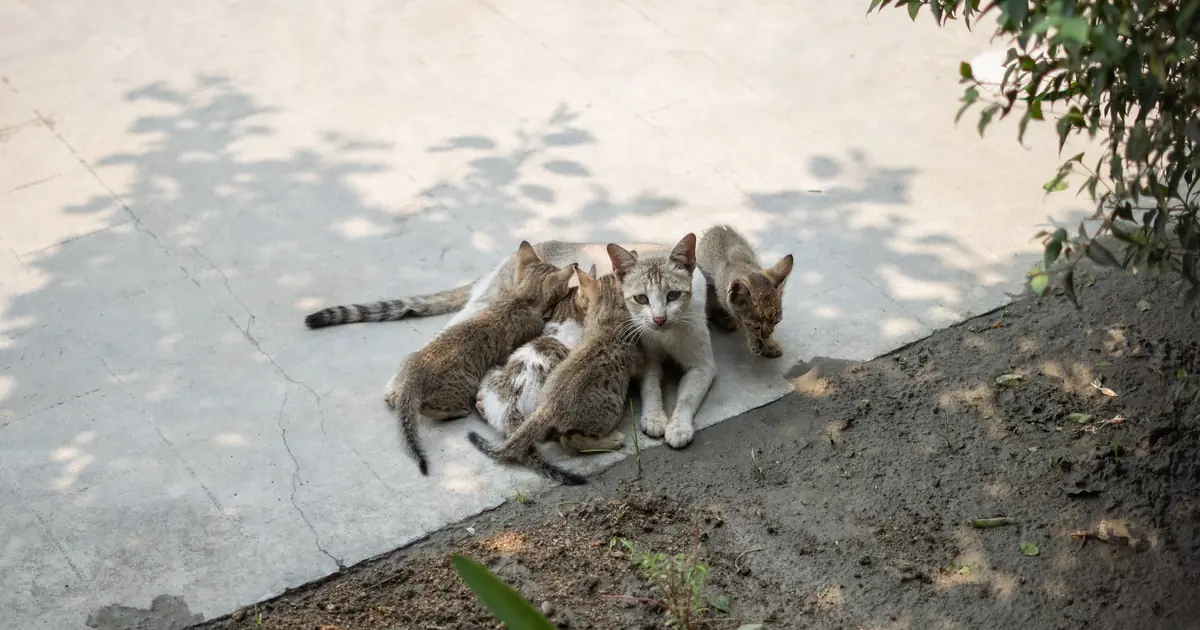
If you’ve got an older, unspayed female cat and she’s suddenly yowling at the door again, you might be wondering if she’s really still able to have kittens. The honest answer surprises a lot of cat parents: yes, she probably is.
Unlike dogs or humans, cats don’t have a hard stop button on fertility. There’s no clean cutoff age where a female cat’s body simply closes up shop. That’s actually one of the reasons unplanned litters happen so often, even from cats their owners assumed were “too old” to get pregnant. Let’s get into what actually happens to a cat’s fertility as she ages, and why spaying is the safer path no matter how old she is.
- Cats do not go through menopause. An unspayed female can keep cycling and conceiving into old age.
- Fertility usually peaks between 1 and 7 years old, then starts declining after about age 7 to 10.
- A cat can start having kittens as young as 4 to 6 months old, sometimes before she’s even fully grown.
- A single unspayed female can have 2 to 3 litters a year, and that math adds up fast over a lifetime.
- Spaying is the only reliable way to stop a cat from having kittens and it also prevents serious health risks like pyometra.
At What Age Do Cats Stop Having Kittens?
Cats don’t have a set age where they stop having kittens entirely. Fertility gradually declines after around 7 to 10 years old, but plenty of unspayed females have gotten pregnant well into their teens. There’s no biological switch that flips off, just a slow fade.
That’s a very different picture from human reproduction, where menopause marks a clear end point. A cat’s ovaries keep releasing eggs and her body keeps cycling for most of her life unless she’s spayed. Older queens (the term for female breeding cats) tend to have smaller litters, longer gaps between pregnancies, and a harder time carrying a pregnancy to term. But “harder” isn’t the same as “impossible.” This is exactly why vets don’t consider any unspayed female cat truly safe from pregnancy just because she’s gotten older.
When Do Cats Start Having Kittens?
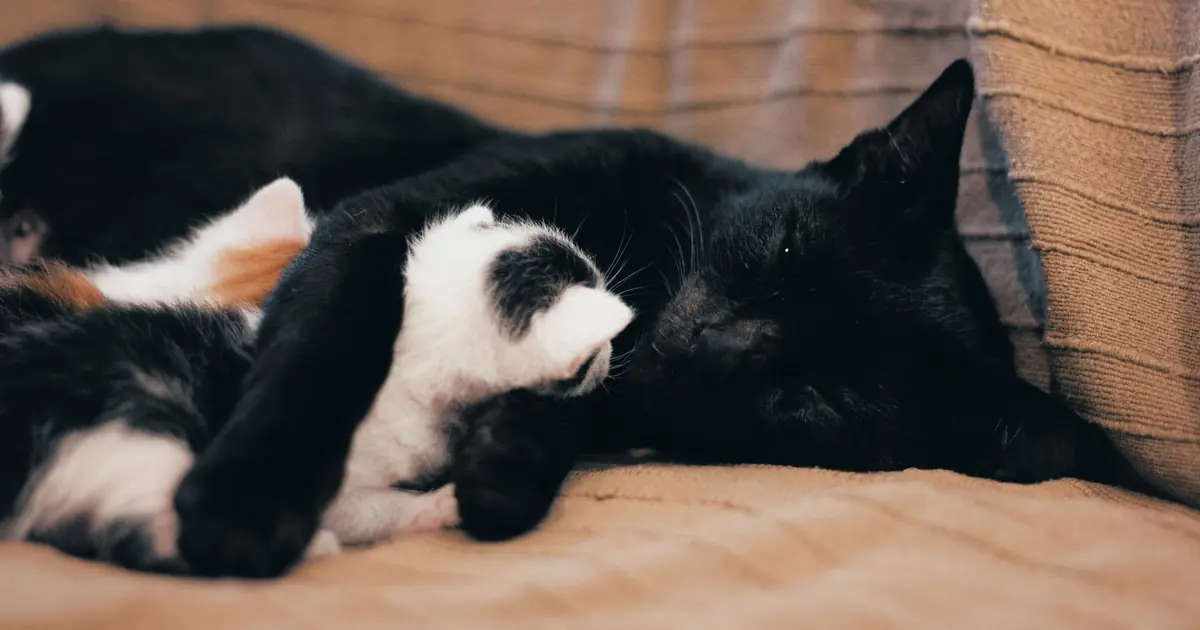
Cats reach sexual maturity as early as 4 to 6 months old, and some can get pregnant even younger. That’s shockingly young when you picture it: a kitten who hasn’t finished growing herself, already able to carry a litter of her own. If you want the full picture of feline puberty timing, check out our guide on when cats go through puberty.
This early start is one of the biggest reasons accidental litters happen. A lot of cat parents assume they have months to schedule a spay appointment, then discover their “kitten” is already in heat at 4 months old. We cover the exact ages and risk factors in our post on how young cats can get pregnant. The takeaway: if you have an intact female kitten, don’t wait until she “seems grown up” to talk to your vet about spaying.
Do Cats Go Through Menopause?
No, cats do not go through menopause. Unlike humans, female cats keep having heat cycles and can keep getting pregnant for essentially their entire lives unless they’re spayed. There’s no natural end to fertility built into feline biology the way there is in ours.
What does change with age is quality, not availability. Older cats tend to have fewer eggs viable for fertilization, more irregular cycles, and pregnancies that are more physically taxing. Litters often get smaller and kittens can be born weaker. Some senior cats also develop reproductive tract issues that make pregnancy less likely or more dangerous even while she’s technically still fertile. So while an old cat absolutely can get pregnant, her body isn’t handling it the way it did at age 2.
| Life Stage | Fertility Level | Notes |
|---|---|---|
| Kitten (4 to 6 months) | Fertile, often before full growth | Highest risk age for accidental “surprise” litters |
| Prime years (1 to 7 years) | Peak fertility | Largest, healthiest litters; most reliable cycles |
| Senior (7+ years) | Declining but present | Smaller litters, higher pregnancy risk, still possible into the teens |
What Are the Risks of an Older Cat Getting Pregnant?
Pregnancy in an older, unspayed cat carries real risks: harder labors, more birth complications, and smaller or weaker litters. Her own body takes a bigger hit too, since pregnancy and nursing drain calcium, energy, and immune reserves that an older cat has less of to spare.
Picture it this way. A 2-year-old cat’s body is built to handle the physical marathon of pregnancy and nursing a litter. A 10-year-old cat’s body is not built for that same marathon, even if she’s otherwise healthy. Older queens are more likely to need a C-section, more likely to have kittens that don’t survive, and more likely to develop complications like uterine inertia (when contractions weaken or stop during labor). According to the Cornell Feline Health Center, spaying removes these risks entirely and is considered a routine, safe procedure at nearly any healthy adult age.
How Many Litters Can One Cat Have in a Lifetime?
A single unspayed female cat can have 2 to 3 litters a year, with an average of 4 to 6 kittens per litter. Do that math over even 5 or 6 fertile years and one cat’s descendants can number in the hundreds. That’s not an exaggeration, it’s just how exponential math works when a species reaches puberty this young and breeds this often.
If you’re trying to figure out exactly how often this can happen, our guide on how many times a cat can get pregnant in a year breaks down the timeline between heats and litters. And if you’re expecting your cat’s very first litter, our post on how many kittens a first-time mom typically has is worth a read too. This snowball effect is exactly why shelters see so many unplanned kittens every spring and summer, often called “kitten season.”
Why Do Vets Recommend Spaying Instead of Breeding an Older Cat?
Vets recommend spaying rather than breeding an older cat because it eliminates the risks of late-life pregnancy and prevents serious conditions like pyometra, a life-threatening uterine infection. Spaying also cuts the risk of mammary tumors, especially when done before a cat’s first few heat cycles.
Here’s the thing: an intact older female isn’t just at risk during pregnancy. Every heat cycle she goes through without being spayed keeps her exposed to pyometra and hormone-driven cancers. The ASPCA notes that spaying before health problems develop is far safer than treating them later, and International Cat Care points out that age alone rarely rules a cat out as a good candidate for spaying, as long as she’s otherwise healthy. Honestly, if you’re on the fence about spaying an older cat because you think “she’s too old for surgery, so she’s probably too old to get pregnant anyway,” that assumption isn’t a safe bet. Talk to your vet instead of guessing.
What Are the Signs an Older, Unspayed Cat Is in Heat or Pregnant?
An older unspayed cat in heat will still yowl, roll around, hold her tail to the side, and try to escape outside, the same behaviors you’d see in a younger cat. Pregnancy signs include a pink swollen belly area, weight gain, nesting behavior, and increased appetite in the final weeks.
Cats typically cycle every 2 to 3 weeks during breeding season if they don’t get pregnant, and our guide on how often cats go into heat lays out the full pattern. If you suspect your senior cat might already be pregnant, our post on how long cat pregnancies last covers the roughly 63 to 65 day timeline and what to expect along the way. Don’t assume gray hair on her muzzle means she’s aged out of any of this. She hasn’t.
Zoom out and the picture gets bigger than any one cat. Every accidental litter adds to a shelter system that’s already stretched thin, and kitten season hits hardest exactly when unspayed cats of every age keep cycling and conceiving. Spaying your cat, at any age, is one of the simplest things you can do to keep her healthier and keep that cycle from starting in your home.
A quick vet note: this article is educational, not a substitute for veterinary care. Spaying is the safest, most reliable way to prevent unwanted litters and it also protects against pyometra and reduces mammary cancer risk. Talk to your vet about the right time to spay your cat, especially if she’s older or has existing health conditions.
Frequently Asked Questions
Q: Can a 10-year-old cat still get pregnant?
Yes, a 10-year-old unspayed cat can still get pregnant. Fertility declines with age but doesn’t disappear, and cats have conceived well into their teens.
Q: Do cats go through menopause?
No, cats do not experience menopause. Unspayed females keep cycling and remain capable of getting pregnant for most of their lives, unlike humans whose fertility ends at a defined point.
Q: At what age should I spay my cat to avoid unwanted litters?
Most vets recommend spaying by 5 to 6 months old, before a cat’s first heat cycle. Spaying at any adult age still prevents future pregnancies and lowers health risks.
Q: Is it dangerous for an old cat to have kittens?
Yes, pregnancy in an older cat carries higher risks, including difficult labor, smaller or weaker litters, and greater strain on the mother’s body compared to younger cats.
Q: How many times can a cat go into heat in a year?
An unspayed cat can go into heat every 2 to 3 weeks during breeding season if she doesn’t get pregnant, which can add up to several cycles across a single year.
Q: Can a cat get pregnant during her first heat?
Yes, cats can get pregnant during their very first heat cycle, which can happen as early as 4 to 6 months old, well before they’re fully grown.
Q: What happens if you don’t spay an older female cat?
An unspayed older cat will keep cycling and remains at risk of pregnancy, pyometra, and mammary tumors for the rest of her life, since none of those risks fade with age alone.

Hello and welcome to The Ideal Cat!
We are some passionate cat owners from different professions. We love our cats and have a lot of experience in how to care for our pets. We are incredibly excited to share our knowledge, experience, and research with you. So you can take good care of your loving cat. We will answer most of the common questions about owning cats, taking care of them, etc. If you have any question contact with us. Thanks for visiting! Enjoy the content.
