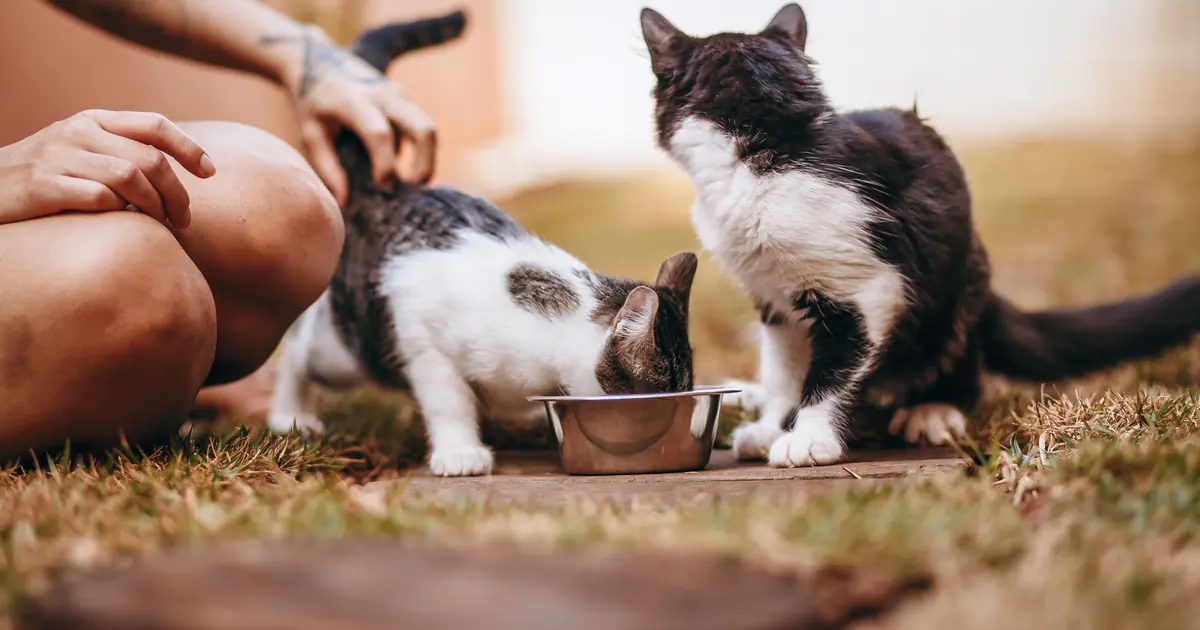
Picture this: dinner goes down in under a minute, and thirty seconds later it’s back up on your rug. If you’ve watched your kitten inhale a bowl of food like it’s a contest, then hunch over and hurl, you already know kittens can absolutely overdo it at mealtime.
Here’s the thing, though. Kittens eat differently than adult cats do. They’re growing fast, burning through calories, and biologically wired to eat more often. So the trick isn’t cutting portions down to nothing. It’s feeding smarter: the right amount, at the right pace, on a schedule that matches how a kitten’s body actually works.
- Kittens can overeat, most often from eating too fast, competing with littermates, or free-feeding without portion control.
- Overeating usually shows up fast: vomiting or spitting food back up, loose stool, and a round, tight belly right after a meal.
- Kittens under six months typically need three to four measured meals a day, tapering to two meals by adulthood.
- A kitten that eats a lot but stays thin or fails to gain weight may have intestinal worms, which is common in kittens and needs a vet check.
- A hard, painful, or persistently swollen belly, or vomiting that doesn’t stop, is a reason to call the vet, not wait it out.
Can a kitten actually overeat?
Yes. A kitten’s stomach is small, and when it fills up fast, food and air get crammed in faster than the body can handle. That’s when you see the telltale signs: a quick meal followed by vomiting, gagging, or a belly that suddenly looks like a little basketball. It’s not a huge medical emergency most of the time, but it’s a clear signal to slow the pace down and rethink how meals are served.
Why do kittens overeat in the first place?
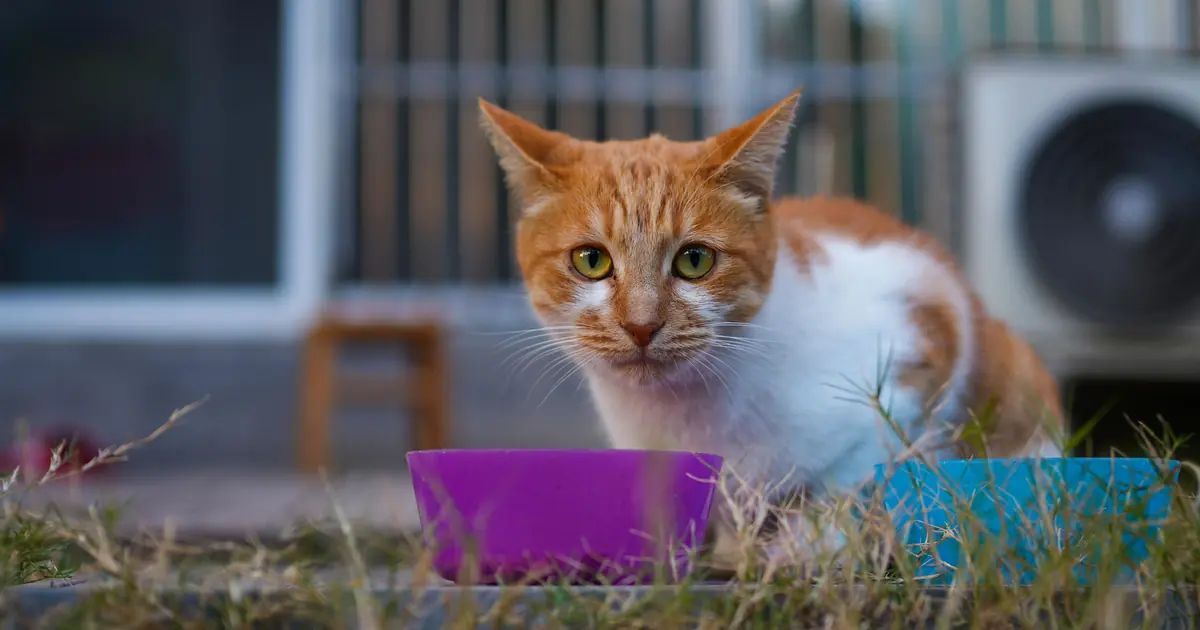
Kittens overeat for a handful of very ordinary reasons, and none of them mean your kitten is broken or greedy. Here’s what’s usually behind it:
- Eating too fast: Kittens don’t pace themselves the way adult cats often learn to. Fast eating means more air swallowed and less time for the stomach to signal “full.”
- Competing with littermates: If a kitten grew up sharing a bowl, or still shares one, it may gulp food out of habit, worried the food (or a sibling) will beat it to the last bite.
- Free-feeding without limits: Leaving a bowl out all day sounds convenient, but some kittens simply don’t self-regulate well, especially in the first few months.
- Genuine hunger from rapid growth: Kittens grow enormously fast and burn a lot of energy, so real hunger between meals is common and normal, not a red flag on its own.
- Intestinal worms: A kitten with worms can eat like it’s starving because parasites are stealing nutrients, and it still might not gain weight properly. Kittens can be born with worms or pick them up from their mother’s milk, so this is worth ruling out early.
- Boredom or stress: Just like people, some kittens eat because there’s nothing else going on. A bored kitten with an always-full bowl will often eat past full.
What happens when a kitten overeats?
When a kitten overeats, the most common result is vomiting or regurgitation soon after the meal, sometimes within minutes. You might also notice loose or soft stool, a visibly bloated or tight belly, general discomfort (hunching, restlessness, not wanting to be touched around the middle), and gassiness. If overeating becomes a daily pattern rather than a one-off, the longer-term risk is excess weight gain, which sets a kitten up for obesity later in life. According to the International Cat Care, kittens that consistently take in more calories than they burn are more likely to become overweight adult cats, so early feeding habits genuinely matter.
If your kitten’s gas seems worse than usual after big meals, you’re not imagining it. Fast eating and gulped air are a common reason kittens fart more than expected.
How much and how often should a kitten eat?
Most kittens need three to four small, measured meals a day up to around six months old, then two meals a day is usually enough once they’re closer to adulthood. This isn’t about limiting a hungry kitten out of spite, it’s about matching meal frequency to a stomach that’s still small and a growth rate that’s genuinely fast. Always check the feeding chart on your kitten’s specific food, since calorie density varies by brand, and confirm the amount with your vet at checkups.
| Kitten Age | Meals Per Day | Feeding Tips |
|---|---|---|
| 0 to 4 weeks | Nursing or bottle-fed on demand | Kitten milk replacer only, never cow’s milk; follow vet guidance closely. |
| 4 to 8 weeks | 4 meals | Wean onto moistened kitten food gradually; small, frequent portions. |
| 2 to 6 months | 3 to 4 meals | Measure portions using the food’s chart; separate bowls if there’s competition. |
| 6 to 12 months | 2 to 3 meals | Start tapering toward adult feeding routine; watch waistline and energy. |
| 12 months+ | 2 meals | Transition to adult cat food per your vet’s timeline. |
How can you prevent a kitten from overeating?
You prevent overeating by controlling portion size, pace, and access, not by cutting calories a growing kitten actually needs. A few things that genuinely help:
- Measure every meal with a kitchen scale or measuring cup instead of eyeballing it.
- Use a slow feeder bowl with ridges or a puzzle design so a fast eater has to work for each bite.
- Give littermates separate bowls, spaced apart, so nobody feels like they’re racing for food.
- Switch from free-feeding to scheduled meals if your kitten is a gulper. Scheduled meals let you control both the amount and the pace.
- Keep meals calm. Feed in a quiet spot away from foot traffic or a noisy dog, since stress makes kittens eat faster.
Feeding on a schedule also makes it much easier to track appetite changes over time, which matters if you’re ever wondering whether your cat always seems hungry for a reason beyond normal growth.
What’s the difference between a healthy kitten appetite and a real problem?
A healthy kitten appetite looks like steady eating at mealtimes, playful energy, and a body that’s gaining weight and length as the weeks go by. A problem looks different: eating with obvious desperation every single meal, a belly that stays hard or swollen between meals rather than just after eating, weight that isn’t tracking upward on schedule, or a kitten that’s ravenous but staying thin no matter how much it eats. That last combination, big appetite plus no weight gain, is one of the clearer signs something (often parasites) is interfering with digestion. If you’re ever unsure how your kitten’s body condition compares to where it should be, it helps to know how to tell if a cat is underweight, since the same checks work on growing kittens too. And if the opposite worries you, plenty of parents also ask about why a cat seems unusually large for its age.
When does overeating or a bloated belly mean it’s time to call the vet?
Call your vet if your kitten’s belly feels hard or painful to the touch, stays swollen for more than a few hours, or if vomiting and diarrhea keep happening rather than settling down after one meal. Also get a vet involved if your kitten eats constantly but isn’t gaining weight, which often points to worms rather than simple overeating. Kittens dehydrate much faster than adult cats, so repeated vomiting or diarrhea can turn serious quickly. According to VCA Animal Hospitals, any kitten showing ongoing digestive upset or poor weight gain should be examined promptly rather than monitored at home.
This article is educational and isn’t a substitute for veterinary care. If something about your kitten’s eating or belly feels off, especially combined with lethargy or repeated vomiting, a licensed vet can check for underlying causes like parasites, an obstruction, or an infection that need proper diagnosis.
Frequently Asked Questions
Q: Is it normal for a kitten to throw up after eating too fast?
Yes, it’s fairly common. When a kitten gulps food quickly, it swallows extra air and doesn’t give its stomach time to register fullness, which often brings the food right back up within minutes. Slowing the meal down with a slow feeder bowl usually fixes it.
Q: Should I free-feed my kitten or give scheduled meals?
Scheduled meals are the safer default for most kittens, especially fast eaters, because they let you control portion size and pace. Some kittens do fine grazing on measured amounts throughout the day, but a kitten prone to gulping or vomiting does better with set mealtimes.
Q: How many times a day should a 2-month-old kitten eat?
A 2-month-old kitten typically needs three to four small meals a day. Their stomachs are still small, so frequent, portioned meals work better than one or two large ones.
Q: Can overeating cause diarrhea in kittens?
Yes, eating too much or too fast can lead to loose stool as the digestive system struggles to process a large amount of food at once. If diarrhea continues past a day or shows up with other symptoms, a vet visit is a good idea.
Q: Why does my kitten’s belly look bloated after eating?
A mildly rounded belly right after a big meal is usually just a full stomach and is nothing to worry about once it settles within an hour or two. A belly that stays hard, swollen, or seems painful to the touch is different and warrants a vet check, since that can point to worms, gas buildup, or a more serious issue.
Q: Can worms make a kitten act like it’s overeating?
Yes. Intestinal worms are common in kittens and can cause a big appetite alongside a bloated belly, poor weight gain, or a dull coat, because the parasites are competing for nutrients. A vet can confirm this with a simple stool check.
Q: At what age can kittens switch to eating like adult cats?
Most kittens can transition toward an adult feeding schedule of two meals a day around 12 months old, once growth slows down. Your vet can help time the switch to adult food based on your kitten’s breed and growth pace.
Q: Does a kitten overeating mean it will become an overweight cat?
Not from one meal, but a repeated pattern of overeating can raise the risk of excess weight later in life. Keeping portions measured and meals scheduled while your kitten is young helps build habits that support a healthy weight as an adult.

Hello and welcome to The Ideal Cat!
We are some passionate cat owners from different professions. We love our cats and have a lot of experience in how to care for our pets. We are incredibly excited to share our knowledge, experience, and research with you. So you can take good care of your loving cat. We will answer most of the common questions about owning cats, taking care of them, etc. If you have any question contact with us. Thanks for visiting! Enjoy the content.
