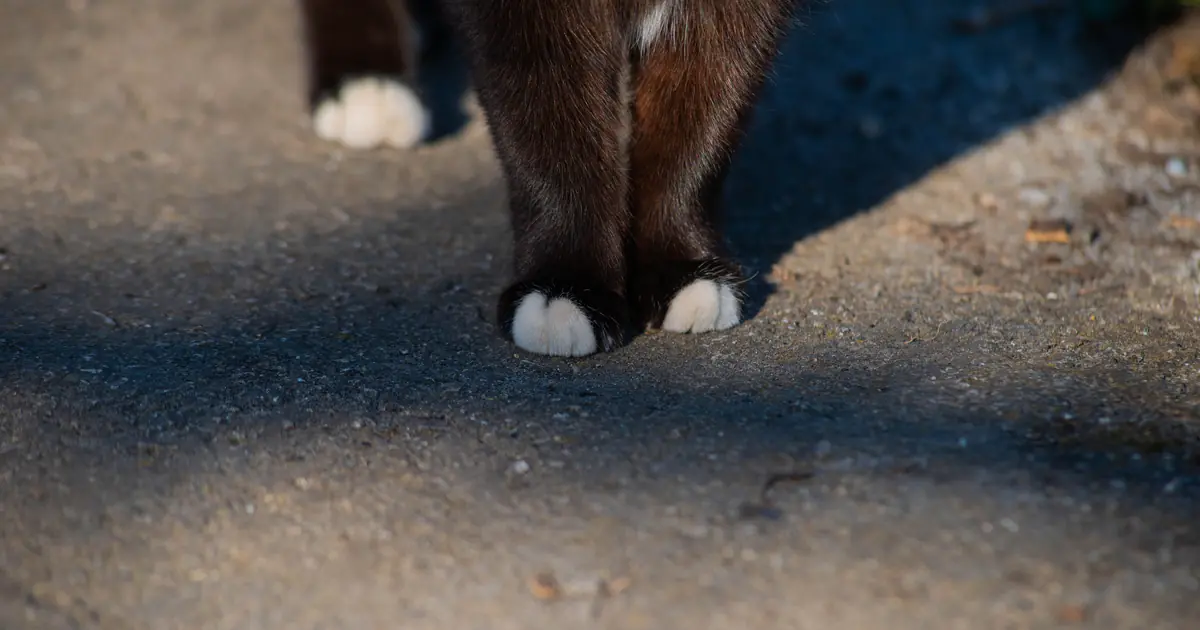
Watch your cat bat a toy off the coffee table, and it sure looks like she’s using an arm. She’s got a shoulder, an elbow, even something that bends like a wrist. So why do vets and anatomy books call that limb a “foreleg” instead of an arm?
It comes down to how the limb is built and how it’s used. Cats are built to walk on all fours, which changes both the job that front limb does and the name we give it. Let’s break down what’s actually going on under that fur, bone by bone.
- Cats do not have arms. Their front limbs are called forelegs, and cats are quadrupeds that walk on all four legs.
- A cat’s foreleg contains the same bone types as a human arm: a shoulder blade, a humerus (upper arm bone), an elbow, and a radius and ulna (forearm bones).
- Cats walk on their toes, a style of movement called digitigrade locomotion, unlike humans who walk on flat feet.
- A cat’s collarbone (clavicle) is small and floats free in muscle instead of attaching to other bones, which gives the shoulder extra flexibility.
- Cats have paws, not hands. Each front paw usually has five toes, including a thumb-like dewclaw that helps with gripping and climbing.
Do Cats Have Arms?
No, cats don’t have arms in the way people do. What looks like an arm on a cat’s front half is called a foreleg, and it functions as a leg: it bears weight, it drives movement, and it plants on the ground with every step. Cats are quadrupeds, meaning they walk and run on all four limbs, so both the front and back limbs are built primarily for locomotion, not for hanging or swinging free the way human arms do.
Still, the confusion is fair. A cat’s foreleg contains the same set of bones, joints, and muscle groups found in a human arm. The difference is function and posture, not the parts list. A cat’s “arm” carries its body weight and touches the ground constantly, while a human arm is free to reach, carry, and manipulate objects without ever bearing full body weight.
What Bones Are in a Cat’s Front Leg?
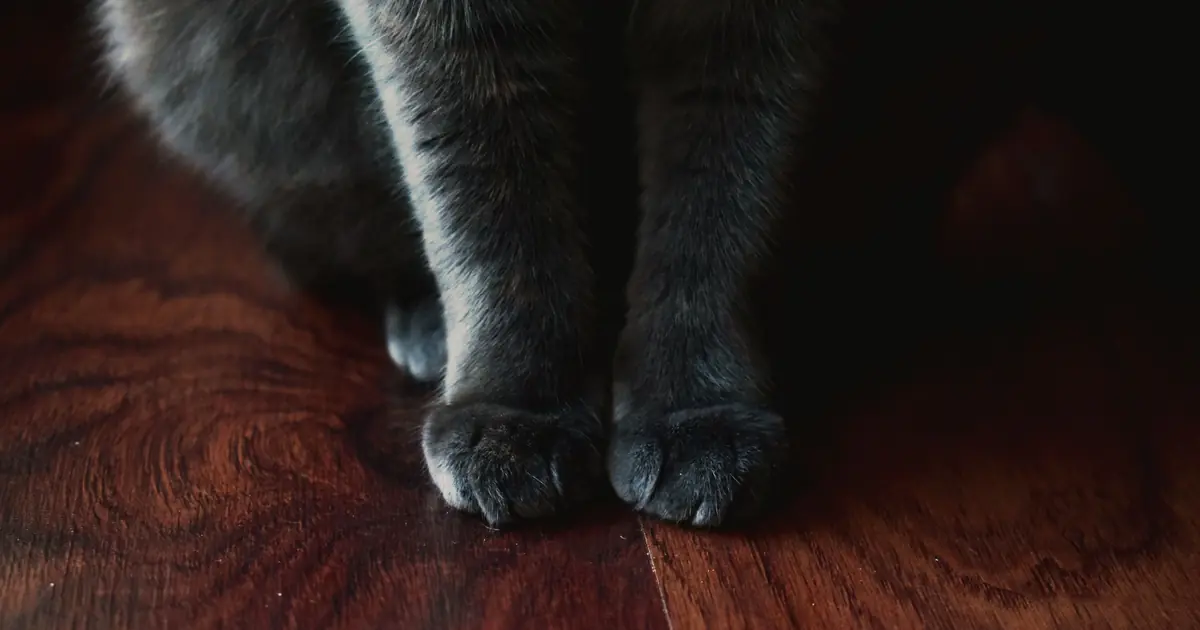
A cat’s front leg is built from the same bone groups as a human arm, just arranged for walking instead of reaching. Starting at the top of the leg and working down to the paw, here’s what’s in there:
- Scapula (shoulder blade): a flat, triangular bone that anchors the leg to the body. In cats it isn’t rigidly joined to the skeleton the way a human shoulder blade is, which is part of why cats move so fluidly.
- Humerus (upper arm bone): the single long bone running from the shoulder down to the elbow.
- Elbow joint: the hinge where the humerus meets the two forearm bones.
- Radius and ulna (forearm bones): two long bones that run side by side from the elbow to the wrist, letting the paw rotate slightly.
- Carpus (wrist): a cluster of small carpal bones, similar in concept to the row of tiny bones in a human wrist. Vets sometimes treat wrist injuries in cats, including a condition called carpal hyperextension, where this joint drops closer to the ground than it should.
- Paw (metacarpals and phalanges): the bones of the foot and toes, tipped with retractable claws.
So a cat’s foreleg genuinely does have an “elbow” and a “wrist” in the anatomical sense. What it doesn’t have is a free hand at the end of it, and it doesn’t get used the way a human arm does day to day.
Why Are They Called Legs Instead of Arms?
Cats’ front limbs are called legs because cats are quadrupeds that stand and move on all four limbs at once, using the front pair for weight-bearing and propulsion just like the back pair. An arm, by definition, is a limb that’s freed up from walking so it can grip, carry, and manipulate things. Since a cat’s front limb never gets that kind of time off, “leg” fits its job better than “arm.”
There’s a second reason too: how cats actually stand. Cats are digitigrade, meaning they walk up on their toes with the heel and wrist held off the ground, the same way dogs, horses, and most fast-running mammals do. Humans, by contrast, are plantigrade and walk flat-footed. That toe-walking stance is built for speed and stealth, both handy traits for an animal that hunts small prey for a living, and it’s one more sign the limb is doing leg work, not arm work.
What Do Cats Use Their Front Legs and Paws For?
Cats put their front legs and paws to work in far more ways than just walking. Beyond carrying weight, that front leg and paw combination handles most of a cat’s hands-on tasks:
- Walking and running: the front legs share weight-bearing duty with the back legs and help steer direction changes.
- Climbing and jumping: strong shoulders and flexible front paws let cats grip bark, furniture, and shelves, which is part of how they manage to jump so high relative to their size.
- Grabbing and holding prey or toys: cats use both front paws together to trap and hold onto a toy or a real catch, almost like a hug.
- Batting and swatting: that quick paw swipe at a dangling string or a rolling ball is pure front-leg dexterity.
- Grooming: a damp paw becomes a washcloth for the face and ears.
- Kneading: that rhythmic paw-pressing cats do on blankets and laps traces back to kitten nursing behavior.
Watch a cat wash its face or knead a blanket and it really does look like an arm and hand at work. Functionally, though, it’s still a leg and a paw doing double duty.
What’s the Deal With a Cat’s Floating Collarbone?
Cats do have a collarbone, called a clavicle, but it’s tiny and doesn’t connect to any other bone. Instead, it floats free inside the shoulder muscles rather than bracing against the sternum or shoulder blade the way a human collarbone does. That loose attachment is a big part of why cats seem almost boneless when they squeeze through tight spaces or twist mid-fall.
Researchers at Cornell University’s veterinary college have pointed to this floating clavicle as a key reason cats are so flexible, since it lets the shoulder blades slide and rotate almost independently of the ribcage. If you’ve ever watched your cat pour herself through a gap that seemed way too narrow, thank that unattached little bone. It’s a big reason cats are so flexible compared to most other mammals their size.
Do Cats Have Hands Instead of Paws?
No, cats have paws, not hands. A paw is a broader, less dexterous structure than a human hand, with toes that can’t spread and grip the way fingers do. What a cat’s front paw does have is a small extra digit on the inner side called a dewclaw, positioned a bit like a thumb, though it doesn’t oppose the other toes the way a real thumb does.
Most cats have five toes on each front paw and four on each back paw, for 18 toes total. Some cats are born with extra toes on their front feet, a harmless genetic trait called polydactyly that gives them noticeably wide, mitten-like paws. PetMD notes that these extra toes usually form on the thumb side of the paw, sometimes making a polydactyl cat’s paw look almost like it has a real thumb. That dewclaw and its polydactyl cousins are as close as cats get to real thumbs, and if you’re curious how they compare to true opposable digits, our guide on whether cats have thumbs goes deeper on that.
How Does a Cat’s Front Leg Compare to a Human Arm?
A cat’s foreleg and a human arm share the same bone blueprint, but the proportions, posture, and job description are different. Here’s a side-by-side look:
| Cat foreleg part | Human arm equivalent |
|---|---|
| Scapula (loosely attached, muscle-suspended) | Shoulder blade (anchored to collarbone and ribcage) |
| Humerus | Humerus (upper arm bone) |
| Elbow joint | Elbow joint |
| Radius and ulna | Radius and ulna (forearm bones) |
| Carpus (wrist, held off the ground) | Wrist (carpal bones) |
| Paw with claws, weight-bearing | Hand with fingers, free to grip |
| Floating, muscle-suspended clavicle | Clavicle rigidly joined to sternum and shoulder blade |
The bones line up almost one for one. What changes everything is that a cat’s version of this limb touches the ground with every stride, while a human arm almost never does. That single difference is why one gets called a leg and the other an arm.
Cats aren’t the only part of the body people mix up, either. If your cat’s back legs bend in a way that has you second-guessing basic feline anatomy, it’s worth reading about whether cats have knees too (short version: yes, but they’re higher up the leg than you’d think, and what looks like a backward knee is actually the ankle).
Frequently Asked Questions
Q: Do cats technically have arms?
No. Cats have forelegs, not arms. The bones inside match a human arm’s shoulder, humerus, elbow, and forearm, but cats use that limb to walk and bear weight, which is what makes it a leg rather than an arm.
Q: Do cats have elbows?
Yes, cats have elbows. A cat’s elbow is the joint where the humerus meets the radius and ulna, roughly halfway down the front leg, and it bends the same direction a human elbow does.
Q: Do cats have wrists?
Yes, cats have a wrist joint called the carpus, made up of several small carpal bones. It sits partway up the front leg, above the paw, and is usually held slightly off the ground when a cat stands still.
Q: Why don’t cats have a rigid collarbone like humans do?
Cats have a clavicle, but it’s small and floats free in the shoulder muscles instead of attaching to the sternum or shoulder blade. This loose setup gives the shoulders extra range of motion, which helps cats squeeze through tight gaps and land safely after a fall.
Q: How many toes do cats have on their front paws?
Most cats have five toes on each front paw and four on each back paw, for 18 toes in total. The extra front toe is a small, thumb-like dewclaw set higher on the inside of the leg.
Q: Do cats have thumbs?
Not true opposable thumbs. Cats have a dewclaw on each front paw that sits in roughly the same spot as a human thumb and helps with gripping prey or climbing, but it can’t move independently to oppose the other toes the way a real thumb can.
Q: What is it called when an animal walks on its toes like a cat?
It’s called digitigrade locomotion. Cats, dogs, and horses all walk on their toes with the wrist and heel lifted off the ground, which is built for speed and quiet movement, unlike humans, who walk flat-footed in a style called plantigrade.
Q: Are a cat’s front legs and back legs built the same way?
No. A cat’s front legs connect to the body through a loosely attached shoulder blade and floating clavicle, while the back legs connect through the pelvis, a much more rigid joint built for powerful pushing off the ground when running or jumping.

Hello and welcome to The Ideal Cat!
We are some passionate cat owners from different professions. We love our cats and have a lot of experience in how to care for our pets. We are incredibly excited to share our knowledge, experience, and research with you. So you can take good care of your loving cat. We will answer most of the common questions about owning cats, taking care of them, etc. If you have any question contact with us. Thanks for visiting! Enjoy the content.
