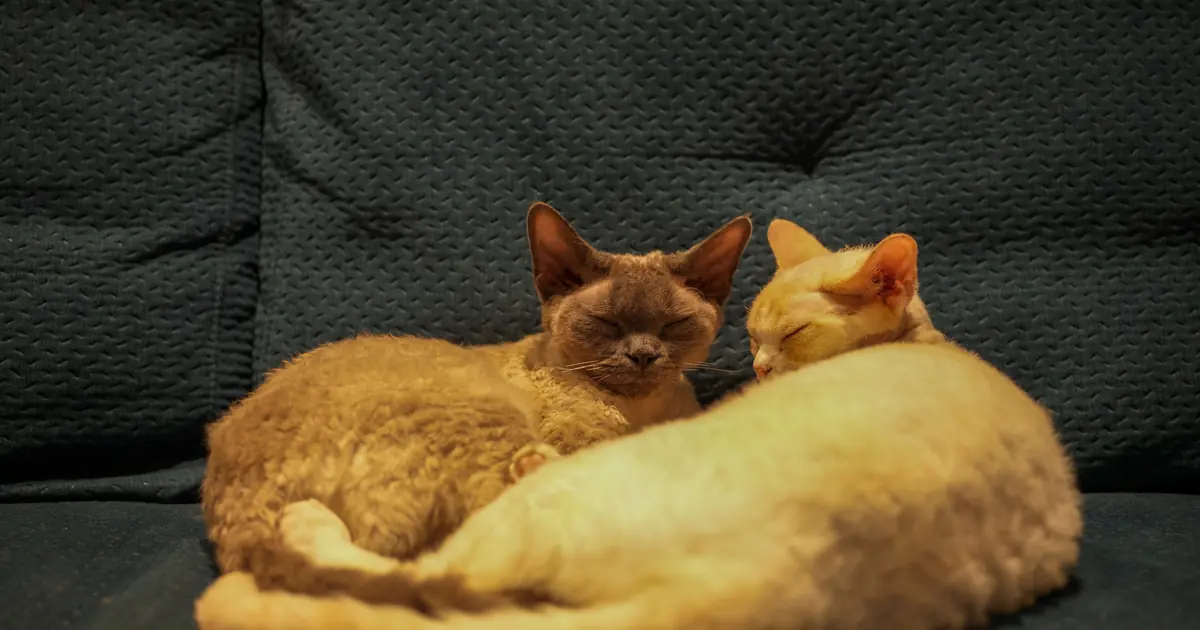
You saw a photo of a cat covered in soft, springy curls, and your first thought was, “Wait, is that a poodle cat?” Totally fair. The fur really does look like a freshly groomed poodle. But here’s the twist most cute photos leave out: a “poodle cat” isn’t a single official breed. It’s a nickname people use for curly-haired cats, and a few different breeds wear it.
So if you typed “poodle cat” hoping to adopt one, take a breath. You can absolutely get a curly cat. You just need to know which breed the photo actually showed. Most of the time, it’s a Selkirk Rex. Sometimes it’s a LaPerm, a Devon Rex, or a Cornish Rex. And once, in Germany, someone tried to make a literal poodle-style cat from scratch. That story gets a little complicated, and we’ll get to it.
🐱 Quick Answer: A “poodle cat” is a nickname, not an official breed. It usually means the Selkirk Rex, a curly-coated cat nicknamed “the cat in sheep’s clothing.” It can also mean the LaPerm, Devon Rex, or Cornish Rex. A separate German breed called the Pudelkatze once aimed for curls plus folded ears, but it’s now considered rare to extinct.
Key Takeaways
- “Poodle cat” is a nickname, most often for the Selkirk Rex, which is also called “the cat in sheep’s clothing.”
- Four curly cat breeds get called poodle cats: the Selkirk Rex, LaPerm, Devon Rex, and Cornish Rex, and each one’s curls come from a different gene.
- The Selkirk Rex curl gene is dominant, while the Cornish Rex and Devon Rex curl genes are recessive, so their coats look and feel different.
- The German Pudelkatze, created in the late 1980s from Devon Rex and Scottish Fold cats, is now considered rare to extinct over welfare concerns.
- Curly cat prices range from roughly $600 for a LaPerm to $3,000 or more for a Devon Rex or Selkirk Rex from a breeder.
Is a poodle cat real, or is it made up?
A poodle cat is real in the sense that curly-haired cats are very real. It just isn’t a real breed name on any pedigree. No major cat registry, like The Cat Fanciers’ Association or TICA, recognizes a breed called “poodle cat.” It’s a friendly nickname people invented because the coat looks like poodle curls.
The breed most people mean is the Selkirk Rex. It’s a recognized curly-coated cat that breeders and vets sometimes call “the cat in sheep’s clothing” because the fur really does look like soft lambswool. So when someone says “I want a poodle cat,” they almost always want a Selkirk Rex without knowing the proper name.
And yes, there really was a cat called the Poodle Cat, capital P, in Germany. That’s a different and much rarer story, and we’ll cover it honestly below, welfare warts and all.
Which curly cat does “poodle cat” usually mean?
“Poodle cat” usually means the Selkirk Rex, but four curly breeds share the nickname. Here’s a quick side-by-side so you can match the cat in that photo to a real breed. Each curl comes from a different gene, which is why their coats feel so different in person.
| Breed | Coat and curl | Curl gene | Origin | Typical price |
|---|---|---|---|---|
| Selkirk Rex | Plush, loose, woolly curls, the “poodle” look | Dominant | USA, 1987 | $1,200 to $3,000 |
| LaPerm | Springy ringlets and waves, lighter coat | Dominant | USA, 1980s | $600 to $1,500 |
| Devon Rex | Short, fine, rippled waves, big ears | Recessive | England, 1960 | $1,800 to $3,000 |
| Cornish Rex | Very short, tight, washboard waves | Recessive | England, 1950 | $800 to $2,000 |
If the cat looked thick, round-faced, and teddy-bear soft, you were probably looking at a Selkirk Rex. If it had huge ears, a pixie face, and a thin coat, that’s a Devon Rex. Tight little waves close to the body usually mean a Cornish Rex. Loose corkscrew ringlets often point to a LaPerm.
Poodle cat at a glance: the Selkirk Rex (the headline breed)
Since the Selkirk Rex is the cat behind most “poodle cat” searches, here are its stats. Think of this as the poodle cat profile, with the honest note that “poodle cat” is the nickname, not the registry name.
| Origin | United States (Montana), 1987 |
| Weight (Male) | 11 to 16 lbs |
| Weight (Female) | 6 to 12 lbs |
| Lifespan | 10 to 15 years |
| Coat | Curly, woolly, in shorthair and longhair |
| Colors | Most colors and patterns, including solid, tabby, calico, and pointed |
| Energy Level | Moderate, playful but laid back |
| Grooming Needs | Moderate, gentle brushing a few times a week |
| Good With Kids | Yes, patient and tolerant |
| Good With Other Pets | Yes, including cat-friendly dogs |
| Average Price | $1,200 to $3,000 from a breeder |
Want the full deep dive on this breed alone? We’ve got a dedicated guide.
Where did the poodle cat name come from?
The poodle cat nickname comes from the curly coat, and the cat that earned it most is the Selkirk Rex. The Selkirk Rex started in 1987 in Montana, when a Persian breeder named Jeri Newman noticed one oddly curly kitten in a rescue litter. That single curly cat is the ancestor of every Selkirk Rex alive today.
People took one look at that plush, curly fur and reached for the easiest comparison they had: a poodle. The name stuck because it’s instantly clear. Say “poodle cat” and everyone pictures the same fluffy, curly look, even if the official breed name means nothing to them yet.
What about the German “Poodle Cat” (Pudelkatze)?
The German Pudelkatze, literally “poodle cat,” was a real attempt at a distinct curly breed, not just a nickname. A German breeder named Rosemarie Wolf started it in the late 1980s by crossing Devon Rex cats with Scottish Folds. The goal was bold: a cat with a curly, lambswool coat and folded ears, basically a poodle look with extra cuteness.
Honestly, reliable information on the Pudelkatze is thin, so we’re being careful here rather than inventing details. What sources agree on: it was a chunkier cat than a Devon Rex, with a denser curly coat and folded ears. It was never recognized by the major cat registries, and it’s now considered extremely rare, quite possibly extinct.
The reason it faded matters, and we’ll be straight about it in the health section. Combining the curly gene with the Scottish Fold’s folded-ear gene raised serious welfare concerns, and German animal welfare law that restricts breeding cats with known skeletal defects effectively ended the program.
What does a poodle cat look like?
A poodle cat’s signature feature is its curly or wavy coat, which can range from soft loose ringlets to tight little waves depending on the breed. The Selkirk Rex has the plushest, most “poodle-like” look: dense, woolly curls all over, even on the whiskers, which curl too and sometimes break easily.
The curl itself isn’t styling or grooming. It’s genetics. The hair grows curved instead of straight, so it twists as it comes in. In the Selkirk Rex that curl gene is dominant, which means a kitten only needs one copy to come out curly. In the Cornish Rex and Devon Rex, the curl gene is recessive, so both parents have to carry it.
How the curl differs by breed
- Selkirk Rex: thick, soft, loose curls with real body, the closest to a poodle’s coat.
- LaPerm: bouncy ringlets and waves, often with a slightly tousled, just-woke-up look.
- Devon Rex: short, fine, rippling waves on a slim cat with oversized ears and a pixie face.
- Cornish Rex: very short, tight, even waves that feel like crushed velvet, no guard hairs.
One thing worth knowing: curly does not mean hypoallergenic. All four shed some dander, and no cat is truly allergy-free. If allergies are your reason for wanting a poodle cat, spend real time around the breed first.
What is a poodle cat’s personality like?
Most poodle cats, especially the Selkirk Rex, are famously easygoing, affectionate, and patient. The Selkirk in particular tends to be a mellow lap cat that follows you room to room and tolerates handling well. People often describe them as the “golden retriever” of curly cats.
The rex breeds bring more zoom. Devon Rex and Cornish Rex cats are clowns: high energy, mischievous, and clingy in the best way. They climb, perch on shoulders, and want to be in the middle of everything. LaPerms land somewhere between, curious and gentle, often quietly devoted to one person.
So the personality you get depends heavily on which “poodle cat” you bring home. Want calm and cuddly? Lean Selkirk Rex. Want a furry comedian? Look at the Devon or Cornish Rex.
Is a poodle cat right for you?
A poodle cat is a great fit if you want an affectionate, people-oriented cat and you’re okay with a coat that needs a little gentle care. They’re not high-maintenance divas, but they’re not “set it and forget it” either. Here’s the honest breakdown.
A poodle cat suits you if: you’re home a fair amount, you want a cat that’s interactive and cuddly, and you like the idea of a unique-looking pet that turns heads.
Maybe think twice if: you want a totally independent cat, you travel constantly, or you’re buying purely for “hypoallergenic” reasons (they’re not). Curly breeds also cost more upfront than a shelter cat, and good breeders aren’t cheap.
Are poodle cats healthy? The honest health rundown
Most curly poodle cats are reasonably healthy, but their genetics carry a few specific things to watch, and one of them, the German Pudelkatze cross, raises real welfare red flags. Let’s separate the everyday curly breeds from the controversial one.
For the recognized curly breeds, the curl mutation mainly affects the coat, not the skeleton. Selkirk Rex, LaPerm, Devon Rex, and Cornish Rex cats can live full lives of roughly 10 to 15 years with good care. Like any breed, they have a few inherited risks worth screening for, such as heart conditions (hypertrophic cardiomyopathy) and polycystic kidney disease, depending on lineage.
The rex coat and skin
Rex coats are thin, so these cats can feel the cold and may get oily skin or ear wax buildup, especially the Devon and Cornish Rex. That’s not a disease, just a care quirk. Regular gentle ear checks and the occasional bath keep things comfortable.
The Pudelkatze problem: curls plus folded ears
The German Pudelkatze is the one to flag clearly. It combined the rex curl with the Scottish Fold’s folded-ear gene, and that fold gene is the issue. The same single gene that folds a Scottish Fold’s ears also disrupts cartilage all over the body, a condition called osteochondrodysplasia. It can cause painful, arthritic, malformed joints, and every cat with the folded ear is affected to some degree.
That’s why welfare groups like the RSPCA and UFAW oppose breeding folded-ear cats at all, and why countries including the Netherlands have banned it. Stacking that fold gene onto another mutation is exactly the kind of breeding most experts argue against. So when we say the Pudelkatze is “rare to extinct,” that’s not just bad luck. It reflects a genuine ethical line a lot of breeders refused to cross.
This article is educational, not veterinary advice. If you’re choosing a curly breed or you’ve noticed limping, stiffness, or ear problems in your cat, talk to a licensed vet, and ask any breeder for health-screening records before you commit.
How do you groom and care for a poodle cat?
Grooming a poodle cat is lighter than the curly coat suggests, but it needs a gentle touch. The number one rule for all rex and curly breeds: do not over-brush. Aggressive brushing can pull out the curl, frizz the coat, or even break those delicate curly whiskers.
- Brush gently, a few times a week. Use a soft brush or just your fingers. For longhair Selkirk Rex, a wider-tooth comb helps prevent mats without flattening the curls.
- Bathe occasionally. Thin-coated Devon and Cornish Rex can get oily, so an occasional bath with a cat-safe shampoo keeps the skin happy. Selkirk and LaPerm coats usually need less.
- Clean the ears. Big-eared rex breeds collect wax fast. Check weekly and wipe with a vet-approved cleaner, never a cotton swab deep in the canal.
- Trim nails and keep them warm. Standard nail trims every couple of weeks, and a cozy bed or sweater in winter, since thin coats run cold.
For step-by-step technique on coat care for wavy and woolly cats, see our dedicated guide.
What should you feed a poodle cat?
Feed a poodle cat the same high-quality, protein-rich diet you’d feed any healthy cat, with portions matched to its size and activity. There’s no special “curly cat” food. The coat comes from genes, not nutrition, though good omega-3s and overall nutrition keep any coat looking its best.
A few practical notes. Devon and Cornish Rex cats are slim and active, so they often eat well and rarely get pudgy. The Selkirk Rex is stockier and can gain weight if free-fed, so measure meals. Always keep fresh water available, and choose a complete-and-balanced food labeled for your cat’s life stage. When in doubt about portions or weight, your vet can set a target.
How much exercise and enrichment does a poodle cat need?
Poodle cats need daily play and mental stimulation, with the rex breeds needing the most. Devon and Cornish Rex cats are little athletes who climb, leap, and get bored without outlets. Skip enrichment and they’ll invent their own, usually involving your countertops at 3am.
- Two short play sessions a day with a wand toy or chase toy.
- Vertical space: a tall cat tree, shelves, or window perches.
- Puzzle feeders to work that clever rex brain.
- Rotate toys weekly so they stay interesting.
The Selkirk Rex is calmer and happy with moderate play, but every curly cat does better with a buddy or busy household than with long lonely days.
How do poodle cats do with kids, dogs, and other cats?
Poodle cats are generally excellent family pets, and the Selkirk Rex especially is patient with kids, dogs, and other cats. Their easygoing nature makes them forgiving of the chaos that comes with a busy home.
The rex breeds are social butterflies too. Devon and Cornish Rex cats often bond with dogs and love having company, since they hate being alone. As always, introduce new pets slowly and supervise young children so they learn gentle handling. Done right, a curly cat slots into a multi-pet household beautifully.
How much does a poodle cat cost?
A poodle cat costs roughly $600 to $3,000 from a breeder, depending on the breed, lineage, and quality. Add ongoing costs for food, litter, and vet care like any cat. Here’s the range by breed.
| Breed | Typical breeder price | Notes |
|---|---|---|
| LaPerm | $600 to $1,500 | Often the most affordable curly breed |
| Cornish Rex | $800 to $2,000 | Varies by region and breeder |
| Selkirk Rex | $1,200 to $3,000 | Show lines run higher |
| Devon Rex | $1,800 to $3,000+ | Can reach $5,000 for top lines |
Beyond the kitten price, budget for first-year vet visits, spay or neuter, vaccines, quality food, and supplies. A curly cat is a 12-to-15-year commitment, so factor in the long game, not just the sticker price.
Where can you find a poodle cat?
To find a poodle cat, look for a reputable breeder of the specific curly breed you want, or check breed-specific rescues. Since “poodle cat” isn’t an official breed, search by the real name: “Selkirk Rex breeder,” “LaPerm breeder,” and so on.
- Registry breeder listings: CFA and TICA list registered breeders by breed.
- Breed rescues: rex and curly breeds do turn up in rescue, sometimes through Persian or general cat rescues.
- Ask for health records: a good breeder screens for heart and kidney issues and lets you meet the kitten’s parents.
One firm bit of advice: skip anyone selling a “Pudelkatze” or “poodle cat with folded ears.” Folded-ear breeding carries the welfare problems we covered, and a responsible breeder won’t go near it.
Similar breeds to the poodle cat
If you love the poodle cat look, these are the curly breeds worth comparing. Each one is its own breed with its own personality, so read up before you decide.
- Selkirk Rex: the plushest, most poodle-like curls and the calmest temperament. The classic “poodle cat.”
- LaPerm: bouncy ringlets, lighter build, gentle and curious.
- Devon Rex: pixie face, huge ears, playful clown energy, short rippled coat.
- Cornish Rex: tight velvety waves, slim and athletic, endlessly social.
Common myths and misconceptions about poodle cats
Myth 1: A poodle cat is one specific breed.
Nope. “Poodle cat” is a nickname for several curly breeds, led by the Selkirk Rex. No registry recognizes a breed by that exact name.
Myth 2: Poodle cats are hypoallergenic.
Curly coats don’t make a cat allergy-free. All cats produce the Fel d 1 allergen and shed dander. Spend time with the breed before assuming you’ll be fine.
Myth 3: The curls need fancy grooming.
Actually the opposite. Over-grooming can ruin the curl. Gentle, occasional brushing is better than daily brushing for these coats.
Myth 4: You can buy a “real” Poodle Cat with folded ears.
The German Pudelkatze is rare to extinct, and for good reason. The folded-ear gene causes painful skeletal problems, so responsible breeders don’t produce it.
Frequently asked questions about poodle cats
Q: What breed is a poodle cat?
A poodle cat is usually a Selkirk Rex, a curly-coated breed nicknamed “the cat in sheep’s clothing.” The name can also refer to the LaPerm, Devon Rex, or Cornish Rex. There’s no official breed actually called “poodle cat.”
Q: Is a poodle cat real?
Curly cats are very real, but “poodle cat” is a nickname, not a recognized breed. A separate German breed called the Pudelkatze, or Poodle Cat, did exist, but it’s now considered extremely rare to extinct due to welfare concerns.
Q: Are there really curly-haired cats?
Yes. Several breeds have naturally curly or wavy coats from genetic mutations, including the Selkirk Rex, LaPerm, Devon Rex, and Cornish Rex. The curl happens because the hair grows curved instead of straight.
Q: Which cat looks most like a poodle?
The Selkirk Rex looks most like a poodle, with thick, soft, woolly curls all over its body. It’s the breed people most often mean when they say “poodle cat.”
Q: How much does a poodle cat cost?
A curly “poodle cat” costs about $600 to $3,000 from a breeder. LaPerms are often the most affordable, while Devon Rex and show-quality Selkirk Rex cats can run $3,000 or more.
Q: Are poodle cats hypoallergenic?
No. Curly coats are not hypoallergenic. All cats produce allergens and shed some dander. If you have allergies, spend time around the specific breed before bringing one home.
Q: What was the German Pudelkatze?
The German Pudelkatze, or Poodle Cat, was a breed attempt started by Rosemarie Wolf in the late 1980s by crossing Devon Rex and Scottish Fold cats. It aimed for curly fur and folded ears but is now rare to extinct over welfare concerns linked to the fold gene.
Q: Do poodle cats get along with dogs and kids?
Yes, most curly poodle cats are friendly and adaptable. The Selkirk Rex is especially patient with children and other pets, and the rex breeds often bond well with dogs. Always introduce new pets slowly.
Final verdict: should you get a poodle cat?
If you’ve fallen for that curly, teddy-bear look, a poodle cat can be a wonderful, affectionate companion, you just need to chase the right breed name. For most people, the answer is the Selkirk Rex: plush curls, a mellow personality, and great with families. Want more energy and personality? The Devon or Cornish Rex will keep you laughing.
The one breed to leave alone is the folded-ear German Pudelkatze. The curls are charming, but the health cost isn’t worth it, and that’s why it has all but vanished. Choose a recognized curly breed from a careful breeder, ask for health records, and you’ll get the poodle-cat look without the heartbreak. Run any specific health questions by your vet, and enjoy your future curly cuddle machine.

Hello and welcome to The Ideal Cat!
We are some passionate cat owners from different professions. We love our cats and have a lot of experience in how to care for our pets. We are incredibly excited to share our knowledge, experience, and research with you. So you can take good care of your loving cat. We will answer most of the common questions about owning cats, taking care of them, etc. If you have any question contact with us. Thanks for visiting! Enjoy the content.
