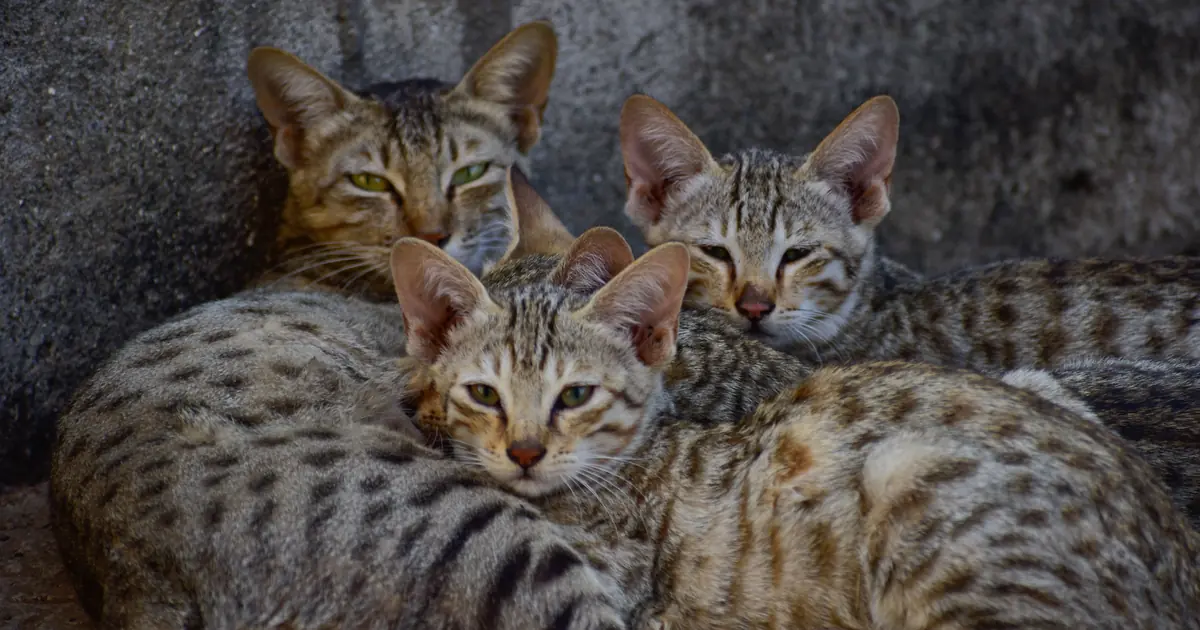
Picture a cat that survived a thousand years in the desert with no breeder, no vet, and no kibble bowl. Just heat, hunting, and grit.
That’s the Arabian Mau. Long before anyone gave it a fancy name, it was the everyday street cat of the Gulf, slinking between buildings in Dubai and stalking lizards across Saudi sand.
And here’s the part that trips everyone up: despite the “Mau” in its name, it has nothing to do with the spotted Egyptian Mau. Different region, different look, different story. Let’s get into it.
- The Arabian Mau is a natural landrace breed from the Arabian Peninsula, not a lab-made or designer cat.
- The Arabian Mau is not the same as the Egyptian Mau: it has no spots and comes from a different region.
- Male Arabian Maus weigh about 9 to 16 pounds and females about 8 to 14 pounds.
- Arabian Mau cats are very hardy, with a lifespan of 12 to 15 years and no well-documented breed-specific genetic diseases.
- The Arabian Mau is recognized by the World Cat Federation but not by CFA or TICA as a championship breed, and it’s hard to find outside the Gulf.
What Is an Arabian Mau Cat?
An Arabian Mau is a natural short-haired cat breed that descends from the desert cats of the Arabian Peninsula. “Natural” matters here. Nobody crossed two breeds in a cattery to invent it. It evolved on its own, over centuries, shaped by heat and survival.
These cats trace back to the African wildcat lineage that spread across the region long ago. They lived as free-roaming street and village cats across Saudi Arabia, the UAE, Kuwait, Qatar, Oman, and Bahrain. Tough, smart, and built for the sun.
The word “Mau” simply means “cat” in old Egyptian, which is exactly why the name causes so much confusion. We’ll clear that up in a minute.
Breed Stats at a Glance
| Origin | Arabian Peninsula (desert landrace, 1,000+ years; formalized in the 2000s) |
| Weight (Male) | 9 to 16 lbs |
| Weight (Female) | 8 to 14 lbs |
| Lifespan | 12 to 15 years (some reach 17) |
| Coat | Short, single coat, no undercoat |
| Colors | Brown tabby, black, white, red/ginger, bicolor, and tabby-and-white |
| Energy Level | High |
| Grooming Needs | Low |
| Good With Kids | Yes, best with older, gentle kids |
| Good With Other Pets | Yes, with slow intros (can be territorial) |
| Average Price | Often free to low-cost adoption in the Gulf; roughly $300 to $1,800 from breeders, where available |
Is the Arabian Mau the Same as the Egyptian Mau?
No. The Arabian Mau and the Egyptian Mau are two completely separate breeds that just share a word. The Egyptian Mau is famous for its natural spots. The Arabian Mau has no spots at all.
Here’s the easiest way to remember it. Egyptian Mau equals spots and Egypt. Arabian Mau equals no spots and the Gulf. That’s the whole thing.
| Feature | Arabian Mau | Egyptian Mau |
|---|---|---|
| Coat pattern | Tabby, solid, bicolor (no spots) | Distinct natural spots |
| Region of origin | Arabian Peninsula (Gulf states) | Egypt |
| Build | Lean, leggy, desert-adapted | Muscular, “cheetah-like” stance |
| Main registry | World Cat Federation (WCF) | CFA, TICA, and others |
| Availability | Rare outside the Gulf | More widely bred worldwide |
So if a “breeder” shows you a spotted cat and calls it an Arabian Mau, something’s off. That’s your first red flag.
History and Origin: A Cat Built by the Desert
The Arabian Mau’s history is basically a survival story. For more than 1,000 years, these cats lived wild and semi-wild across the Arabian Peninsula. No human shaped them on purpose. The desert did the work.
Cats that couldn’t handle blistering heat, scarce water, and lean hunting simply didn’t pass on their genes. What was left over generations was a lean, hardy, heat-tolerant cat with a low-maintenance coat and a sharp brain. Function over fluff.
How It Became a Recognized Breed
The Arabian Mau only became a “breed” in the formal sense recently. In the early 2000s, a felinologist named Petra Mueller, based in the UAE, started documenting these native desert cats. Urban sprawl and crossbreeding with imported cats were thinning out the original population, and she wanted to preserve the real thing.
After years of study and selective breeding to keep the lines true, the breed gained traction. The World Cat Federation approved the Arabian Mau following its 2008 meeting, and the cats became eligible for international shows from January 2009.
One honest caveat: the Arabian Mau is recognized by the WCF, but it is not a championship breed with the CFA or TICA. So depending on where you live, it may barely register as a “breed” at all.
What Does an Arabian Mau Look Like?
An Arabian Mau looks like a cat designed for movement. Medium to large, lean, and athletic, with long legs and a firm, muscular body. Nothing chunky or low-slung here. This is a runner and a jumper.
The head is rounded but a touch longer than it is wide. The ears are the giveaway: large, tall, and set high, almost a little oversized for the face. Those big ears help shed heat, which makes sense for a desert native. The eyes are large, slightly oval, slightly slanted, and often a striking green.
Coat and Colors
The Arabian Mau has a short, single coat with no undercoat. That’s a big deal for two reasons: it sheds very little, and it’s easy to keep clean. The coat lies close to the body and has a smooth, almost glossy feel.
The most recognized colors are brown tabby, black, white, and red (ginger). You’ll also see bicolors and tabby-and-white combos, and yes, even calico-style patterning shows up. The one thing you won’t see is the bold spotting of an Egyptian Mau. Many Arabian Maus carry the soft “ticked” or tabby look common to wild-descended cats, where each hair has bands of color.
Kitten vs Adult
Arabian Mau kittens are leggy, busy, and curious from day one. They fill out into their lean adult frame slowly, and their coat color can settle and deepen as they mature. Don’t expect a fluffy baby phase. These cats are sleek pretty much the whole way through.
Arabian Mau Personality and Temperament
The Arabian Mau is intelligent, loyal, active, and seriously attached to its people. This is not a decorative cat that sleeps 20 hours and ignores you. It wants in on your day.
Think of it as a cat with a working-cat brain. It hunted to eat for a thousand years, so it’s alert, clever, and always scanning for something to do. Bored Arabian Maus get into trouble, so give them a job.
Are Arabian Mau Cats Friendly?
Yes, Arabian Mau cats are friendly and affectionate with their families, and they bond hard with their favorite humans. They tend to follow you around, “help” with chores, and demand a good chunk of attention. Loyalty is one of their best traits.
They’re also social once they trust you. With strangers they can be a bit reserved at first, which tracks for a cat whose ancestors had to be cautious to survive.
The Vocal Thing
Heads up: these cats talk. A lot. The Arabian Mau is a vocal breed, and it will tell you when the bowl is low, when the door is closed, and when it simply wants you to look at it. Owners often notice females are the chattier ones, while males tend to be a little quieter.
If you want a silent, low-key roommate, this probably isn’t your cat. If you like a conversation, you’ll love it.
Is the Arabian Mau Right for You?
The Arabian Mau is right for active homes that want an engaged, playful, talkative cat and can handle a high-energy personality. It’s not right for someone wanting a quiet lap ornament.
You’ll probably love an Arabian Mau if you:
- Want an interactive cat that’s genuinely involved in your life.
- Can offer daily play, climbing space, and mental stimulation.
- Don’t mind a vocal cat with opinions.
- Prefer low grooming and minimal shedding.
- Live somewhere warm, or can keep your home cozy in winter.
You might want to skip it if you:
- Want a calm, quiet, mostly independent cat.
- Are away long hours with no enrichment at home.
- Live somewhere cold and drafty (more on that below).
- Need a breed you can easily buy with papers outside the Gulf.
Arabian Mau Health Issues to Know About
The Arabian Mau is one of the hardiest cat breeds out there, with no well-documented breed-specific genetic diseases. Centuries of natural selection in a brutal climate left a robust gene pool, which is a real perk compared with many heavily-bred pedigrees.
That doesn’t mean immortal, though. Arabian Maus still face the everyday cat health stuff: dental disease, obesity if overfed and under-exercised, parasites, and the usual age-related issues like kidney trouble in their senior years. Routine vet care still matters.
The Cold Sensitivity Catch
Here’s a breed-specific quirk worth knowing. With its short single coat and no undercoat, the Arabian Mau is built for heat, not cold. These cats crave warmth and don’t love chilly, drafty homes. In cooler climates, give yours warm spots, cozy beds, and a heated cat bed in winter if needed.
This guide is educational, not a substitute for a vet visit. Annual checkups (twice a year for seniors) keep small issues small. If your Arabian Mau stops eating, hides, strains in the litter box, or seems suddenly lethargic, call your vet right away.
Grooming and Care
Grooming an Arabian Mau is about as easy as cat care gets. The short, undercoat-free coat means a quick brush once or twice a week is plenty to catch loose hair and keep it shiny. No mats, no daily detangling, no fur tumbleweeds everywhere.
A soft slicker or rubber grooming mitt works great. Round out the routine with the basics most cats need:
- Brush teeth a few times a week to fend off dental disease.
- Trim nails every couple of weeks.
- Check ears now and then and wipe gently if dirty.
- Bathe rarely, only if your cat gets into something.
A gentle grooming glove is honestly all most Arabian Maus need, and a lot of them enjoy the massage feel of it during your weekly once-over.
Feeding and Diet
Feed your Arabian Mau a high-quality, protein-rich diet that matches its active, athletic build. These are lean hunters by nature, so they do well on food where animal protein leads the ingredient list.
A few practical notes. Active cats burn energy, but they can still gain weight if you free-feed an indoor cat all day. Measure meals, keep treats modest, and always have fresh water out (a fountain can encourage drinking). Match portions to your cat’s age, weight, and activity, and ask your vet if you’re unsure.
Exercise and Enrichment
The Arabian Mau needs daily exercise and serious mental stimulation, because this is a high-prey-drive cat that gets restless when bored. A bored Arabian Mau will invent its own fun, and you may not love its ideas.
Lean into that hunting instinct. Wand toys, feather teasers, and toss-and-chase games tap right into it. Rotate puzzle feeders and treat balls to make the brain work for food, which a former desert hunter appreciates.
Vertical space is a big win too. Tall cat trees, shelves, and window perches let an Arabian Mau climb, survey, and burn energy. A window with a view of birds is basically cat television. Two short play sessions a day go a long way toward a calmer, happier cat.
One safety note: many owners are tempted to let this athletic, ex-street cat roam outside. Free-roaming Arabian Maus can be very territorial and face real outdoor dangers like cars, disease, and fights. Indoor life with good enrichment, a catio, or supervised harness time is the safer call.
Living With Kids, Dogs, and Other Cats
The Arabian Mau can do well in a busy household, but it has preferences. It’s affectionate and playful, so it often fits right into family life, with a few caveats per group.
With Kids
Arabian Maus generally do well with older, respectful kids who understand cat boundaries. Their playful energy is a great match for children who want to interact. Very young kids who grab or chase can stress them out, so always supervise and teach gentle handling.
With Dogs
Arabian Maus usually get along fine with calm, cat-friendly dogs that don’t chase. Introduce them slowly and give the cat high escape routes. A dog that respects the cat’s space tends to win it over in time.
With Other Cats
This one needs patience. Many Arabian Maus are territorial, a leftover instinct from defending turf as street cats. They can absolutely live with other cats, but go slow with introductions: separate spaces first, scent swapping, then gradual face-to-face time. Rushed intros are where it goes sideways.
Lifespan and Aging Tips
Arabian Mau cats typically live 12 to 15 years, and well-cared-for cats sometimes reach 17. Their hardy desert genetics give them a real head start on a long life.
To help yours age well, stay ahead of the basics. Keep up dental care, don’t let the weight creep up, and switch to twice-yearly vet visits in the senior years to catch kidney, thyroid, and joint issues early.
As your Arabian Mau slows down, tweak the setup. Add easy-access litter boxes, softer warm beds (remember, they love warmth), and gentle play to keep that clever brain busy. A senior Arabian Mau still wants to be part of things, just at a calmer pace.
How Much Does an Arabian Mau Cost?
The Arabian Mau’s price depends entirely on where you are. In the Gulf, you can often adopt one for little to nothing through local rescues, since many are former street cats. Outside the region, the few available from breeders tend to run roughly $300 to $1,800.
Why the wide range and the high end? Rarity. There simply aren’t many registered breeders, and importing one is expensive and complicated. You’re paying for scarcity, not luxury.
| Cost Item | Estimated Range |
|---|---|
| Adoption (Gulf rescues) | Free to low-cost |
| Breeder kitten (where available) | ~$300 to $1,800 |
| Initial vet setup (spay/neuter, vaccines, microchip) | ~$150 to $400 |
| Yearly food and litter | ~$400 to $700 |
| Routine annual vet care | ~$150 to $350 |
Are Arabian Mau Cats Rare? Where to Find One Ethically
Yes, Arabian Mau cats are rare outside the Arabian Peninsula. Inside the Gulf they’re common as street and rescue cats, but registered, papered Arabian Maus are genuinely hard to come by elsewhere.
If you’re in the region, start with local shelters and rescues. You’ll likely find healthy, friendly Arabian Mau and Arabian Mau mixes that just need a home. Honestly, this is the most ethical and rewarding route, and the most authentic way to get the real desert cat.
If you go through a breeder, look for:
- WCF registration or clear, verifiable breed documentation.
- Health-checked, vaccinated kittens that stay with mom until 12 weeks.
- A clean, home-raised, well-socialized environment.
- A breeder happy to answer questions and show the parents.
Walk away if you see:
- A spotted cat sold as an “Arabian Mau” (that’s not the breed).
- No paperwork plus a suspiciously high price.
- Kittens sold very young, or sellers dodging health questions.
Similar Breeds to Consider
If the Arabian Mau is hard to find near you, a few breeds share its lean look or active, friendly vibe:
- Egyptian Mau: The spotted cousin in name only, athletic and devoted, and far easier to find with papers.
- Abyssinian: A ticked-coat, super-active, people-loving breed with a similar “always busy” energy.
- Domestic Shorthair: Your local mixed-breed shorthair is the closest everyday match: hardy, low-maintenance, and full of personality.
- Oriental Shorthair: Sleek, talkative, and intensely bonded to its people, much like the chatty Arabian Mau.
Common Myths and Misconceptions
The Arabian Mau collects more myths than most breeds, mostly thanks to its name. Let’s bust the big ones.
Myth: The Arabian Mau is just the Egyptian Mau with a different name. False. They’re separate breeds from different regions. The Arabian Mau has no spots; the Egyptian Mau is defined by them.
Myth: It’s a fancy, delicate purebred. Nope. It’s a tough natural landrace that survived the desert on its own for centuries. Hardy is its whole brand.
Myth: Arabian Maus are hypoallergenic. Not exactly. No cat is truly hypoallergenic. Their low shedding and minimal dander may bother mild-allergy folks less, but they still produce allergens.
Myth: Because it’s a desert cat, it can live happily outdoors anywhere. Risky thinking. It’s heat-adapted, sure, but outdoor life still means cars, disease, and fights, and these cats dislike cold climates.
Frequently Asked Questions
Q: Is the Arabian Mau the same as the Egyptian Mau?
No. They’re two separate breeds that only share the word “Mau,” which means “cat.” The Arabian Mau comes from the Arabian Peninsula and has no spots, while the Egyptian Mau comes from Egypt and is known for its natural spotted coat.
Q: Are Arabian Mau cats friendly?
Yes. Arabian Mau cats are friendly, loyal, and affectionate with their families, and they bond strongly with their favorite people. They’re playful and social, though they can be a little reserved with strangers at first.
Q: How much is an Arabian Mau?
In the Gulf, Arabian Maus are often adopted free or cheaply through rescues. Outside the region, the few available from breeders typically cost around $300 to $1,800 because of how rare they are.
Q: Are Arabian Mau cats rare?
Yes, Arabian Mau cats are rare outside the Arabian Peninsula. They’re common as street and rescue cats in Gulf countries but very hard to find as registered, papered cats elsewhere.
Q: Do Arabian Mau cats shed a lot?
No, Arabian Mau cats are low shedders. Their short, single coat has no undercoat, so a quick weekly brush is usually enough to keep loose hair under control.
Q: How big do Arabian Mau cats get?
Arabian Maus are medium to large. Males weigh about 9 to 16 pounds and females about 8 to 14 pounds, with a lean, leggy, muscular build suited to climbing and running.
Q: Are Arabian Mau cats healthy?
Yes, the Arabian Mau is considered very hardy with no well-documented breed-specific genetic diseases, thanks to its natural desert origins. It still needs routine vet care and tends to dislike cold weather because of its short coat.
Q: Are Arabian Mau cats good with kids and other pets?
Generally yes. Arabian Maus do well with respectful older kids and calm, cat-friendly dogs. They can be territorial with other cats, so slow, careful introductions work best.
Final Verdict: Should You Get an Arabian Mau?
The Arabian Mau is a wonderful cat for the right home: hardy, smart, loyal, and refreshingly low-maintenance to groom. If you want an active, chatty, devoted companion and you can keep that busy brain entertained, you’ll be smitten.
Just go in with open eyes. They’re vocal, they need real play, they can be territorial, and they hate the cold. The biggest hurdle for most people is simply finding one outside the Gulf.
If you’re in the region, adopting a desert-born Arabian Mau from a local rescue might be the most rewarding choice you’ll make. You’d be giving a thousand-year survivor a soft couch and a forever bowl. Not a bad trade.

Hello and welcome to The Ideal Cat!
We are some passionate cat owners from different professions. We love our cats and have a lot of experience in how to care for our pets. We are incredibly excited to share our knowledge, experience, and research with you. So you can take good care of your loving cat. We will answer most of the common questions about owning cats, taking care of them, etc. If you have any question contact with us. Thanks for visiting! Enjoy the content.
)