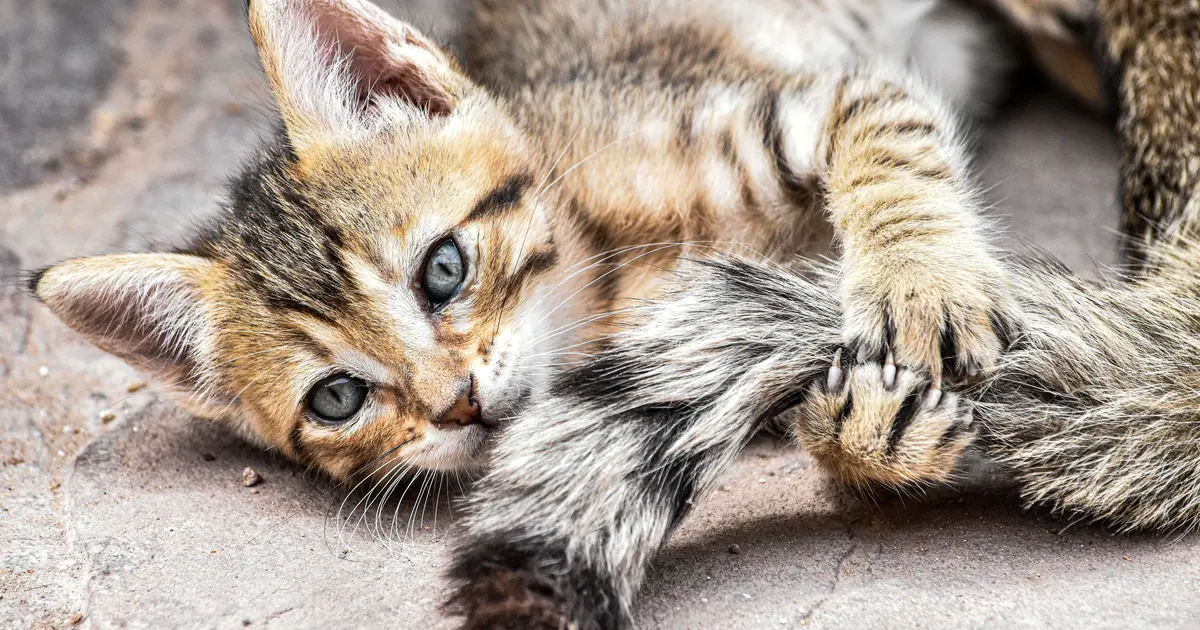
Picture this: your cat suddenly puffs up like a bottle brush, arches its back into a Halloween-decoration hump, and bounces sideways across the living room like it’s dodging an invisible opponent. Then it stops, blinks at you, and trots off like nothing happened. If you laughed out loud the first time you saw it, you’re not alone.
This move has a name (a few, actually): the crab walk, the sideways hop, or the “puff and pounce.” It looks dramatic, but for most cats it’s just a burst of pure joy and play energy, the same theatrical streak behind cats who flop over and play dead. Let’s get into why cats do it, what it means, and the rare cases when it’s worth a vet’s attention.
- The sideways “crab walk” is a playful posture where a cat arches its back, puffs its fur, and hops sideways to look bigger.
- Kittens crab-walk more often than adult cats because it’s part of how they practice hunting and social play skills.
- The sideways hop often shows up alongside the zoomies and an arched-back “Halloween cat” stance.
- A relaxed, bouncy sideways run is play; a stiff, wobbly one paired with falling or head tilting is not.
- A cat that stumbles, falls to one side, or circles constantly outside of play may have vestibular disease, a balance disorder that needs veterinary care.
Why Do Cats Run Sideways?
Cats run sideways because it’s a built-in play move that makes them look bigger and more dramatic to a playmate. The cat arches its spine into a high curve, fluffs its fur and tail, turns its body sideways, and hops or trots in short, bouncy bursts. It’s the same body language you’d see on a Halloween cat decoration, just animated and usually pretty silly to watch.
This posture is called a “lateral display” in animal behavior terms. Cats and many other animals use it to exaggerate their size without any real fighting involved. Think of it as a cat’s way of saying “look how big and fierce I am” while actually just having a blast.
Why Does the Sideways “Crab Walk” Happen During Play?
The crab walk happens during play because it lets cats practice mock combat and predator-prey chasing without anyone getting hurt. A cat might crab-walk toward a housemate, a toy, or even your ankle as an invitation to play, or as a playful bluff meant to look intimidating for a second before the chase starts.
Kittens use this move constantly while wrestling with littermates. According to International Cat Care, this kind of rough-and-tumble play teaches young cats how to bluff, dodge, and pounce, skills that matter for real hunting later. Adult cats keep the behavior around because, honestly, it still works as a fun way to burn off energy and interact with you or another pet.
How Does Sideways Running Connect to the Zoomies and the “Halloween Cat” Pose?
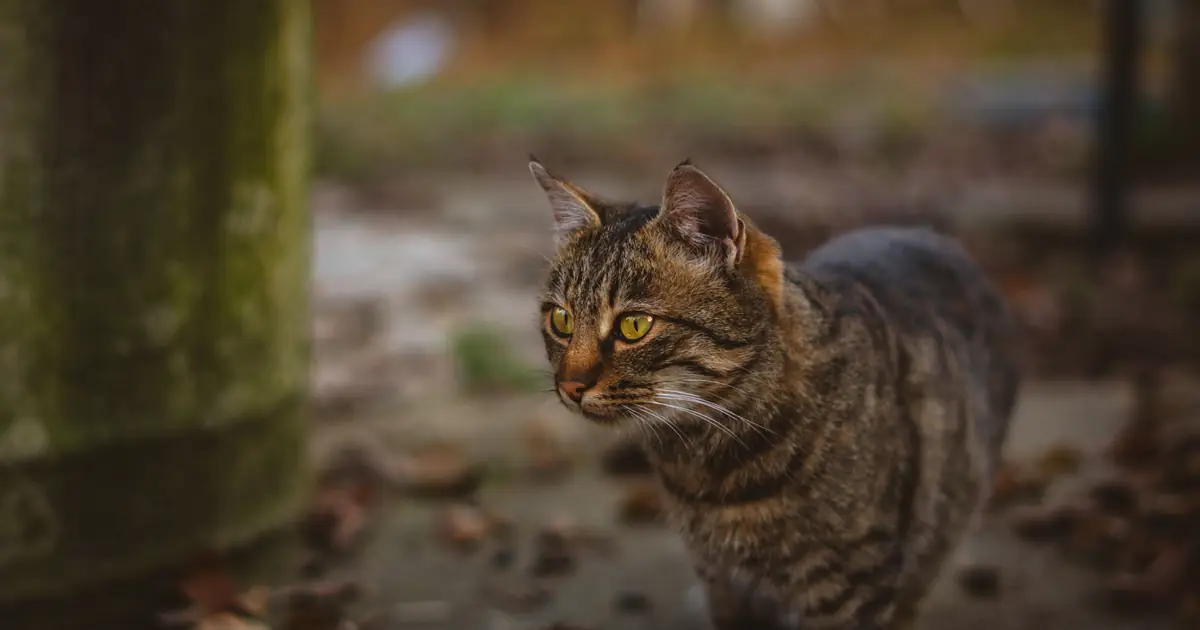
Sideways running is usually just one part of a bigger burst of playful energy that includes the zoomies and the arched-back stance. The zoomies are those sudden, fast sprints around the house, often triggered by pent-up energy, and a crab walk can kick a zoomies session off or cap it. The arched back, meanwhile, is its own signal worth knowing on its own; you can read more about why cats arch their back in different situations, from play to genuine fear.
When you see both together, an arched spine plus a sideways hop, that’s the classic “Halloween cat” look. It’s dramatic on purpose. Nine times out of ten, it’s a game, not a threat.
Is Sideways Running a Sign of Aggression, or Just Play?
Sideways running is almost always play, not aggression, as long as your cat’s body stays loose and bouncy. Watch the details: playful crab-walking comes with forward or sideways-swiveled ears, a puffed but loosely waving tail, and a light, springy gait that stops and starts. The cat often follows it up with a play-pounce or a quick chase, similar to the little sideways wiggle before pouncing that many cats do before jumping on a toy.
True aggression looks different. A genuinely upset cat flattens its ears back against its head, lashes its tail hard and fast, and may hiss or growl instead of staying silent and springy. Play between cats can look rough and even include some hissing during rough play, so don’t panic over one hiss, just watch the overall body language before assuming a fight is brewing.
Do Kittens Crab-Walk More Than Adult Cats?
Yes, kittens crab-walk far more often than adult cats do. The ASPCA notes that kittens go through an intense social play phase, roughly between 6 and 14 weeks old, when wrestling, pouncing, and sideways bluff-charging with littermates helps build coordination and bite inhibition. It’s normal to see a kitten crab-walk several times a day during this stage.
Adult cats still crab-walk, just less often and usually with less intensity. A senior cat that suddenly starts doing dramatic sideways hops it never did before isn’t necessarily wrong, cats can stay playful their whole lives, but any sudden new habit is worth a quick mental note in case anything else changes.
When Does Sideways Movement Signal a Health Problem?
Sideways movement signals a health problem when it happens outside of play and comes with stumbling, falling, or a head tilt that doesn’t go away. Occasional, bouncy crab-walking during a game is completely normal. A cat that lists to one side while just trying to walk across the room, falls over, or spins in circles is showing a different pattern entirely, and it often points to vestibular disease.
Vestibular disease affects the balance system in the inner ear or brainstem, and according to VCA Hospitals, it can cause sudden loss of balance, a head tilt, circling, and rapid eye flicking called nystagmus. Cats with a head-tilt tendency are also worth reading up on separately; see our guide on why cats tilt their heads for the full range of causes, from curiosity to a medical issue. If you’ve ever wondered whether cats can even get dizzy in the first place, we cover that in our piece on whether cats get dizzy.
How Can You Tell Playful Crab-Walking From a Balance Problem?
You can tell the difference by looking at when it happens and what else comes with it. Playful crab-walking shows up during games, looks bouncy and controlled, and stops the moment the cat gets distracted. A balance problem shows up any time, looks stiff or wobbly, and doesn’t resolve just because the cat calms down.
| Context | Other signs | What to do |
|---|---|---|
| Playful sideways hop (crab walk) | Arched back, puffed tail, forward ears, bouncy and springy gait, often paired with the zoomies or pouncing at a toy | Nothing needed, enjoy it, or grab a wand toy and join in |
| Concerning sideways stumbling | Head tilt, falling to one side, circling, wobbling at rest, rapid eye movements, vomiting, or loss of appetite | Call your vet promptly for an exam, don’t wait it out |
This article is educational and not a substitute for a veterinary exam. If your cat shows the red-flag signs above, especially a sudden head tilt, repeated falling, or circling that isn’t part of play, contact your vet the same day rather than waiting to see if it passes on its own.
Frequently Asked Questions
Q: What is it called when a cat runs sideways?
It’s commonly called the “crab walk” or a sideways hop. Cats arch their back, puff up, and bounce sideways, almost always during play, as a way to look bigger to a playmate.
Q: Why do cats arch their back and run sideways at the same time?
Arching the back and running sideways together is a classic play display sometimes called the “Halloween cat” pose. Cats do it to look larger and more dramatic for a moment, but it’s almost always just a game rather than a real threat.
Q: Do kittens crab-walk more than adult cats?
Yes. Kittens crab-walk often because it’s part of how they practice hunting and social skills during their main play window, roughly 6 to 14 weeks old. Adult cats still do it, just less frequently and with less intensity.
Q: Is a cat running sideways a sign of aggression?
Usually not. A relaxed sideways hop with forward ears and a loosely puffed tail is playful. True aggression looks tenser, with flattened ears, a hard-lashing tail, and hissing or growling instead of a bouncy, springy gait.
Q: Can running sideways mean my cat is sick?
Rarely, and context matters. Occasional playful hopping is normal, but a cat that stumbles, falls over, or circles repeatedly outside of play may have vestibular disease, a balance disorder affecting the inner ear or brain.
Q: What is vestibular disease in cats?
Vestibular disease is a balance disorder that affects the inner ear or the brain’s balance center. It can cause head tilting, stumbling, circling, and sideways falling, and it needs a veterinary exam to find and treat the underlying cause.
Q: How can I tell if my cat’s sideways running is just play?
Playful sideways running looks bouncy, quick, and controlled, and it usually shows up during the zoomies or while chasing a toy. A balance problem looks wobbly and uncontrolled, with the cat struggling to stay upright even when it’s not playing at all.
Q: Should I take my cat to the vet for running sideways?
Not for normal playful hopping during a game. Call your vet if the sideways movement includes stumbling, falling, a head tilt, vomiting, or happens outside of play, since those can point to a neurological or inner ear problem.

Hello and welcome to The Ideal Cat!
We are some passionate cat owners from different professions. We love our cats and have a lot of experience in how to care for our pets. We are incredibly excited to share our knowledge, experience, and research with you. So you can take good care of your loving cat. We will answer most of the common questions about owning cats, taking care of them, etc. If you have any question contact with us. Thanks for visiting! Enjoy the content.
