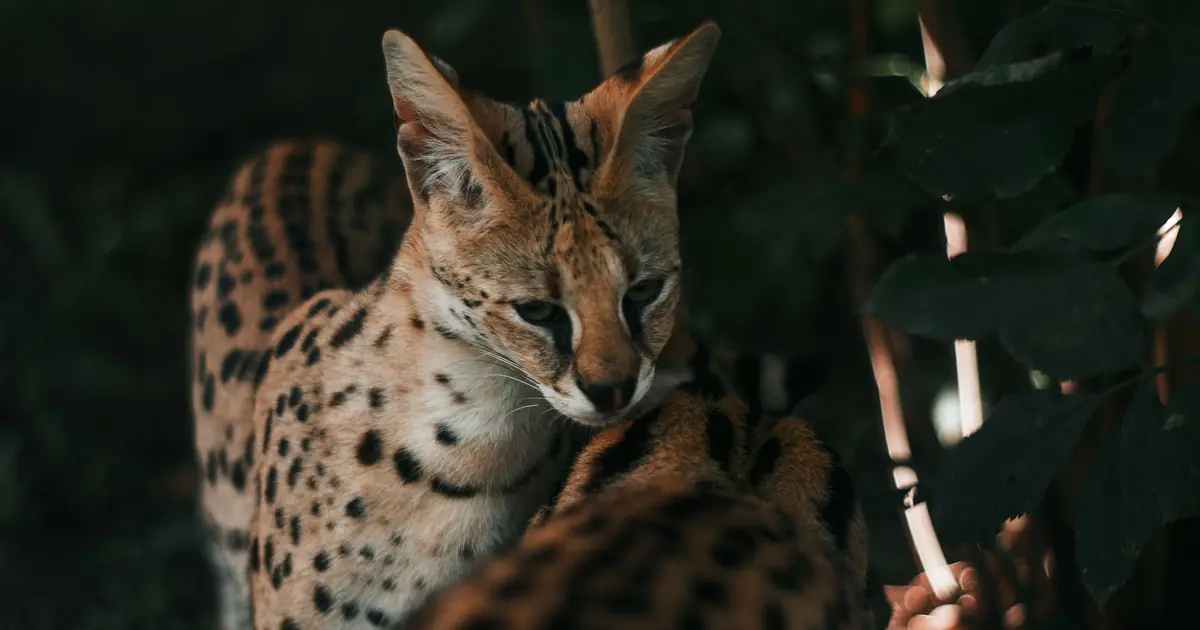
If you’ve fallen for the wild, leggy look of a Savannah cat but you also reach for a tissue every time you’re near a cat, you’ve probably typed “are Savannah cats hypoallergenic” into Google more than once. It’s a fair question. These cats are striking, part domestic cat and part African serval, and the internet is full of breeders promising they’re easier on allergies.
Here’s the honest version. Some Savannah owners really do report fewer sneezes and less itching. But that’s not the same as allergen-free, and it’s worth understanding exactly why before you fall further in love with a kitten you might not be able to keep.
- No cat breed, including the Savannah, is truly hypoallergenic. Every cat produces some amount of the Fel d 1 protein that causes allergic reactions.
- Cat allergies come mainly from Fel d 1, a protein made in a cat’s saliva and skin glands, not from the hair itself.
- Savannah cats have a short, single-layer coat with no dense undercoat, so they shed less hair and spread less dander around a home.
- Individual cats within the same breed can vary a lot in how much Fel d 1 they produce, so one Savannah may bother you far less than another.
- Early-generation Savannahs (F1 and F2) are restricted or banned in some U.S. states and countries because of their wild serval ancestry.
Are Savannah cats actually hypoallergenic?
Not in the strict sense of the word, no. Savannah cats aren’t allergen-free, but many allergy sufferers find them easier to live with than an average shorthair. That’s the real, more honest answer than the marketing line you’ll see on some breeder sites.
The term “hypoallergenic” gets thrown around loosely in the pet world, but it just means “less likely to trigger an allergic reaction,” not “guaranteed not to.” A Savannah’s shorter coat and, in some individuals, lower Fel d 1 output can add up to a genuinely lower-allergen experience. Whether that’s enough for you depends entirely on how sensitive you are and which specific cat you meet.
What actually causes cat allergies?
Cat allergies come from a protein called Fel d 1, which cats produce in their saliva, skin (sebaceous) glands, and to a lesser extent their urine, not from the hair itself. According to the American Academy of Allergy, Asthma and Immunology, Fel d 1 is the primary allergen behind most cat allergy reactions, and it’s found in dander (tiny flecks of dried skin) that flake off constantly and cling to fabric, furniture, and air.
Here’s the part people miss: hair is really just the delivery system. When a cat grooms itself, saliva coats the fur, dries, and flakes off as dander, which floats through the air and settles everywhere. A cat that sheds less hair spreads less of that dander around your home, which is one reason low-shedding breeds get labeled hypoallergenic even though the hair was never the real problem.
Why are Savannah cats sometimes considered lower-allergen?
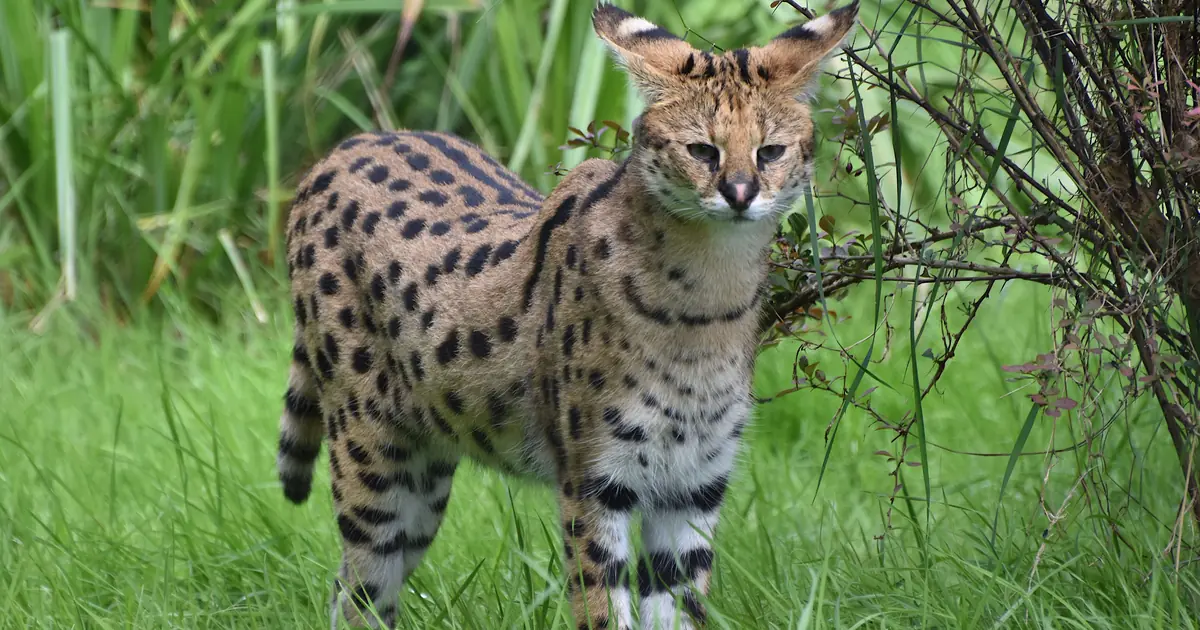
Savannah cats may cause fewer reactions in some people for two main reasons: individual cats can naturally produce less Fel d 1, and their short single coat sheds less than a typical shorthair’s double coat. Some breeders and owners report noticeably calmer allergy symptoms around Savannahs specifically, though this hasn’t been backed by large, controlled studies the way it has for a handful of other breeds.
A Savannah’s coat is short and lies flat against the body, without the plush, insulating undercoat that breeds like the Maine Coon or Persian carry. Less fur volume plus less shedding means less dander tracked around your house, on your couch, and into your air ducts. That’s a real, physical mechanism, not just wishful thinking. It just isn’t unique to Savannahs, and it isn’t a guarantee.
What’s the honest caveat here?
The honest caveat is simple: no cat is truly hypoallergenic, and Fel d 1 production varies enormously between individual cats, even within the same litter. A breed reputation is a decent starting clue, not a promise. One Savannah kitten might produce noticeably less allergen than its own littermate.
Allergy severity on the human side varies just as much. Some people react to trace amounts of dander from across a room. Others can bury their face in a “high allergen” cat’s fur and feel nothing. That’s why breed labels only get you so far, and why a real, in-person test matters more than any list on the internet, including this one.
How do Savannah cats compare to other “hypoallergenic” breeds?
Savannah cats sit in the same general category as a handful of other breeds anecdotally linked to fewer allergy symptoms: Siberian, Balinese, Russian Blue, Bengal, and Sphynx. Each gets there through a different mechanism, so it helps to see them side by side.
| Breed | Why it’s considered lower-allergen | Caveat |
|---|---|---|
| Savannah | Short single coat sheds less; some individuals produce less Fel d 1 | Not scientifically proven as a breed trait; varies cat to cat |
| Siberian | Widely reported to produce lower Fel d 1 levels than average | Still a heavy seasonal shedder despite lower protein levels |
| Balinese | Long hair but a single coat layer with less undercoat fluff | Still sheds and still produces Fel d 1 like any cat |
| Russian Blue | Dense but short coat; some owners report lower reactions | Evidence is mostly anecdotal, not clinically confirmed |
| Sphynx | No fur to trap and spread dander around the home | Still produces Fel d 1 in saliva and skin oils; needs frequent bathing |
If you’re weighing several of these against each other, our guides on whether Balinese cats are hypoallergenic, Siamese cats and allergies, and Ragdoll cats and allergy sufferers go deeper on each one. And if you want the full lineup in one place, check our roundup of cat breeds considered hypoallergenic.
What does the Savannah’s wild ancestry mean for ownership?
A Savannah cat is a hybrid between a domestic cat and the African serval, a medium-sized wild cat, and that wild blood shapes both its personality and its legal status. The closer a Savannah is to its serval parent, the more restrictions you’ll run into.
Savannahs are labeled by generation: F1 (one serval parent, roughly 50% wild blood), F2, F3, and so on down to F5 and beyond, where the cat is nearly indistinguishable from a large domestic cat in temperament. Early generations like F1 and F2 are larger, more energetic, and sometimes trickier to manage day to day. They’re also restricted or outright banned in several U.S. states and countries, so check your local exotic pet laws before you fall for a specific kitten. Later generations (F4, F5) are legal almost everywhere and make far calmer household pets. For the full rundown on temperament, size, and generations, our complete Savannah cat guide covers it in detail.
How can you reduce allergens if you get a Savannah?
You can cut down on allergens from any cat, Savannah included, with a handful of consistent habits: regular grooming, frequent cleaning, air filtration, and good hygiene after handling your cat. None of these eliminate Fel d 1 completely, but together they make a real, noticeable difference.
- Brush your Savannah once or twice a week to catch loose hair and dander before it spreads around the house.
- Wipe your cat down with a damp cloth or use vet-approved allergen-reducing wipes between baths.
- Run a HEPA air purifier in the rooms where you spend the most time, especially the bedroom.
- Wash your hands and avoid touching your face after petting your cat or scooping the litter box.
- Scoop the litter box daily and keep it in a well-ventilated spot, since urine also carries trace Fel d 1.
- Vacuum with a HEPA-filter vacuum and wash soft furnishings like blankets and cat beds regularly.
- Keep your cat off your bed and out of your bedroom if your allergies are on the more severe side.
Should allergy sufferers get a Savannah cat?
If you have mild to moderate cat allergies, a Savannah is worth a real test before you rule it out, but if your allergies are severe, treat any “hypoallergenic” breed claim with caution. The only reliable way to know is to spend real time with the actual cat you’re considering, not just the breed on paper.
Visit the breeder or foster home and spend at least a few hours around adult Savannahs, ideally over more than one visit. Ask if you can handle a cat that’s been groomed recently and see how your body responds over the following day, since some allergic reactions build up gradually rather than hitting immediately. If you have a history of asthma or severe allergic reactions, talk to an allergist first. The American College of Allergy, Asthma and Immunology recommends skin or blood testing plus a supervised exposure trial before bringing home any cat if you have a known pet allergy. A kitten is a fifteen-plus year commitment, and no coat type is worth risking your health over.
A quick note before you decide
This article is educational and isn’t a substitute for medical advice. If you have a history of asthma, hives, or severe respiratory reactions around cats, talk to a board-certified allergist before bringing one home, and ask about formal allergy testing. It’s also worth double-checking your state or country’s exotic pet laws, since early-generation Savannahs (F1 through F3) are restricted or banned in places like New York City, Hawaii, and parts of Australia.
Frequently Asked Questions
Q: Are Savannah cats good for people with allergies?
Savannah cats can be a better fit than some breeds for people with mild allergies, thanks to their short, single-layer coat and lower shedding. They still produce Fel d 1, the main cat allergen, so someone with severe allergies should test their reaction to a specific cat before adopting.
Q: What cat breed is 100% hypoallergenic?
No cat breed is 100% hypoallergenic. Every cat produces some level of the Fel d 1 protein in its saliva and skin, and even hairless breeds like the Sphynx still generate allergens that can trigger a reaction.
Q: Do Savannah cats shed a lot?
Savannah cats shed less than many domestic shorthairs because they have a short, single coat without a thick undercoat. They still shed some hair year-round, just noticeably less than double-coated breeds like the Maine Coon.
Q: Is Fel d 1 in cat hair or cat saliva?
Fel d 1 is produced mainly in a cat’s saliva and skin (sebaceous) glands, not in the hair itself. Hair simply carries dried saliva and skin flakes, called dander, around the home, which is why grooming and shedding affect how much allergen spreads.
Q: Can I test my allergies before adopting a Savannah cat?
Yes, spending several hours with an adult Savannah before adopting is the most reliable way to gauge your reaction, since allergic responses can build up over a day rather than appear instantly. An allergist can also run a skin or blood test for cat dander to give you a clearer picture beforehand.
Q: Are all Savannah cat generations legal to own?
No, early-generation Savannahs, typically F1 through F3, are restricted or banned in several U.S. states and other countries because of their closer serval ancestry. Later generations like F4 and F5 are legal in most places and are generally treated like any other domestic cat breed.
Q: Does grooming a Savannah cat reduce allergens?
Regular brushing and wiping down your Savannah’s coat can meaningfully cut down on loose hair and dander in your home. It won’t eliminate Fel d 1 entirely, but combined with air filtration and frequent cleaning, it makes a real difference for many allergy sufferers.
Q: How is a Savannah cat different from a Bengal cat for allergies?
Savannah cats are part serval, while Bengal cats are part Asian leopard cat, but both share a short, low-shedding coat that some allergy sufferers tolerate well. Neither breed is scientifically proven to be lower-allergen; the effect, when reported, seems to depend more on the individual cat than the breed itself. See our guide on how much Bengal cats shed for more on that comparison.

Hello and welcome to The Ideal Cat!
We are some passionate cat owners from different professions. We love our cats and have a lot of experience in how to care for our pets. We are incredibly excited to share our knowledge, experience, and research with you. So you can take good care of your loving cat. We will answer most of the common questions about owning cats, taking care of them, etc. If you have any question contact with us. Thanks for visiting! Enjoy the content.
