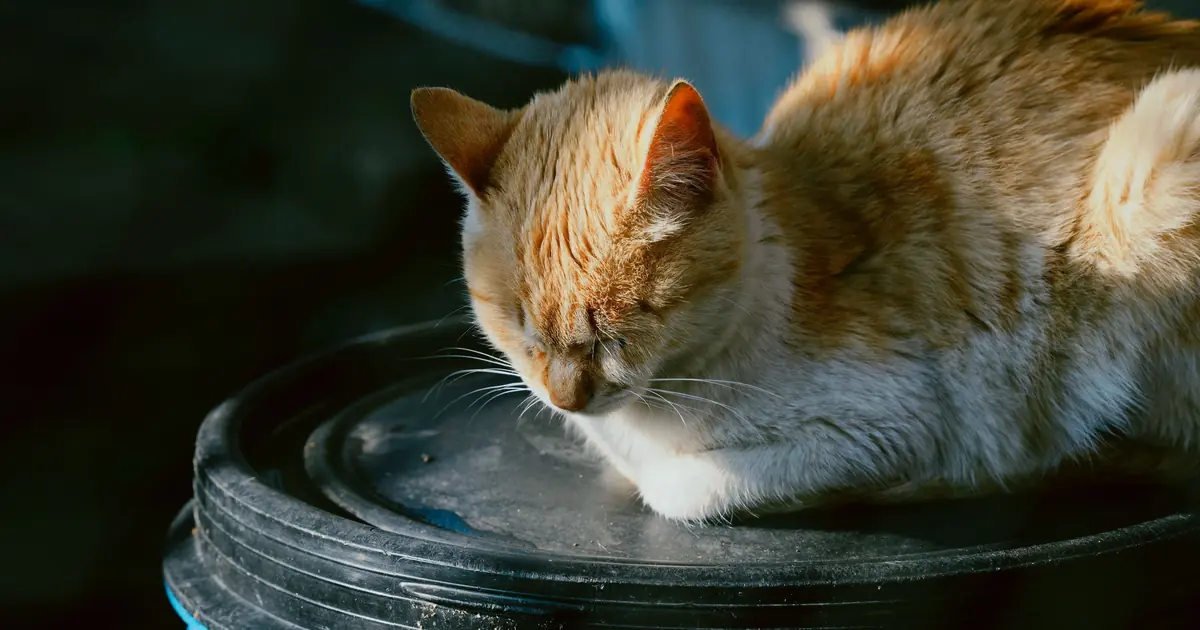
You glance over at the couch and there’s your cat, sitting bolt upright, chin dipping toward their chest like they’re nodding off in a boring meeting. A second later their head snaps back up. It looks uncomfortable. It’s also completely normal.
That little head-bob is your cat’s version of a catnap, not full sleep. They’re resting just enough to recharge while keeping one ear, literally, on the room around them. Cats have been doing this for thousands of years, long before anyone was tucking them into a soft bed at home.
- Cats sleep 12 to 16 hours a day, and much of that time is light dozing, not deep sleep.
- Sleeping with the head up is a sign of light sleep, when a cat’s muscles stay loose enough to snap into action fast.
- This posture is a leftover survival instinct from wild ancestors who napped in the open with predators and prey nearby.
- Most cats cycle between upright dozing and deeper, fully relaxed sleep (curled up or sprawled flat) several times a day.
- A cat that sits up with head and neck stretched out, elbows spread, and seems to struggle for breath needs a vet visit, not a nap.
Why do cats sleep with their head up?
Cats sleep with their head up because they’re in light sleep, not deep sleep, and staying semi-upright keeps them ready to react. During light sleep, a cat’s muscles relax just enough to rest but not enough to go fully limp. The head drooping and jerking back up is that muscle tone loosening, then a sound or shift in balance triggering a quick correction. It’s the same reason your own head might nod on a long car ride when you’re fighting sleep.
This half-awake state serves a real purpose. If your cat is watching birds outside the window, waiting for the treat bag, or keeping tabs on the dog across the room, dozing upright lets them rest without fully checking out.
What’s the difference between light sleep and deep sleep in cats?
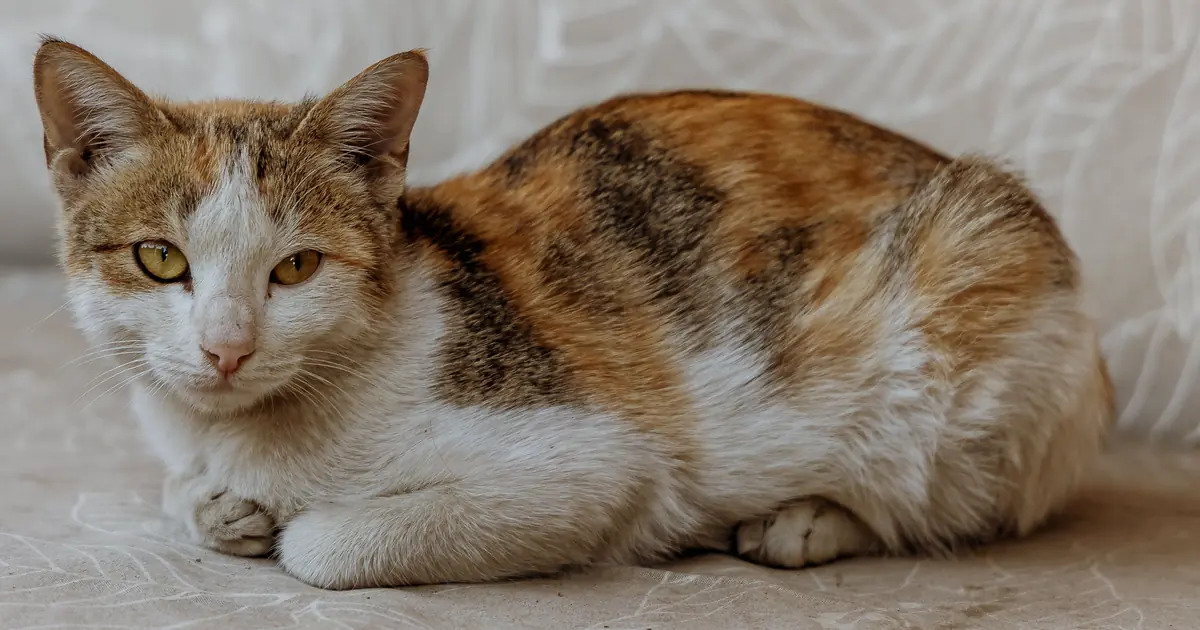
Light sleep and deep sleep are two very different states, and cats spend most of their day in the lighter one. In light sleep, a cat’s ears still swivel toward noise, whiskers may twitch, and they can wake almost instantly. In deep sleep, which vets sometimes call slow wave sleep, the body goes fully limp, breathing slows and evens out, and the cat is much harder to rouse.
According to the Cornell Feline Health Center, cats are naturally built to sleep in short bursts around the clock rather than one long stretch, which is why you see so much light dozing sprinkled between the deeper naps. If your cat is sleeping so much that it worries you, remember most of those hours are this lighter, easily interrupted rest, not the deep sleep people picture.
Deep sleep is when you’ll spot twitching paws, fluttering whiskers, or soft chirps that mean your cat is dreaming. If your cat twitches in her sleep, that’s the deeper stage, the opposite end of the spectrum from the upright, head-bobbing doze.
Is sleeping upright a survival instinct?
Yes, sleeping upright is a survival instinct passed down from wild ancestors who couldn’t afford to sleep too deeply too often. A cat in the wild is both predator and prey. Going fully unconscious in the open leaves them vulnerable, so dozing lightly with the head up and ears working let ancestral cats rest without dropping their guard completely.
Your indoor cat has never had to worry about a coyote sneaking up on the sofa, but that wiring doesn’t disappear just because the environment got safer. Domestic cats still default to this cautious dozing pattern, especially in spots that feel a little exposed, like the middle of the living room instead of a tucked-away corner.
Does sleeping upright mean my cat feels unsafe?
Not necessarily. Head-up dozing is a normal part of a cat’s daily sleep cycle, not a red flag on its own. Most cats do it dozens of times a day regardless of how relaxed or secure they feel at home. It’s simply the lighter half of how cats sleep.
Context matters, though. A cat who dozes upright occasionally but also flops onto their side, exposes their belly, or curls into a tight loaf elsewhere in the house is showing you the full range of normal rest. A cat who never fully relaxes, always startles awake, or only naps sitting bolt upright in a corner might be dealing with stress or tension with another pet. The posture itself isn’t the problem; it’s a clue pointing to something else.
What do other sleep positions mean, and how does head-up dozing compare?
Cats shift through several sleep positions in a day, and each one tells you something about how relaxed they are. Head-up dozing sits on the lighter, more alert end of that spectrum, while positions like the belly-up sprawl sit on the deeply relaxed end.
| Sleep Position | What It Means |
|---|---|
| Head up, chin nodding | Light dozing, staying alert. Normal and common throughout the day. |
| Curled in a tight ball | Conserving body heat, moderate to deep sleep. Very common in cooler rooms. |
| The loaf (paws tucked under) | Resting but ready to move quickly if needed. Common light sleep or awake-but-chill position. |
| Belly up, fully sprawled | Deep relaxation and trust in the surroundings. A sign your cat feels safe. |
| Sitting up, head and neck stretched, elbows out | Not a normal sleep position. Can signal trouble breathing; needs a vet check. |
If you’ve ever wondered why cats cover their face when they sleep, or noticed your cat prefers dozing between your legs, those are other flavors of the same instinct: finding a position that balances comfort with security. Even where your cat sleeps on your bed often reflects how bonded and secure they feel with you.
When does upright sleeping signal a health problem?
Upright sleeping signals a health problem when it stops looking like a doze and starts looking like effort. Vets call this an orthopneic posture: a cat sits with the head and neck stretched upward, elbows pushed out from the body, and often the mouth slightly open, all in an attempt to open the airway and breathe easier. This is not the casual chin-bob of a light nap. It looks strained, and the cat usually can’t or won’t lie down.
This posture shows up with heart disease, including a condition called feline hypertrophic cardiomyopathy, and with respiratory problems like asthma or fluid in the chest. According to VCA Hospitals, cats are experts at hiding illness, so labored breathing or an inability to get comfortable lying down is often one of the few visible clues something serious is happening. If you’ve also noticed your cat panting outside of exercise or heat, treat that as urgent.
This article is meant to help you understand normal cat sleep, not to replace a vet visit. If your cat sits upright with head raised and neck stretched, seems unable to settle or lie down, is breathing rapidly, or is panting without an obvious reason like heat or play, call your veterinarian right away. Fast breathing combined with reluctance to lie flat is one of the clearer “don’t wait and see” signs in cat health.
How can I tell if my cat’s head-up sleep is normal?
Your cat’s head-up sleep is almost certainly normal if it’s brief, happens on and off throughout the day, and your cat can flop into a fully relaxed position (curled, loafed, or sprawled) without any trouble the rest of the time. Watch for how the episode ends, too. A normal light doze usually ends with your cat waking, stretching, maybe grooming a paw, and going about their day.
What’s not normal is a cat who only ever sleeps sitting up, breathes hard or fast while doing it, refuses food, hides more than usual, or seems restless and unable to get comfortable no matter the position. Those combined signs, not the head-up posture by itself, are what should send you to the vet.
Frequently Asked Questions
Q: Why does my cat’s head keep bobbing while they sleep sitting up?
Your cat’s head bobs because their muscles are relaxing into light sleep, then a sound or shift in balance briefly wakes them enough to lift their head again. This on-and-off cycle is completely normal and usually lasts just a few minutes before your cat either wakes fully or settles into a deeper, more relaxed position.
Q: How many hours a day do cats actually sleep?
Cats sleep 12 to 16 hours a day on average, and kittens or senior cats can sleep even more. Most of those hours are light dozing rather than deep sleep, which is why you’ll often catch your cat resting with one eye or ear seemingly on alert.
Q: Is it bad for my cat to sleep sitting up all the time?
Occasional upright dozing is normal, but a cat who sleeps sitting up exclusively, and never fully relaxes into a curled or sprawled position, may be dealing with pain, breathing trouble, or stress. If you notice this pattern consistently, it’s worth a vet visit to rule out a heart or lung issue.
Q: What is orthopneic posture in cats?
Orthopneic posture is when a cat sits upright with the head and neck stretched out and the elbows held away from the body to make breathing easier. It’s a sign of respiratory distress, often linked to heart disease or lung problems, and it means a same-day vet visit rather than a wait-and-see approach.
Q: Do kittens sleep with their heads up more than adult cats?
Kittens actually spend more time in deep sleep than adult cats because their bodies and brains are developing fast. Adult cats, especially those living in busy households or with other pets, tend to show more of the light, head-up dozing since they’re staying alert to more activity around them.
Q: Why does my cat sleep sitting up but then flop over when I approach?
That flop is a great sign. It means your cat was dozing lightly, heard or sensed you coming, woke up enough to register you’re not a threat, and relaxed fully into a deeper, trusting sleep position. It’s your cat’s way of saying they feel safe with you around.
Q: Can old age cause a cat to sleep sitting up more often?
Yes, older cats sometimes sleep sitting up more because arthritis or joint pain makes lying flat uncomfortable. If your senior cat seems to avoid lying down or struggles to get into a curled position, mention it to your vet, since pain management can make a real difference in their comfort.
Q: Should I wake my cat up if they’re dozing with their head bobbing?
No, there’s no need to wake a cat who’s dozing with a bobbing head, since this is a normal light sleep state, not distress. Let them finish their natural cycle. They’ll wake on their own within a few minutes and either settle deeper or get up and move on with their day.

Hello and welcome to The Ideal Cat!
We are some passionate cat owners from different professions. We love our cats and have a lot of experience in how to care for our pets. We are incredibly excited to share our knowledge, experience, and research with you. So you can take good care of your loving cat. We will answer most of the common questions about owning cats, taking care of them, etc. If you have any question contact with us. Thanks for visiting! Enjoy the content.
