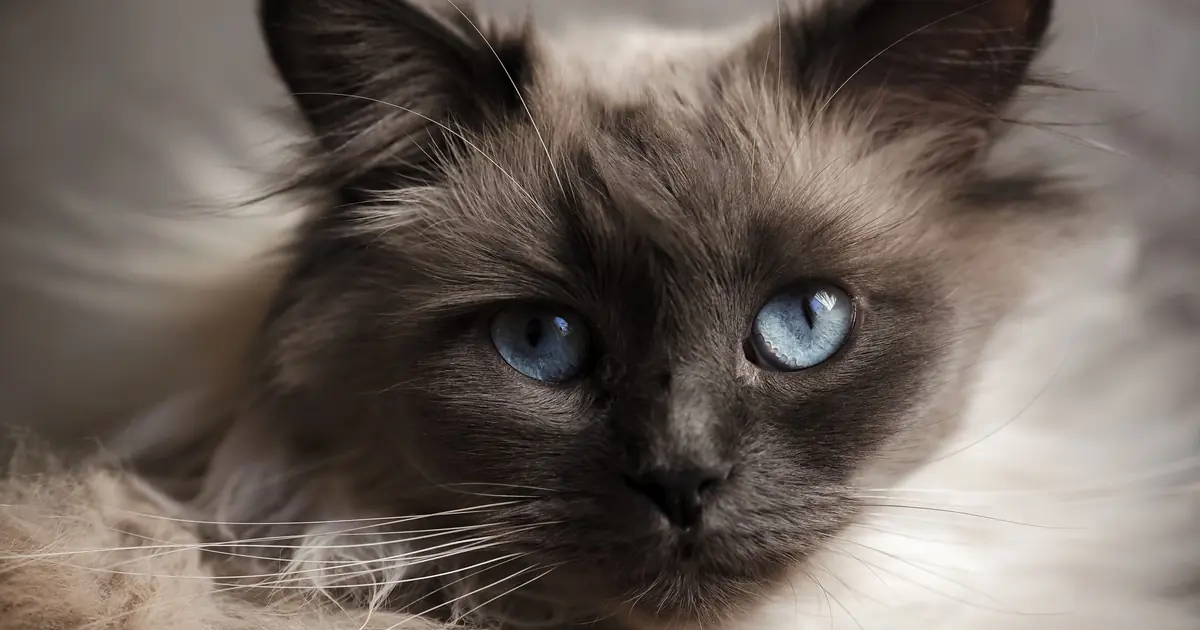
If you’re eyeing a Birman and picturing tumbleweeds of fur rolling across your living room floor, take a breath. Birmans are long-haired, sure, but they’re one of the more forgiving longhairs for shedding. That silky coat looks fancy, but it doesn’t come with the maintenance headache you’d get from a Persian.
Still, “less shedding” doesn’t mean “no shedding.” Every cat with fur loses some of it, and Birmans are no exception. Here’s what actually happens with a Birman’s coat, why it behaves the way it does, and how to keep the fur situation under control without turning grooming into a wrestling match.
- Birmans have a single-layer silky coat with no dense undercoat, so they shed and mat less than most longhairs.
- Shedding is light and steady most of the year, with noticeably heavier sheds in spring and fall as the coat adjusts to daylight changes.
- One weekly brushing session, using a metal comb or slicker brush, is usually enough to manage a healthy Birman’s coat.
- Birmans are not hypoallergenic. They still produce the Fel d 1 protein that triggers cat allergies, even though less loose fur means slightly less dander floating around.
- Sudden heavy shedding, bald patches, or itchy skin are not normal Birman traits and are worth a vet visit.
Do Birman cats shed a lot?
No, Birman cats don’t shed a lot compared to other long-haired breeds. They shed moderately, which puts them somewhere in the middle of the pack, well below Persians and Maine Coons but above short-haired breeds like Siamese. You’ll find loose hairs on furniture and clothes, especially during seasonal coat changes, but you won’t be vacuuming daily just to keep up. The Cat Fanciers’ Association’s official Birman breed standard describes the coat as medium-long with a silky texture and light undercoat, which lines up with why shedding stays manageable.
Cat parents who’ve owned both breeds often describe the difference as night and day: a Birman’s coat releases hair in a slow, manageable trickle, not a constant flurry.
Why do Birman cats shed less than other longhairs?
Birman cats shed less because their coat is single-layered, meaning it lacks the dense, woolly undercoat that Persians and Maine Coons carry underneath their outer fur. That undercoat is what traps loose hair, creates mats, and fuels heavy shedding in double-coated breeds. Without it, a Birman’s fur has less volume to lose and less tendency to tangle into knots.
The texture matters too. A Birman’s coat is silky and semi-long, closer to satin than wool. Silky fur has less static cling and glides past neighboring hairs instead of grabbing onto them, so loose strands fall away cleanly instead of felting into mats behind the ears or under the legs.
How much and when do Birman cats shed?
Birman cats shed lightly and consistently through most of the year, with two noticeable spikes: one in spring and one in fall. These seasonal sheds happen because daylight length, not temperature, signals a cat’s body to swap out its coat. As days get longer in spring, Birmans blow out some of their winter density. As days shorten in fall, they shed the lighter summer coat to grow in a slightly thicker one for the colder months.
Indoor cats living under consistent artificial light sometimes shed a bit more evenly year-round, with less dramatic seasonal swings, since their bodies get mixed signals about the season. Either way, you’re not looking at the kind of “shedding season” that leaves fur tumbleweeds in every corner, just a temporary uptick in loose hair on the brush. The International Cat Care guide to skin and coat health confirms that day length, not outdoor temperature, is the main trigger behind seasonal shedding cycles in cats.
What are a Birman’s grooming needs?
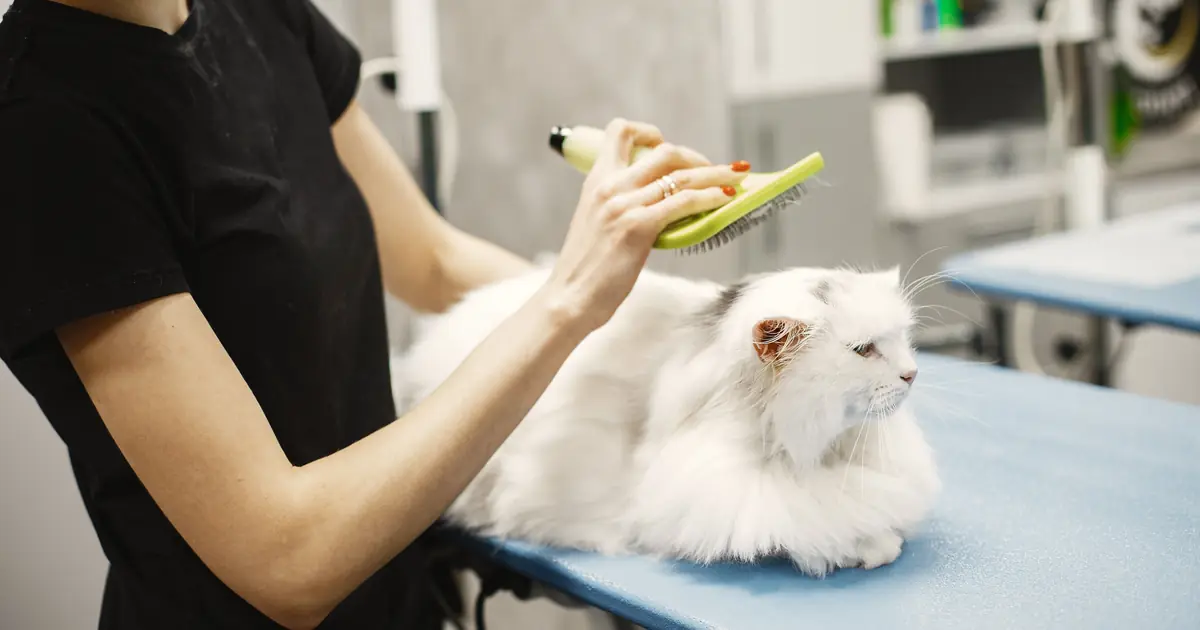
A Birman needs about one thorough brushing a week to stay mat-free and looking its best, which is noticeably easier than the near-daily grooming a Persian requires. Use a stainless steel comb or a soft slicker brush, and work through the coat gently, section by section, from the skin outward.
Pay extra attention to the spots where tangles like to start:
- Behind the ears
- Under the armpits (where the front legs meet the body)
- Along the belly
- The base of the tail
Birmans rarely need baths beyond the occasional one when they get into something messy, since their coat resists dirt and mats well on its own. If you want extra help during heavy shedding weeks, a rubber grooming glove or gentle deshedding tool can pull out loose undercoat fluff without irritating the skin. For a full routine, our step-by-step guide to grooming a cat at home covers brushing technique, nail care, and bathing basics that apply to any longhair.
Are Birman cats hypoallergenic?
No, Birman cats are not hypoallergenic. No cat breed truly is. Birmans still produce Fel d 1, the protein found in cat saliva, skin glands, and dander that triggers most cat allergies, as explained by the Cornell Feline Health Center’s overview of cat allergies. Lighter shedding means slightly less loose fur carrying that dander around your home, which is why some allergy sufferers report doing a little better around Birmans than around heavy shedders, but it’s not a guarantee and it’s not the same as being allergen-free.
If allergies are a real concern in your household, spend time with a Birman in person before committing, and talk to your allergist first. For a deeper look at the science behind Fel d 1 and which breeds tend to produce less of it, see our guide on whether Birman cats are hypoallergenic.
What affects how much a Birman sheds?
A Birman’s shedding level changes based on season, diet, health, stress, and age, not just breed genetics. Here’s how each factor plays in:
- Season: Spring and fall coat changes temporarily increase shedding, as covered above.
- Diet: A cat food lacking enough protein and omega fatty acids can leave a coat dry and prone to excess shedding.
- Health: Thyroid issues, parasites, and skin infections can all cause abnormal hair loss that looks like shedding but isn’t.
- Stress: Cats under chronic stress sometimes overgroom or shed more, similar to how humans lose more hair during stressful periods.
- Age: Kittens and senior cats often have different coat cycles than adult cats in their prime years.
A good diet, a calm routine, and regular parasite prevention keep shedding at that normal, manageable baseline.
When is a Birman’s shedding a problem?
A Birman’s shedding becomes a problem when it turns sudden, excessive, or comes with bald patches, redness, or itching. Normal shedding is diffuse and even across the body. A skin or health issue tends to show up as patchy hair loss, thinning in specific spots, or a coat that looks dull and brittle rather than just loose.
Common culprits behind abnormal shedding include:
- Fleas or other external parasites
- Food or environmental allergies
- Ringworm or other fungal infections
- Hormonal imbalances, including thyroid disease
- Chronic stress or anxiety leading to overgrooming
This article is meant to help you understand normal shedding, not diagnose your cat. If you notice bald spots, scabs, excessive scratching, or a shedding pattern that seems out of the ordinary for your Birman, it’s worth a trip to the vet to rule out an underlying condition. For more on this specific red flag, see our article on why a cat might be going bald.
How can you manage a Birman’s shedding?
You can manage a Birman’s shedding with a weekly brushing routine, a quality diet, good hydration, and a gentle deshedding tool during seasonal peaks. Here’s what actually moves the needle:
- Brush once a week with a metal comb, more often during spring and fall sheds.
- Feed a cat food with real animal protein and added omega-3 and omega-6 fatty acids for skin and coat health.
- Keep fresh water available at all times, since good hydration supports healthy skin and a healthy coat.
- Use a rubber grooming glove or soft deshedding tool during heavy shedding weeks, always brushing gently in the direction of hair growth.
- Vacuum and wash cat bedding weekly to keep loose fur from building up around the house.
Skip harsh deshedding blades made for dogs. A Birman’s silky coat doesn’t need that kind of aggressive tool, and it can irritate the skin.
How does Birman shedding compare to other long-haired breeds?
Compared to other popular long-haired breeds, Birmans sit in the low-to-moderate shedding range, well below Persians and Maine Coons, and roughly in line with Ragdolls.
| Breed | Shedding Level | Grooming Need |
|---|---|---|
| Birman | Low to moderate | Weekly brushing |
| Persian | Heavy | Daily brushing, prone to mats |
| Maine Coon | Heavy (seasonal) | 2 to 3 times a week |
| Ragdoll | Low to moderate | Weekly brushing |
If you’re weighing a Birman against a Persian specifically, our comparison of how much Persian cats shed lays out exactly why that double coat makes such a difference. Curious how a short-haired option stacks up instead? Check out our guide on Siamese cat shedding for the other end of the spectrum.
A quick note before the FAQs: normal shedding, even the heavier seasonal kind, is nothing to worry about. But sudden heavy shedding, bald spots, or itchy, inflamed skin are signs worth getting checked by a licensed veterinarian, since they can point to allergies, parasites, or an underlying illness that needs proper diagnosis and treatment. This article is educational and isn’t a substitute for veterinary care.
Frequently Asked Questions
Q: Do Birman cats shed more than Ragdolls?
Not really. Birmans and Ragdolls shed at similar low-to-moderate levels because both breeds have a single-layer coat without a dense undercoat. Neither breed sheds nearly as much as double-coated longhairs like Persians or Maine Coons.
Q: Why does my Birman shed more in spring?
Longer daylight hours in spring signal a Birman’s body to shed some of its winter coat density. This seasonal shed usually lasts a few weeks and is heavier than the cat’s normal year-round shedding, but it’s a completely natural cycle.
Q: Do Birman cats need to be shaved to control shedding?
No, Birmans should not be shaved to manage shedding. Their single-layer coat doesn’t build up the way a double coat does, and shaving can damage the coat’s texture and disrupt normal regrowth. Weekly brushing is enough to keep shedding under control.
Q: Is a Birman a good cat for people with allergies?
A Birman may be slightly easier on allergy sufferers than heavy shedders since less loose fur spreads less dander, but Birmans are not hypoallergenic. They still produce the Fel d 1 protein that causes most cat allergies, so anyone with a serious allergy should spend time with a Birman before bringing one home.
Q: What causes excessive shedding in a Birman cat?
Excessive shedding beyond the normal seasonal sheds is usually caused by poor diet, parasites like fleas, allergies, hormonal issues such as thyroid disease, or stress. If shedding suddenly increases or comes with bald patches, a vet visit can pinpoint the cause.
Q: How often should you brush a Birman cat?
Brush a Birman cat about once a week during normal months, and increase to two or three times a week during the heavier spring and fall sheds. A stainless steel comb or slicker brush works well on their silky coat.
Q: Do Birman cats get mats easily?
No, Birman cats rarely get mats because their coat lacks a dense undercoat and has a silky, low-static texture. Mats are more likely to form in areas of friction, like behind the ears or under the front legs, so those spots deserve extra attention during brushing.
Q: Does diet affect how much a Birman cat sheds?
Yes, diet plays a real role in shedding. A cat food with quality animal protein and added omega-3 and omega-6 fatty acids supports healthy skin and a healthy coat, which can reduce excess shedding caused by dry or brittle fur.

Hello and welcome to The Ideal Cat!
We are some passionate cat owners from different professions. We love our cats and have a lot of experience in how to care for our pets. We are incredibly excited to share our knowledge, experience, and research with you. So you can take good care of your loving cat. We will answer most of the common questions about owning cats, taking care of them, etc. If you have any question contact with us. Thanks for visiting! Enjoy the content.
