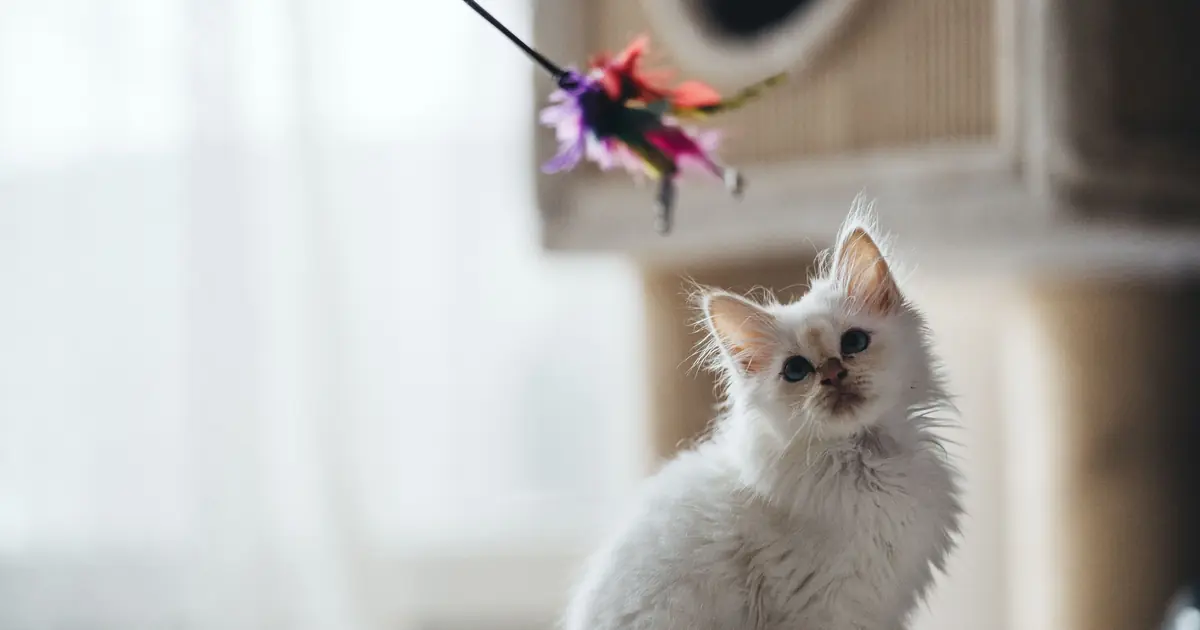
You’ve fallen for those baby blue eyes and that white-gloved paws look, and now you’re wondering if a Birman cat could actually work with your allergies. It’s a fair question. Nobody wants to bring home a new best friend only to spend the next ten years sneezing on the couch together.
Here’s the honest answer: Birmans aren’t allergy-proof, and no breed on the planet is. But there are real reasons some allergy sufferers do better with a Birman than with, say, a Persian or a Maine Coon. Let’s get into what’s actually going on with cat allergies, and whether a Birman is a reasonable bet for your specific nose.
- Birman cats are not hypoallergenic; they produce Fel d 1, the same allergy-triggering protein found in every cat breed.
- Cat allergies come mainly from Fel d 1, a protein made in a cat’s saliva, skin, and tear glands, not from the hair itself.
- A Birman’s coat has a single layer with no thick undercoat, which means less trapped dander and comparatively moderate shedding.
- Individual cats within any breed can produce very different amounts of Fel d 1, so results vary from cat to cat, not just breed to breed.
- Spending real time with the specific Birman you’re considering, ideally with an allergist’s guidance, tells you far more than any breed label ever will.
Are Birman cats hypoallergenic?
No, Birman cats are not hypoallergenic. That word gets thrown around a lot in cat breed marketing, but no cat breed has ever been proven allergen-free. Birmans, like every other cat, make a protein called Fel d 1 that’s the main trigger behind cat allergies.
What makes Birmans stand out is their coat type, not their biology. They’re a semi-longhaired breed with silky fur and no dense undercoat, so they don’t shed the way a Persian or a Ragdoll does. Less loose hair floating around your home can mean less dander drifting with it. That’s a meaningful difference for some people, but it’s a management perk, not a cure.
What actually causes cat allergies?
Cat allergies come mostly from a protein called Fel d 1, which cats produce in their saliva, skin (through sebaceous glands), and tear ducts, according to the American Academy of Allergy, Asthma and Immunology. It is not the hair itself that sets off your immune system, it’s this protein riding along on the hair, skin flakes, and saliva a cat leaves behind everywhere it grooms, sleeps, and rubs against furniture.
Because cats groom themselves constantly, that saliva dries on their fur and flakes off as microscopic dander. This dander is light enough to float in the air and settle into carpets, curtains, and your lungs. So a “low-shedding” cat can still be a high-allergen cat, and a heavy shedder can sometimes produce relatively little Fel d 1. Coat length and allergy severity don’t always line up the way people assume.
Why might Birman cats be easier on allergies for some people?
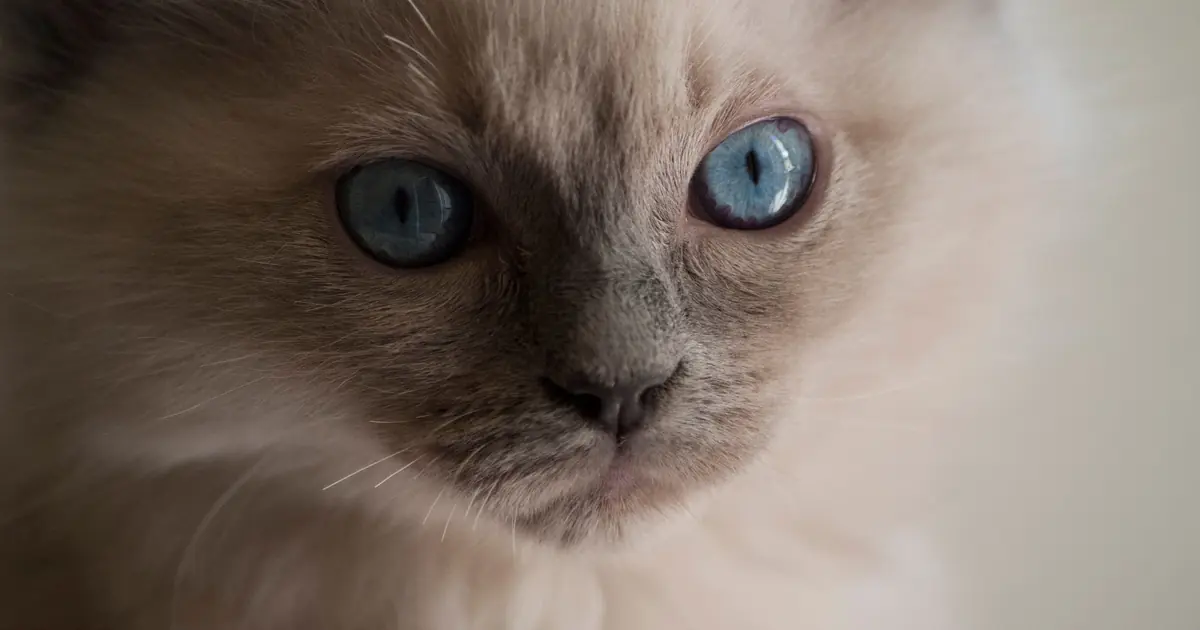
Birmans might feel more tolerable to some allergy sufferers because of how their coat is built, not because they make less Fel d 1. Their single coat has no woolly undercoat underneath the long guard hairs, which is the layer that causes cats like Persians and Maine Coons to shed heavily and trap dander close to the skin.
With less loose fur circulating through your home, there’s less surface area carrying dried saliva and skin flakes into the air you breathe. Birmans also mat less than other longhaired breeds, so they need less intensive brushing, which means fewer grooming sessions that kick dander into the air. None of this changes how much Fel d 1 an individual Birman produces. It just changes how much of it ends up airborne in your living room.
Is any cat breed truly hypoallergenic?
No. Not one cat breed has been scientifically proven to be hypoallergenic, and the Cornell Feline Health Center and other veterinary sources are consistent on this point. Every cat produces some amount of Fel d 1, and levels vary more by individual cat than by breed. For a full rundown of which breeds tend to fare better with allergy sufferers, see our guide to which cat breeds are considered hypoallergenic.
Sex, hormones, and even coat color play a role too. Studies cited by allergy researchers have found that intact male cats tend to produce more Fel d 1 than neutered males or females, and some research has suggested darker-coated cats may carry slightly more allergen than lighter ones, though this isn’t fully settled science. The bottom line: a “hypoallergenic breed” label is really shorthand for “may produce somewhat less airborne allergen for some people,” never a guarantee.
How do Birmans compare to other breeds marketed as low-allergen?
Birmans sit in the same rough category as the Balinese, Siberian, Russian Blue, and Sphynx, breeds regularly recommended to allergy sufferers, though each gets there differently and none is allergen-free. Comparing them side by side makes the differences (and the shared caveat) easier to see.
| Breed | Why it’s considered easier on allergies | Caveat |
|---|---|---|
| Birman | Single coat, no undercoat, mats less and sheds moderately | Still produces normal Fel d 1 levels; long fur can trap some dander |
| Balinese | Often called the “long-haired Siamese”; single silky coat with minimal undercoat | Some studies suggest lower Fel d 1 output in this line, but it varies by individual cat |
| Siberian | Anecdotally and in some small studies linked to lower Fel d 1 levels despite a thick coat | Evidence is limited and inconsistent; not every Siberian tests low |
| Russian Blue | Reputed among owners for lower allergen output | Dense double coat sheds year-round; scientific support is thin |
| Sphynx | No fur to trap and spread dander around the house | Skin still produces Fel d 1 and needs regular bathing, which can concentrate allergen on your hands |
If you’re weighing a Birman against these alternatives, it helps to read up on whether Balinese cats are hypoallergenic and how Savannah cats stack up for allergy sufferers, since the honest answer looks similar across the board: better tolerated by some people, guaranteed for no one.
What is a Birman’s coat and grooming routine really like?
A Birman’s coat is medium to long, silky, and famously low-maintenance for a longhaired cat, thanks to that missing undercoat. Unlike a Persian, whose dense undercoat mats into knots within days without daily brushing, a Birman’s coat lies close to the body and tends to stay smooth with just two or three brushing sessions a week.
But “low shedding” doesn’t mean “no shedding.” Birmans still lose hair, especially during seasonal coat changes in spring and fall, and every hair carries some dried saliva. Regular brushing actually helps here: it removes loose fur and dander before it scatters through your home, rather than leaving it to shed naturally onto furniture and floors. If you want the full picture on caring for this breed’s coat, temperament, and health needs, the complete Birman cat guide covers it in depth.
How can you cut down allergens if you bring home a Birman?
You can meaningfully lower your exposure to cat allergens with a few consistent habits, even though you can’t eliminate them. These steps matter more than breed choice for a lot of allergy sufferers:
- Brush your Birman two to three times a week, ideally outdoors or in a room you can ventilate afterward, to remove loose fur before it spreads.
- Wash your hands and avoid touching your face after petting or grooming your cat.
- Keep your cat out of your bedroom so you get at least one allergen-reduced space to recover in overnight.
- Run a HEPA air purifier in main living areas, since Fel d 1 particles are small enough to stay airborne for hours.
- Vacuum carpets, curtains, and upholstery weekly with a HEPA-filter vacuum, and wash bedding and cat furniture regularly.
- Wipe your cat down with a damp cloth or use vet-approved allergen-reducing wipes between full grooming sessions.
None of this is unique to Birmans. It’s the same playbook allergists recommend for anyone living with any cat, but it matters more with breeds people are hoping to tolerate.
Should you get a Birman if you have cat allergies?
You should get a Birman only after spending real, hands-on time with the specific cat, ideally more than once, before you commit. A breed reputation tells you almost nothing about how your immune system will react to one particular animal, since Fel d 1 output varies so much cat to cat.
If you have diagnosed cat allergies, talk to an allergist first. They can test your sensitivity and may recommend allergy shots (immunotherapy) or antihistamines as a backup plan, not a first resort. Visit a friend’s Birman, a breeder’s cattery, or a rescue that has one available, and spend a couple of hours in the same room, then a couple more the next day if you can. Mild sneezing after five minutes is a very different signal than your eyes swelling shut. Trust your body’s actual response over any breed’s marketing.
This article is educational and isn’t a substitute for advice from a board-certified allergist or your veterinarian, especially if you have asthma or a history of severe allergic reactions.
Q: Are Birman cats hypoallergenic?
No. Birman cats produce Fel d 1, the same protein responsible for cat allergies in every breed. Their single coat with no undercoat can mean less airborne dander for some people, but they aren’t allergen-free.
Q: Do Birman cats shed a lot?
Birmans shed moderately, less than double-coated breeds like Maine Coons or Persians because they lack a dense undercoat. They still shed year-round with heavier loss during spring and fall coat changes.
Q: What cat breed is closest to truly hypoallergenic?
No breed is truly hypoallergenic, but Balinese, Siberian, Russian Blue, Sphynx, and Birman cats are the ones most often recommended to allergy sufferers due to coat type or reported lower Fel d 1 levels in some individuals. Results still vary cat to cat.
Q: What causes cat allergies if it’s not the hair?
Cat allergies are triggered mainly by Fel d 1, a protein cats produce in their saliva, skin, and tear glands. It spreads through the home on shed hair, dried saliva, and dander, which is why even low-shedding cats can still cause reactions.
Q: Can allergy sufferers live comfortably with a Birman cat?
Some allergy sufferers do live comfortably with a Birman, especially with regular brushing, HEPA air filtration, and keeping the cat out of the bedroom. Others still react significantly, since individual sensitivity and each cat’s Fel d 1 output vary widely.
Q: Do male or female Birmans cause fewer allergies?
Neutered male and female cats tend to produce less Fel d 1 than intact male cats, according to allergy research. Neutering your Birman may modestly reduce allergen levels, though it won’t eliminate them.
Q: Should I get an allergy test before adopting a Birman?
Yes. An allergist can confirm whether you’re specifically allergic to cats and how severe that sensitivity is, which is far more useful than relying on a breed’s reputation. Spending time with the actual cat you’re considering is the next best step.
Q: How is a Birman’s coat different from a Persian’s?
A Birman has a single coat with no thick undercoat, so it mats less and sheds less than a Persian’s dense double coat. Persians require daily brushing to prevent painful mats, while Birmans typically need brushing just two to three times a week.

Hello and welcome to The Ideal Cat!
We are some passionate cat owners from different professions. We love our cats and have a lot of experience in how to care for our pets. We are incredibly excited to share our knowledge, experience, and research with you. So you can take good care of your loving cat. We will answer most of the common questions about owning cats, taking care of them, etc. If you have any question contact with us. Thanks for visiting! Enjoy the content.
