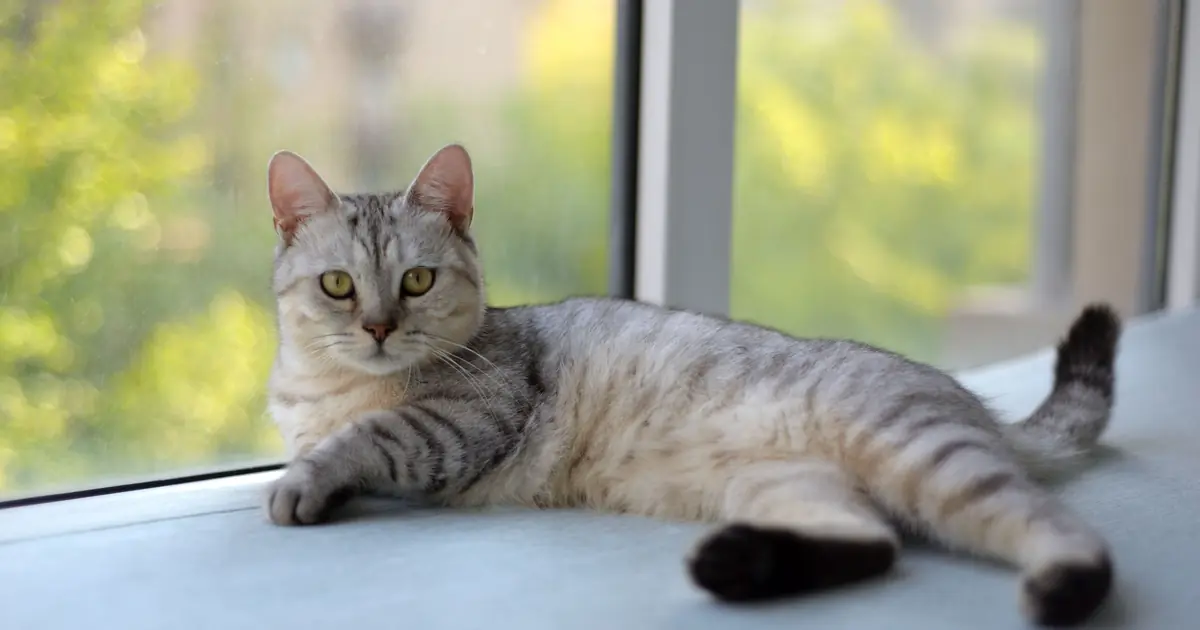
Picture a cat the color of toasted honey, sitting perfectly still on a windowsill at dusk. Then a moth flutters past. In half a second the stillness is gone, and you remember this cat’s ancestors earned their keep catching rats in Chinese farmhouses for centuries.
That’s the Dragon Li. It looks, at a glance, like the brown tabby snoozing in any neighborhood. Look closer and you’re seeing one of the only natural cat breeds China has ever formally recognized.
Here’s the honest catch though: outside China, this cat is almost a ghost. Solid information is thin, real breeders are rare, and a lot of what’s written online repeats the same shaky legends. So let’s sort the facts from the folklore.
| Origin | China (natural landrace; formally recognized early 2000s) |
| Weight (Male) | 10 to 12 lbs, sometimes up to 15 lbs |
| Weight (Female) | 8 to 11 lbs |
| Lifespan | 12 to 15 years |
| Coat | Short to medium, dense, no heavy undercoat |
| Colors | Brown ticked / mackerel tabby with golden-brown agouti and black tips |
| Energy Level | High |
| Grooming Needs | Low |
| Good With Kids | Yes, with respectful handling |
| Good With Other Pets | Yes, with slow introductions |
| Average Price | Highly variable; roughly $500 to $2,000+, and very hard to source in the West |
Where Do Dragon Li Cats Come From?
Dragon Li cats come from China, where they developed naturally over a very long time, with no human-planned crossbreeding behind them. That last part matters. The Dragon Li is what breeders call a natural breed or landrace: a population of cats that simply existed, did their thing, and got standardized later. They weren’t designed in a cattery.
In China the cat is usually called the Li Hua Mao (貍花貓). The name is often translated as something like “fox-flower cat,” which is where you’ll see Dragon Li fans calling it the fox flower cat. The breed only became an official, written-down breed in the early 2000s, debuting as an experimental breed in Beijing around 2004 and getting recognized by China’s Cat Aficionado Association (CAA).
The folklore (and one claim worth doubting)
These cats show up in old Chinese stories, including a famous court legend involving a swapped baby and a cat. Lovely tale, and it tells you the líhuā māo has been part of Chinese daily life for a very long time.
You’ll also read that the Dragon Li descends from the wild Chinese mountain cat (Felis bieti). Be careful with that one. It’s a popular claim, but it has not been genetically confirmed, and plenty of experts treat it as unproven. So the truthful version is: the Dragon Li is a long-domesticated Chinese cat with possible wild roots that nobody has actually proven. Anyone selling you a “wildcat hybrid” is overselling.
What happened with the CFA?
Here’s a fact that trips people up. The Cat Fanciers’ Association (CFA), the big American registry, did briefly accept the Dragon Li into its Miscellaneous class back in February 2010. Then it removed the breed, effective May 2015. So today, the Dragon Li is recognized in China by the CAA but is not a championship breed with the CFA, and it isn’t recognized as a standardized breed by the other major Western registries either. Recognition status is part of why this cat stays so obscure abroad.
What Does a Dragon Li Cat Look Like?
A Dragon Li looks like a sturdy, athletic brown tabby that someone dusted with gold. The build is the first tell: rectangular, well-muscled, with a broad chest and strong legs. This is a working cat’s body, not a delicate lap ornament.
The signature feature is the coat. Dragon Li cats wear a brown ticked tabby coat, and “ticked” is the key word. Each individual hair is banded with color: black near the root, a warm golden or yellowish band in the middle, and a dark tip. Layer thousands of those hairs together and you get that shimmery, golden-brown “wild” look. Most Dragon Li cats also show mackerel tabby striping on the legs and tail, plus a faint necklace-style marking across the chest.
Coat, eyes, and other details
- Coat texture: short to medium, dense, and fairly hard to the touch, without a thick fluffy undercoat.
- Color: brown ticked / mackerel tabby is the one recognized look. No calicos, no solids, no pointed Dragon Li cats.
- Eyes: large and almond-shaped, usually green, yellow, or brown.
- Ears: medium to large, often with light tufting at the tips.
- Tail: medium length, tapering, usually ending in a dark tip.
How is a Dragon Li different from an Abyssinian or an ordinary tabby?
This is the question everyone actually has, so let’s settle it. A ticked coat alone does not make a cat a Dragon Li, and a brown tabby alone definitely doesn’t.
| Trait | Dragon Li | Abyssinian | Ordinary brown tabby |
| Body | Sturdy, muscular, rectangular | Slim, fine-boned, elegant | Varies wildly |
| Coat pattern | Ticked plus visible mackerel stripes | Mostly ticked, few or no stripes | Any tabby pattern, often bold stripes |
| Color | Golden-brown only | Ruddy, sorrel, blue, fawn | Brown, gray, orange, and more |
| Origin | Natural Chinese breed | Established global breed | No breed; mixed ancestry |
| Findability | Very rare outside China | Widely available | Everywhere |
Short version: the Abyssinian is the slim, almost foxy ticked cat. The Dragon Li is the chunkier, golden, striped-and-ticked Chinese cat. And the tabby at the shelter is almost certainly just a wonderful regular tabby. Honestly, most “I think my cat is a Dragon Li” guesses turn out to be ordinary tabbies, and that’s nothing to be sad about.
Kitten vs adult
Dragon Li kittens look softer and rounder, with the golden ticking less developed. The breed is also a slow grower. A Dragon Li can take up to three years to fully mature in body and coat, so the cat you bring home at six months is still a work in progress.
Dragon Li Personality and Temperament
The Dragon Li personality is smart, active, and quietly loyal. Think of a cat that loves you on its own terms. It will follow you room to room and check on what you’re doing, then go invent its own afternoon project. This is not the breed that melts into your lap for three hours.
These cats are problem-solvers. Owners and breeders consistently describe them as clever, alert, and endlessly interested in their surroundings. That hunter heritage runs deep, so a Dragon Li will stalk a toy mouse with genuine seriousness, then look smug about it.
Are Dragon Li cats friendly?
Yes, Dragon Li cats are friendly, but in an independent way rather than a velcro-cat way. They bond strongly with their family and can be gentle and affectionate, especially with the people they trust. They just tend to choose their cuddle moments instead of demanding them nonstop. If you want a cat that’s devoted but not needy, this temperament is a sweet spot.
The honest downsides
- High energy: a bored Dragon Li will find its own fun, and you may not love its choices.
- Strong prey drive: small pets like hamsters and birds are a genuine risk.
- Independent streak: this isn’t the snuggly breed for someone craving constant lap time.
- Slow to mature: expect kitten-brained chaos for longer than usual.
Is the Dragon Li Right for You?
The Dragon Li suits an active home that respects a cat’s independence and can keep a clever hunter busy. It’s a poor match for someone who wants a calm, clingy lap cat or who has no time to play.
Picture your daily reality. Are you out of the house twelve hours with zero enrichment set up? This cat will be miserable, and your blinds will pay. Do you toss a wand toy around every evening and enjoy a cat with opinions? You’ll get along beautifully.
You’ll love a Dragon Li if you:
- Want a smart, athletic, low-grooming cat
- Enjoy interactive play and puzzle feeders
- Appreciate a loyal companion that isn’t needy
- Are fascinated by rare, naturally occurring breeds
Look elsewhere if you:
- Want a lap cat that cuddles on demand (try a Ragdoll)
- Have very small “snack-sized” pets roaming free
- Have no time for daily play
- Need a cat you can actually find and buy easily
Dragon Li Health Issues to Know About
Dragon Li cats are generally considered a hardy, healthy breed, mostly because natural breeds skip the heavy inbreeding that creates breed-specific diseases. The flip side: there’s very little formal health data on Dragon Li cats, simply because the breed is rare and understudied. So treat “known issues” with humility.
With limited breed-specific data, the smart move is to watch for the same common feline health concerns any cat can face, and keep up with regular checkups.
- Dental disease: common in all cats; brush teeth and have your vet check the gums.
- Obesity: an active hunter that gets bored and overfed can still pack on weight.
- Parasites and infectious disease: standard vaccinations and parasite prevention matter, especially given outdoor-hunter instincts.
- General senior issues: kidney and thyroid changes show up in many older cats, Dragon Li included.
This guide is educational, not veterinary advice. Please talk to a licensed vet for anything specific to your cat. Get to a vet promptly if you see red flags like sudden weight loss, not eating for more than a day, labored breathing, straining in the litter box, or repeated vomiting.
Grooming and Care for a Dragon Li
Grooming a Dragon Li is refreshingly easy. The short, dense coat without a heavy undercoat needs only a quick brush about once a week to pull loose hair and keep that golden sheen. No mats, no daily detangling, no salon visits.
A simple weekly routine covers it: a once-over with a soft brush or grooming glove, a nail trim every couple of weeks, and a peek in the ears. Bathing is rarely needed unless your cat gets into something. Expect a bit more shedding during seasonal coat changes in spring and fall.
A rubber curry brush or grooming mitt works well here, since it lifts loose hair without irritating a short coat. It doubles as a petting session most cats actually enjoy.
Feeding and Diet for a Dragon Li
Feed a Dragon Li a high-protein, meat-first diet that matches its active, muscular build. As an athletic natural breed with a true hunter’s metabolism, this cat does best on quality food rich in animal protein, with portions controlled so it stays lean.
There’s no special “Dragon Li formula,” so good general feline nutrition rules apply. Pick a complete and balanced food, follow portion guidance for your cat’s weight, and keep fresh water available. Many active cats do well with a mix of wet and dry food, and a puzzle feeder is a great way to engage that clever, hunting brain at mealtime.
Watch the waistline as your cat ages and slows down. The amount that kept a busy two-year-old lean can quietly fatten up a mellow eight-year-old.
Exercise and Enrichment
A Dragon Li needs daily active play to stay happy, because this is a high-energy hunting breed that gets restless without an outlet. Skip the playtime and you’ll meet the 2am zoomies, the curtain-climbing, and the knocked-over everything.
Lean into the hunter instinct. These cats light up for anything that mimics prey.
- Wand toys and feather teasers for real chase-and-pounce play
- Puzzle feeders and treat balls that make them work for food
- Tall cat trees and shelves for climbing and surveying their kingdom
- Rotating a few toys so novelty never runs out
- A secure catio if you want safe outdoor stimulation
Two solid play sessions a day, even ten to fifteen minutes each, will burn off the busy energy and deepen your bond.
Living With Kids, Dogs, and Other Cats
Dragon Li cats generally do well in busy family homes, with kids, dogs, and other cats, as long as introductions go slowly and everyone respects the cat’s boundaries. Their confident, even temperament helps a lot here.
With kids
A Dragon Li is usually patient and playful with children who handle cats gently. The active, game-for-anything personality actually matches well with older kids who like interactive play. Teach little ones to read cat body language and to leave a resting cat alone.
With dogs
Many Dragon Li cats live happily with cat-friendly dogs. This is a confident breed that won’t necessarily hide under the bed. Introduce them gradually, keep early meetings calm, and give the cat high escape routes.
With other cats and small pets
Other cats are usually fine with proper slow introductions. Small pets are the real concern. That hunting drive is no joke, so birds, hamsters, and fish should be kept securely out of reach. Never assume a Dragon Li sees the family gerbil as a roommate.
Dragon Li Lifespan and Aging Tips
Dragon Li cats typically live 12 to 15 years, and a healthy indoor cat with good care can sometimes reach the upper end or beyond. As a robust natural breed, longevity is one of its quiet strengths.
Help your Dragon Li age well with a few steady habits:
- Annual vet visits while young, moving to twice a year once your cat hits about seven.
- Senior-friendly tweaks like easy-access litter boxes and softer bedding as joints stiffen.
- Weight checks, since the slowdown of middle age makes extra pounds creep on.
- Gentle play that keeps an older Dragon Li’s sharp mind engaged without overdoing it.
How Much Does a Dragon Li Cost?
A Dragon Li can range from roughly $500 to $2,000 or more, but honestly, reliable pricing barely exists outside China because the breed is so rare. There’s no settled market price the way there is for a Ragdoll or Maine Coon.
In China, where the cat is common, it can be quite inexpensive. Abroad, the price reflects scarcity, import logistics, and how badly a buyer wants one rather than any standard breed value. Treat any quoted number as a rough guide, not a guarantee.
| Cost | Rough estimate |
| Kitten (Western market, if found) | $500 to $2,000+ (highly variable) |
| Initial setup (litter, beds, trees, bowls) | $150 to $400 |
| Food per year | $300 to $700 |
| Routine vet care per year | $200 to $500 |
| Unexpected vet costs | Budget a cushion or get pet insurance |
Where to Find a Dragon Li Ethically
Finding a Dragon Li ethically is the hard part, because there are almost no established Dragon Li breeders outside China. In much of the West, the realistic count of genuine breeders is tiny, sometimes just a handful, if any in your country at all.
So here’s the straight talk. If you see a flashy website promising readily available “Dragon Li kittens for sale” with instant shipping and a deposit link, be very skeptical. Rare-breed scams love hard-to-verify breeds exactly like this one.
How to source responsibly
- Start with Chinese cat associations, like the CAA, or reputable specialty breed networks.
- Ask for proof: registration, health records, photos of the parent cats, and a real address.
- Be patient, a true Dragon Li may mean a waitlist or international travel.
- Walk away from pressure, wire-only payments, or prices that seem too good.
- Consider the alternative: if you love the look, a golden ticked tabby from a shelter gives you the same charm and saves a life.
Real talk, for most people abroad, adopting a tabby that resembles a Dragon Li is far more achievable, far cheaper, and just as rewarding.
Similar Breeds to Consider
If you can’t track down a Dragon Li, or just love the look and personality, these breeds scratch a similar itch:
- Abyssinian: the classic ticked cat, slim and playful, and actually findable.
- Egyptian Mau: another natural, athletic spotted breed with serious hunter energy.
- Ocicat: a wild-looking spotted cat that’s friendly and outgoing.
- Bengal: a high-energy, intelligent breed with a striking coat (more demanding, though).
- Domestic shorthair tabby: the unsung hero, the same golden-tabby charm waiting at your local shelter.
Common Myths and Misconceptions About the Dragon Li
This breed attracts more myths than most, partly because reliable info is so scarce. Let’s clear up the big ones.
Myth: “Any brown tabby is a Dragon Li”
No. A true Dragon Li is a specific natural breed with a sturdy build and golden ticked tabby coat, not just any brown tabby. The vast majority of brown tabbies are wonderful mixed-ancestry cats with no Dragon Li lineage at all.
Myth: “The Dragon Li is a wildcat hybrid”
The Dragon Li is a domestic cat, not a proven wildcat hybrid. The popular claim that it descends from the Chinese mountain cat (Felis bieti) has never been genetically confirmed, so treat it as folklore rather than fact.
Myth: “It’s a CFA championship breed”
Not anymore. The CFA briefly accepted the Dragon Li into its Miscellaneous class in 2010 and then removed it in 2015. Today it’s recognized in China by the CAA but isn’t a championship breed with the major Western registries.
Myth: “They’re easy to buy”
Outside China, the Dragon Li is genuinely rare and tough to source from a legitimate breeder. Easy availability online is usually a red flag, not a lucky break.
Dragon Li FAQ
Q: Is the Dragon Li the same as the Li Hua?
Yes. Dragon Li, Chinese Li Hua, China Li Hua, and Li Hua Mao all refer to the same natural Chinese cat breed. “Dragon Li” is the popular English name, while Li Hua Mao (貍花貓) is the traditional Chinese name, sometimes translated as “fox flower cat.”
Q: Are Dragon Li cats rare?
Yes, Dragon Li cats are very rare outside China. They’re fairly common in China but seldom seen elsewhere, with extremely few established breeders in North America or Europe. That scarcity is one of the breed’s defining traits.
Q: How much is a Dragon Li cat?
A Dragon Li can run roughly $500 to $2,000 or more abroad, but reliable pricing barely exists because the breed is so rare. In China it can be inexpensive; elsewhere the price mostly reflects scarcity and import costs rather than a standard breed value.
Q: Are Dragon Li cats friendly?
Yes, Dragon Li cats are friendly and loyal, though independent rather than clingy. They bond closely with their families and can be gentle and affectionate, but they tend to choose their cuddle moments instead of demanding constant lap time.
Q: Where do Dragon Li cats come from?
Dragon Li cats come from China, where they developed naturally as a landrace over a very long time. The breed was formally recognized in the early 2000s by China’s Cat Aficionado Association (CAA), making it one of China’s few officially recognized natural cat breeds.
Q: How big do Dragon Li cats get?
Dragon Li cats are medium to large and muscular. Males usually weigh about 10 to 12 pounds, occasionally up to 15, while females tend to run 8 to 11 pounds. They’re a slow-maturing breed and can take up to three years to fully fill out.
Q: How long do Dragon Li cats live?
Dragon Li cats typically live 12 to 15 years. As a hardy natural breed with little of the inbreeding that causes breed-specific disease, well-cared-for indoor Dragon Li cats can sometimes reach the higher end of that range or beyond.
Q: Do Dragon Li cats make good pets?
Yes, Dragon Li cats make great pets for active homes that enjoy a smart, independent cat. They’re loyal, playful, low-maintenance to groom, and good with respectful kids and other pets. The main catch is simply how hard they are to find outside China.
Final Verdict: Should You Get a Dragon Li?
The Dragon Li is a genuinely special cat: a smart, athletic, loyal natural breed wearing one of the prettiest golden tabby coats out there, with real history woven through Chinese culture. If you want an independent companion with a hunter’s spark and an easy grooming routine, this breed is a joy.
The honest hurdle isn’t the cat, it’s finding one. Outside China, the Dragon Li (Chinese Li Hua) is rare to the point of nearly mythical, and the sourcing scene is thin and scam-prone. If you can connect with a legitimate breeder and you’ve got the patience, wonderful. If not, a golden ticked tabby from your local shelter offers the same charm, the same loyalty, and a much shorter wait. Either way, you’re choosing a cat with serious personality, and that’s the part that really counts.

Hello and welcome to The Ideal Cat!
We are some passionate cat owners from different professions. We love our cats and have a lot of experience in how to care for our pets. We are incredibly excited to share our knowledge, experience, and research with you. So you can take good care of your loving cat. We will answer most of the common questions about owning cats, taking care of them, etc. If you have any question contact with us. Thanks for visiting! Enjoy the content.
