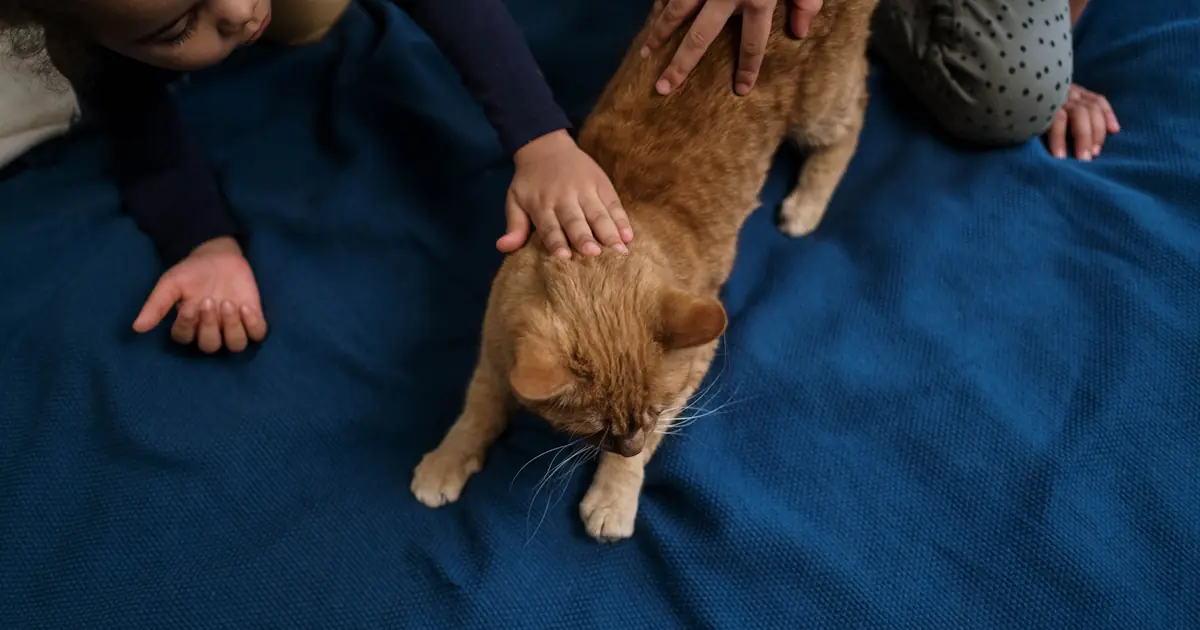
Bringing a newborn home is a huge shift for everyone in the house, including the cat who used to run the place. One day your cat has your full attention and a quiet living room. The next, there’s a crying, squirming, oddly-smelling little human taking up all your time.
Most cats handle this transition fine. But “fine” usually means a slower, more thoughtful introduction than just walking in the door and letting them sniff away. Let’s go through exactly how cats tend to react, why the change hits them the way it does, and how to keep everyone safe and calm while your cat and baby get used to each other.
- Cat reactions to a new baby range from calm curiosity to hiding, clinginess, or attention-seeking behavior, and most cats settle in within a few weeks.
- A newborn changes a cat’s environment through new smells, sounds, and a disrupted routine, all of which can raise stress levels temporarily.
- The old myth that cats “smother” or “steal breath from” babies has no scientific backing, but real risks like scratches and litter-box germs are worth managing anyway.
- Scent introduction before the baby comes home, using an unwashed blanket or worn item, helps a cat recognize the baby as familiar rather than a threat.
- A cat should never be left alone and unsupervised with a baby or young infant, regardless of how relaxed the cat seems.
How do cats typically react to a new baby?
Cats react to a new baby along a pretty wide spectrum, and there’s no single “normal” response. Some cats are openly curious and want to sniff the baby’s blanket or sit nearby. Others go quiet and cautious, watching from a distance for a week or two. Some hide more than usual, and a few become clingier with their favorite person, following you room to room like they’re checking in.
A smaller number of cats act out, using the litter box outside its usual spot, scratching furniture more, or getting snippy when handled. None of this means your cat is broken or “bad.” It means your cat noticed a big change and is working through it in cat language. Give it two to six weeks of steady routine and most cats settle into a new normal, often becoming genuinely fond of the baby as they grow.
Why does a new baby change things so much for a cat?
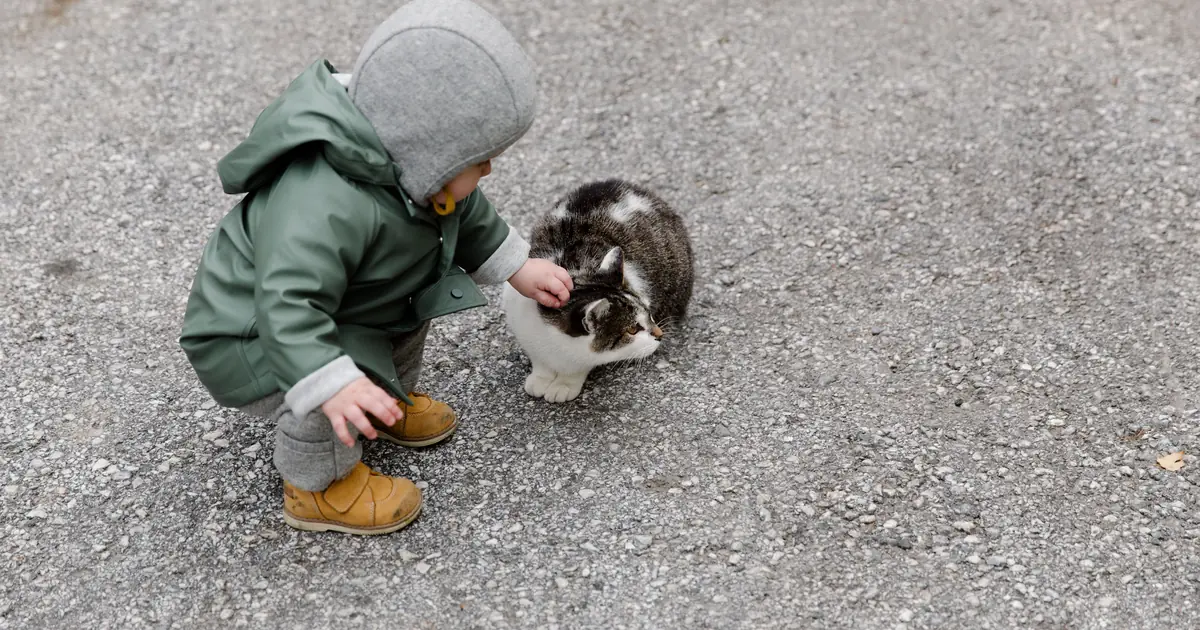
A new baby changes a cat’s whole world at once, and that pile-up is what causes stress, not the baby itself. Cats are creatures of routine, and a newborn rewrites almost every part of it overnight.
- New smells: baby lotion, formula, diapers, and a brand-new person’s scent are all unfamiliar to your cat.
- New sounds: crying is loud, unpredictable, and sits right in a pitch range that can grate on sensitive cat ears.
- Less one-on-one time: feedings and sleepless nights eat into the attention your cat used to get, and cats notice.
- New off-limits zones: the nursery, the crib, and sometimes the whole upstairs suddenly become areas your cat can’t roam freely.
- New gear everywhere: strollers, swings, and monitors change the shape and smell of rooms your cat has always known.
Any one of these on its own is a minor adjustment. All of them landing in the same week is why some cats need extra patience during those first few months.
Do cats get jealous of a new baby?
Cats don’t experience jealousy the same complicated way humans do, but they absolutely notice a drop in attention and resources, and they’ll act on it. What looks like jealousy is usually a cat competing for something it used to have without question: your lap, your attention, or a quiet house. That can show up as extra meowing, nudging in between you and the baby, or acting out when you’re distracted.
The fix isn’t guilt, it’s scheduling. Carve out five or ten minutes of dedicated cat time even on hard days: a play session with a wand toy, a few minutes of brushing, or just sitting with your cat while the baby naps. For more on this pattern, our guide on whether cats get jealous breaks down the behavior in more detail.
How should you prepare your cat before the baby arrives?
Preparing a cat before the baby comes home means introducing the changes gradually, ideally starting a month or two ahead, so nothing feels sudden on day one.
- Set up the nursery early. Let your cat explore the crib, changing table, and furniture while they’re still just new objects, not off-limits territory guarded by a screaming infant.
- Play recordings of baby sounds. Crying and cooing sound clips at a low volume, increased gradually, can take the edge off the real thing later.
- Shift feeding and play times. If a newborn will change when you feed or play with your cat, start moving that schedule now instead of changing it cold.
- Introduce baby lotions and powders. Let your cat sniff a small amount on your hands so the scent isn’t a total surprise later.
- Set up high perches and safe zones. Cat trees, shelves, and a quiet room with food, water, and a litter box give your cat somewhere to retreat when things feel like too much.
- Practice calm handling. If your cat isn’t used to sudden movements or grabby hands, gentle desensitization now helps once the baby starts reaching for fur.
What’s the safest way to introduce a cat to a newborn?
The safest introduction is slow, scent-first, and always supervised, with no forced contact between cat and baby. Here’s a simple sequence that works for most households.
- Send a scent ahead. Before the baby comes home, bring back a blanket or worn onesie from the hospital and let your cat sniff it on neutral ground.
- Let your cat approach first. When the baby is home, keep the first meeting calm and let your cat come closer at their own pace, not the other way around.
- Keep initial sessions short. A minute or two of calm sniffing is a win. There’s no need to force a long “meet and greet.”
- Reward calm behavior. A treat or gentle praise when your cat stays relaxed near the baby builds a positive association.
- Never force contact. Don’t pick your cat up and place them next to the baby, and don’t let anyone hold the baby up to the cat’s face.
- Repeat daily in short bursts. Consistency, not intensity, is what builds trust over the first few weeks.
According to International Cat Care, gradual, low-pressure introductions give cats the best chance of accepting a new baby without lasting stress.
Is it safe to have a cat around a newborn?
Yes, cats and newborns can share a home safely, but it takes real supervision and a few firm rules, not just good intentions. The old myth that cats will “suck the breath” out of a sleeping baby or smother them on purpose isn’t supported by any evidence. What can actually happen is a cat curling up close to a baby’s face for warmth, which is a real suffocation risk simply because of proximity, not intent.
Here are the practical safety rules to follow:
- Never leave a cat alone and unsupervised in a room with a baby, especially during naps.
- Keep the cat out of the crib and bassinet entirely, using a mesh cover or a closed nursery door when you’re not there.
- Trim your cat’s nails regularly and supervise handling to avoid accidental scratches from a startled cat.
- Keep the litter box out of reach of a crawling baby and wash your hands after scooping.
If you’re pregnant, litter box hygiene matters even before the baby arrives because of toxoplasmosis, a parasitic infection that can pass through cat feces and cause serious complications during pregnancy. The CDC recommends that pregnant women avoid changing litter boxes when possible, or wear gloves and wash hands thoroughly if they must. Our guide on cat poop and pregnancy safety covers this in more depth.
What are the signs your cat is stressed about the baby?
A stressed cat usually shows it through a change in normal habits, not through anything dramatic. Watch for these signs:
- Hiding more than usual, especially during feeding times or when the baby cries.
- Eating less or skipping meals for more than a day.
- Over-grooming to the point of bald patches or irritated skin.
- Urinating or spraying outside the litter box, sometimes on items that smell like the baby.
- Hissing, swatting, or growling when approached, even by people the cat used to trust.
If you’re seeing spraying specifically, our piece on getting a cat to stop spraying walks through the common triggers and fixes. And if the behavior looks more like general stress than a litter box issue, the signs of stress in cats guide is worth a read too.
| Cat reaction | What it usually means | What to do |
|---|---|---|
| Curious sniffing, calm approach | Healthy adjustment, low stress | Let it happen naturally, reward calm behavior |
| Hiding more than usual | Feeling overwhelmed by new sounds and smells | Give access to a quiet safe room with food, water, and litter |
| Extra clingy or vocal | Seeking attention that’s now split with the baby | Schedule short daily one-on-one play or petting sessions |
| Hissing, swatting, or growling | Fear, overstimulation, or feeling cornered | Slow down introductions, give more space, avoid forcing contact |
When should you get help for a cat that’s struggling with a new baby?
You should reach out to your vet or a certified cat behaviorist if your cat’s stress signs last more than two to three weeks, get worse instead of better, or include ongoing aggression. A vet visit first rules out a medical cause, since pain or illness can look a lot like behavioral stress. From there, a feline behaviorist can build a step-by-step plan tailored to your cat and your household.
If your cat has become suddenly aggressive rather than just cautious, it’s worth reading about why cats become suddenly aggressive, since a change like a new baby is a common trigger worth ruling in or out. And if your cat seems more scared than aggressive, tips for calming a scared cat can help in the meantime.
This article is meant to help you prepare and reassure you, not replace professional advice. If your cat’s behavior around the baby feels unsafe or isn’t improving, talk to your veterinarian.
Frequently Asked Questions
Q: Can a cat hurt a newborn baby?
A cat can accidentally scratch a baby if startled or handled roughly, but deliberate harm is rare. The bigger risk is a cat lying too close to a baby’s face for warmth, which is why supervision and keeping cats out of the crib matter more than worrying about aggression.
Q: Will my cat run away or leave if I have a baby?
Most cats don’t run away because of a new baby, though some may hide more or spend less time in shared rooms for a few weeks. Cats are attached to their territory and routine, and with patience most stay just as bonded to the family as before.
Q: How long does it take a cat to adjust to a new baby?
Most cats adjust within two to six weeks, though timelines vary by personality. Confident, social cats often settle faster, while shy or older cats may take a couple of months to feel fully comfortable with the new routine.
Q: Should I keep my cat away from the baby completely?
No, complete separation usually isn’t necessary or realistic long-term. Supervised, gradual exposure works better than total avoidance, since it lets your cat build a calm, familiar relationship with the baby instead of ongoing stress from being cut off entirely.
Q: Is the myth about cats stealing a baby’s breath true?
No, there’s no evidence that cats intentionally smother or “steal breath” from babies. The real, documented risk is a cat settling close to a sleeping baby’s face for warmth, which is why keeping cats out of the crib and using a mesh cover is the recommended precaution.
Q: Can pregnant women safely keep their cat during pregnancy?
Yes, pregnant women can safely keep their cats, as long as someone else handles litter box scooping or gloves and handwashing are used consistently. The concern is toxoplasmosis, a parasite sometimes found in cat feces, and standard hygiene precautions make the risk very low.
Q: Why does my cat sit on the baby’s things or in the nursery?
A cat sitting on baby items or in the nursery is usually drawn to new smells, warmth, or a cozy new space, not trying to claim the baby. Keeping the crib itself off-limits with a mesh cover while allowing supervised nursery access elsewhere usually solves this.
Q: What should I do if my cat hisses at the baby?
If your cat hisses at the baby, give them more distance and slow the introduction process down rather than pushing closer contact. Hissing is a fear signal, and forcing interaction usually backfires. Reward calm behavior from a distance and let your cat set the pace.

Hello and welcome to The Ideal Cat!
We are some passionate cat owners from different professions. We love our cats and have a lot of experience in how to care for our pets. We are incredibly excited to share our knowledge, experience, and research with you. So you can take good care of your loving cat. We will answer most of the common questions about owning cats, taking care of them, etc. If you have any question contact with us. Thanks for visiting! Enjoy the content.
