
Cats get hurt in the most cat-like ways: a scuffle with the neighbor’s tabby (sometimes it starts with nothing more than cats slapping each other before things escalate), a jump gone wrong off the bookshelf, a scrape against a fence post. One minute your cat is fine, the next you’re staring at a scratch or a torn claw wondering what to do next. Take a breath. Most small wounds are manageable at home if you know the right steps.
This guide walks you through exactly how to clean a cat wound safely, what to reach for and what to avoid, and how to tell the difference between “keep an eye on it” and “get to the vet now.” Cat skin heals fast, but it also hides trouble well, so a little know-how goes a long way.
- Minor surface scrapes can usually be cleaned at home with warm water or saline and a pet-safe antiseptic.
- Never use hydrogen peroxide, rubbing alcohol, or tea tree oil on a cat wound, they damage healthy tissue or are toxic to cats.
- Cat bite wounds are high-risk because sharp teeth puncture deep and seal the skin over, trapping bacteria underneath.
- Diluted chlorhexidine (around a 0.05% solution) is one of the few antiseptics vets consider safe for cleaning cat wounds.
- Any wound that’s deep, won’t stop bleeding, came from a bite, or shows swelling, pus, or a bad smell needs a veterinarian.
Can You Clean a Cat Wound at Home, or Does It Need a Vet?
You can clean a small, shallow scrape at home, but anything deep, gaping, bleeding heavily, or caused by a bite belongs with a veterinarian. The size and cause of the wound matter more than how it looks on the surface.
A minor scrape from brushing against a rough surface, a small nick from a claw, or a shallow scratch that’s already stopped bleeding are usually fine to manage yourself. You’re mostly rinsing away dirt and keeping it clean while it heals. But cats have thin, loose skin, and a wound that looks small on top can go much deeper than it appears, especially if another animal was involved.
| Wound Type | Home Care or Vet Visit? |
|---|---|
| Minor surface scrape or shallow scratch | Home care usually fine, monitor for changes |
| Bite or puncture wound (from another cat, dog, or wildlife) | Vet visit, even if it looks small on the surface |
| Deep cut or wound that won’t stop bleeding | Vet visit, urgent |
| Wound with swelling, pus, odor, or your cat seems unwell | Vet visit, this is likely infected |
How Do You Clean a Minor Cat Wound Step by Step?
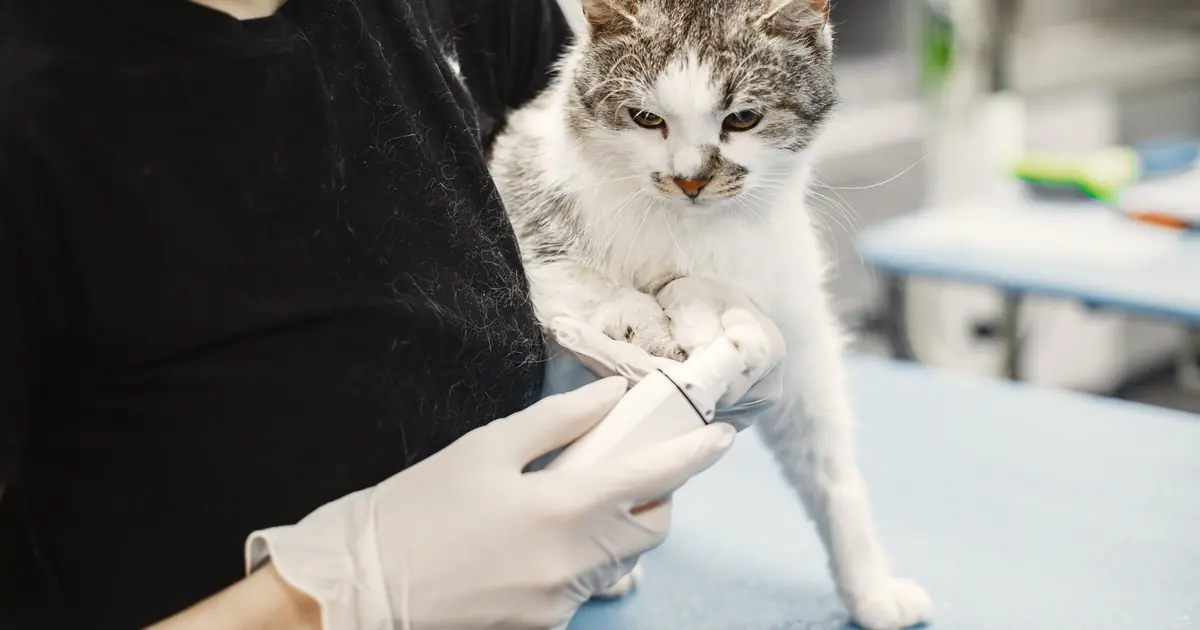
Cleaning a minor cat wound takes six simple steps: settle your cat, trim the fur, rinse it, dry it, apply a pet-safe antiseptic if you have one, and watch it over the next few days. Go slowly and stop if your cat is too stressed or in pain to cooperate.
- Restrain your cat gently. Wrap your cat snugly in a towel, exposing only the injured area (sometimes called a “purrito”). This keeps you both safe and calm. Ask a second person to help hold if you can.
- Trim the fur around the wound. Use blunt-tipped scissors and trim carefully, pointing the tips away from the skin. Removing fur stops hair and debris from getting trapped in the wound as it heals.
- Rinse with warm water or saline. Plain lukewarm tap water works, or make a saline rinse with about one level teaspoon of salt dissolved in two cups of warm water. Flush gently to wash away dirt and loose debris.
- Pat the area dry. Use a clean, soft cloth or gauze. Don’t rub, just dab, so you don’t reopen the wound or irritate the skin further.
- Apply a pet-safe antiseptic if you have one. A dilute chlorhexidine solution (around 0.05%) or a dilute povidone-iodine solution are the options most veterinarians consider appropriate for cats. If you don’t have either on hand, a clean rinse alone is safer than reaching for the wrong product.
- Monitor the wound daily. Check it once or twice a day for the next several days. Look for redness, swelling, discharge, or your cat licking at it excessively, and call your vet if any of those show up.
Only cover the wound if your cat won’t stop licking or scratching at it, or if it’s in a spot that gets dirty easily. A light non-stick bandage, changed daily, is usually enough. If you can’t get a bandage to stay put, a soft recovery cone works better than fighting with tape on fur. It’s worth noting that healing skin can itch as it knits back together, so if you’ve ever wondered why cat scratches itch while they heal, some mild itchiness during recovery is normal and not automatically a sign of infection.
What Should You Never Use on a Cat Wound?
Never use hydrogen peroxide, rubbing alcohol, tea tree oil, or human antibiotic ointments like Neosporin on a cat wound. Each of these can hurt more than it helps.
- Hydrogen peroxide: it fizzes dramatically, but that bubbling action damages healthy tissue and actually slows healing. VCA Animal Hospitals specifically warns against using it to clean a cat’s wound or a drained abscess.
- Rubbing alcohol: it stings badly and dries out the tissue around the wound, which can delay healing.
- Tea tree oil: the ASPCA warns that tea tree (melaleuca) oil is toxic to cats even in small amounts, and it can cause drooling, tremors, or worse if licked.
- Neosporin and other human antibiotic ointments: cats groom constantly, so they’ll lick most of it right off. Some ingredients aren’t meant to be swallowed, and the ointment itself can trap bacteria under a greasy layer instead of letting the wound breathe.
- Human pain relievers: never give your cat ibuprofen, acetaminophen, or aspirin. Cats process these very differently than people do, and they can be dangerous even in tiny amounts. Pain control after an injury should come from your vet.
If you’ve already put one of these on your cat’s wound and you’re worried, call your vet or an animal poison control line right away rather than waiting to see what happens.
Why Are Cat Bite Wounds So Risky?
Cat bite wounds are risky because a cat’s sharp, narrow teeth punch a small hole that seals over almost immediately, trapping bacteria deep under the skin where oxygen can’t reach it. That sealed-over puncture is exactly the environment certain bacteria thrive in.
The biggest culprit is Pasteurella multocida, a bacteria that lives naturally in cats’ mouths. The Cornell Feline Health Center notes this bacteria can also spread to people through a bite or scratch, so gloves and handwashing matter when you’re cleaning up after your cat. Once it’s driven under the skin by a bite, it can trigger cellulitis (a spreading skin infection) within just a few hours of the injury. Left alone, that infection often develops into a painful, swollen abscess, a pocket of pus under the skin, within a few days. Most abscesses need to be drained by a vet and treated with a course of antibiotics, and properly treated ones typically clear up within 10 to 14 days.
This is why a tiny puncture wound from a cat fight deserves the same seriousness as a larger cut. It might look like nothing on day one and turn into a hot, swollen mess by day three. If you know or suspect your cat was bitten, by another cat, a dog, or wildlife, call your vet even if you can’t find an obvious wound.
What Are the Signs a Cat Wound Is Infected?
A cat wound is likely infected if it’s swollen, warm to the touch, oozing pus, smells bad, or your cat seems off, lethargic, or feverish. Any one of these on its own is worth a call to your vet.
- Swelling or a firm lump under the skin near the wound
- Redness or heat when you touch the area
- Pus or discharge that’s yellow, green, or foul-smelling
- A wound that reopens or won’t close after several days
- Your cat licking or biting at the spot obsessively
- Lethargy, hiding, poor appetite, or a fever
Cats are experts at masking pain, so a change in behavior, like hiding and skipping meals, can be one of your earliest clues that something’s wrong even before the wound looks obviously bad. Trust that instinct and get your cat checked out.
When Should You Take Your Cat to the Vet Right Away?
Take your cat to the vet right away for any bite wound, any deep or gaping cut, bleeding that doesn’t stop within a few minutes of gentle pressure, or a wound paired with lethargy, limping, or loss of appetite. Don’t wait it out to see if it improves on its own.
Other reasons to call your vet promptly include a wound near the eyes, mouth, or genitals, a wound your cat keeps reopening, or any injury from a fall, car, or unknown source where internal injury is possible. Tail injuries deserve their own mention too: a hard yank or a door slam can cause serious internal damage even when the skin looks intact, which is one reason cat tails sometimes fall off after trauma that wasn’t treated right away. When in doubt, a quick phone call to your vet clinic costs you nothing and can save your cat a much rougher recovery later.
Vet Note
This article is educational and not a substitute for veterinary care. Deep wounds, heavy bleeding, bite wounds, and any wound showing signs of infection all need a licensed veterinarian, not home treatment. Never use hydrogen peroxide, rubbing alcohol, or human medications on your cat, and never give pain medication without your vet’s guidance. If your cat’s wound is bleeding heavily, your cat is in obvious distress, or you’re simply unsure, treat it as an emergency and call your vet or the nearest animal ER.
Frequently Asked Questions
Q: Can I use human antiseptic wipes on my cat’s wound?
No, most human antiseptic wipes contain alcohol or ingredients that sting and can irritate a cat’s skin. Stick to warm water, saline, or a vet-approved dilute chlorhexidine solution instead.
Q: Is it okay to use hydrogen peroxide to clean a cat wound?
No, hydrogen peroxide damages healthy tissue around a wound and can slow healing rather than help it. Vets specifically advise against using it on cat wounds or drained abscesses.
Q: How long does it take for a cat wound to heal?
A minor surface scrape usually starts healing within a few days and closes up within a week or two, while deeper wounds or abscesses can take 10 to 14 days once a vet has drained and treated them. Healing time depends on the wound’s depth and whether it gets infected.
Q: Should I let my cat lick a wound clean?
No, a cat’s mouth carries bacteria that can introduce infection into an open wound, and constant licking can also irritate the area and delay healing. A soft recovery cone is a better way to stop licking than letting them “clean” it themselves.
Q: My cat has a small scab from a scratch, do I need to do anything?
If the scab is small, dry, and your cat isn’t bothering it, you likely just need to monitor it for a few days. Leave the scab alone so it can protect the healing skin underneath, and call your vet if you notice swelling or discharge.
Q: Can I use Neosporin on my cat’s wound?
It’s best to avoid it. Cats groom frequently and will lick most human antibiotic ointments right off, and it isn’t meant to be swallowed. A dilute antiseptic rinse followed by monitoring is a safer approach.
Q: What does an infected cat wound look like?
An infected wound typically looks red and swollen, feels warm, and may ooze yellow, green, or foul-smelling discharge. Your cat may also seem more tired than usual or go off their food, both signs it’s time to see a vet.
Q: Why do cat bites need antibiotics when the wound looks tiny?
A cat’s teeth are thin and sharp, so they punch a deep, narrow hole that seals over the surface almost immediately, sealing bacteria in with it. This sets the stage for cellulitis or an abscess within days, which is why vets usually prescribe antibiotics for cat bite wounds even when they look minor.

Hello and welcome to The Ideal Cat!
We are some passionate cat owners from different professions. We love our cats and have a lot of experience in how to care for our pets. We are incredibly excited to share our knowledge, experience, and research with you. So you can take good care of your loving cat. We will answer most of the common questions about owning cats, taking care of them, etc. If you have any question contact with us. Thanks for visiting! Enjoy the content.
)