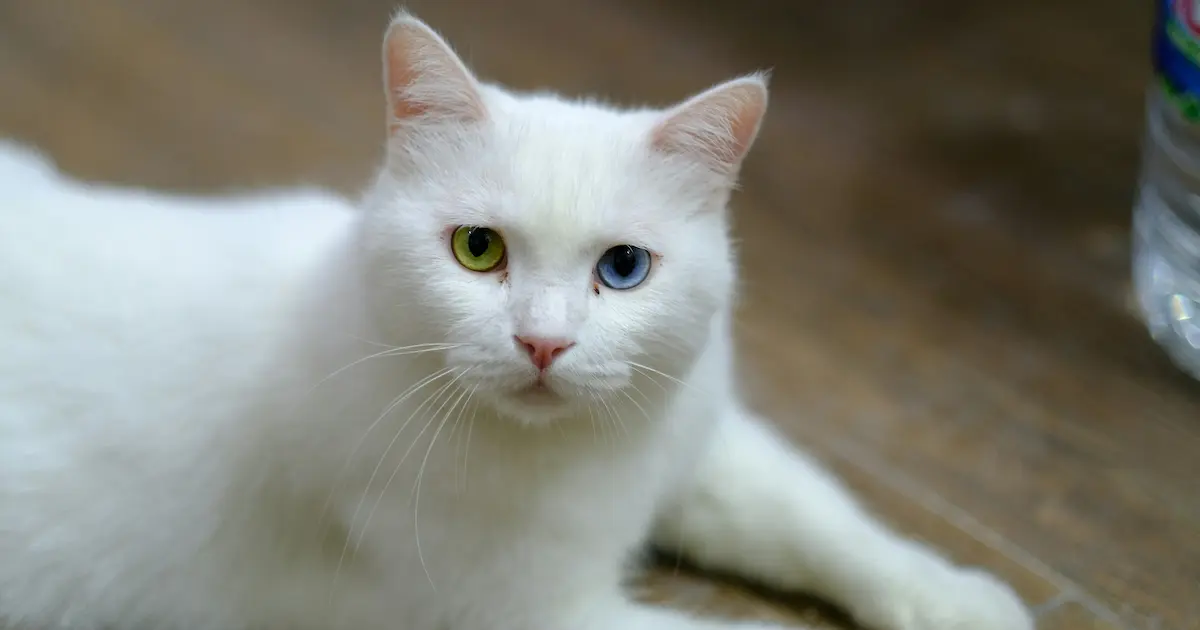
Picture this. You walk into a friend’s living room and a small, snow-white cat freezes mid-step to study you. Then it happens: one eye glints pale blue, the other glows warm gold. You forget what you were going to say.
That’s the Khao Manee effect. People call it the “diamond eye” cat for a reason, and once you’ve seen those eyes up close, generic tabby cats never quite look the same again.
But here’s the thing. Those eyes come with a price tag that can rival a used car, a chatty personality that fills your whole home with sound, and a health quirk nobody at the breeder always explains clearly. So before you fall the rest of the way in love, let’s talk about what owning a Khao Manee is actually like.
| Origin | Thailand (ancient breed, centuries old) |
| Weight (Male) | 8 to 10 lbs |
| Weight (Female) | 6 to 8 lbs |
| Lifespan | 10 to 12 years (some reach 15) |
| Coat | Short, smooth, single layer |
| Colors | Always pure white |
| Energy Level | High |
| Grooming Needs | Low |
| Good With Kids | Yes, with supervision for younger kids |
| Good With Other Pets | Yes, with a slow intro |
| Average Price | $1,700 to $11,000 from breeders |
The Khao Manee Story: From Thai Royalty to Your Living Room
The Khao Manee isn’t a designer cat someone cooked up in the last few decades. It’s old. Really old.
The name means roughly “white gem” in Thai, and these cats show up in an ancient set of illustrated poems called the Tamra Maew, or Cat Book Poems. For centuries, Thai royalty kept them inside palace walls. People believed a white cat with shining eyes brought luck, wealth, and even healing energy into a home.
That royal, secretive past explains a lot about the cat you’d bring home today. They lived close to people for generations, so they crave human company. They were treasured rather than working barn cats, so they expect to be the center of attention. Old habits run deep.
The breed stayed mostly hidden in Thailand until 1999, when breeder Colleen Freymuth brought the first Khao Manees to the United States. Recognition followed slowly. The International Cat Association granted championship status in 2015, and the Cat Fanciers’ Association accepted the breed into its miscellaneous class in 2018. The World Cat Federation recognizes it too, though some European registries still don’t. Translation: this is a genuinely rare cat, even now.
What a Khao Manee Actually Looks Like
Let’s start with the obvious. A Khao Manee is white. Not cream, not “mostly white with a smudge,” but solid, glistening white from nose to tail tip. The coat is short, smooth, and lies close to the body, almost like it was tailored.
Then there are the eyes. They can be blue, gold, green, or odd-eyed, meaning one of each. The odd-eyed look (one blue, one gold) is the showstopper everyone pictures, and it’s a big reason these cats command such high prices.
Body-wise, think athletic, not chunky. They have a lean, muscular frame, long legs, a medium-length tail, and a head that’s a soft wedge shape with high cheekbones. Adults can stretch out to around 18 inches long, which makes them look bigger than their actual 6-to-10-pound weight.
One thing that surprises new owners: kittens sometimes arrive with a small patch of color on the head that fades as they grow. And every now and then, a Khao Manee litter produces a kitten that isn’t white at all. That’s not a defect. The white gene works by masking an underlying color, and once in a while the hidden color shows through. Those kittens can’t be shown, but good breeders sometimes keep them in their programs on purpose, which we’ll get to in the health section.
Living With a Khao Manee: The Personality
If you want a quiet, aloof cat that decorates your shelf and ignores you, scroll on. The Khao Manee is the opposite of that.
These cats are bold, curious, and relentlessly social. They greet visitors at the door like a small white welcoming committee. They follow you room to room. They supervise your cooking, your laundry, and your laptop work. Owners often describe them as dog-like, and honestly, that fits.
They’re also talkers. Big talkers. A Khao Manee will hold actual back-and-forth “conversations” with you, chirping and meowing to report on its day or to ask why dinner is late. The voice is pleasant rather than harsh, but it’s frequent. If you live in a thin-walled apartment with a light-sleeping roommate, factor that in.
The flip side of all that affection is separation anxiety. A Khao Manee left alone for long, repeated stretches can get genuinely stressed and unhappy. They are smart, high-energy, and emotionally tuned in to their people, which is wonderful when you’re home and hard on them when you’re not.
The good news? They’re brilliant and trainable. Plenty of Khao Manees learn to play fetch, come when called, and figure out puzzle feeders. A few sessions with a clicker and some treats, and you’ll be amazed at what this cat picks up.
Is the Khao Manee Right for You?
This is the part most breed sites skip, so let’s be straight with each other.
A Khao Manee is a great match if you:
- Are home a lot, or have another pet to keep your cat company
- Actually enjoy a chatty, interactive cat that “talks” back
- Want a playful, trainable companion, not a low-effort lap ornament
- Have the budget for a rare breed plus ongoing care
- Are okay with daily play and enrichment being part of your routine
You should probably look elsewhere if you:
- Work long hours and travel often with nobody home
- Want a silent, independent cat
- Need a budget-friendly first pet
- Live somewhere that can’t handle a vocal, active animal
- Aren’t prepared for the possibility of a deaf or partially deaf cat (more on that next)
None of this means the breed is “difficult.” It just has clear needs. Match them and you’ll have one of the most rewarding cats around. Ignore them and you’ll both be miserable.
The Deafness Question: What Every Owner Needs to Know
Here’s the topic glossy breeder pages tend to rush past. White cats, including the Khao Manee, carry a higher risk of congenital deafness.
It comes down to a single dominant gene, often called the W gene, that produces the pure white coat. That same gene is linked to blue eye color and to hearing loss in the inner ear. Researchers have documented this same coat-eye-hearing connection across many animals, so it’s well understood, not a rumor.
Here’s what that means in plain terms. Not every white cat is deaf. But the odds go up with blue eyes. Studies suggest somewhere in the range of 15 to 30 percent of blue-eyed white cats have some hearing loss, and it can affect one ear or both. With odd-eyed cats, deafness, when it happens, often shows up on the blue-eyed side.
Responsible breeders test for this with a painless procedure called a BAER test (it stands for brainstem auditory evoked response). It accurately checks whether a kitten can hear before it ever goes home. Always ask a breeder whether the kitten’s hearing has been BAER tested. This is also why some breeders deliberately keep those occasional non-white kittens in their lines, since pairing in non-white cats can lower the chance of deaf kittens.
Now the part that should reassure you: a deaf cat can live a completely happy, full life. Trust me, deaf cats are not broken cats. They just need a few adjustments.
- Keep them indoors. A deaf cat can’t hear a car, a dog, or a coyote coming, so free roaming outside isn’t safe.
- Use hand signals and vibration. Cats read body language beautifully. A wave for “dinner” or a stamp on the floor to get their attention works wonders.
- Approach where they can see you. Walk into their line of sight before touching them so you don’t startle a sleeping cat.
Plenty of owners say their deaf Khao Manee is the sweetest, most attentive cat they’ve ever had. It watches you closely because sight is its main channel. Once you adapt, it stops feeling like a “condition” and just becomes your cat.
Other Health Issues to Watch
Outside of deafness, the Khao Manee is considered a hardy natural breed without a long list of inherited diseases. Centuries of natural selection in Thailand built a pretty robust cat. Still, a few things deserve your attention.
Sun and skin sensitivity. This is a sneaky one. A pure-white cat has very little pigment to protect its skin, especially on thin-furred spots like the ear tips and nose. Long stretches sunbathing in a hot window can lead to sunburn and, over years, raise the risk of skin damage on those exposed areas. If your cat loves a sunny ledge, offer a shaded spot too, and ask your vet about pet-safe sun protection for ears and nose if sunbathing is a daily habit.
Obesity. A bored Khao Manee can pack on weight fast, and extra pounds bring joint and metabolic problems. Since this is a high-energy cat, the fix is usually more play and the right portions rather than a special diet.
The usual feline care. Keep up with vaccines, dental checks, and yearly vet visits. Like any cat, they can develop age-related issues later in life, so routine monitoring matters more than worrying about exotic breed diseases.
Grooming and That Bright White Coat
Good news for the busy among us: the Khao Manee is about as low-maintenance as a cat gets, coat-wise.
That short, single-layer coat doesn’t mat and doesn’t shed heavily. A quick brush once a week is plenty to catch loose hairs and keep things glossy. Most of the time, your cat handles its own grooming just fine.
The white coat does show grime more than a dark coat would, so the occasional wipe-down or rare bath keeps that “fresh snow” look. Round out the routine with regular nail trims and ear checks. If your cat is deaf, gentle ear cleaning is still part of the deal, since deafness doesn’t change normal ear hygiene needs.
Feeding and Diet
Cats are true carnivores, and the Khao Manee is no exception. Build the diet around a quality food where real meat (chicken, turkey, fish) leads the ingredient list, with solid animal protein content.
A mix of wet and dry food works well for most. Wet food adds hydration, which is good for kidneys and urinary health, while dry kibble is convenient and can support dental health. Many owners do a combination of both.
Because this breed burns energy and can gain weight when under-stimulated, portion control matters. Measure meals instead of free-feeding a full bowl all day, and adjust based on your cat’s body condition. Your vet can tell you in seconds whether your cat is lean, ideal, or creeping toward chubby.
Exercise and Enrichment for a Clever Cat
A Khao Manee without a job will invent one, and you may not love its choices (curtains, counters, your sleeping face at 5 a.m.). The cure is enrichment.
These cats love to climb, chase, and solve. A tall cat tree near a window is close to mandatory, giving them a perch to survey their kingdom and burn energy going up and down. Rotate toys so they stay novel, and lean into anything that triggers the hunting instinct: wand toys, balls, and puzzle feeders that make them work for a treat.
Daily interactive play isn’t optional with this breed, it’s how you keep them sane and trim. Ten to twenty minutes of focused play, split into a couple of sessions, makes a huge difference. And since they’re so trainable, teaching tricks doubles as mental exercise. A Khao Manee that learns to fetch is a tired, happy Khao Manee.
Khao Manee With Kids, Dogs, and Other Cats
This is a social butterfly, so the news here is mostly great.
With kids, Khao Manees generally do well thanks to their playful, sturdy nature. They won’t tire out quickly during a play session. Still, supervise younger children and teach them gentle handling, because every cat deserves to set its own boundaries.
With other pets, they tend to thrive. In fact, a second animal can be a gift, since it gives your social cat company when you can’t be there. Do the introductions slowly and properly: separate spaces at first, scent swapping, then supervised meetings. Rushing it can sour even an easygoing cat on a new roommate.
One small note for deaf Khao Manees: a calm, predictable home suits them best. Loud, chaotic households can be more stressful for a cat that relies heavily on sight and routine.
Lifespan and Aging Tips
A healthy Khao Manee typically lives 10 to 12 years, and with great care, good genetics, and a bit of luck, some reach 15. Lifespan comes down to the basics done consistently: smart diet, healthy weight, regular vet visits, and an indoor life that keeps them safe.
As your cat ages, watch for the usual senior changes: less jumping, weight shifts, stiffness, or new bathroom habits. Catching these early makes them far easier to manage. Senior cats also appreciate easier access to favorite spots, so a step or two up to that beloved window perch goes a long way once the leaps get harder.
How Much Does a Khao Manee Cost?
Brace yourself, because this is one of the most expensive cats in the world.
Prices swing wildly, and that confuses a lot of buyers. From a well-known US breeder, especially for an odd-eyed kitten with strong lineage, you can easily see $7,000 to $11,000. Some smaller catteries list kittens closer to $1,700 to $2,500, often with eye color affecting the price (odd-eyed costs more than single-color eyes).
So why the giant gap? A few reasons. Rarity and limited breeding stock push prices up. Importing from Thailand adds transport, quarantine, and vet costs. Odd-eyed kittens are harder to produce, so they cost more. And honestly, demand for that “diamond eye” look lets top breeders charge a premium.
The ongoing costs are far more down to earth. Plan for roughly $30 to $250 a month covering food, litter, parasite prevention, toys, and routine care, plus a few hundred dollars upfront for setup gear like a carrier, litter box, and that all-important cat tree.
Where to Find a Khao Manee Ethically
You won’t be rescuing a Khao Manee from your local shelter. They’re too rare for that, and almost every one comes through a dedicated breeder. That makes choosing the right breeder the single most important decision you’ll make.
Green flags to look for:
- BAER hearing testing on kittens, with results shared openly
- Registration with a recognized body like TICA or CFA
- A health guarantee and a vet health certificate
- Willingness to let you see the parents and where the cats live
- Plenty of questions for you, since good breeders care where kittens land
Red flags to walk away from:
- A “neighbor breeder” offering a suspiciously cheap white cat with no paperwork
- No hearing testing, or dodging the question
- No health records and no chance to meet the parents
- Pressure to pay fast or buy sight unseen
At these prices, patience pays. A reputable breeder may have a waitlist, and that’s a good sign, not a hassle. A genuine Thai white gem is worth the wait.
Similar Breeds to Consider
Drawn to the Khao Manee but want to weigh your options? A few breeds scratch a similar itch:
- Siamese: equally vocal and people-obsessed, with that classic chatty, dog-like devotion, and far easier to find.
- Oriental Shorthair: sleek, athletic, and talkative, available in tons of colors including solid white.
- Korat: another ancient Thai good-luck cat, silver-blue instead of white, affectionate and devoted.
- Turkish Angora: elegant white cat (longhaired) that also carries the white-coat deafness consideration, plus a playful streak.
- Foreign White: essentially a white Oriental with blue eyes, bred specifically for a clean white coat and chatty temperament.
Common Myths and Misconceptions
Myth: All Khao Manees are deaf. Not true. Many hear perfectly. Deafness is a risk, not a guarantee, and BAER testing tells you for sure.
Myth: A white cat that throws a colored kitten is “fake.” Nope. The white gene hides an underlying color, so a non-white kitten is just genetics doing its thing. It happens in well-bred litters.
Myth: They’re delicate, high-maintenance show cats. The coat is low-effort and the breed is naturally hardy. The real “maintenance” is social and mental, not grooming.
Myth: Blue eyes mean a better or “purer” cat. Eye color is about looks and pricing, not quality. A gold-eyed Khao Manee is every bit as much a Khao Manee.
Myth: They’re aloof like many cats. Honestly the opposite. This is one of the most attention-seeking, interactive breeds you’ll meet.
Khao Manee FAQ
Q: Are Khao Manee cats deaf?
Some are, but many aren’t. The dominant white gene is linked to hearing loss, and roughly 15 to 30 percent of blue-eyed white cats have some deafness. A BAER test from the breeder confirms a kitten’s hearing.
Q: How much does a Khao Manee cost?
Prices range widely, from about $1,700 to $11,000. Reputable US breeders, especially for odd-eyed kittens with strong lineage, often charge $7,000 to $11,000 due to rarity and import costs.
Q: Are Khao Manee cats good pets for families?
Yes. They’re social, playful, and generally great with kids and other pets. Just supervise young children and do slow introductions with existing animals.
Q: Do Khao Manee cats meow a lot?
They do. This is a vocal breed that “talks” to communicate needs and greet you. The voice is pleasant, but if you want a quiet cat, this isn’t the one.
Q: How long do Khao Manee cats live?
Typically 10 to 12 years, and some reach 15 with excellent care. A healthy weight, good diet, indoor life, and regular vet visits all stretch their lifespan.
Q: Can a Khao Manee be left alone all day?
Not ideally. They bond closely with people and can develop separation anxiety. If you’re out a lot, a second pet for company helps a great deal.
Q: Are Khao Manee cats hypoallergenic?
No. They shed lightly and groom easily, but no cat is truly hypoallergenic. Allergy sufferers should spend time around one before committing.
Q: Why are Khao Manee cats so expensive?
They’re extremely rare, hard to breed, and often imported from Thailand. The prized odd-eyed look and high demand push prices into the thousands.
Final Verdict: Should You Get a Khao Manee?
The Khao Manee is a genuine living treasure, a centuries-old Thai cat with a coat like fresh snow and eyes that stop people in their tracks. It’s also one of the most social, talkative, and engaging cats you can share a home with.
But it asks for things in return: your time, your attention, a real budget, and a clear-eyed understanding that some of these cats can’t hear (and that’s okay). Get one because you want a chatty, clever, velcro companion, not just because the photos are gorgeous.
If you’re home often, ready to play, and charmed by the idea of a white gem following you around chirping commentary on your day, the Khao Manee might be the most rewarding cat you’ll ever love. Take your time, choose an ethical breeder, and that wait will be more than worth it.

Hello and welcome to The Ideal Cat!
We are some passionate cat owners from different professions. We love our cats and have a lot of experience in how to care for our pets. We are incredibly excited to share our knowledge, experience, and research with you. So you can take good care of your loving cat. We will answer most of the common questions about owning cats, taking care of them, etc. If you have any question contact with us. Thanks for visiting! Enjoy the content.
