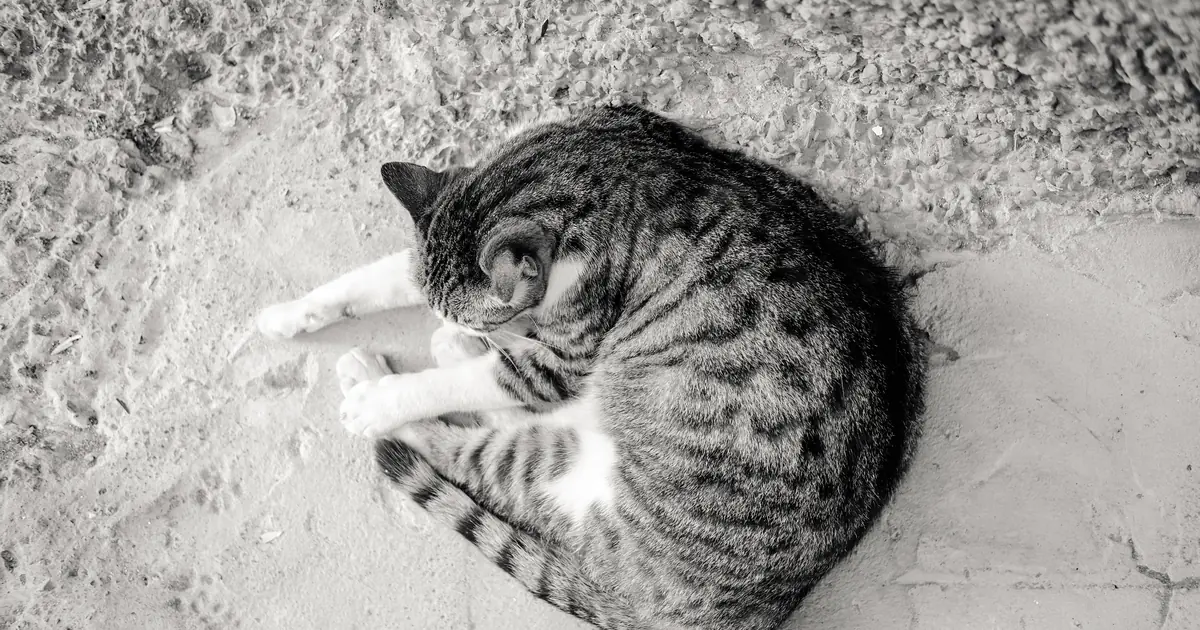
If you’ve ever peeked at your cat folded into a tight, perfect circle, nose tucked under a paw, you’ve seen what cat parents call the “cat croissant.” It’s cute, it’s compact, and it looks almost impossible for a body with a spine and four legs to pull off.
But that curled ball isn’t just an adorable party trick. It’s your cat’s body doing exactly what it evolved to do: hold onto heat and shield the soft parts underneath. Here’s why cats sleep this way, and when a tightly curled cat might be telling you something more.
- Cats curl into a ball mainly to conserve body heat and to protect vulnerable organs like the belly, chest, and throat.
- Cats sleep 12 to 16 hours a day on average, and how tightly they curl often depends on room temperature.
- A tight curl usually means a cat is cold or slightly cautious, while a loose sprawl or belly-up pose usually means a cat feels warm and safe.
- The loaf position (paws tucked under the body) is a separate, more alert resting pose, not the same as the curled-ball sleep position.
- A cat that suddenly curls up tight all the time, hides, and stops eating normally could be cold, stressed, in pain, or sick, and is worth a vet visit.
Why do cats sleep in a ball?
Cats sleep in a ball because it’s the most efficient shape for staying warm and protected while they rest. Curling nose to tail shrinks the body surface exposed to the air, which helps a cat hold onto heat, while also tucking the belly, chest, and throat safely out of reach. It’s a shape built by evolution, not a habit your cat picked up by accident.
Domestic cats still carry a lot of behavior from their wild ancestors. A cat curled into a tight circle looks smaller, warmer, and harder for a predator to target. Even a cat that’s never seen anything scarier than the vacuum cleaner still sleeps like it might need to defend itself.
Why do cats curl up to stay warm?
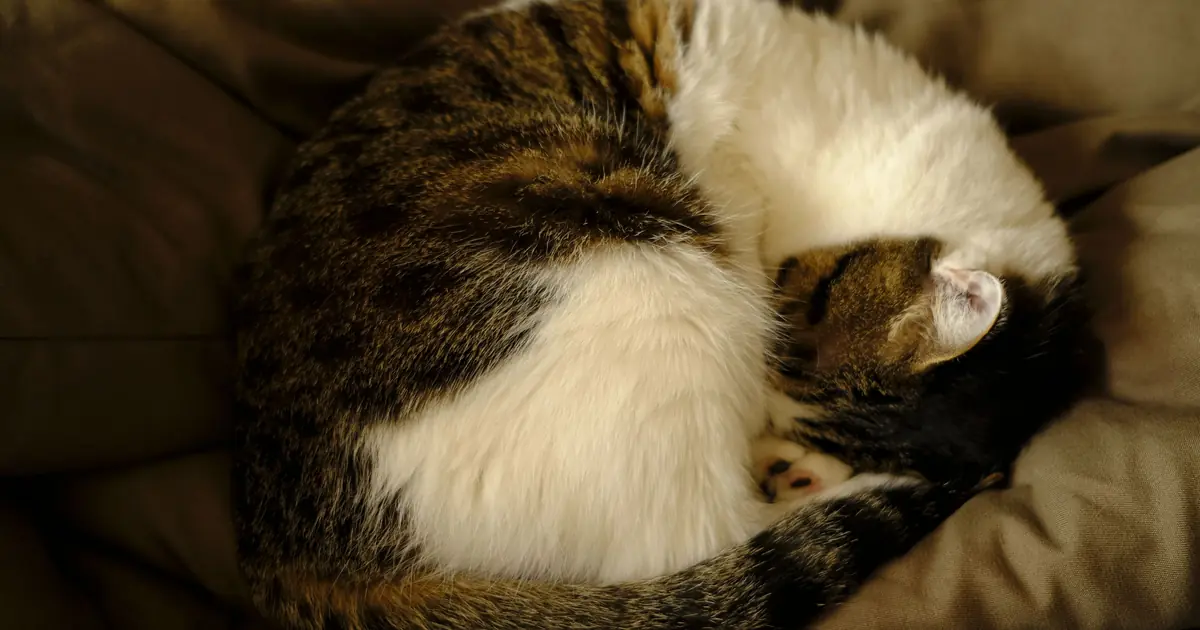
Cats curl up to stay warm because curling reduces how much body heat escapes into the air. A cat’s normal body temperature runs around 100.5 to 102.5°F, and their paws, ears, tail, and nose lose heat fastest since there’s less fur and fat covering them. Tucking those parts against the body traps warmth close to the skin.
This is why you’ll notice your cat curling tighter on a cold night, or picking a sunny patch of floor and folding up small. According to VCA Animal Hospitals, cats typically sleep 12 to 16 hours a day, and the curl position shows up most often when a cat is conserving warmth. If your house runs cool, check out whether cats get cold indoors.
Is curling up a protective instinct from the wild?
Yes, curling into a ball is largely a leftover survival habit from wild cats. Before cats were couch companions, they were both hunters and prey, and sleeping in the open came with real risk. Balling up tucks the abdomen, where the vital organs sit, behind muscle and bone, and hides the throat, a spot no cat wants exposed while unconscious.
Your cat doesn’t think this through every time. It’s built in, the same way we flinch at loud noises even in a perfectly safe room.
Does curling up just mean my cat is comfortable and cozy?
Most of the time, yes. A cat curled up on a soft blanket or in a warm sunbeam is usually just comfortable, not worried about anything. Cats are creatures of comfort first, and a tight little ball on a heated cat bed is often just a cat making the most of a cozy spot.
Context matters. A cat curled up in your favorite chair with half-closed eyes is a relaxed cat, plain and simple. The curl becomes something to watch when it shows up alongside hiding or skipping meals, which we’ll cover below.
What does it mean when a cat sleeps curled up vs stretched out?
A cat sleeping curled up usually means they’re cold, cautious, or lightly guarding themselves, while a cat sleeping stretched out flat usually means they’re warm and completely relaxed. Body language works on a spectrum here: the tighter the curl, the more a cat is prioritizing warmth and protection over comfort. The looser and flatter the pose, the more that cat trusts its surroundings.
This is different from the loaf position, where a cat tucks its paws neatly under its body while sitting upright, often with eyes open. Loafing is more of an alert rest than deep sleep. Our guide on what it means when a cat loafs breaks that pose down separately, since it’s distinct from the curled ball this article covers.
| Sleep Position | What It Usually Means |
|---|---|
| Tight ball (nose tucked, tail wrapped) | Cold, mildly cautious, or conserving heat |
| Loose curl | Comfortable and relaxed, still a bit guarded |
| Loaf position (paws tucked under body) | Resting but alert, not in deep sleep |
| Stretched out flat | Warm and fully relaxed |
| Belly up | Deep trust and total relaxation in their environment |
Does a cat’s sleep position reveal how much they trust you?
Yes, a cat’s sleeping posture is one of the clearest signs of how safe they feel. According to PetMD, cats that sprawl on their back with the belly exposed are showing about as much trust as a cat can show, since the belly is their most vulnerable spot. A cat that falls asleep like that near you is telling you they feel completely safe.
A curled-up cat isn’t necessarily distrustful, though. Plenty of confident, well-loved cats ball up out of habit or because the room is chilly. But if your cat only ever curls tight and never stretches out, even in a warm, quiet home, that’s worth noticing.
When is curling up tightly a sign something’s wrong?
A cat that suddenly starts curling tightly all the time, especially paired with hiding, reduced appetite, or withdrawal, may be cold, stressed, in pain, or unwell. Cats are experts at masking discomfort, and a tense curl held for long stretches can be one of the only visible clues something is off.
Watch for these red flags alongside a changed sleep posture:
- Hiding in unusual spots and avoiding family members or other pets
- Skipping meals or eating noticeably less than normal
- Reluctance to move, jump, or stretch out even when settled
- Excessive grooming of one area, or a general drop in grooming
- Lethargy that lasts more than a day or two
This article is educational, not a substitute for veterinary care. If your cat’s sleeping habits change suddenly and stick around, a checkup is worth it. The Cornell Feline Health Center notes that a real shift in normal behavior, sleep included, is often the first sign something needs a closer look.
How can I keep my cat cozy so they don’t have to ball up from the cold?
You can help your cat stay warm with a few simple additions to their space, especially in colder months. Try these:
- Add a soft, enclosed cat bed or cave bed they can burrow into.
- Keep one warm sleeping spot away from drafts, vents, and windows.
- Offer a heated cat bed or a safe pet-specific heating pad in winter.
- Layer a blanket over their favorite napping spot so they can choose how much warmth they want.
- Keep an eye on room temperature if your cat seems to be curling tighter than usual.
Cats naturally adjust to the seasons, so expect more curling and cuddling in winter. Our guide on whether cats sleep more in winter covers those shifts, and if your cat tucks its nose under a paw, see why cats cover their face when they sleep. Cats that sleep with their head propped up instead of tucked down are usually staying more alert, a useful contrast to the deep curl. And if your cat has a favorite curling spot, where your cat chooses to sleep on your bed says a lot too.
Frequently Asked Questions
Q: Why do cats sleep curled up in a ball?
Cats curl up mainly to conserve body heat and to protect vulnerable areas like the belly and throat. It’s an instinct passed down from wild ancestors who needed to stay warm and stay safe while resting in the open.
Q: Is it bad if my cat always sleeps in a ball?
Not usually. Many healthy, happy cats curl up out of habit or because they like the warmth. It’s only a concern if the tight curling is new, constant, and paired with hiding, appetite changes, or lethargy.
Q: What’s the difference between a cat sleeping in a ball and loafing?
A curled ball is a deep sleep position focused on warmth and protection, with the head tucked and eyes closed. Loafing is a more alert resting pose where the paws tuck under the body while the cat stays upright, often with eyes open.
Q: Do cats curl up more in winter or cold weather?
Yes. Cats tend to curl tighter and more often when the room is cold, since balling up reduces heat loss. You’ll usually see less curling and more stretched-out sleeping once the weather warms up.
Q: Why does my cat cover its face while curled up?
Covering the face while curled up helps block out light and further reduces heat loss from the nose and eyes, two areas that lose warmth quickly. It’s often paired with the ball position for extra coziness.
Q: Does curling up in a ball mean my cat is stressed?
It can, but only in certain contexts. A relaxed cat curling up for a nap is normal. A cat that curls tightly, hides, and avoids interaction, especially after a change at home, may be dealing with stress and could use a calmer, quieter space.
Q: How many hours a day do cats spend sleeping curled up?
Cats sleep about 12 to 16 hours a day total, though not all of that time is spent curled tightly. Deep sleep periods, when cats are most likely to be curled or fully relaxed, tend to come in short bursts of about 10 to 15 minutes at a time.
Q: Should I worry if my cat stops stretching out and only curls tightly?
A permanent shift away from relaxed, stretched-out sleep toward constant tight curling can signal discomfort, illness, or a cold environment. If this change sticks around for more than a few days, it’s a good reason to schedule a vet visit.

Hello and welcome to The Ideal Cat!
We are some passionate cat owners from different professions. We love our cats and have a lot of experience in how to care for our pets. We are incredibly excited to share our knowledge, experience, and research with you. So you can take good care of your loving cat. We will answer most of the common questions about owning cats, taking care of them, etc. If you have any question contact with us. Thanks for visiting! Enjoy the content.
