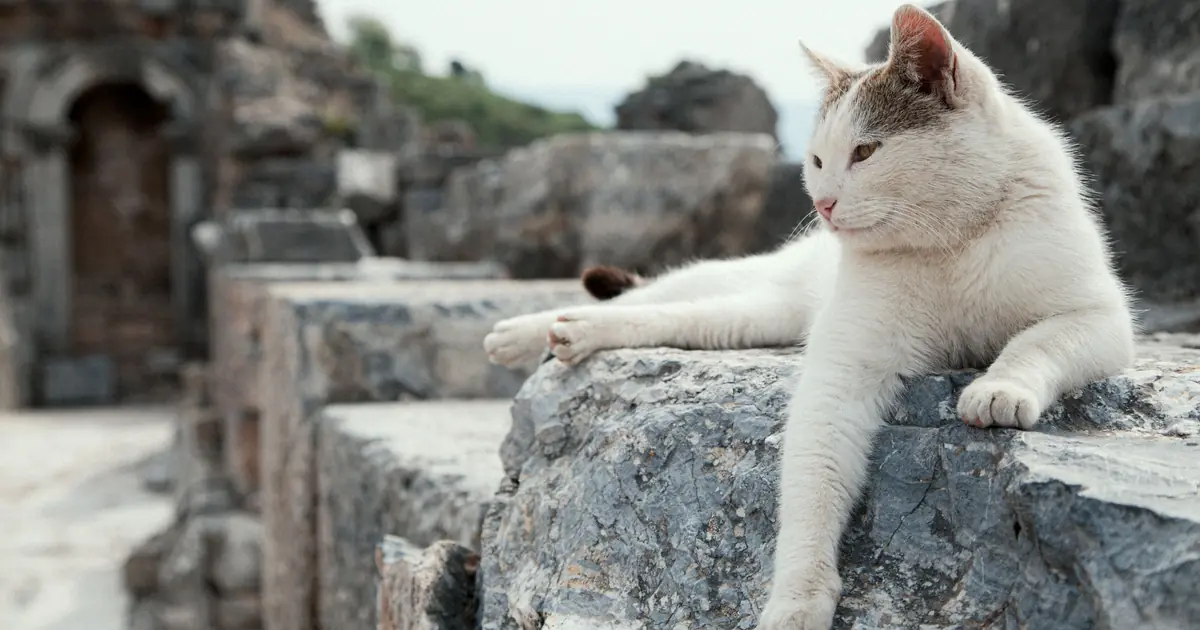
Picture a sun-bleached fishing harbor in the Greek islands. Nets drying on the dock, a few boats bobbing, and a white-and-ginger cat sitting at the water’s edge, watching the catch come in like she owns the place.
That cat is an Aegean. And she might just dip a paw in to help.
The Aegean cat is the only native cat breed of Greece, and one of the oldest domestic cats on the planet. People have only bothered to formally develop it since the 1990s, which makes it both ancient and brand new at the same time. Here’s the thing that surprises most people: this breed actually likes water.
Aegean Cat Breed Stats at a Glance
Here’s the quick snapshot before we dig in. The Aegean is a medium, well-built cat with a coat that’s easy to live with and a personality that’s anything but quiet.
| Origin | Cycladic islands of Greece (the Aegean Sea); a natural landrace |
| Weight (Male) | About 9 to 13 lb (4 to 6 kg) |
| Weight (Female) | About 7 to 11 lb (3 to 5 kg) |
| Lifespan | 12 to 15 years, sometimes longer |
| Coat | Semi-long, water-resistant, no undercoat |
| Colors | Always part white, paired with black, blue, red, cream, or tabby (bi-color or tri-color) |
| Energy Level | High; active, playful, and curious |
| Grooming Needs | Low; weekly brushing is usually plenty |
| Good With Kids | Yes, very; sociable and patient |
| Good With Other Pets | Yes; gets on with cat-friendly dogs and other cats |
| Average Price | Roughly $300 to $500 in Greece; much higher and harder to find elsewhere |
Where Does the Aegean Cat Come From?
The Aegean cat comes from the Cycladic islands of Greece, scattered across the Aegean Sea. It’s a landrace, which means it developed naturally over thousands of years without anyone designing it.
Cats first reached these islands during the Bronze Age. That makes the Aegean one of the oldest domesticated cats around. For centuries they lived alongside fishermen, sunning themselves on harbor walls and cleaning up scraps from the day’s catch. Nobody bred them on purpose. Nature, the sea, and a steady supply of fish did the work.
Formal breeding only started in the early 1990s, when Greek cat lovers decided this hardy little harbor cat deserved official status. Today many Greeks consider the Aegean a national treasure. It’s the country’s only native breed.
Is the Aegean a Recognized Breed?
Yes and no. The Aegean is recognized in Greece and by the World Cat Federation, but it is not a championship breed with the big international registries. The Cat Fanciers’ Association (CFA), The International Cat Association (TICA), and FIFe do not recognize it.
Honestly, that’s not a knock on the cat. Aegean breeders mostly raise these cats as beloved pets, not show-ring competitors. If you want a pedigree to frame on the wall, this isn’t your breed. If you want a sturdy, friendly cat with deep roots, it absolutely is.
What Does an Aegean Cat Look Like?
An Aegean cat is a medium, muscular cat with a semi-long coat that’s always partly white. The white usually covers anywhere from a quarter to nearly all of the body, paired with patches of black, blue (gray), red, cream, or tabby markings.
You’ll see bi-color Aegeans (white plus one color) and tri-color ones (white plus two, often the classic calico mix). The eyes range from green to blue to a warm yellow, and the ears are rounded and lightly furred. The coat lies flat and has no undercoat, which gives it that sleek, slightly water-resistant feel.
How Are Aegean Kittens Different From Adults?
Aegean kittens look like fluffy little troublemakers, and their coats fill out as they grow. The semi-long coat reaches its full length and that signature plumed tail by adulthood, usually around the first year. Eye color can settle as they mature too. Personality-wise, kittens are bold and busy from day one, so what you see is pretty much what you get.
What Is the Aegean Cat’s Personality Like?
Aegean cats are friendly, smart, and seriously chatty. These are people cats. They tend to like almost everyone they meet, and they want to be in the middle of whatever you’re doing.
Talk to an Aegean and you’ll get an answer. They reply with chirps, trills, and happy little meows, and they’ll keep the conversation going as long as you do. (Fair warning: a silent house is not what you’re signing up for.)
They’re also playful and active well into adulthood. An Aegean wants games, climbing spots, and a job to do. Bored Aegeans get creative, and not always in ways you’ll love. Give them attention and they give it right back, often by following you room to room like a small furry shadow.
Are Aegean Cats Friendly?
Aegean cats are very friendly, often described as one of the most sociable natural breeds. They bond closely with their families, greet visitors instead of hiding, and generally enjoy the company of kids and other animals. If you want an aloof, low-contact cat, look elsewhere. The Aegean wants in.
Is the Aegean Cat Right for You?
The Aegean is a great fit for active, social homes that don’t mind a talkative companion. It’s less ideal for people who want a quiet, independent cat or who travel constantly and can’t give it daily attention.
Here’s a quick honesty check before you fall in love.
| You’ll love an Aegean if… | Think twice if… |
| You want a social, affectionate cat that’s part of the family | You prefer a calm, quiet, low-key cat |
| You enjoy a chatty cat that “talks” back | You’re sensitive to noise or want silence |
| You have time for daily play and enrichment | You’re away from home for long stretches |
| You like the idea of a rare, healthy natural breed | You want a recognized show breed with papers |
| You’re patient about finding one | You need a cat available right now |
Are Aegean Cats Healthy?
Aegean cats are among the healthiest cat breeds you’ll find. Because they developed through natural selection rather than human-controlled breeding, they’re free from most of the inherited diseases that trouble many pedigree breeds.
That doesn’t mean they’re bulletproof. Every cat can develop common feline issues over a lifetime, like dental disease, obesity, or urinary trouble, especially in their senior years. There’s also a small catch worth naming: because the breed is rare and only recently formalized, there isn’t a lot of formal health data on it yet. So while the track record looks excellent, it’s based mostly on the breed’s robust natural origins.
The good news is that day-to-day care is simple. Keep your Aegean at a healthy weight, brush its teeth or use dental treats, and keep up with regular checkups. This guide is educational, so please talk to your own vet about your cat’s specific needs and a vaccination and wellness plan.
Red Flags That Mean “Call the Vet”
- Straining in the litter box or peeing outside it (possible urinary blockage, an emergency in male cats)
- Not eating for more than a day or sudden weight loss
- Repeated vomiting or diarrhea
- Lethargy, hiding, or a big drop in that usual chattiness
- Trouble breathing or pale gums
How Do You Groom and Care for an Aegean Cat?
Grooming an Aegean is refreshingly easy. The semi-long coat has no undercoat, so it rarely mats and a weekly brush is usually all you need.
A quick once-a-week comb removes loose hair and keeps that coat glossy. During spring and summer, shedding ramps up, so you may want to brush twice a week in those months to stay ahead of the fur. Beyond that, the basics apply: trim nails every couple of weeks, check ears, and brush those teeth.
Because there’s no thick undercoat, you won’t be fighting the dense tangles you get with some other long-haired breeds. It’s one of the lowest-maintenance semi-long coats out there.
Do Aegean Cats Shed a Lot?
Aegean cats shed moderately, with a noticeable uptick in spring and summer. Weekly brushing keeps loose hair under control most of the year, and a second weekly session during shedding season helps. They’re not a heavy-shedding breed, but no cat is truly low-shed, so expect some fur on your couch.
What Should You Feed an Aegean Cat?
Feed an Aegean a high-quality, meat-first diet built for its life stage. As natural hunters with a fishing heritage, these cats thrive on plenty of animal protein, so look for a food that names real meat or fish as the first ingredient.
Portion control matters more than you’d think. Aegeans are active, but they’ll happily overeat if you let them, and extra weight is hard on any cat. Measure meals instead of free-feeding, keep fresh water available at all times, and adjust portions as your cat ages or slows down.
Wet food helps with hydration, which is good news for urinary health. Mix it with dry if you like, and ask your vet what split makes sense for your individual cat.
How Much Exercise and Play Does an Aegean Need?
Aegean cats need daily active play, and they’ll let you know if they’re not getting it. These are high-energy cats with strong hunting and fishing instincts, so they crave both physical and mental challenges.
Wand toys, feather teasers, and puzzle feeders are gold. Climbing trees and high perches give them the vertical space they love. And here’s the fun part: many Aegeans genuinely enjoy water. A dripping faucet, a few floating toys in a shallow bowl, or even a pet water fountain can keep one entertained for ages.
That fishing heritage is real. Don’t be shocked if your Aegean tries to “fish” toys out of the water dish or stands guard over the bathtub.
If your Aegean loves to bat things around water, a quietly circulating pet fountain can double as both hydration and entertainment.
PetSafe Drinkwell Pet Fountain
A circulating water fountain keeps water fresh and moving, which appeals to a water-curious Aegean and encourages more drinking. It’s a good pick for active cats who like to play near their water and for households focused on urinary and kidney health.
How Does the Aegean Get Along With Kids, Dogs, and Other Cats?
Aegean cats are excellent family cats and usually do well with children, dogs, and other cats. Their easygoing, social nature makes them adaptable, and they tend to seek out company rather than avoid it.
With kids, Aegeans are typically patient and playful, though, as with any cat, gentle handling should be taught early. With dogs, they generally get along fine as long as the dog is cat-friendly and introductions are slow. And in multi-cat homes, their sociable streak often makes them welcoming housemates.
The golden rule is the same for any breed: introduce new animals gradually and give everyone their own space at first.
How Long Do Aegean Cats Live, and How Do You Help Them Age Well?
Aegean cats typically live 12 to 15 years, and some go well beyond that with good care. Their healthy natural origins give them a real head start on a long life.
To help your Aegean age gracefully, lean into prevention. A few things that make a big difference:
- Keep up with annual vet visits, moving to twice yearly once your cat is around 8 to 10
- Watch the waistline; obesity is one of the biggest threats to a cat’s lifespan
- Stay on top of dental care to prevent painful, costly problems later
- Provide easy-access litter boxes, soft beds, and lower perches for older joints
- Keep that active mind busy with gentle play even into the senior years
An aging Aegean may get quieter or slower, so any sudden change deserves a vet visit.
How Much Does an Aegean Cat Cost?
In Greece, an Aegean kitten usually costs around $300 to $500, and many are simply adopted as island strays or rehomed locally. Outside Greece, the story changes fast.
Because the breed is rare and rarely exported, finding one abroad can mean a long wait, a higher price, and import or travel costs on top. There just aren’t many breeders outside Greece. Here’s a rough idea of what to budget.
| Scenario | Rough Cost |
| Adoption in Greece (stray or local rehome) | Free to low cost |
| Kitten from a Greek breeder | About $300 to $500 |
| Imported abroad (with travel/import fees) | Significantly higher; varies widely |
| First-year setup (food, litter, vet, supplies) | Several hundred dollars on top |
Where Can You Find an Aegean Cat Ethically?
The most ethical way to get an Aegean is through a reputable Greek breeder or a Greek animal rescue, since that’s where the breed actually lives. If you’re outside Greece, patience is your best friend.
A few honest pointers:
- Start with Greek cat clubs and rescues; many island cats need homes
- Ask any breeder to show health checks, living conditions, and how the kittens are socialized
- Be wary of anyone abroad promising an “Aegean” cheaply and instantly; true ones are genuinely rare
- Remember that a lovely white-and-color rescue cat may be Aegean-type even without papers, and just as wonderful
If you visit the Greek islands, you’ll meet plenty of Aegean-type cats living their best harbor life. Some travelers even arrange ethical adoptions through local rescues.
Which Breeds Are Similar to the Aegean Cat?
The Aegean looks a lot like a couple of famous Eastern Mediterranean breeds, and it’s easy to mix them up. Here’s how the Aegean compares to its look-alikes.
| Breed | How It Compares to the Aegean |
|---|---|
| Turkish Van | Also water-loving and semi-long-haired, but mostly white with color only on the head and tail (the “Van pattern”). A recognized show breed; the Aegean has more varied, all-over color. |
| Turkish Angora | A finer, silkier single coat and often all white. More delicate-looking than the sturdy, harbor-built Aegean, and a recognized registry breed. |
| Norwegian Forest Cat | Much larger with a thick double coat built for cold. Shares the natural-breed background, but the Aegean is smaller and undercoat-free. |
| Domestic semi-longhair | Many bi-color “moggies” look Aegean. The difference is the documented Greek-island lineage, not just appearance. |
If you love the Aegean’s looks but want a registry breed, the Turkish Van and Turkish Angora are the closest cousins worth a look.
Common Myths About Aegean Cats
This breed is rare enough that a lot of half-truths float around. Let’s clear up the big ones.
Myth: Aegean cats are just Greek street cats
Not quite. While many island cats are Aegean-type, the formal Aegean is a recognized landrace with documented lineage in Greece. The street cats are the foundation, but a true Aegean is more than a random stray.
Myth: All cats hate water, so this one must too
The Aegean breaks the rule. Thanks to its fishing-harbor heritage and water-resistant coat, many Aegeans are genuinely drawn to water and will paw, splash, and “fish” given the chance.
Myth: A rare breed means a sickly breed
The opposite is true here. The Aegean’s natural origins make it one of the healthier breeds, free from most inherited feline diseases, even though formal health data is still limited.
Myth: They’re the same as a Turkish Van
They look similar but they’re distinct. The Turkish Van is mostly white with color on the head and tail, while the Aegean comes in more varied bi-color and tri-color patterns.
Aegean Cat FAQ
Q: Are Aegean cats rare?
Yes, Aegean cats are rare, especially outside Greece. They’re considered a national treasure in their homeland but are seldom exported, so finding one abroad can mean a long wait and a higher price.
Q: Are Aegean cats friendly?
Aegean cats are very friendly and among the most sociable natural breeds. They bond closely with their families, like almost everyone, and tend to greet people rather than hide. They’re also notably chatty.
Q: Do Aegean cats like water?
Yes, many Aegean cats genuinely like water. Their fishing-harbor heritage and water-resistant coat mean they often enjoy pawing at faucets, splashing in shallow dishes, and playing near water, a trait rare in most cat breeds.
Q: How much is an Aegean cat?
An Aegean kitten typically costs around $300 to $500 from a Greek breeder, and many are adopted at low or no cost in Greece. Outside Greece, prices run much higher once import and travel costs are added.
Q: Are Aegean cats healthy?
Aegean cats are among the healthiest breeds because they developed through natural selection rather than selective breeding. They’re free from most inherited feline diseases, though formal health data on the breed is still limited.
Q: How big do Aegean cats get?
Aegean cats are medium-sized. Males typically weigh about 9 to 13 pounds and females about 7 to 11 pounds, with a muscular, well-balanced build suited to an active, agile harbor cat.
Q: How long do Aegean cats live?
Aegean cats typically live 12 to 15 years, and some live longer with good care. Their healthy natural origins, a quality diet, dental care, and regular vet visits all support a long life.
Q: Are Aegean cats good with kids and other pets?
Yes, Aegean cats are usually excellent with kids, cat-friendly dogs, and other cats. Their social, easygoing nature makes them adaptable family pets, as long as introductions are gradual and handling is gentle.
The Verdict on the Aegean Cat
The Aegean cat is one of the great underrated breeds: a hardy, healthy, water-loving charmer with deep roots on the Greek islands and a personality that fills a room. It’s friendly, chatty, easy to groom, and built to last.
The catches are real. They’re active, they’re vocal, and they’re genuinely hard to find outside Greece, with no fancy registry pedigree to show off. But if you want a sturdy, affectionate cat with a fascinating history and a soft spot for the water dish, the Aegean cat is hard to beat. Greece has been keeping this one a quiet secret for far too long.

Hello and welcome to The Ideal Cat!
We are some passionate cat owners from different professions. We love our cats and have a lot of experience in how to care for our pets. We are incredibly excited to share our knowledge, experience, and research with you. So you can take good care of your loving cat. We will answer most of the common questions about owning cats, taking care of them, etc. If you have any question contact with us. Thanks for visiting! Enjoy the content.
