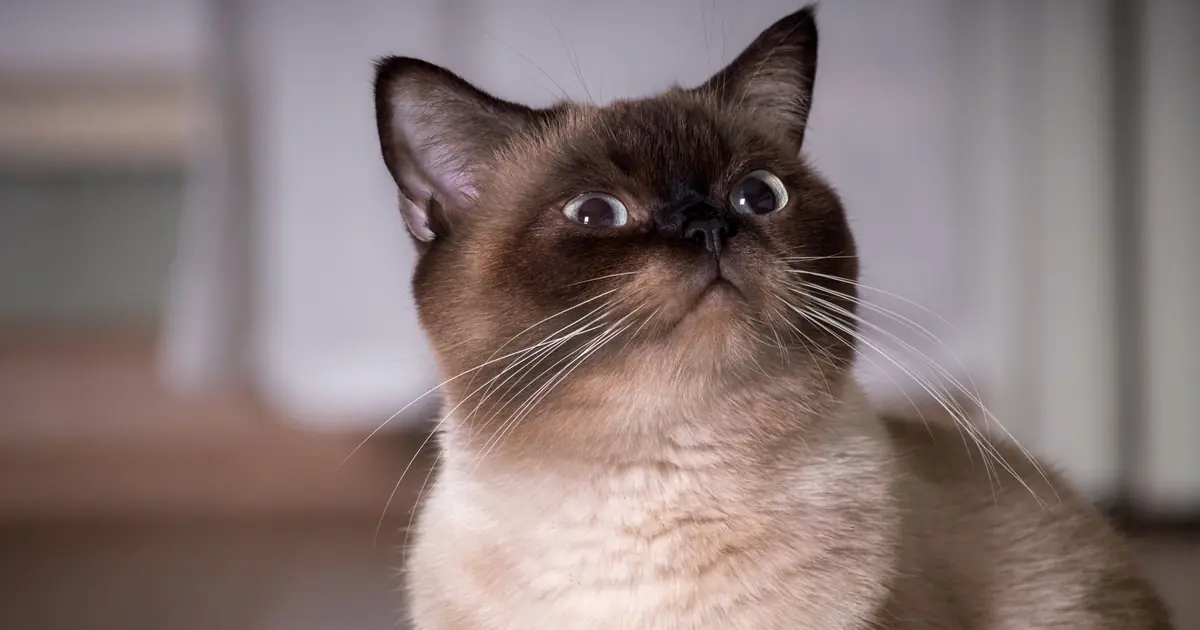
Picture a Burmese cat. Now imagine that exact body and personality, but in a silver-tipped coat, or a spotted tabby pattern, or a glossy jet-black version that looks like a tiny panther. That is the Asian cat in a nutshell.
Here is the fun part. Most people have never heard of it, and the ones who have usually confuse it with “cats from Asia.” It is neither rare-because-exotic nor a geographic label. The Asian cat is a British breed group, born from one happy accident in the 1980s.
And once you live with one, you will understand why fans call them shadows with opinions.
- The Asian cat is a Burmese-type breed recognized by the UK’s GCCF, not by the CFA, with only limited TICA standing outside Britain.
- The Asian Group has four shorthaired varieties: Asian Self (which includes the Bombay), Asian Smoke, Asian Tabby, and the Burmilla, plus a semi-longhaired version called the Tiffanie.
- Asian cats are medium and muscular, with males roughly 11 to 15 pounds and females around 8 to 12 pounds.
- They are affectionate, talkative, intelligent cats that bond hard with their people and hate being left alone for long.
- The breed is generally sturdy, but its Burmese and Persian roots mean owners should be aware of PKD, hypokalemia, and gangliosidosis.
What Is an Asian Cat Breed?
An Asian cat is a British pedigree breed that has the body and temperament of a Burmese but comes in a wide variety of colors and patterns. The breed is also called the Asian Shorthair, and as a whole it is known as the Asian Group. It was developed in the United Kingdom in the 1980s and is recognized by the Governing Council of the Cat Fancy (GCCF).
So the name throws people, and that is fair. “Asian” here does not mean a cat from Asia. It is simply the name British breeders gave to this family of Burmese-type cats. Think of it like a brand name, not a map pin.
The whole point of the breed was variety. The Burmese is gorgeous, but it only comes in a handful of solid colors. Breeders wanted that same sweet, chatty Burmese soul wrapped in every color and pattern a cat lover could dream of. That is the Asian.
| Origin | United Kingdom, 1980s |
| Weight (Male) | 11 to 15 lb (5 to 7 kg), medium and muscular |
| Weight (Female) | 8 to 12 lb (3.5 to 5.5 kg) |
| Lifespan | 12 to 18 years, some reach their early 20s |
| Coat | Short, fine, satiny, glossy, lies close to the body (Tiffanie is semi-longhaired) |
| Colors | Huge range: black, blue, chocolate, lilac, red, cream, caramel, apricot, cinnamon, fawn, plus torties, smokes, shaded, and tabby patterns |
| Energy Level | Moderate to high, playful and curious |
| Grooming Needs | Low, a weekly brush is plenty for the shorthaired varieties |
| Good With Kids | Yes, friendly and sociable with gentle children |
| Good With Other Pets | Yes, usually great with cat-friendly dogs and other cats |
| Average Price | Roughly £400 to £800 from a UK breeder, hard to find outside the UK |
History and Origin: One Accidental Litter
The Asian breed traces back to a single accidental mating in England around 1981. A lilac Burmese female named Faberge and a Chinchilla Persian male named Sanquist belonged to Baroness Miranda von Kirchberg. The two cats found each other when they were not supposed to, and the result changed feline history.
That litter produced four kittens with a stunning silver-shaded coat over a Burmese-shaped body. They were so pretty that the Baroness scrapped the neutering plan and decided to develop them into a new breed. She called it the Burmilla, a blend of Burmese and Chinchilla.
From One Cat to a Whole Group
The Burmilla was just the beginning. As breeders kept working with these Burmese-cross cats, more colors and patterns appeared. Rather than treat each as a separate breed, the GCCF organized them into one family: the Asian Group.
The Burmilla earned preliminary GCCF recognition in 1990. Over the next decade the other varieties followed, and by 2003 all of them had reached full GCCF Championship status. It was a fast rise for a breed that started by accident.
What Does an Asian Cat Look Like?
An Asian cat has a Burmese-type body: medium-sized, muscular, and surprisingly heavy for its frame. It is rounded and athletic rather than slim and tubular, with a sweet, open face, expressive eyes, and a short, glossy coat that hugs the body. The big difference from a Burmese is the sheer range of colors and patterns.
Pick one up and you will notice it weighs more than it looks. Fans of Burmese-type cats call this “bricks wrapped in silk.” There is real muscle under that satiny coat.
The Four Shorthaired Varieties
The Asian Group splits into four shorthaired varieties, each defined by coat type rather than a single color. Here is the quick map.
| Variety | What makes it distinct |
|---|---|
| Asian Self (includes Bombay) | A solid, even color with no pattern. The black version is the Bombay, a glossy mini-panther look. |
| Asian Smoke | A self-colored cat with a silvery-white undercoat that flashes through as the cat moves. |
| Asian Tabby | Tabby markings in spotted, classic, mackerel, or ticked patterns over an agouti background. |
| Burmilla (Asian Shaded) | A pale coat with color only tipped or shaded on the ends, often over a silver undercoat. The original Asian. |
There is also a semi-longhaired version, the Tiffanie (sometimes called the Asian Semi-longhair). Same Burmese body and personality, just a softer, longer coat. We will link out to a full Tiffanie guide rather than cover it in depth here.
Kitten Versus Adult
Asian kittens are wiry little dynamos that grow into solidly muscled adults by about a year, with full maturity closer to two. Coat color can deepen and settle with age, especially in the Burmese-influenced shades, so the kitten you bring home may look slightly different as an adult. The glossy, close-lying coat shows up early.
Asian Cat Personality and Temperament
Asian cats are affectionate, talkative, intelligent, and deeply people-oriented. They inherit the famous Burmese temperament: they want to be with you, on you, or at least in the same room watching what you do. These are not aloof cats that tolerate humans. They are partners.
Expect commentary. Asians have that Burmese chatty streak, and they will tell you about their day, your day, and the bird outside. Not as loud as a Siamese, but rarely silent.
They are smart, too. Many learn to open doors, play fetch, and figure out exactly which drawer the treats live in. Boredom is the enemy. A bored Asian invents its own entertainment, and you may not love the results.
Are Asian Shorthair Cats Friendly?
Yes, Asian Shorthair cats are very friendly. They bond strongly with their families, greet people at the door, and usually warm up to visitors instead of hiding. Most are happy to be picked up, carried around, and used as a furry scarf during a movie.
The honest flip side: this friendliness comes with a need for company. An Asian left alone all day, every day, can get lonely and a little needy. They are happiest in homes where someone is around often, or where they have another pet for company.
Is the Asian Cat Right for You?
The Asian cat suits people who want an interactive, affectionate companion and can give it daily attention. It is a poor match for someone who works long hours away from home and wants an independent, low-contact cat. Match the cat to your lifestyle, not the other way around.
This breed is a wonderful pick if you:
- Are home a lot, or have another pet to keep your cat company
- Want a cat that interacts, follows you, and “talks” back
- Enjoy play sessions, puzzle toys, and a cat with personality
- Love the Burmese temperament but want more color and pattern options
Think twice if you:
- Travel constantly or are out 10-plus hours a day with no second pet
- Want a quiet, hands-off cat that does its own thing
- Live outside the UK, where finding one is genuinely tough (more on that below)
Asian Cat Health Issues
The Asian cat is generally a sturdy, healthy breed, but its Burmese and Persian ancestry means a few inherited conditions are worth knowing. Responsible breeders screen for them. This section is educational, so always talk to a licensed vet about your individual cat.
Here are the main conditions linked to the breed’s Burmese and Persian roots.
| Condition | What it is and where it comes from |
|---|---|
| Polycystic kidney disease (PKD) | Fluid-filled cysts form in the kidneys over time. It traces to the Persian (Chinchilla) side of the family. A DNA test exists, so ask breeders about it. |
| Hypokalemia | Low blood potassium that can cause episodic muscle weakness, including a weak, drooping neck. It is a known Burmese-line issue and has a genetic test. |
| GM1/GM2 gangliosidosis | A rare inherited neurological disorder seen in some Burmese-related lines. Affected kittens show problems young. DNA testing lets breeders avoid producing affected cats. |
The good news: all three have genetic tests, so a careful breeder can screen them out of their lines. Ask to see health-testing results before you commit to a kitten.
Beyond the inherited stuff, Asian cats benefit from the same basics every cat needs: yearly vet checks, dental care, parasite prevention, and a healthy weight. Catching problems early is the single biggest favor you can do them.
Grooming and Care for an Asian Cat
Asian cats are low-maintenance in the grooming department. The short, fine, glossy coat needs only a weekly brush to stay sleek and to keep loose hair off your couch. There is no undercoat drama and no daily detangling like you would get with a long-haired breed.
Do Asian Cats Shed?
Yes, Asian cats shed, but only lightly. Their short, close-lying coat means far less fur around the house than you would see from a fluffy breed. A quick weekly brush with a soft rubber grooming mitt catches most loose hair before it lands on your clothes. No breed is truly hypoallergenic, including this one.
Round out the care routine with the usual: trim the claws every couple of weeks, check the ears, and start a tooth-brushing habit early. That is genuinely most of the job.
Feeding and Diet
Asian cats do best on a high-quality, protein-rich diet built for an active, muscular cat. Like all cats, they are obligate carnivores, so meat should sit at the top of the ingredient list. Portion control matters, because a food-motivated Asian will happily eat past “enough.”
A few practical tips:
- Feed a named animal protein as the first ingredient, wet or dry or a mix.
- Measure meals instead of free-feeding, since this breed loves food and can gain weight.
- Keep fresh water available, and consider a fountain if your cat drinks little.
- Adjust portions as your cat ages, especially if it slows down in its senior years.
If your cat ever shows kidney concerns, your vet may suggest a tailored diet. Do not switch to a special diet on your own, since the wrong food can do more harm than good.
Exercise and Enrichment
Asian cats are playful, athletic, and clever, so they need daily play and mental stimulation to stay happy. A couple of short, active play sessions a day, plus puzzle feeders and climbing space, will keep that busy brain out of trouble. Bored Asians turn into mischief machines.
Things this breed tends to love:
- Wand and feather toys for chase-and-pounce sessions
- Puzzle feeders that make them work for a snack
- A tall cat tree or shelves to climb and survey the room
- Fetch, yes, many Asians genuinely retrieve
Because they are so smart and social, even 15 minutes of focused play does wonders. It burns energy, deepens your bond, and saves your curtains.
A simple wand toy can turn into the highlight of your cat’s evening. If you want one ready-made, an interactive feather wand is an easy win for keeping an Asian engaged.
Living With Kids, Dogs, and Other Cats
Asian cats are sociable and adaptable, which makes them great family pets in busy households. They generally do well with gentle children, cat-friendly dogs, and other cats, especially when introductions go slowly and calmly. This is not a breed that wants to be the only living thing in the house.
With Children
Asians are patient and playful with kids who know how to handle a cat kindly. Teach little ones to be gentle, give the cat an escape route, and you will likely end up with a devoted playmate for your child.
With Dogs and Other Cats
Because they crave company, many Asians actively enjoy having a buddy. A calm dog or another sociable cat can be the perfect companion for the hours you are away. Do proper, gradual introductions so first impressions go smoothly.
Lifespan and Aging Tips
Asian cats typically live 12 to 18 years, and some reach their early 20s with good care. A long life comes down to the basics done consistently: good food, regular vet visits, dental care, a healthy weight, and a low-stress home. Indoor living also adds years compared with roaming outdoors.
As your Asian ages, a few small shifts help a lot:
- Move to twice-yearly vet checks so problems get caught early.
- Watch for changes in thirst, appetite, or litter box habits, which can signal kidney issues.
- Keep food, water, and litter easy to reach as joints stiffen.
- Keep playing, just gentler, to protect muscle and mood.
How Much Does an Asian Cat Cost?
A well-bred Asian kitten from a UK breeder usually costs somewhere between £400 and £800, depending on variety, lineage, and the breeder’s health testing. Prices can run higher for show-quality cats. Outside the UK, the breed is rare, so expect a search, a possible waitlist, and added travel or import costs.
That sticker price is only the start. Budget for the ongoing costs of any cat, plus the value of buying from a breeder who tests their lines.
| Cost | Rough estimate |
|---|---|
| Kitten from a UK breeder | £400 to £800 (sometimes more for show lines) |
| Initial setup (litter box, beds, toys, carrier) | £100 to £200 |
| First-year vet care (vaccines, neutering, microchip) | £150 to £300 |
| Ongoing yearly costs (food, litter, vet, insurance) | £500 to £900+ |
Paying a bit more for a health-tested kitten from a reputable breeder almost always saves money and heartache later. Cheap kittens from unknown sources can come with expensive surprises.
Where to Find an Asian Cat Ethically
The best way to find an Asian cat is through a registered GCCF breeder, ideally one connected to a recognized Asian or Burmese cat club. The breed is uncommon, so a short waitlist is normal and actually a good sign. A real breeder welcomes questions and shows you health-testing results without being asked twice.
Look for a breeder who:
- Health-tests their breeding cats and shares the results
- Raises kittens underfoot in the home, well socialized
- Lets kittens go no earlier than around 12 to 13 weeks, fully vaccinated
- Asks you plenty of questions, because they care where their kittens land
Rescue is also worth a look. Purebred Asians rarely show up in shelters, but Burmese and Asian breed rescues exist, and a Burmese-type mix can offer that same loving personality. Walk away from any seller pushing pressure, cash-only deals, or kittens ready to leave at six weeks.
Similar Breeds to the Asian Cat
If you love the Asian cat, several related breeds share its body type or personality. Here is how the closest relatives compare.
- Burmilla: A member of the Asian Group itself, defined by its shimmering silver-shaded coat. If the tipped-coat look is what drew you in, this is the one.
- Burmese: The breed the Asian was built from. Same sweet, chatty temperament and body type, but a much smaller color palette.
- Bombay: The sleek black cat. In the UK it is the Asian Self black; the American Bombay is a separate breed with strict copper eyes.
- Tiffanie (Asian Semi-longhair): The longhaired member of the Asian Group, with the same personality in a softer coat.
Common Myths and Misconceptions
The Asian cat collects more confusion than almost any breed, mostly thanks to its name. Let us clear up the big ones.
Myth: An “Asian cat” means any cat from Asia
No. The Asian cat is a specific British breed group developed in the UK in the 1980s. The name is just the breed label, not a reference to the continent. Plenty of famous breeds actually come from Asia, like the Siamese and Korat, but those are not “Asian cats” in this sense.
Myth: The Asian and the Burmese are the same breed
They are closely related but not identical. The Asian was developed from the Burmese and shares its body and personality, but it comes in far more colors and patterns. The Burmese sticks to a small set of solid colors.
Myth: The Bombay is always the American Bombay
Not in Britain. The UK’s black Asian Self is also called the Bombay, but it can have golden, yellow, or green eyes. The American Bombay is a distinct breed that requires bright copper eyes. Same name, two different cats.
Frequently Asked Questions
Q: What is an Asian cat breed?
An Asian cat, or Asian Shorthair, is a British pedigree breed developed in the 1980s from the Burmese. It has a Burmese-type body and personality but comes in a wide range of colors and patterns. The Asian Group includes the Self (Bombay), Smoke, Tabby, and Burmilla varieties.
Q: Are Asian Shorthair cats friendly?
Yes, Asian Shorthair cats are extremely friendly and people-oriented. They bond closely with their families, often greet visitors instead of hiding, and love being held. The trade-off is that they need plenty of company and can get lonely if left alone all day.
Q: How much is an Asian cat?
A well-bred Asian kitten from a UK breeder typically costs £400 to £800, with show-quality cats sometimes higher. The breed is rare outside the UK, so expect waitlists and possible travel costs. Buying from a health-testing breeder is worth the extra money.
Q: What is the difference between an Asian cat and a Burmese?
The Asian cat was developed from the Burmese and shares its body type and friendly temperament. The main difference is color: the Asian comes in a huge range of colors and patterns, while the Burmese is limited to a small set of solid colors.
Q: Do Asian cats shed a lot?
No, Asian cats are light shedders. Their short, fine, close-lying coat means far less loose fur than fluffy breeds, and a weekly brush keeps it under control. No cat is fully hypoallergenic, though, including the Asian.
Q: How long do Asian cats live?
Asian cats usually live 12 to 18 years, and some reach their early 20s with good care. A nutritious diet, regular vet checkups, dental care, a healthy weight, and indoor living all help them reach the upper end of that range.
Q: How big do Asian cats get?
Asian cats are medium-sized and muscular. Males generally weigh about 11 to 15 pounds and females around 8 to 12 pounds. They feel heavier than they look thanks to their solid, muscled build under a sleek coat.
Q: Are Asian cats good with kids and dogs?
Yes, Asian cats are sociable and usually do well with gentle children, cat-friendly dogs, and other cats. Because they crave company, many actively enjoy having an animal companion. Slow, calm introductions help everyone get along.
Final Verdict: Is the Asian Cat for You?
The Asian cat is one of the best-kept secrets in the cat world: a Burmese heart in a rainbow of coats. If you want an affectionate, chatty, clever companion that treats you like its favorite person, this breed delivers in spades. Just know that all that love comes with a need for your time and attention.
If you are home often, enjoy an interactive cat, and can track one down (no small task outside the UK), the Asian Shorthair will reward you with years of devoted, talkative company. For the right home, it is hard to beat.

Hello and welcome to The Ideal Cat!
We are some passionate cat owners from different professions. We love our cats and have a lot of experience in how to care for our pets. We are incredibly excited to share our knowledge, experience, and research with you. So you can take good care of your loving cat. We will answer most of the common questions about owning cats, taking care of them, etc. If you have any question contact with us. Thanks for visiting! Enjoy the content.
