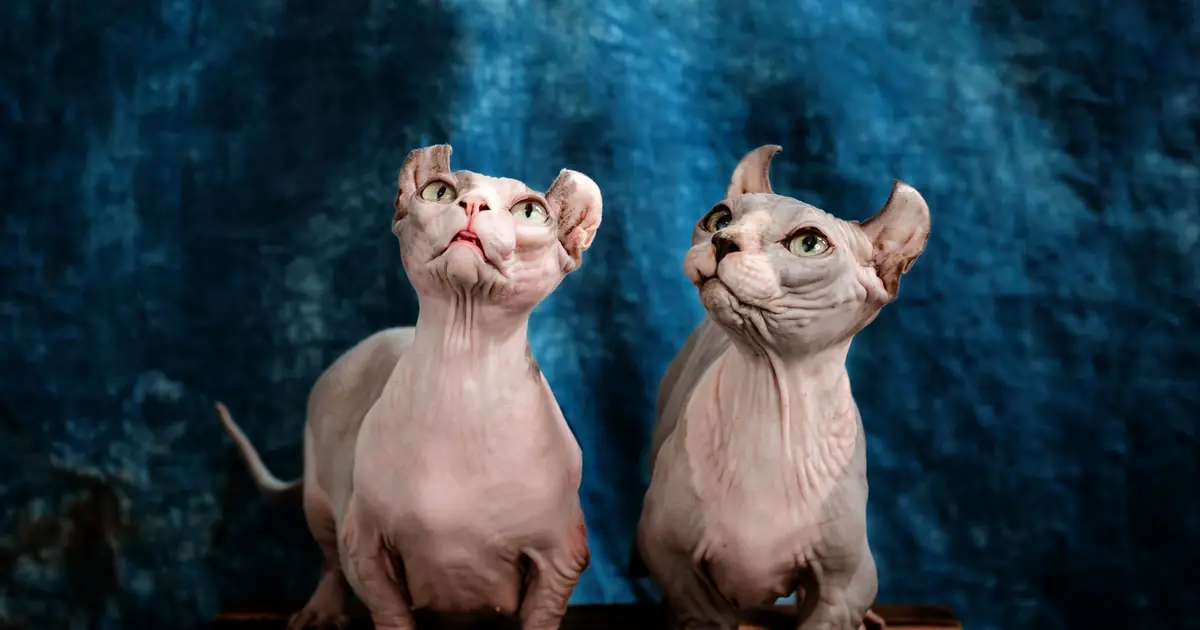
Picture a cat the size of a teacup, with no fur, legs like a corgi, and ears that curl backward like little ribbons. That’s a Dwelf cat. It looks less like a house pet and more like something a fantasy illustrator dreamed up.
And here’s the part nobody tells you upfront. The Dwelf cat isn’t one mutation. It’s three, stacked into one tiny body.
That makes the Dwelf one of the rarest and most debated cats alive. So before you fall for those photos, let’s talk honestly about what you’d actually be signing up for.
| Origin | United States, mid-2000s (Sphynx x Munchkin x American Curl) |
| Weight (Male) | 5 to 7 lbs |
| Weight (Female) | 4 to 6 lbs |
| Lifespan | 12 to 15 years (estimated, breed is new) |
| Coat | Hairless, often with a soft peach-fuzz; warm and suede-like to the touch |
| Colors | Skin shows the underlying color: black, white, gray, pink, cream, tabby, pointed, and tortie patterns |
| Energy Level | Moderate to high |
| Grooming Needs | High (regular bathing, skin care, ear care) |
| Good With Kids | Yes, with gentle, supervised handling |
| Good With Other Pets | Yes, with slow introductions |
| Average Price | $2,000 to $3,000+ from breeders |
What Is a Dwelf Cat?
A Dwelf cat is a small, hairless cat with short legs and curled-back ears, created in the United States by combining three breeds. The name is a blend of “dwarf” and “elf,” which sums it up perfectly. Dwarf legs, elf ears.
Each feature comes from a different parent breed. The hairlessness comes from the Sphynx. The short legs come from the Munchkin. And the curled ears come from the American Curl. No other cat combines all three.
That triple combination is exactly what makes the Dwelf so rare, so expensive, and so controversial. We’ll get to all three.
History and Origin: Where Did the Dwelf Come From?
The Dwelf is a young breed. It appeared in the United States in the mid-2000s, not long after another short-legged hairless cat called the Bambino. Breeders wanted the Bambino’s hairless, stubby-legged look, then added the American Curl’s signature ears on top.
You’ll sometimes see the Dwelf grouped with “elf cat” lineage, since both lean into that pointy, otherworldly look. The difference is in the ears. Elf cats have ears that curl at the tip. Dwelfs inherit the American Curl’s fuller backward curl.
Because the breed is so new and so deliberately designed, it sits firmly in “experimental” territory. It was built for looks, by combining traits people found striking. Keep that in mind as we talk health later.
Is the Dwelf a recognized breed?
No, the Dwelf is not recognized for championship status by major registries like the Cat Fanciers’ Association or The International Cat Association. It’s considered experimental and extremely rare. You won’t see Dwelfs competing in show rings, and reputable registries have been cautious about formally endorsing a cat built from three mutations.
Appearance: Hairless Skin, Curled Ears, Short Legs
The Dwelf is unmistakable. Once you’ve seen one, you’ll never confuse it with anything else.
Start with the skin. Dwelfs are essentially hairless, though most have a fine peach-fuzz that makes them feel like warm suede. Their skin is wrinkled around the shoulders and face, and it shows whatever color the cat would have been with fur. So a “black” Dwelf has dark gray skin, and a tabby Dwelf shows faint tabby markings right on the skin.
Then the legs. They’re short and sturdy, a Munchkin trait, which gives the Dwelf a low, rolling little walk. Despite the stubby legs, most Dwelfs get around just fine and climb more than you’d expect.
And the ears. This is the showstopper. They curl backward away from the face, sometimes dramatically. It’s cute, but it also means the ear opening is more exposed and the cartilage is stiffer than a normal cat’s.
Kitten vs adult Dwelf
Dwelf kittens are tiny and extra wrinkly, with ears that may not have finished curling yet. The curl develops and “sets” over the first several weeks, much like it does in American Curl kittens. As adults, Dwelfs stay genuinely small. Many never top 5 pounds, and 7 pounds is on the larger end.
Personality and Temperament: What Are Dwelf Cats Like?
Dwelf cats are affectionate, playful, people-focused little extroverts. They inherit the Sphynx’s velcro-cat personality, which means they want to be on you, near you, or watching you, basically always.
If you wanted an aloof, independent cat, this is not your breed. Dwelfs follow you room to room. They greet guests. They burrow under blankets because they’re warm-seeking by nature (no fur, remember).
They’re also clever and curious. Expect a cat that opens cabinets, investigates your dinner, and figures out puzzle toys faster than you’d like. The good news is they’re usually friendly with everyone, which makes them charming family cats.
The flip side? They hate being alone. A Dwelf left by itself all day, every day, can get lonely and stressed. This is a companion-first cat.
Is the Dwelf Cat Right for You?
The Dwelf suits a specific kind of owner. Be honest with yourself here, because this is not a low-effort cat.
A Dwelf might be right for you if you’re home a lot, you don’t mind weekly baths, you keep a warm home, and you have room in the budget for both the kitten and ongoing vet care. It’s a wonderful fit for devoted, hands-on cat people who want a constant shadow.
A Dwelf is probably wrong for you if you travel often, want a hands-off pet, are on a tight budget, or feel uneasy about breeding for three stacked mutations. And that last point deserves real attention.
- The Dwelf cat is a rare, experimental US breed combining Sphynx (hairless), Munchkin (short legs), and American Curl (curled ears).
- Dwelfs are small, usually 4 to 7 pounds, and live an estimated 12 to 15 years.
- Dwelf kittens typically cost $2,000 to $3,000 or more, and the breed is genuinely hard to find.
- Combining three mutations raises real welfare concerns, including spinal, joint, skin, heart, and ear-cartilage risks, so research breeders carefully.
- Dwelfs are not hypoallergenic and need warmth, regular bathing, and a strictly indoor life.
The ethics question, said plainly
Here’s the honest version. Each Dwelf trait comes from a mutation that carries its own health baggage. Stack three together and you increase the number of things that can go wrong. Some vets and welfare groups argue that breeding cats primarily for an unusual look, when that look is tied to deformities, isn’t fair to the animal.
Other people point out that many Dwelfs live happy, comfortable lives with good care. Both things can be true. We’re not here to shame anyone who loves their Dwelf. But you deserve to make this choice with eyes open, not just heart eyes.
Are Dwelf Cats Healthy? Health Issues to Know About
Dwelf cats can be healthy, but the breed carries inherited risks from all three parent breeds, so honest screening matters. Because the Dwelf is so new, long-term health data is limited, which is itself a reason for caution.
This section is educational, not a diagnosis. Always work with a vet who knows hairless and dwarf breeds, and ask any breeder for health screening on the parents.
Heart: hypertrophic cardiomyopathy (HCM)
Hypertrophic cardiomyopathy is a thickening of the heart muscle, and it shows up in Sphynx lines. Since the Dwelf draws from the Sphynx, HCM is a sensible concern to screen for. Ask whether breeding cats have had heart screening, and have your Dwelf checked by your vet over its life.
Skin: the hairless trade-off
No fur means the skin does all the work fur normally does. Dwelfs can get oily skin, blackheads, yeast in skin folds, and sunburn if exposed to strong light. They also get cold easily. Regular gentle bathing and a warm home keep most skin issues in check.
Spine and joints: the Munchkin factor
The short-leg mutation is linked to skeletal issues. These can include lordosis (an inward curve of the spine), pectus excavatum (a sunken chest), and joint strain from uneven weight distribution. Importantly, the dwarfism gene is lethal in its homozygous form, meaning kittens that inherit two copies don’t survive, which is why responsible breeders pair carefully.
Ears: the American Curl factor
Those curled ears come with stiffer cartilage and a more open ear canal. That can mean more wax buildup, more dirt, and a need for gentle, regular ear cleaning. Handle the ears carefully, since the cartilage is firmer and can be damaged by rough touching.
| Trait source | Health risks to watch |
|---|---|
| Sphynx (hairless) | HCM (heart), oily skin, blackheads, sunburn, getting cold, dental issues |
| Munchkin (short legs) | Lordosis, pectus excavatum, joint strain, arthritis risk; lethal if two copies of the gene |
| American Curl (curled ears) | Stiffer ear cartilage, more wax, ear infections if not cleaned |
This is general guidance, not a substitute for veterinary advice. If your Dwelf shows breathing trouble, lethargy, fainting, or a hunched posture, see your vet promptly.
Grooming and Care for a Dwelf Cat
Hairless does not mean low-maintenance. A Dwelf needs more routine grooming than most fluffy cats, just of a different kind.
Bathing
Plan on a bath every week or two. Without fur to absorb skin oils, those oils build up and can leave greasy patches and brown residue, especially in the folds. Use a gentle, cat-safe shampoo and warm (not hot) water, then dry your Dwelf thoroughly so it doesn’t get chilled.
Skin and ear care
Wipe your Dwelf down between baths with a soft, damp cloth. Clean the ears gently and regularly, since the curled shape collects more debris. Check nail beds and skin folds for buildup too.
Keeping a Dwelf warm
A Dwelf gets cold fast. Sweaters, heated beds, sunny windowsills, and a warm room all help. Many Dwelfs will burrow into your blankets or sit on you for body heat, which honestly is half the charm.
One product that earns its place in a hairless household is a soft, washable cat sweater for chilly days, plus a self-warming or heated cat bed for nap time.
Feeding and Diet
Dwelf cats burn energy fast and run warm, so they often have hearty appetites for their size. Feed a high-quality, protein-rich cat food, and split it into measured meals so a small cat doesn’t overeat.
Because they’re tiny, portion control matters. A few extra grams a day adds up quickly on a 5-pound frame. Always keep fresh water available, and ask your vet about the right calorie target for your individual cat, since hairless cats can have higher energy needs.
Exercise and Enrichment
Don’t let the short legs fool you. Dwelfs are active, curious, and playful. They love chasing, climbing low cat trees, and solving food puzzles.
Give your Dwelf daily interactive play with wand toys and chase games. Rotate toys to keep things fresh. Low platforms and ramps suit their short legs better than tall, sheer climbing towers.
Mental stimulation matters as much as physical. A bored Dwelf will invent its own entertainment, usually involving your stuff.
Living With Kids, Dogs, and Other Cats
Dwelf cats are social and usually do well in busy homes. They tend to enjoy company, including other pets.
With kids, supervise gently. A Dwelf is small and fragile, with delicate ears and a sensitive back, so children need to learn calm, careful handling. No tail-pulling, no rough lifting.
With dogs and other cats, slow introductions work best. Most Dwelfs are friendly and adapt well, but their tiny size means they can be accidentally hurt during rough play. Pick gentle housemates and give everyone time to adjust.
Lifespan and Aging Tips
The Dwelf’s estimated lifespan is about 12 to 15 years, based largely on its Munchkin and Sphynx relatives. Since the breed is so new, this is an estimate, not a guarantee.
To help your Dwelf age well, stay ahead of the known risks. Keep up with vet checkups including heart monitoring, watch the joints and spine as the cat ages, keep weight in a healthy range, and maintain warm, draft-free living spaces. Senior Dwelfs especially feel the cold, so cozy bedding becomes even more important.
How Much Does a Dwelf Cat Cost?
A Dwelf kitten typically costs $2,000 to $3,000 or more from a breeder. The price reflects how rare and difficult the breed is to produce, plus the careful pairing needed to avoid the lethal gene combination.
But the kitten price is only the start. Hairless, mutation-heavy breeds bring ongoing costs you should budget for.
| Cost | Estimated range |
|---|---|
| Dwelf kitten | $2,000 to $3,000+ |
| Initial vet visits and vaccines | $150 to $400 |
| Quality food (yearly) | $300 to $600 |
| Grooming supplies and sweaters | $50 to $150 |
| Routine vet care (yearly) | $200 to $500+ |
| Pet insurance (yearly, optional) | $200 to $600 |
Given the inherited risks, pet insurance is worth a serious look for this breed.
Where to Find a Dwelf Cat Ethically
Finding a Dwelf is genuinely hard. Very few breeders produce them, so be patient and be picky. The rarer the breed, the more important your due diligence.
A responsible Dwelf breeder will screen breeding cats for health issues (especially heart), be transparent about the welfare debate, let you see how the cats live, provide vet records, and never pressure you. They’ll also pair cats carefully to avoid the lethal homozygous combination.
Red flags to walk away from
- No health screening or vague answers about parent health.
- Multiple “rare” mutated breeds churned out at volume.
- Kittens sold very young, under 12 weeks.
- No willingness to show you the living conditions.
- Pressure, deposits before you’ve seen anything, or “today only” deals.
Honest talk: because of the welfare concerns, some cat lovers choose not to support breeding the Dwelf at all, and instead adopt a hairless cat in need from a rescue. That’s a valid, compassionate path too.
Similar Breeds to Consider
If the Dwelf has caught your eye, these related breeds are worth comparing. Some give you a similar look with fewer stacked mutations.
| Breed | Hairless? | Short legs? | Curled ears? | Quick note |
|---|---|---|---|---|
| Dwelf | Yes | Yes | Yes | All three mutations combined; rarest of the group |
| Sphynx | Yes | No | No | The hairless original; normal legs and ears |
| Bambino | Yes | Yes | No | Like a Dwelf without the curled ears |
| Minskin | Mostly | Yes | No | Short legs, may have fur on points; no curled ears |
| American Curl | No | No | Yes | Where the curled ears come from; fully furred |
| Elf cat | Yes | No | Curled tips | Hairless with curled ear tips, normal legs |
The simplest way to remember it: a Bambino is a Dwelf without the curled ears. A Minskin is short-legged and partly hairless, but also lacks the curl. And a Sphynx has the hairlessness but keeps normal legs and ears.
Common Myths and Misconceptions About Dwelf Cats
Myth: Dwelf cats are hypoallergenic
This is the big one. Dwelf cats are not hypoallergenic. Cat allergies come mainly from a protein called Fel d 1 in saliva and skin oils, not from fur. Since Dwelfs still produce that protein and groom themselves, they can absolutely trigger allergies. Some people react less to hairless cats, but “less” is not “none.”
Myth: hairless cats are dirty
Not dirty, just high-maintenance. Dwelfs need regular baths precisely because their skin oils have nowhere to go. Keep up the routine and they’re perfectly clean.
Myth: short legs mean a Dwelf can’t move well
Most Dwelfs are surprisingly nimble. They run, play, and climb low surfaces happily. The short legs are about height, not ability, though tall jumps are harder for them.
Myth: the Dwelf is just a fancy Sphynx
It’s much more than that. A Dwelf adds Munchkin legs and American Curl ears to the Sphynx body. Three breeds, three mutations, one very distinctive cat.
FAQ: Dwelf Cat Questions Answered
Q: What is a Dwelf cat?
A Dwelf cat is a rare, experimental breed from the United States that combines three breeds: the Sphynx (hairless body), the Munchkin (short legs), and the American Curl (curled-back ears). The name mixes “dwarf” and “elf.”
Q: Are Dwelf cats healthy?
Dwelf cats can be healthy with good care, but they inherit risks from all three parent breeds, including heart issues (HCM), skin problems, spinal and joint concerns, and ear-cartilage issues. Long-term data is limited because the breed is so new, so careful breeder screening and regular vet checkups matter.
Q: How much is a Dwelf cat?
A Dwelf kitten typically costs $2,000 to $3,000 or more from a breeder. The breed is genuinely rare and hard to produce, which keeps prices high, and ongoing care adds to the lifetime cost.
Q: How big do Dwelf cats get?
Dwelf cats stay small, usually 4 to 7 pounds. Many never top 5 pounds. They’re one of the smaller cat breeds, thanks to the dwarfism trait from their Munchkin ancestry.
Q: What’s the difference between a Dwelf and a Bambino?
The main difference is the ears. A Dwelf has curled-back ears inherited from the American Curl, while a Bambino has normal, upright ears. Both are hairless and short-legged, but only the Dwelf has the curl.
Q: Are Dwelf cats hypoallergenic?
No, Dwelf cats are not hypoallergenic. Allergies come from the Fel d 1 protein in saliva and skin oils, which hairless cats still produce. Some allergy sufferers react less to hairless breeds, but reactions are still possible.
Q: Is it ethical to breed Dwelf cats?
This is debated. Critics argue that combining three mutations linked to deformities prioritizes appearance over welfare. Supporters note many Dwelfs live happy lives with good care. If you want one, choosing a transparent, health-screening breeder (or adopting) is the responsible path.
Q: How long do Dwelf cats live?
Dwelf cats have an estimated lifespan of about 12 to 15 years, based on their Munchkin and Sphynx relatives. Because the breed is so new, this is an estimate, and good vet care can help them reach the higher end.
Final Verdict: Should You Get a Dwelf Cat?
The Dwelf cat is a striking, affectionate, one-of-a-kind companion. If you’re a devoted, home-based cat person with the budget and patience for high-maintenance care, a Dwelf can be a deeply loving little shadow.
But this isn’t a casual choice. The Dwelf stacks three mutations, carries real health risks, costs a small fortune, and sits at the center of a genuine welfare debate. None of that makes loving one wrong. It just means you should go in fully informed, with a great vet and an honest breeder (or an open mind about adoption).
If that sounds like you, the Dwelf cat will reward you with constant company and a personality far bigger than its tiny body. Just promise to keep the blankets warm.

Hello and welcome to The Ideal Cat!
We are some passionate cat owners from different professions. We love our cats and have a lot of experience in how to care for our pets. We are incredibly excited to share our knowledge, experience, and research with you. So you can take good care of your loving cat. We will answer most of the common questions about owning cats, taking care of them, etc. If you have any question contact with us. Thanks for visiting! Enjoy the content.
