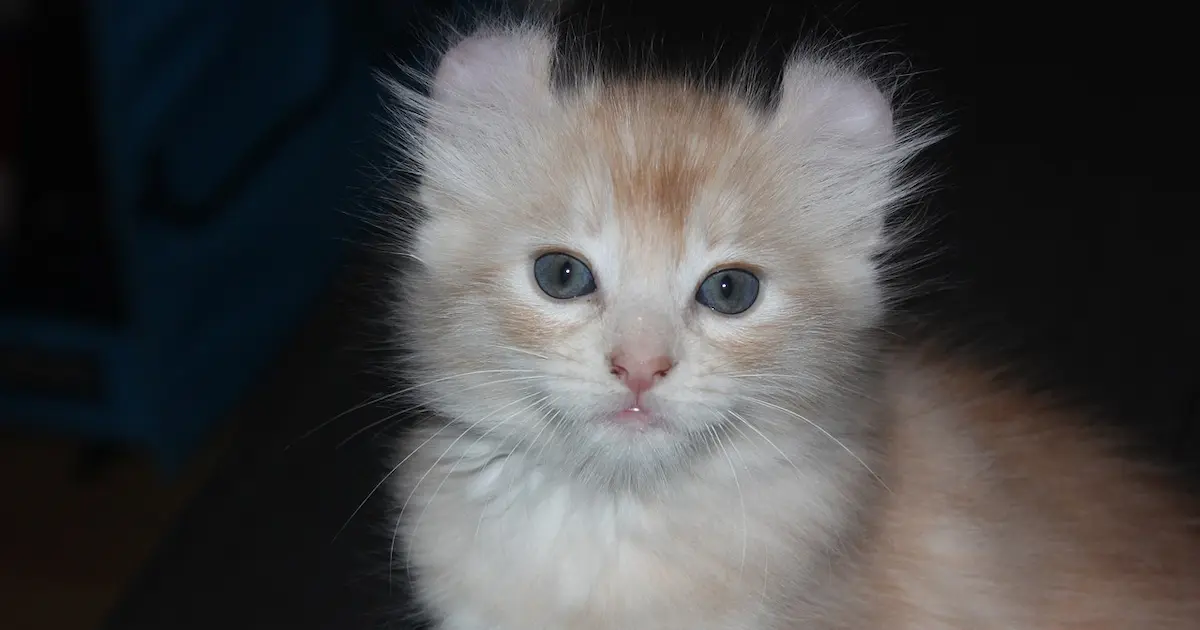
Picture this. A scruffy black stray turns up on your doorstep one June afternoon. She’s sweet, she’s hungry, and her ears curl backward like little petals. You feed her, you keep her, and a few years later her great-great-grandkittens are winning ribbons at cat shows around the world.
That’s not a fairy tale. That’s the actual origin story of the American Curl, and honestly, it’s one of the best in the cat world.
Here’s the thing about this breed though. Those ears get all the attention, but they’re maybe the least interesting thing about living with a Curl. Stick around and I’ll tell you what these cats are really like, including the one detail almost every breed site forgets to warn new buyers about.
American Curl Breed Stats at a Glance
| Origin | United States (California), 1980s |
| Weight (Male) | 7 to 10 lbs |
| Weight (Female) | 5 to 8 lbs |
| Lifespan | 12 to 16 years (often longer) |
| Coat | Silky, short or long (semi-long) |
| Colors | All colors and patterns |
| Energy Level | Moderate to High |
| Grooming Needs | Low (ears need extra care) |
| Good With Kids | Yes |
| Good With Other Pets | Yes, with slow intros |
| Average Price | $800 to $2,000 from breeders |
The Doorstep Cat: Where American Curls Came From
Most cat breeds were shaped over centuries. The American Curl basically appeared overnight.
In 1981, a black longhaired stray with strangely curled ears wandered up to a couple in Lakewood, California. They took her in and named her Shulamith. When she had her first litter, some of her kittens had the same curly ears, and the cat fancy took notice fast.
Curious whether this was a fluke or something heritable, the breed’s early supporters had the cats studied. A feline geneticist confirmed the curl came from a single dominant gene, which meant a kitten only needs one copy to get those ears. That made building a breed possible.
Things moved quickly after that. The International Cat Association recognized the Curl by the late 1980s. Then in 1999 the breed made history as the first cat ever admitted to the Cat Fanciers’ Association championship class with both its longhaired and shorthaired versions accepted at the same time.
Pretty good run for a cat who showed up uninvited and stayed for dinner.
Those Famous Ears (and the Kitten “Ear Lottery” Nobody Warns You About)
Let’s talk about the ears, because this is where new buyers get tripped up.
American Curl kittens are not born with curly ears. They come out with normal, straight little ears like any other kitten. Within the first couple of days, the ears start to curl backward. Then, plot twist, they slowly relax and uncurl again over the next few weeks.
The ears don’t lock into their final shape, or “set,” until the kitten is around 16 weeks old. Until that moment, nobody can promise you how curly a given kitten will turn out.
This matters more than it sounds. A show-quality Curl needs ears that arc backward somewhere between 90 and 180 degrees, with a gentle 90-degree curve being the ideal. Plenty of perfectly healthy, perfectly lovable Curls end up with only a slight curl, which makes them “pet quality.” Same cat, same sweetness, just less dramatic ears.
So if a breeder tries to sell you an eight-week-old kitten as guaranteed show quality, raise an eyebrow. The ears literally haven’t decided yet.
One more thing worth knowing. The base of the ear is firm and a little stiff, while the tips stay soft and bendy. That combination is exactly why these cats need a careful hand, which we’ll get to in the grooming section.
What an American Curl Actually Looks Like
Strip away the ears for a second and you’ve got a slender, elegant, well-balanced cat. Not chunky, not delicate. Curls are moderately muscled with a body that’s a touch longer than you’d expect for their size.
Females usually land between 5 and 8 pounds, males between 7 and 10. These are not giant cats. They’re the kind you can scoop up with one arm.
The coat comes in two versions, short or semi-long, and both feel silky and lie flat against the body. There’s barely any undercoat, which is great news for your vacuum cleaner. As for color, the American Curl shows up in basically everything: solid, tabby, tortoiseshell, calico, bicolor, you name it. The eyes are big, walnut-shaped, and impossible to ignore.
Their faces have a permanently curious, almost surprised expression, like they just heard a really good piece of gossip. It’s part of the charm.
Living With an American Curl: The Peter Pan Personality
People in the cat world call the American Curl the “Peter Pan” of cats, and it fits. They never really grow up. That kitten energy, the goofiness, the constant interest in what you’re doing, it sticks around well into their senior years.
If you want a cat who keeps to itself, this is not your breed. Curls want to be wherever you are. You’ll have company in the bathroom, supervision while you cook, and a furry assistant for every Zoom call.
Here’s a nuance most sites skip though. The American Curl is more of a “shadow cat” than a classic lap cat. They love being near you, leaning on you, padding behind you from room to room. Some will curl up in your lap, but plenty prefer to sit right beside you instead. If a lifelong lap warmer is your dream, set that expectation now.
They’re also clever and quietly chatty. Don’t expect Siamese-level yelling. Curls tend to communicate in soft trills and little chirps, the conversational equivalent of a friendly nudge. Many take well to learning tricks, fetch, and even leash walks if you start early.
Is the American Curl Right for You?
Let me be honest, because that’s more useful than cheerleading.
An American Curl is a great fit if you:
- Are home a lot, or have other pets to keep your cat company
- Want a social, interactive cat that bonds hard with its people
- Like the idea of training, play, and a cat that acts a bit dog-like
- Have kids or other animals and want an adaptable cat
- Don’t mind a weekly ear check as part of the routine
Think twice if you:
- Work long hours and travel often, leaving the house empty for days
- Want a quiet, independent cat who entertains itself
- Expect a guaranteed lap cat (you might get a shadow instead)
- Have a tight budget, since this is a pricier, rarer breed
The biggest deal-breaker is loneliness. These cats genuinely struggle when left alone too much. If your home sits empty most of the day, a Curl will be miserable, and a miserable cat finds ways to let you know.
Health Issues to Know About
The good news is the American Curl is one of the healthier purebred cats out there. Because breeders were allowed to cross Curls with regular domestic cats for years, the breed kept a wide, healthy gene pool. That diversity protects them from a lot of the inherited problems that plague more tightly bred cats.
Here’s what to actually watch for.
Ear Infections
This is the one tied directly to the breed’s signature feature. The curled shape can trap more wax than a normal ear, and trapped wax is a cozy home for bacteria and yeast. Watch for head shaking, pawing at the ears, redness, a bad smell, or any discharge. Caught early, ear infections are easy to treat.
Dental Disease
Like nearly all cats, Curls can develop tartar, gum disease, and tooth problems with age. Regular tooth brushing and dental checkups go a long way here.
Progressive Retinal Atrophy
A few sources flag this gradual eye condition, where the light-sensing cells in the retina slowly break down and vision fades. It’s not common in the breed, but it’s worth asking a breeder whether their lines have any history of eye issues.
A Word on Ethics
You may wonder whether breeding for curled ears is cruel, the way some “cute mutation” breeds raise real welfare concerns. It’s a fair question, and the honest answer is reassuring here. When the Curl’s mutation was studied, researchers found it caused no extra defects or health problems beyond the ear shape itself. The cartilage difference doesn’t hurt the cat or its hearing. That sets the Curl apart from breeds where a “cute” trait comes bundled with pain.
Grooming and Ear Care
For the coat, American Curls are about as low-maintenance as cats get. With so little undercoat, a quick brush once a week keeps shedding down and the silky coat looking sharp. Longhaired Curls might need a touch more attention, but not much.
The ears are the real homework, and this is where I want to slow down, because owners get nervous about it.
Remember how the base of the ear is firm but the tips are soft and fragile? When you clean those ears, you treat the tips like tissue paper. Use a gentle, vet-approved ear cleaner and a soft cotton pad, and only wipe the parts you can easily see. Never jam anything down into the ear canal, and never force or bend the ear to “test” the curl.
A simple weekly peek-and-wipe is plenty. If you spot heavy wax buildup, odor, or redness, that’s a vet visit, not a deep-cleaning session at home. Trust me, your Curl will be much happier with a light touch.
Round out the routine with regular nail trims and tooth brushing, and you’re done.
Feeding Your American Curl
Cats are carnivores, full stop. Your Curl does best on a protein-rich diet built around real animal protein like chicken, turkey, or fish, not fillers.
A mix of wet and dry food works well for most. Wet food keeps your cat hydrated and is gentle on digestion, while dry food is convenient and can help a little with dental health. Many owners do a blend of both.
Watch the portions, though. Curls are playful, but they’ll happily pack on weight if you free-feed them and skip play sessions. Extra pounds lead to joint strain and other problems down the line, so measure meals and keep treats to a minimum.
Exercise, Play, and Keeping a Forever-Kitten Busy
A bored Curl is a recipe for trouble. All that Peter Pan energy needs somewhere to go.
These cats love to climb and perch, so a tall cat tree near a window is close to mandatory. Give them vertical space and a sunny lookout and you’ll keep them happy and trim.
They also adore interactive play. Wand toys, fetch, puzzle feeders, even teaching them simple tricks all scratch the mental itch. Because Curls want to play with you, not just by themselves, plan on a few short play sessions a day. The upside? It’s genuinely fun, and it deepens your bond.
Apartment living is fine for a Curl as long as you give them height to climb and time to play. Square footage matters less than enrichment.
American Curls With Kids, Dogs, and Other Cats
This is a breed that genuinely seems to like a full house.
Their patient, playful nature makes them a solid match for families with children, as long as kids learn to handle those delicate ear tips gently. With dogs and other cats, Curls tend to be easygoing and curious rather than territorial.
That said, do the introductions slowly. Even a friendly cat needs space and time to size up a new dog or feline roommate. Rushed first meetings cause stress that takes weeks to undo, so let everyone meet at their own pace.
Lifespan and Aging Gracefully
American Curls are long-lived, typically reaching 12 to 16 years, and many sail well past that with good care. Their healthy gene pool is a big reason why.
To help your cat age well, keep up yearly vet visits (twice yearly once they’re seniors), stay on top of dental care, and keep their weight in check. As they slow down, watch for stiffness, changes in appetite, or litter box trouble, since these can be early signs of age-related issues. The earlier you catch something, the easier it usually is to manage.
The lovely part is that even older Curls keep that playful spark. Don’t be surprised if your “senior” cat still ambushes your shoelaces at twelve.
How Much Does an American Curl Cost?
An American Curl kitten from a reputable breeder usually runs between $800 and $2,000, and show-quality kittens with that perfect ear arc can climb higher.
Why the big range? A few things drive it: the kitten’s ear quality, the breeder’s reputation and health testing, the cat’s lineage, and plain old supply. Curls are still a fairly rare breed, so waiting lists are common and bargains are rare.
And remember, the sticker price is just the start. Budget for first-year vet care, vaccinations, spay or neuter, food, litter, a good cat tree, and the occasional ear-related vet visit. A realistic first-year cost lands well above the kitten price alone.
If someone’s offering a “purebred American Curl” for a couple hundred dollars with no paperwork, that’s your cue to walk away. Cheap usually means corners were cut somewhere that matters.
Where to Find an American Curl Ethically
Because Curls are rare, you’ll likely go through a breeder rather than a shelter, though it’s always worth checking rescues first. Purebreds do sometimes end up needing homes.
When you do contact a breeder, look for these green flags:
- They health-test their breeding cats and share results
- They let you visit and see where the cats actually live
- Kittens stay with mom until at least 12 to 16 weeks
- They ask you plenty of questions too
- They’re honest that young kittens’ ear quality isn’t final yet
Red flags to avoid: breeders who won’t let you visit, who always have kittens “ready now,” who push you to pay fast, or who guarantee show ears on a tiny kitten. A good breeder cares where their kittens land, not just how quickly they sell.
Similar Breeds to Consider
If the Curl has caught your eye but you’re weighing options, here are a few cats with overlapping appeal:
- Scottish Fold: another unusual-eared breed, but be aware their folded ears come with real cartilage and joint concerns, unlike the Curl’s harmless mutation.
- American Bobtail: playful, dog-like, and great with families, with a fun bobbed tail instead of curled ears.
- Abyssinian: if you love an active, curious, people-following cat with normal ears.
- Ragdoll: for those who want the affection but prefer a true, mellow lap cat.
- Munchkin: another playful, social breed built from a natural mutation, if you don’t mind the short-leg debate.
Common Myths and Misconceptions
Myth: The curled ears mean the cat is in pain. Nope. The mutation affects only the ear cartilage shape and causes no pain or hearing loss. This is one of the genuinely benign “cute” mutations.
Myth: Kittens are born with curly ears. They’re born straight-eared. The curl develops, relaxes, and then sets over the first few months.
Myth: American Curls are high-maintenance. Their coat is easy. The only real extra is gentle weekly ear care.
Myth: They’re hypoallergenic. They’re not. No cat truly is, though their lighter shedding may bother some people less.
Myth: All American Curls are show-stunning. Many are lovely “pet quality” cats with only a slight curl, and they make exactly the same wonderful companions.
American Curl FAQ
Q: Are American Curl cats good for first-time owners?
Yes, they’re a friendly, adaptable, low-grooming breed that’s forgiving for beginners. The main thing to learn is gentle weekly ear care, which takes about five minutes.
Q: Do American Curl cats’ ears hurt them?
No. Studies of the breed found the ear-curl mutation causes no pain, defects, or hearing problems. The cartilage shape is simply different, not damaged.
Q: Are American Curls lap cats?
Sometimes, but they’re better described as shadow cats. They love being near you and following you around, though many prefer sitting beside you over curling up in your lap.
Q: How long do American Curl cats live?
Most live 12 to 16 years, and plenty reach their late teens. Their diverse gene pool helps them stay healthy longer than many purebred cats.
Q: Are American Curl cats rare?
Yes, they’re still considered an uncommon breed worldwide. That rarity is part of why kittens carry higher prices and breeders often have waiting lists.
Q: Do American Curls get along with dogs?
Usually yes. Curls tend to be confident and social rather than territorial, so they often do well with dogs. Just introduce them slowly to keep stress low.
Q: When do American Curl kittens’ ears stop curling?
The ears set permanently at around 16 weeks of age. Before that, the curl develops and relaxes, so a kitten’s final ear shape can’t be guaranteed early.
Q: How much does an American Curl cost?
Expect roughly $800 to $2,000 from a reputable breeder, with show-quality kittens costing more. Factor in first-year vet and supply costs on top of that.
The Final Verdict: Should You Get an American Curl?
If you want a cat who treats you like the center of the universe, the American Curl delivers. You get a healthy, easygoing, forever-playful companion wrapped up in one of the most charming origin stories in the cat world. Those backward ears are just the bonus.
The catch is simple. These cats need you. Leave them alone too often and that sunny personality dims fast. But if your home is full of people, pets, and attention, an American Curl will reward you with years of trills, shadow-following, and shoelace ambushes.
So here’s the real question. Are you ready for a cat who genuinely wants to be your sidekick? If yes, the American Curl might just be the best doorstep decision you ever make.

Hello and welcome to The Ideal Cat!
We are some passionate cat owners from different professions. We love our cats and have a lot of experience in how to care for our pets. We are incredibly excited to share our knowledge, experience, and research with you. So you can take good care of your loving cat. We will answer most of the common questions about owning cats, taking care of them, etc. If you have any question contact with us. Thanks for visiting! Enjoy the content.
