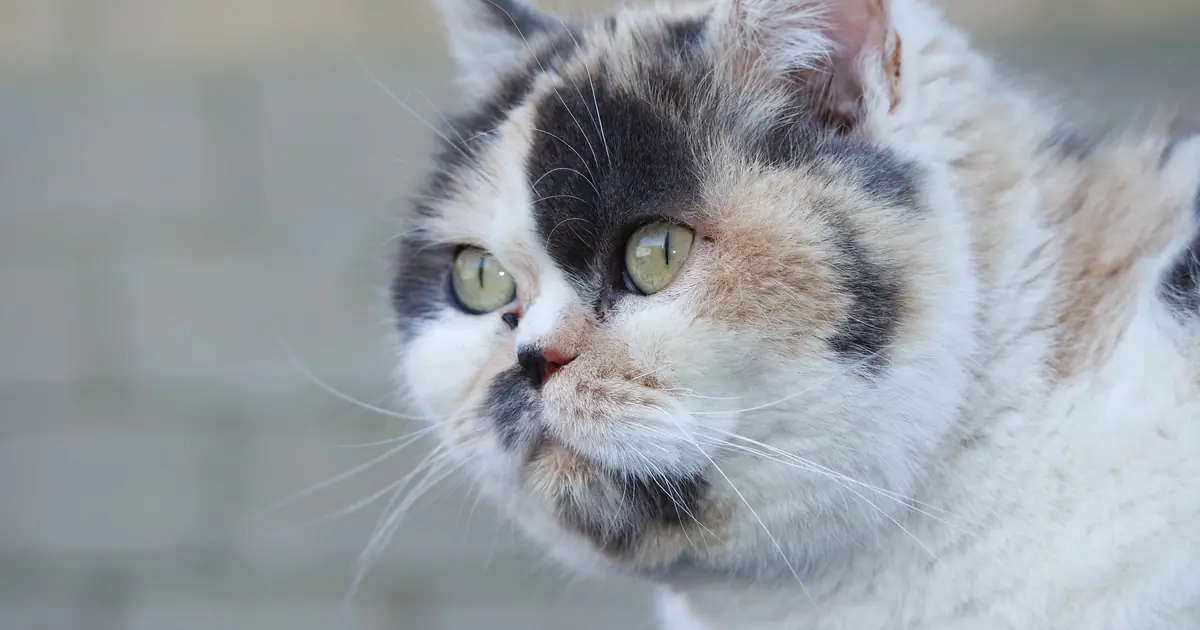
If you’ve ever scrolled past a cat that looks part werewolf, part forest creature, or pure white with diamond eyes, you’ve probably wondered just how rare some cats really get. Here’s the thing: “rarest cat breed” doesn’t have one tidy answer, because rarity depends on whether you mean the smallest gene pool, the hardest cat to buy, or the newest mutation. The Sokoke usually takes the crown, but it has serious competition. Let’s meet the eight rarest cat breeds and clear up what actually makes each one so hard to find.
- The Sokoke is the breed most often named the rarest in the world, tracing back to free-roaming forest cats near Kenya’s Arabuko-Sokoke forest.
- Cat breeds become rare for different reasons: a tiny founding gene pool, a recent natural mutation, regional confinement, or very recent registry recognition.
- The Khao Manee, an all-white “diamond eye” cat from Thailand, is one of the priciest rare breeds at roughly $7,000 to $11,000 per kitten.
- “Rarest breed” is not the same as “most expensive cat,” and neither describes the rarest wild cats, which are endangered species, not pet breeds.
- The Ashera, often called the world’s rarest cat, is widely regarded as a marketing rebrand of the Savannah, not a genuine separate breed.
What Is the Single Rarest Cat Breed?
The Sokoke is the single rarest cat breed most experts point to. The Sokoke descends from naturally occurring forest cats in coastal Kenya, locally called khadzonzo, and only a few hundred exist as registered pedigree cats worldwide. That tiny population, plus the breed’s recent and limited spread outside Africa and Scandinavia, is what keeps the Sokoke at the top of nearly every “rarest” list.
It helps to know that rarity isn’t one single thing. A breed can be rare because almost no breeding cats exist anywhere, like the Sokoke. Or it can be rare in one country while common in another, like the Khao Manee, which is uncommon in Thailand’s homeland sense but extremely scarce in the United States. Throughout this guide, “rare” means the breed is genuinely hard to find as a pet, with small numbers and few breeders.
What Are the 8 Rarest Cat Breeds? (Comparison Table)
The eight rarest cat breeds are the Sokoke, Khao Manee, Lykoi, Minskin, Kurilian Bobtail, Bambino, Serengeti, and Turkish Van. Each of these rare cats is hard to find for its own reason, from a tiny gene pool to a brand-new mutation. The table below sums up where each comes from, why it’s rare, and roughly what a kitten costs.
| Breed | Origin | Why It’s Rare | Typical Kitten Price |
|---|---|---|---|
| Sokoke | Kenya | Tiny global gene pool from wild forest cats; few breeders | $1,500 to $3,000+ |
| Khao Manee | Thailand | Ancient breed, only reached the West around 1999; very few breeders abroad | $7,000 to $11,000 |
| Lykoi | USA | New natural mutation first bred in 2011; small breeding population | $1,500 to $2,500 |
| Minskin | USA | Developed in 2000 from several breeds; still experimental, few catteries | $1,000 to $1,500+ |
| Kurilian Bobtail | Kuril Islands (Russia/Japan) | Geographically isolated origin; fewer than 100 registered in the U.S. | $1,000 to $3,000 |
| Bambino | USA | Newer hybrid from 2005; still experimental and not widely recognized | $1,500 to $3,000 |
| Serengeti | USA | Created in 1994 to mimic a wild serval; small, specialized breeder base | $600 to $2,000 |
| Turkish Van | Turkey | Ancient natural breed; tightly protected and exported in small numbers | $1,000 to $3,000 |
Prices are general estimates from breeder listings and breed sources, and they swing with bloodline, location, and demand. Always buy from a registered, health-testing breeder rather than chasing the lowest price.
Why Is the Sokoke So Rare?
The Sokoke is so rare because it started as a small group of wild forest cats and has never built a large breeding population. The Sokoke traces back to 1978, when a Kenyan farmer found a litter of distinctive kittens near the Arabuko-Sokoke forest. A handful were brought to Denmark in the 1980s, and the entire modern breed descends from that narrow founding stock.
Recognition came slowly, which kept Sokoke numbers low. The breed was accepted by FIFe in 1993 and by The International Cat Association (TICA) in 2003. Even today, only a small number of breeders work with the Sokoke, so kittens are scarce and waiting lists are common. Sokokes are lean, athletic cats with a striking brown blotched tabby coat that looks like polished wood grain.
Why Is the Khao Manee Considered One of the Rarest Cats?
The Khao Manee is one of the rarest cats because it stayed inside Thailand for centuries and only reached the wider world recently. The Khao Manee is an all-white breed famous for its “diamond eyes,” which are often two different colors, such as one blue and one gold. It was prized by Thai royalty and appears in a 14th-century manuscript of cat poems called the Tamra Maew.
This long isolation is exactly why the Khao Manee is now so scarce abroad. The breed wasn’t introduced to the United States until around 1999 and reached the U.K. in 2009, so very few breeders exist outside Thailand. That scarcity, plus its sacred history, pushes Khao Manee kitten prices to roughly $7,000 to $11,000, making it one of the most expensive rare breeds you can buy.
What Makes the Lykoi “Werewolf Cat” So Unusual?
The Lykoi is unusual because a natural genetic mutation gives it a patchy, roan coat and bald patches that look almost wolf-like. The Lykoi, nicknamed the “werewolf cat,” has a hairless mask around the eyes, nose, and muzzle, plus thin fur that sheds and regrows in cycles. The name comes from the Greek word for wolf.
The Lykoi is rare mainly because the breed is so new. The mutation was identified in feral cats around 2010, and breeders Patti Thomas and Dr. Johnny Gobble produced the first intentional litter in 2011. TICA advanced the Lykoi to championship status in 2016, and it could be shown alongside all breeds from May 2017. With only a small group of dedicated breeders worldwide, healthy Lykoi kittens remain hard to find and typically cost $1,500 to $2,500.
Why Is the Minskin So Hard to Find?
The Minskin is hard to find because it’s a young, still-experimental breed built from several other breeds in tiny numbers. The Minskin is a short-legged cat with sparse fur, usually concentrated on the “points,” meaning the face, ears, legs, and tail. Breeder Paul McSorley began developing the Minskin in Boston in 1998, and the first cat meeting his goal was born in 2000.
Because the Minskin blends Munchkin, Sphynx, Devon Rex, and Burmese ancestry, careful breeding is slow and the population stays small. TICA still lists the Minskin in its experimental category rather than as a fully recognized championship breed. Minskin kittens generally range from about $1,000 to $1,500, with show-quality cats costing more.
What Other Rare Cat Breeds Should You Know?
Beyond the Sokoke, Khao Manee, Lykoi, and Minskin, four more rare cat breeds round out the list: the Kurilian Bobtail, Bambino, Serengeti, and Turkish Van. Each of these rare breeds is scarce for a clear reason, from isolated island origins to very recent creation.
Kurilian Bobtail
The Kurilian Bobtail is a rare, ancient breed from the Kuril Islands off the coast of Russia and Japan. The Kurilian Bobtail is known for its short, pom-pom tail made of 2 to 10 kinked vertebrae, no two tails quite alike. Its remote island origin kept numbers low, and TICA records suggest fewer than 100 live in the United States.
Bambino
The Bambino is a rare, newer breed created around 2005 by crossing the hairless Sphynx with the short-legged Munchkin. The Bambino’s name is Italian for “baby,” fitting its small, kitten-like look. TICA lists the Bambino as experimental, and the Cat Fanciers’ Association does not yet recognize it, which keeps the breed rare and somewhat controversial among breeders.
Serengeti
The Serengeti is a rare breed designed to look like a wild African serval while staying 100% domestic. The Serengeti was created in 1994 by conservation biologist Karen Sausman in California, by crossing the Bengal with the Oriental Shorthair. Despite the wild look, the Serengeti carries no recent wild cat blood, and its small specialist breeder base keeps it uncommon.
Turkish Van
The Turkish Van is a rare, ancient natural breed from eastern Turkey, often called “the swimming cat.” The Turkish Van has a soft, water-resistant coat that’s mostly white with color limited to the head and tail, and many genuinely enjoy water. Tightly protected in its homeland and exported in small numbers, the Turkish Van stays difficult to find elsewhere.
Rarest Breed vs. Most Expensive vs. Rarest Wild Cat
The rarest cat breed, the most expensive cat, and the rarest wild cat are three different things people often mix up. The rarest breed is about how few exist as pets, the most expensive is about price tags, and the rarest wild cats are endangered species, not breeds you can own. Sorting these apart makes the whole topic far less confusing.
- Rarest breed: usually the Sokoke, judged by how few registered cats exist worldwide.
- Most expensive: often the Khao Manee or Savannah, judged by kitten price rather than total numbers.
- Rarest wild cat: endangered wild species like the Iriomote cat, a protected subspecies in Japan, not a domestic pet.
One name worth flagging is the “Ashera,” frequently called the world’s rarest and priciest cat. Investigations found Ashera cats to be genetically identical to Savannah cats, so most experts treat the Ashera as a marketing rebrand rather than a real separate breed. If a seller quotes a six-figure price for an “Ashera,” that’s a major red flag.
How Do You Safely Get a Rare Cat Breed?
The safest way to get a rare cat breed is to work only with a registered breeder who health-tests their cats and lets you visit. Rare breeds attract scammers and careless backyard breeders, so doing your homework protects both your wallet and the kitten’s health. Patience matters too, since waiting lists for breeds like the Sokoke can run months or longer.
Use this checklist before committing to any rare-breed kitten:
- Confirm the breeder is registered with a recognized body like TICA, CFA, or FIFe.
- Ask for health screening records and proof of vaccinations and deworming.
- Visit in person or on a live video call to see the kitten’s living conditions.
- Be cautious of prices that seem far too low or impossibly high for the breed.
- Ask whether a shelter or breed-specific rescue might have a similar cat in need of a home.
One quick note: rare doesn’t mean better. A loving mixed-breed cat from a shelter can be every bit as wonderful as a rare pedigree, and a vet is always the best source for breed-specific health advice.
Frequently Asked Questions About the Rarest Cat Breed
Q: What is the single rarest cat breed in the world?
The Sokoke is most often named the rarest cat breed in the world. It descends from wild forest cats in coastal Kenya and has only a few hundred registered pedigree cats globally, with a small number of breeders. Its tiny gene pool and limited spread keep it at the top of rarity lists.
Q: What is the most expensive rare cat breed?
Among genuine breeds, the Khao Manee is one of the most expensive, with kittens commonly priced at $7,000 to $11,000. Savannah cats can run even higher, sometimes tens of thousands of dollars for early-generation cats. Price reflects scarcity and demand rather than how few cats exist overall.
Q: Is the Ashera really the rarest cat breed?
No, the Ashera is not a genuine rare breed. DNA testing found “Ashera” cats to be the same as Savannah cats, so experts widely consider the Ashera a marketing rebrand. Anyone advertising an Ashera for a six-figure price should be treated with strong caution.
Q: Why are some cat breeds so rare?
Cat breeds become rare for a few clear reasons: a very small founding gene pool, a recent natural mutation, geographic isolation, or very recent recognition by cat registries. The Sokoke is rare from a tiny gene pool, while the Lykoi is rare because the breed was only created in 2011.
Q: What is the rarest cat color or marking?
The all-white coat with two different-colored “diamond eyes” of the Khao Manee is one of the rarest looks in the cat world. Among coat patterns, naturally roan coats like the Lykoi’s “werewolf” appearance are also extremely rare, since they come from uncommon genetic mutations.
Q: Are rare cat breeds healthy?
Rare cat breeds can be healthy, but small gene pools sometimes raise the risk of inherited conditions. Reputable breeders reduce that risk through health testing and careful pairing. Always ask for screening records and consult a licensed veterinarian for breed-specific health guidance before buying.
Q: Can you adopt a rare cat breed from a shelter?
Yes, it’s possible, though uncommon. Rare purebreds occasionally end up in shelters or breed-specific rescues. You’re more likely to find a mixed cat that resembles a rare breed, which can be just as loving and far easier to bring home.
Q: What is the rarest wild cat, as opposed to a breed?
The rarest wild cats are endangered species, not pet breeds. Examples include the Iriomote cat, a protected subspecies living only on a small Japanese island, with very few left in the wild. These are conservation animals and cannot be kept as house pets.
So, what is the rarest cat breed? The Sokoke earns the title on most lists, but the Khao Manee, Lykoi, Minskin, Kurilian Bobtail, Bambino, Serengeti, and Turkish Van each hold their own claim to being among the rarest cats on Earth. Whether you fall for the Sokoke’s forest-cat coat or the Khao Manee’s diamond eyes, choose a registered, health-focused breeder, and remember that the rarest cat breed isn’t always the right one for your home.
This article is educational and not a substitute for professional advice. For health questions about any cat, rare breed or not, always consult a licensed veterinarian.

Hello and welcome to The Ideal Cat!
We are some passionate cat owners from different professions. We love our cats and have a lot of experience in how to care for our pets. We are incredibly excited to share our knowledge, experience, and research with you. So you can take good care of your loving cat. We will answer most of the common questions about owning cats, taking care of them, etc. If you have any question contact with us. Thanks for visiting! Enjoy the content.
