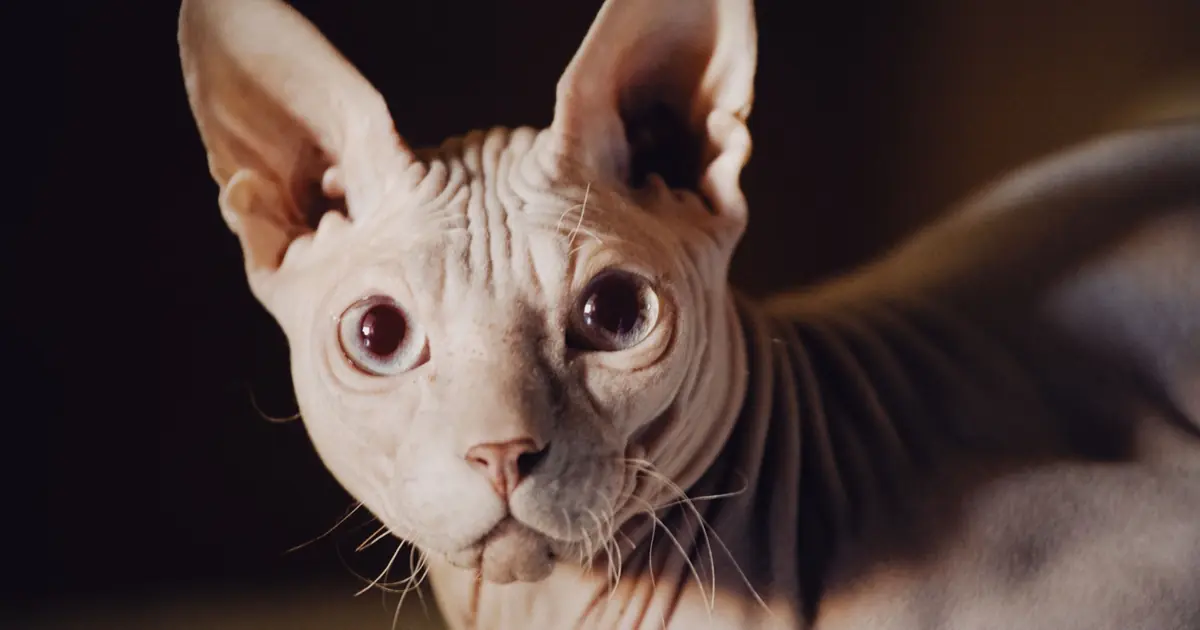
If you’ve ever run a hand over a Sphynx cat and felt that warm, slightly fuzzy suede texture, you already know these cats aren’t actually bald. People assume “hairless” means smooth like a dolphin. In reality, most Sphynx cats are covered in a barely-there peach-fuzz you can feel more than see.
So can a Sphynx cat ever grow real hair? Sort of, and it’s worth understanding what’s actually going on under that wrinkly skin before you start worrying that something’s wrong with your cat.
- The Sphynx’s hairlessness comes from a recessive mutation in the KRT71 gene, which affects the keratin protein that builds the hair shaft.
- Sphynx cats aren’t fully bald. Most have a fine, downy fuzz you can feel but barely see, especially on the ears, nose, paws, and tail.
- Sphynx cats can’t grow a normal full coat because the mutation, not a lack of hair follicles, is what limits growth.
- A Sphynx’s fuzz can thicken slightly in cold weather or with age, but a sudden, unexplained coat change is worth a vet visit.
- Sphynx cats aren’t hypoallergenic. They still produce the Fel d 1 protein that triggers cat allergies, just with less hair to spread it around.
Can Sphynx cats grow hair at all?
Yes, most Sphynx cats grow a fine layer of downy fuzz, but they cannot grow a normal, full cat coat. The hair follicles are there, they’re just built differently because of a genetic mutation that shortens the hair growth cycle almost to nothing. Run your hand backward across a Sphynx’s back and you’ll usually feel a faint texture, like warm suede or a soft peach. That’s real hair. It just never gets the chance to grow long or thick like it would on a Maine Coon or a domestic shorthair.
What causes Sphynx cats to be hairless?
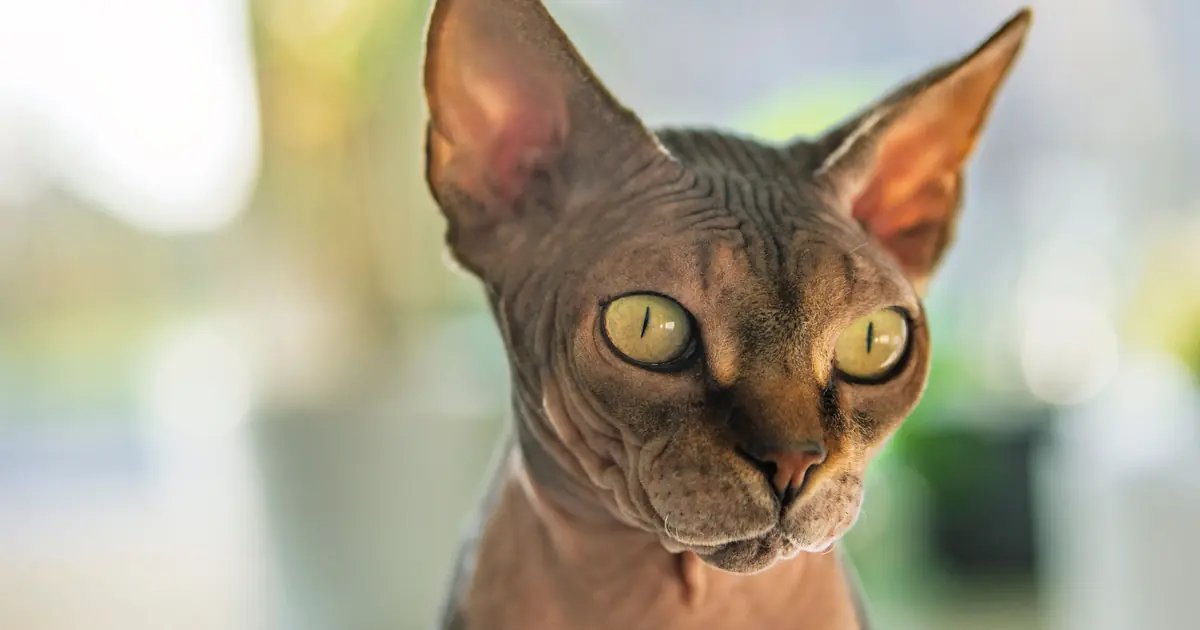
Sphynx hairlessness comes from a naturally occurring recessive mutation in the KRT71 gene, which controls a keratin protein needed to build a normal hair shaft. Keratin is the structural protein that gives hair, claws, and skin their strength. When both copies of this gene carry the mutation, the hair shaft forms weak and brittle, so it breaks off or never fully grows in. According to genetic research from the UC Davis Veterinary Genetics Laboratory, this same KRT71 mutation is behind hairlessness and curly coats in several cat breeds, not just the Sphynx. It’s a naturally occurring mutation that breeders selected for, not something induced or engineered.
Where do Sphynx cats actually have hair?
Sphynx cats usually have the most noticeable hair on their ears, nose, paws, and tail tip, with fine, nearly invisible fuzz covering the rest of the body. No two Sphynx cats look identical here. Some have almost see-through fuzz over their whole body, while others carry a slightly heavier dusting, especially on the extremities that stay warmer with better blood flow.
| Body Area | Typical Sphynx Hair |
|---|---|
| Ears | Fine, soft fuzz, often the most visible hair on the cat |
| Nose and muzzle | Short whiskery hairs and light fuzz around the bridge of the nose |
| Paws | Light downy hair between the toes and on the tops of the feet |
| Body | Barely visible peach-fuzz, texture like suede or chamois leather |
| Tail | Slightly thicker fuzz toward the tip compared to the body |
Does a Sphynx cat’s fuzz change with the seasons or with age?
Yes, a Sphynx cat’s fuzz can get a little thicker in colder months and shift again as the cat ages. Cats’ coats respond to temperature and daylight, and Sphynx cats are no exception, they just have far less hair for the change to show up on. Kittens often feel fuzzier than adult Sphynx cats too, since some of that soft baby down thins out by the time they mature. A Sphynx living in a cold climate or a chilly house may grow a slightly heavier coat of fuzz for warmth, then shed some of it back down once the weather warms up. None of this is a full coat coming in, it’s the same limited fuzz simply getting denser or sparser.
Can a Sphynx cat suddenly grow more hair than usual?
Some natural variation in a Sphynx’s fuzz is normal, but a real, sudden coat change is worth mentioning to your vet. Hormonal shifts, thyroid issues, and certain skin conditions can all change how much fuzz a Sphynx grows or how their skin looks and feels. If you notice new patches of thicker hair appearing quickly, along with changes in energy, appetite, or skin texture, that’s different from the slow, seasonal fuzz changes described above. This article is educational, not a substitute for veterinary care, so any unexplained coat or skin change deserves a real exam rather than a guess.
Why do Sphynx cats feel warm, and what care do they need?
Sphynx cats feel noticeably warmer to the touch than furry cats because they have no coat to trap in body heat, so their skin sits closer to the surface. That same lack of coat means they also lose heat fast in cool rooms and can get sunburned outdoors, so most Sphynx owners keep sweaters on hand and warm sleeping spots around the house. Their skin also produces more surface oil than a haired cat’s, since fur normally absorbs some of that oil for you. Regular bathing, roughly once a week for many Sphynx cats, keeps the skin from getting greasy or breaking out, and it’s worth learning how to bathe a cat that hates water before bath day turns into a wrestling match. For more on the full picture of owning one, our Sphynx cat guide covers diet, temperament, and health needs in depth, and pairing that with the right food matters too, since Sphynx cats burn more calories keeping warm (see our guide to the best cat food for Sphynx cats).
How does the Sphynx compare to other hairless cat breeds?
The Sphynx is the best known hairless breed, but it’s not the only one, and the amount of fuzz varies breed to breed. The Donskoy (or Don Sphynx) from Russia carries a different, dominant hairlessness gene and can actually lose and regrow hair in patches throughout its life. The Peterbald, a Russian breed crossed with Oriental Shorthairs, ranges from completely bald to a soft velour coat, all within the same litter. Bambino and Elf cats are newer hybrid breeds built on Sphynx genetics, mixed with Munchkin or American Curl traits, and they carry a similar fine fuzz. None of these breeds grow a true, insulating coat the way a haired cat does.
Do Sphynx cats shed, and are they hypoallergenic?
Sphynx cats shed very little compared to furry breeds, but they are not hypoallergenic. Cat allergies come mainly from a protein called Fel d 1, found in saliva, skin oils, and dander, not from the hair itself. A Sphynx still produces Fel d 1 and still sheds skin cells and oil onto furniture and bedding, sometimes more visibly than a haired cat because there’s no fur to catch it first. If allergies are a concern in your household, no cat breed, including breeds often marketed as hypoallergenic like the Balinese or the Birman, is truly allergen-free. Regular bathing and cleaning help, but they won’t eliminate the allergens completely, according to the American Animal Hospital Association.
A quick note on Sphynx skin and coat health
A Sphynx cat’s fuzz naturally varies from one individual to the next, and normal seasonal changes are nothing to worry about. But sudden hair growth, hair loss, scabby skin, or greasy buildup that doesn’t clear up with regular bathing is worth a call to your vet. This article is for general education and isn’t a substitute for a hands-on veterinary exam, especially since some hormonal and skin conditions in Sphynx cats need proper testing to diagnose. Keep up with regular baths, check their skin folds for buildup, and keep them warm, and most Sphynx cats stay comfortable in their own (mostly bare) skin for life.
Frequently Asked Questions
Q: Are Sphynx cats really 100% hairless?
No, most Sphynx cats have a fine layer of downy fuzz over their body, with slightly more noticeable hair on the ears, nose, paws, and tail. True, completely bald skin with zero fuzz is less common than the soft, suede-like coat most Sphynx cats actually have.
Q: What gene makes Sphynx cats hairless?
A recessive mutation in the KRT71 gene causes Sphynx hairlessness. This gene affects a keratin protein needed to build a normal hair shaft, so the hair that does grow is short, fine, and sparse instead of a full coat.
Q: Can a Sphynx kitten grow into a fully-coated cat?
No, a Sphynx kitten will not grow a full adult coat later in life. The mutation is present from birth, and while the fuzz can shift slightly with age and season, a Sphynx will not develop normal, thick fur as it matures.
Q: Why does my Sphynx cat feel fuzzy in winter but smoother in summer?
Sphynx cats often grow a slightly thicker layer of fuzz in cold weather for extra warmth, then shed some of it back down once temperatures rise. This seasonal shift is normal and doesn’t mean a full coat is coming in.
Q: Is it normal for a Sphynx cat to have whiskers?
Yes, most Sphynx cats have whiskers, though they’re often shorter, sparser, or curlier than a furry cat’s whiskers, and some individuals have very few. Whiskers serve the same sensory purpose in Sphynx cats as in any other breed, helping them judge space and detect nearby objects.
Q: Are Sphynx cats hypoallergenic since they have so little hair?
No, Sphynx cats are not hypoallergenic. Allergies are triggered by the Fel d 1 protein in a cat’s saliva, skin oils, and dander, and Sphynx cats still produce it, sometimes with more oil buildup on their exposed skin than a haired cat.
Q: Should I worry if my Sphynx cat suddenly grows more hair?
A little extra fuzz in cold weather is normal, but a sudden, noticeable increase in hair growth combined with other changes like skin irritation, weight changes, or low energy is worth a vet visit. Hormonal and thyroid issues can sometimes affect a Sphynx’s coat.
Q: How do I take care of a Sphynx cat’s skin since it has no fur for protection?
Sphynx cats need weekly bathing to remove excess skin oil, regular skin fold checks, and protection from both cold rooms and direct sun exposure. Because they lack a coat to regulate body heat or block UV rays, a bit more hands-on care goes a long way.

Hello and welcome to The Ideal Cat!
We are some passionate cat owners from different professions. We love our cats and have a lot of experience in how to care for our pets. We are incredibly excited to share our knowledge, experience, and research with you. So you can take good care of your loving cat. We will answer most of the common questions about owning cats, taking care of them, etc. If you have any question contact with us. Thanks for visiting! Enjoy the content.
