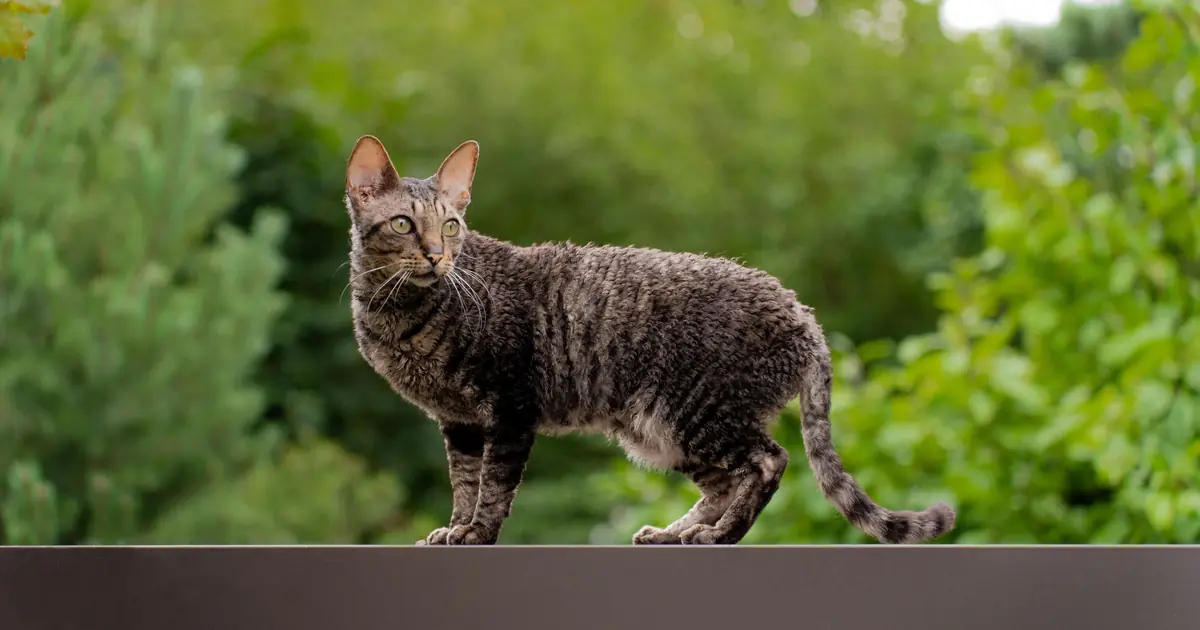
You spot a photo online. Big cat, spotted coat, ears that curl back like a tiny lynx, and a stubby little tail. Your first thought is, “Is that… legal to own?”
Take a breath. The Highlander cat looks like it wandered out of the woods, but it’s a fully domestic breed. No bobcat in the recent family tree. No special permit. Just a goofy, water-splashing, fetch-playing house cat in a wild costume.
Here’s what living with one is actually like, and who should think twice.
Highlander Cat at a Glance
| Origin | United States, developed in 2004 |
| Weight (Male) | 15 to 20 lbs |
| Weight (Female) | 10 to 14 lbs |
| Lifespan | 10 to 15 years |
| Coat | Short or long hair, dense and soft |
| Colors | Spotted and classic tabby, lynx point, silver, brown, and more |
| Energy Level | High |
| Grooming Needs | Low to moderate (plus regular ear checks) |
| Good With Kids | Yes, with normal supervision |
| Good With Other Pets | Yes, including dogs, with slow intros |
| Average Price | $800 to $1,500 from breeders |
Are Highlander Cats Wild? (No, Really)
Highlander cats are not wild and they are not a recent wildcat hybrid. They’re a designer domestic breed, full stop. You can own one as a normal pet in all 50 states, no exotic-animal permit needed.
The confusion is understandable. Highlanders were built to look like a bobcat or lynx, and they nail the look. But that wild appearance comes from selective breeding of domestic cats, not from breeding a house cat to an actual wild animal.
This is the big difference between a Highlander and something like a high-content Savannah. A first-generation Savannah carries genes straight from the African serval, which is why some states regulate them. A Highlander carries none of that. It behaves like the affectionate lap cat it actually is.
Where Did the Highlander Cat Come From?
The Highlander cat is a young American breed, with serious development starting in 2004 and the name “Highlander” adopted in late 2005. Breeders wanted a cat with the bold, bobcat-like build of one experimental breed and the curled ears of another.
The two parent breeds
Highlanders come from crossing the Desert Lynx and the Jungle Curl. The Desert Lynx brought the muscular body, spotted coat, and short bobbed tail. The Jungle Curl brought the signature ears that curl back at the tips. Both are themselves designer domestic breeds, so the Highlander’s “wild” look is all style, no actual wild lineage in the modern cat.
Registry status
The International Cat Association (TICA) accepted the Highlander into its Preliminary New Breed class on May 1, 2008, then moved it up to Advanced New Breed in 2016. In 2022, the American Cat Fanciers Association (ACFA) accepted the Highlander for championship competition. The Cat Fanciers’ Association (CFA) does not currently recognize the breed.
What Does a Highlander Cat Look Like?
A Highlander cat looks like a small wildcat that decided to move indoors. Big body, spotted or marbled coat, curled ears, and a stubby tail. Even people who know cats tend to do a double take.
Those curled ears
The ears are the headline feature. They sit on a wide, firm base and curl backward at the tips, sometimes up to about 90 degrees. Kittens are often born with straighter ears that develop the curl over the first weeks. The curl should be gentle and flexible, never tight or stiff.
The bobbed tail
Most Highlanders have a short, bobbed tail, though length varies quite a bit from cat to cat. Some tails are tiny stubs, others are a bit longer. And yes, they wag it when they’re excited, which is half the reason people call this breed dog-like.
Extra toes (polydactyl paws)
Plenty of Highlanders are polydactyl, meaning they’re born with extra toes. A polydactyl Highlander can have up to seven toes on a front paw and six on a back paw, versus the usual five and four. It’s harmless and honestly pretty charming, those big mitten paws.
One nuance worth knowing: extra toes are not part of the official breed standard, and a polydactyl cat would be disqualified in the show ring. So a polydactyl Highlander makes a wonderful pet, just not a show champion.
Size and coat
Highlanders are big. Males commonly hit 15 to 20 pounds, females land around 10 to 14. They keep growing and filling out for a few years, so that “small” kitten is going to surprise you. The coat comes in short and long versions, both dense and soft, in spotted and classic tabby patterns plus lynx points and various colors.
Highlander Cat Personality and Temperament
Here’s the twist nobody expects from a cat that looks this fierce: the Highlander is a total goofball. Affectionate, social, and clingy in the best way. This is a cat that wants to be part of everything you do.
The dog comparisons are earned. Many Highlanders learn to play fetch, walk on a harness, and come when called. They tend to bond hard with their people and follow you room to room like a furry shadow.
The water obsession
Most cats hate getting wet. Highlanders missed that memo. They’ll bat at the faucet, dunk a paw in your glass, and stand guard at the tub. Keep the toilet lid down and expect a soggy water bowl area. It’s part of the package.
The energy reality
These cats are high-energy and they stay playful well into adulthood. A bored Highlander is a destructive Highlander. They need daily play, things to climb, and ideally a human who’s around a fair amount. If you want a quiet cat that naps 20 hours a day, this isn’t your breed.
Is the Highlander Cat Right for You?
The Highlander is a fantastic fit for active, social households that want an interactive, dog-like cat and have room for a big, busy animal. It’s a poor fit for people who are gone all day, want a calm lap cat, or live somewhere very cramped.
You’ll probably love a Highlander if you:
- Want a cat that interacts, plays fetch, and walks on a leash
- Have space for climbing furniture and active play
- Are home enough to give it real attention and company
- Enjoy a chatty, involved, follow-you-around personality
- Can handle a large, strong cat (and a budget to match)
Think twice if you:
- Work long hours and the cat would be alone all day
- Want a low-energy, independent cat
- Live in a tiny space with nowhere to climb
- Aren’t ready for the price tag and vet costs of a big breed
Highlander Cat Health Issues to Know About
The Highlander cat is generally a healthy, hardy breed with no single dominant inherited disease. Most live a full 10 to 15 years with good care. Still, a few things are worth watching, especially given the ear and tail traits.
Ear care for the curl
Those curled ears can trap wax and debris a little more easily, which raises the odds of buildup or infection if you ignore them. A quick weekly look and gentle cleaning when needed keeps problems away.
Tail and spine caution
Because the breed has a naturally short tail, some people worry about spinal issues like those seen in tailless Manx cats. Hard evidence in Highlanders is limited, but a responsible breeder pays attention to tail and spine health in their lines, and you should ask about it.
General feline conditions
Like many breeds, some sources note that individual Highlanders can develop hypertrophic cardiomyopathy (HCM, a heart-muscle disease) or polycystic kidney disease (PKD, fluid-filled kidney cysts). Reputable breeders screen their breeding cats, so ask to see health testing.
This guide is educational, not veterinary advice. For anything specific to your cat, talk to your vet, and book a check-up if you notice changes in eating, energy, breathing, or litter box habits.
Grooming and Care for a Highlander Cat
Highlander cat grooming is refreshingly low-maintenance, with one exception: the ears. The coat is easy, but the curled ears need a regular peek.
Coat
A shorthaired Highlander needs a brush about once a week to manage loose hair. The longhaired version does better with two or three brushings a week to head off tangles. Both shed, but it’s manageable, not Persian-level work.
Ears, nails, and teeth
- Ears: Check weekly. Wipe gently with a vet-approved cleaner only when you see wax or dirt. Never jam anything deep into the ear canal.
- Nails: Trim every couple of weeks, and remember polydactyl cats have extra claws to keep an eye on.
- Teeth: Brush regularly and keep up with dental check-ups.
Feeding and Diet for a Big, Active Cat
A Highlander cat is a large, muscular, high-energy animal, so it needs a quality, protein-rich diet that supports that build and activity level. Feed for the cat’s age, weight, and energy, and measure portions to avoid quietly turning a powerhouse into a couch potato.
Fresh water should always be available, and a fountain is a smart move for a breed this fascinated by running water. Many Highlanders drink more happily from moving water than a still bowl.
Exercise and Enrichment
Highlander cats need daily, active play and plenty to climb, or they’ll invent their own entertainment (usually at the expense of your shelves). Plan for real engagement, not just a toy left on the floor.
Good options for this breed:
- A tall, sturdy cat tree they can climb and survey from
- Wand toys and fetch sessions, since many will retrieve
- Puzzle feeders to work that busy brain
- Harness and leash walks, which a lot of Highlanders genuinely enjoy
- Water play, even just a dripping faucet, to scratch that splashy itch
A tall, heavy-duty cat tree is close to mandatory for a cat this large and athletic. Look for something built for big cats so it doesn’t tip when a 20-pound Highlander launches onto it.
For leash time, a secure, escape-resistant cat harness makes outdoor walks safer and far less stressful for a strong, curious cat.
Frisco Tall Cat Tree
A tall, multi-level cat tree gives a big Highlander somewhere to climb, perch, and burn energy indoors. Choose a wide, weighted base so it stays put under a heavy, athletic cat.
Living With Kids, Dogs, and Other Cats
The Highlander cat is one of the more family-friendly exotic-looking breeds, usually good with kids, dogs, and other cats when introductions are done right. Its social, playful nature makes it a willing housemate.
With kids
Highlanders are sturdy and tolerant, a nice match for a busy home with children. As with any cat, teach kids gentle handling and give the cat an escape spot when it wants a break.
With dogs
The dog-like personality cuts both ways: many Highlanders get along great with dogs and may even play together. Go slow with first meetings and supervise until everyone’s relaxed.
With other cats
This is a social breed that often does better with feline company than alone, especially in homes where people work away from home. Use a gradual, scent-first introduction and most Highlanders settle in fine.
Lifespan and Aging Tips
Highlander cats typically live 10 to 15 years, and good care can carry them to the upper end of that range. The breed ages a lot like any large, active cat.
- Kittens: Lots of play and socialization. The ear curl develops over the early weeks.
- Adults: Keep the energy outlets coming and watch the waistline.
- Seniors (around 10+): Switch to twice-yearly vet visits, watch for stiffness or weight changes, and make perches easier to reach.
How Much Does a Highlander Cat Cost?
A Highlander kitten from a reputable breeder usually costs between $800 and $1,500, with price varying by pedigree, color, coat length, and breeder reputation. Rarer colors and show-quality lines push toward the top of that range.
The kitten price is only the start. Budget for the rest:
| Expense | Estimated Cost |
|---|---|
| Kitten from a breeder | $800 to $1,500 |
| Initial vet visits and vaccines | $150 to $300 |
| Spay or neuter (if not included) | $150 to $400 |
| Supplies (tree, harness, bowls, litter box) | $200 to $400 |
| Food and litter (yearly) | $500 to $800 |
| Routine vet care (yearly) | $200 to $500 |
Are Highlander Cats Rare? Where to Find One Ethically
Yes, the Highlander is a genuinely rare breed. It’s young, the breeding pool is small, and dedicated catteries are spread thin, so expect a waitlist rather than a same-week kitten.
Buy from a breeder registered with TICA (or another recognized body). A good Highlander breeder will:
- Health-test their breeding cats and share results
- Raise kittens underfoot in the home, well socialized
- Let kittens stay until at least 12 weeks
- Provide a written health guarantee and contract
- Ask you plenty of questions in return
Red flags to walk away from: no health testing, kittens available immediately and cheaply, refusal to show you where the cats live, or anyone marketing the cat as a “wild hybrid.” It isn’t one.
Rescue is rare for this breed but not impossible. Occasionally a Highlander or Highlander mix turns up in breed-specific rescue or a shelter, usually for a few hundred dollars.
Highlander Cat vs Bengal, Savannah, Pixie-Bob, and American Curl
If you love the Highlander’s look, a few other breeds scratch a similar itch. Here’s how they compare.
| Breed | What Sets It Apart |
|---|---|
| Highlander | Curled ears, bobbed tail, often polydactyl, dog-like, fully domestic |
| Bengal | Sleek, glittery spotted coat, very high energy, distant wild ancestry |
| Savannah | Tallest and most exotic, serval ancestry, sometimes legally restricted |
| Pixie-Bob | Bobcat-like look and bobbed tail, mellow and calm, also often polydactyl |
| American Curl | Curled ears too, but from a different gene; smaller, no wild look |
Quick note on the ears: the American Curl’s curl and the Highlander’s curl come from different genes, so they’re not related breeds, just two cats that happen to share a striking feature.
Common Highlander Cat Myths and Misconceptions
Myth 1: “Highlanders are part wildcat.” No. The Highlander is a domestic breed created from other domestic breeds. The wild look is selective breeding, not wild blood.
Myth 2: “You need a permit to own one.” Nope. Highlanders are legal as ordinary pets everywhere in the US, unlike some high-content hybrids.
Myth 3: “The curled ears mean they can’t hear well.” The curl is cosmetic. Highlanders hear just fine; the ears just need regular cleaning.
Myth 4: “Extra toes are a defect.” Polydactyl paws are harmless. They’re just not part of the show standard, so a polydactyl Highlander is a great pet, not a show cat.
Myth 5: “They’re aggressive like a wild cat.” Quite the opposite. Highlanders are famously affectionate, playful, and people-focused.
Frequently Asked Questions About Highlander Cats
Q: Are Highlander cats wild?
No. The Highlander cat is a fully domestic breed developed in the USA in 2004 from the Desert Lynx and Jungle Curl. It only looks wild. It has no recent wildcat ancestry and is legal to own as a normal pet.
Q: How big do Highlander cats get?
Highlander cats are large. Males usually weigh 15 to 20 pounds and females 10 to 14 pounds. They keep filling out for two to three years, so adults are noticeably bigger and heavier than the average house cat.
Q: How much is a Highlander cat?
A Highlander kitten from a reputable breeder typically costs $800 to $1,500. Price depends on pedigree, color, coat length, and breeder reputation. Plan for ongoing costs too, since this is a big cat with a matching food and vet budget.
Q: Are Highlander cats rare?
Yes. The Highlander is a young, uncommon breed with a small number of dedicated breeders. Expect a waitlist rather than an instant kitten, and be cautious of anyone offering them cheaply with no questions asked.
Q: Why do Highlander cats have curled ears?
The curled ears come from the Jungle Curl side of the breed’s ancestry. The ears sit on a firm base and curl backward at the tips, sometimes up to about 90 degrees. The curl is cosmetic and does not affect hearing.
Q: Do all Highlander cats have a short tail?
Most Highlanders have a short, bobbed tail, but length varies a lot from cat to cat. Some have tiny stubs, others a slightly longer tail. The bobbed tail is a defining trait, and many wag it like a dog when excited.
Q: Are Highlander cats polydactyl?
Many are. Polydactyl Highlanders can have up to seven toes on a front paw and six on a back paw. It’s harmless, but extra toes are not part of the breed standard and would be a disqualification in the show ring.
Q: Are Highlander cats good pets for families?
Yes. Highlander cats are affectionate, playful, and social, and they usually do well with kids, dogs, and other cats when introduced slowly. They’re high-energy and need daily play, so they suit active, involved homes best.
The Final Verdict: Should You Get a Highlander Cat?
If you want a cat with the looks of a wildcat and the heart of a Labrador, the Highlander cat is hard to beat. You get curled ears, a wagging bobbed tail, often a set of mitten paws, and a playful, water-loving companion that wants to be in the middle of your life.
Just go in clear-eyed. This is a big, active, expensive cat that needs space, play, and your time. Get those right, and a Highlander cat will reward you with years of fetch games, faucet ambushes, and the kind of affection most people don’t expect from something that looks like it belongs in the wild.

Hello and welcome to The Ideal Cat!
We are some passionate cat owners from different professions. We love our cats and have a lot of experience in how to care for our pets. We are incredibly excited to share our knowledge, experience, and research with you. So you can take good care of your loving cat. We will answer most of the common questions about owning cats, taking care of them, etc. If you have any question contact with us. Thanks for visiting! Enjoy the content.
