
Picture this. You’re building a sandwich, a slice of salami dangling from your fingers, and there’s your cat: pupils wide, whiskers forward, doing the slow-blink negotiation. Those little chirps. That paw on your knee. Honestly, it’s hard to say no to that face.
Here’s the thing though. Can cats have salami? Not really, and definitely not as a regular thing. Cats are obligate carnivores, so meat isn’t the problem. The problem is everything humans do to that meat: the salt, the fat, the curing, and the garlic and onion powder hiding in almost every recipe. Let me walk you through what’s actually going on, what a stolen bite means, and what to give instead.
- Salami is not recommended for cats because it is very high in salt and fat and usually contains garlic and onion powder.
- Garlic and onion (in any form, including powder) are toxic to cats and can damage red blood cells, causing anemia.
- One tiny accidental piece is unlikely to harm a healthy adult cat, but salami should never be a regular treat.
- A single slice of salami can pack around 200 mg of sodium, while a cat only needs roughly 40 mg of sodium a day.
- Watch for vomiting, diarrhea, lethargy, weakness, or pale gums, and call your vet if your cat ate a large amount.
Can cats eat salami safely?
No, cats cannot eat salami safely as a treat or a snack. Salami is a cured, processed meat made for human palates, not feline ones. A single lick or one crumb-sized piece probably won’t hurt a healthy adult cat, but salami offers your cat nothing good and carries several real risks. The safe amount, honestly, is zero.
Why so firm? Because “not immediately poisonous” and “safe” are two very different things. Salami stacks up salt, fat, and toxic seasonings all at once. A little today, a little tomorrow, and those small amounts add up in a body that weighs about ten pounds. If you’re rethinking your cat’s snacks in general, our guide to safe treats instead of salami is a much better place to spend those “I can’t resist that face” moments.
Why is salami bad for cats?
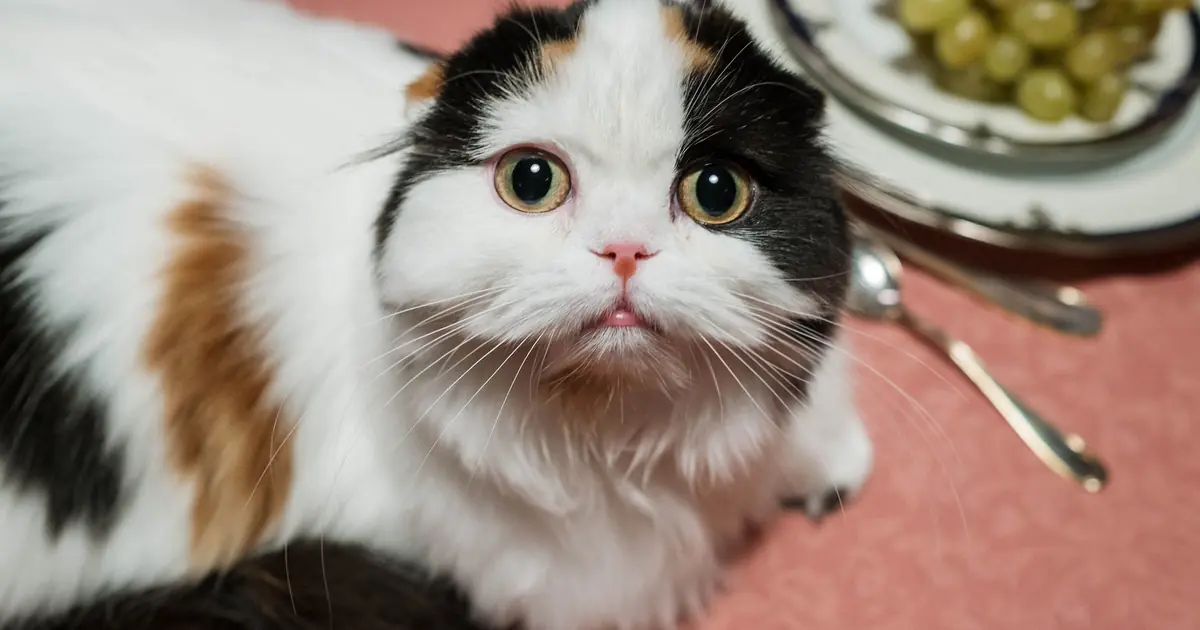
Salami is bad for cats because it combines high sodium, high fat, toxic allium seasonings, and heavy processing in one small slice. Each of those alone is a reason to pause. Together, they make salami one of the worst human meats to hand your cat. Here’s the breakdown.
Garlic and onion powder: the real toxic concern
Garlic and onion are the genuinely dangerous part of salami, and most salami is seasoned with both, often as powder. Garlic and onion belong to the allium family, and they damage a cat’s red blood cells, which can lead to a condition called hemolytic anemia. Powdered forms are actually more concentrated than fresh, so a “little seasoning” is not as harmless as it sounds. This isn’t upset-tummy territory; it’s true toxicity. The ASPCA lists garlic and onions among people foods to avoid feeding pets, and cats are especially sensitive to them.
Way too much salt
Salami is extremely salty, and cats are tiny. One slice can carry roughly 200 mg of sodium, while a cat only needs around 40 mg a day. Too much salt at once can cause excessive thirst, vomiting, and in serious cases sodium poisoning. Over time, a high-salt diet is rough on cats with heart or kidney concerns.
Loaded with fat
Salami is a high-fat food, and that rich fat load can trigger stomach upset or, worse, pancreatitis, a painful inflammation of the pancreas. Regular fatty snacks also pile on calories fast. A few slices to us is a big chunk of a cat’s daily calories, which is how “just a treat” quietly becomes a weight problem.
Cured, processed, and sometimes raw
Salami is a cured meat packed with preservatives like nitrates and nitrites, plus spices that don’t belong in a feline gut. Some salami is technically fermented and never cooked, which adds a small risk of bacteria like Salmonella or Listeria. None of this is designed for a cat’s digestive system.
What’s actually in salami vs why it’s a problem for cats?
Salami looks like plain meat, but the ingredient list tells a different story for cats. Here’s a quick side-by-side of what goes into most salami and why each part is a problem for your cat specifically.
| What’s in salami | Why it’s a problem for cats |
|---|---|
| Garlic powder | Toxic to cats; damages red blood cells and can cause anemia. More concentrated in powder form. |
| Onion powder | Toxic to cats; same allium damage to red blood cells, even in small repeated amounts. |
| Salt (sodium) | Around 200 mg per slice vs a cat’s ~40 mg daily need; risks thirst, vomiting, and salt toxicity. |
| High fat content | Can trigger stomach upset and pancreatitis, and adds far too many calories for a small cat. |
| Nitrates and preservatives | Curing chemicals a cat’s body isn’t built to process regularly. |
| Extra spices (pepper, chili, mustard seed) | Can cause diarrhea, vomiting, bloating, and stomach pain. |
What happens if my cat ate a small piece of salami?
If your cat ate one small piece of salami, they’ll most likely be fine. A single crumb or lick doesn’t usually contain enough garlic, onion, or salt to poison a healthy adult cat. The bigger issues come from larger amounts or from making salami a habit. So don’t panic over one accidental nibble.
Do keep an eye on them for the next day or two, though. Some cats have sensitive stomachs and will get a bit of digestive upset from rich, salty food, similar to what you’d see if your cat throws up after eating something too rich. Offer fresh water, skip any more people food, and watch for the symptoms below. If your cat is very small, very young, elderly, or already unwell, be a little more cautious and call your vet for peace of mind.
What are the symptoms of salami poisoning in cats?
Symptoms of salami-related trouble in cats usually show up as digestive upset first, then, with garlic or onion, signs of anemia. Because garlic and onion damage red blood cells, some symptoms can take a day or two to appear, so don’t assume you’re in the clear after an hour. Watch for these signs:
- Vomiting or diarrhea
- Lethargy or unusual tiredness
- Weakness or wobbliness
- Pale or bluish gums (a red flag for anemia from garlic or onion)
- Rapid breathing or a racing heart
- Excessive thirst and lots of urinating (a salt sign)
- Loss of appetite
Pale gums, weakness, or breathing changes are the ones that mean call your vet now. These point to red-blood-cell damage, which is serious. For more on cat nutrition and safe feeding, PetMD’s cat nutrition resources and the Cornell Feline Health Center are both solid, vet-backed places to read more.
What should I feed my cat instead of salami?
Instead of salami, feed your cat a plain, unseasoned protein or a treat made for cats. Cats crave meat, and that instinct is totally valid; you just want the version without the salt, fat, and toxic seasonings. Good swaps that scratch the same itch:
- A small piece of plain, cooked chicken or turkey, no salt, no seasoning, no skin.
- Plain cooked fish in tiny amounts, or a safe seafood option like cooked shrimp in moderation.
- Freeze-dried meat treats or treats formulated specifically for cats.
- A lick of plain wet food as a “special” snack.
The everyday foundation matters most, though. Treats should stay under about 10% of your cat’s daily calories, and the other 90% should come from a complete, balanced diet. If you want to get that base right, here’s what your cat should actually eat in our guide to the best cat food.
This article is educational and not a substitute for veterinary advice. If your cat ate a lot of salami or shows any worrying symptoms, contact your veterinarian or an emergency vet right away.
What to do if your cat ate a lot of salami
If your cat ate a large amount of salami, or any salami you know was heavily seasoned with garlic or onion, treat it as a vet call, not a wait-and-see. Here’s the simple plan:
- Take the salami away and note roughly how much your cat ate and when.
- Check the label or recipe for garlic and onion (including powders); this matters most to your vet.
- Offer fresh water but do not try to make your cat vomit at home unless a vet tells you to.
- Call your veterinarian or a pet poison helpline and describe the amount and ingredients.
- Watch closely for 24 to 72 hours for vomiting, weakness, or pale gums, and follow your vet’s guidance.
When in doubt, call. Vets would much rather hear from you early than treat a sick cat later.
Frequently Asked Questions
Q: Can cats eat pepperoni instead of salami?
No, pepperoni is not a safe swap for salami. Pepperoni is even spicier and often saltier, and it usually contains the same toxic garlic and onion powder. It carries the same risks of stomach upset, salt overload, and allium toxicity, so skip it too.
Q: Is a tiny bit of salami toxic to cats?
A tiny bit of salami is unlikely to poison a healthy adult cat, since one crumb rarely holds enough garlic, onion, or salt to cause harm. It still isn’t a good idea, because the risks add up with repetition. One accidental nibble is usually nothing to panic about.
Q: Why is garlic in salami dangerous for cats?
Garlic is dangerous for cats because it damages their red blood cells and can cause hemolytic anemia. Garlic is part of the allium family, and cats are very sensitive to it. Powdered garlic in salami is concentrated, so even small seasoning amounts can matter over time.
Q: Can kittens have salami?
No, kittens should never have salami. Kittens are much smaller than adult cats, so the salt, fat, and toxic seasonings hit them harder and faster. Their growing bodies need a complete kitten diet, not processed human meat. Keep salami well out of reach.
Q: How much salami is too much for a cat?
Any regular amount of salami is too much for a cat, and even a single large piece can cause problems. Because salami is so salty and fatty and often contains garlic and onion, there’s no safe serving size. Treat all salami as off-limits for cats.
Q: My cat ate salami and seems fine. Should I worry?
If your cat ate a small amount of salami and seems fine, they probably are, but keep watching. Garlic and onion toxicity can take a day or two to show up as weakness or pale gums. Monitor your cat for 24 to 72 hours and call your vet if anything seems off.
Q: Can cats eat cured or dry-cured salami?
No, cats should not eat cured or dry-cured salami. Curing adds heavy salt, nitrates, and preservatives, and some dry-cured salami is never cooked, which adds a small bacterial risk. It’s just as unsuitable for cats as any other salami, so leave it out.
Q: What human meats are safe for cats instead?
Plain, cooked, unseasoned meats are the safe human options for cats. Small pieces of cooked chicken, turkey, or fish with no salt, oil, garlic, or onion make a good occasional treat. Keep these to under about 10% of your cat’s daily calories.

Hello and welcome to The Ideal Cat!
We are some passionate cat owners from different professions. We love our cats and have a lot of experience in how to care for our pets. We are incredibly excited to share our knowledge, experience, and research with you. So you can take good care of your loving cat. We will answer most of the common questions about owning cats, taking care of them, etc. If you have any question contact with us. Thanks for visiting! Enjoy the content.
