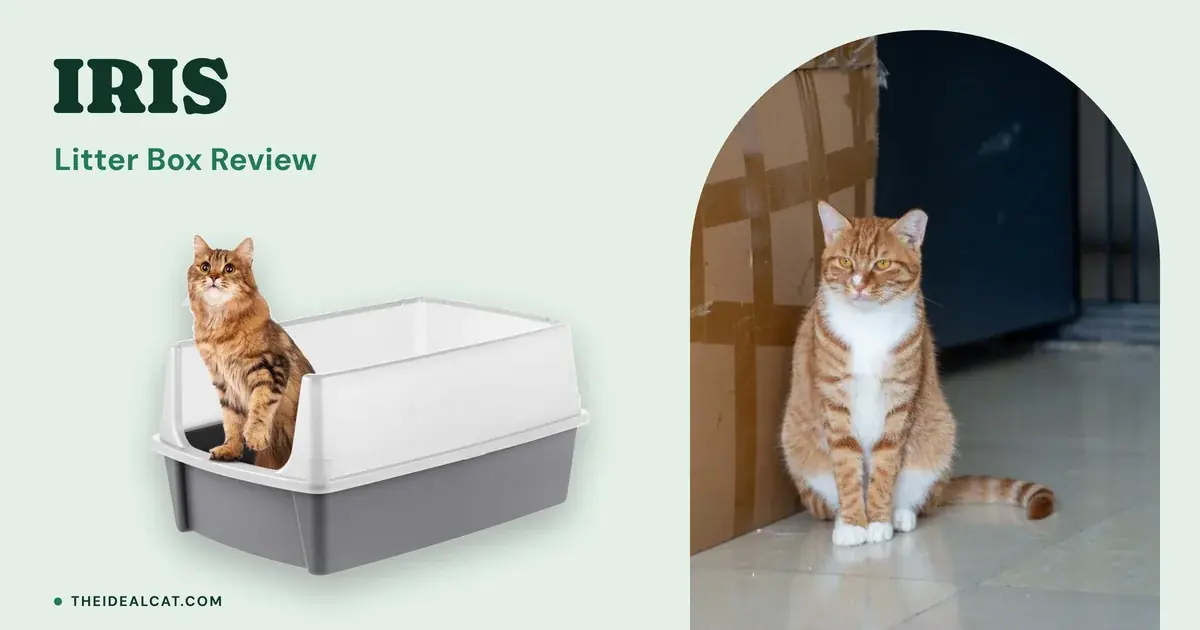
Three IRIS boxes cost exactly the same $39.99 on Chewy: the XX-Large Open Top with scatter shield, the XX-Large Side Entry, and the Large Top Entry. Same money, three very different experiences for your cat.
One is big enough for a Maine Coon and asks nothing of a stiff old cat. Another asks every cat to jump in through a hole in the lid. The price will not help you choose. Your cat will.
Litter boxes are the least interesting thing you will ever buy for your cat, and getting one wrong causes more trouble than almost anything else.
IRIS makes cheap plastic boxes in every configuration going: open, high-back, side entry, top entry, hooded.
The brand is not the hard part. Choosing an entry style your cat will actually use is.
Matching the IRIS box to your cat
| Box | Entry | Price | Pick it if |
|---|---|---|---|
| Open Top with Scatter Shield, XX-Large | Open top | $39.99 | You are unsure. Suits every age, and the size fits big cats. |
| OpenTop Side Entry, XX-Large | Side entry | $39.99 | You want some scatter control but your cat cannot jump onto a lid. |
| Top Entry, Large | Top entry | $39.99 | Your cat is a healthy adult that jumps confidently, and tracking is the problem. |
| Premium Square Top Entry, Large | Top entry | $79.99 | The box sits somewhere you see every day and the finish matters to you. |
| Enclosed with Door Flap, Jumbo | Hooded, flap door | $29.99 | Your cat likes privacy. Try it without the flap first. |
| Large High-Back Open Pan | Open, high back | $30.84 | Your cat stands and sprays over the side of a low pan. |
The XX-Large open top is also listed as made in the USA. IRIS USA, the American arm of Japan’s IRIS Ohyama, runs plastics factories in Wisconsin, Texas and Arizona.

Which entry style suits your cat
This is the whole decision, and it depends on your cat rather than on your floors.
- Open top: suits every cat at every age. No barrier, no trap feeling, easy to see what your cat produced. Worst for scatter and tracking.
- High back: an open pan with raised sides. Solves the standing-and-spraying problem without adding a barrier. The best default for most households.
- Side entry: a raised opening in the side. Middle ground, some containment without a climb.
- Top entry: best tracking control, because the lid knocks litter off the paws. Unsuitable for kittens, seniors, arthritic and overweight cats.
- Enclosed with a flap: maximum containment, and the style cats most often reject. A box with one exit and a door can feel like a trap, particularly in a multi-cat home where being cornered is a real risk.
Size is the specification nobody checks. A box should be roughly one and a half times your cat’s body length, nose to base of tail. Most commercially sold boxes are too small for a large cat, which is why big cats often hang over the edge or refuse a box that looks fine.
On top entry specifically: a cat who suddenly stops using a top-entry box they previously used may be finding the jump painful. Feline arthritis is far more common than most owners realise and presents as reluctance to jump rather than obvious limping. Lower the barrier first, then speak to your vet. International Cat Care covers how quietly it presents.
Our guide to how big a litter box should be covers sizing properly, and Modkat is the premium take on top entry if budget allows.
How many boxes, and where
Buying the right box matters less than having enough of them in the right places, and this is where most households quietly go wrong.
The rule is one box per cat plus one spare. Two cats means three boxes. That sounds excessive and it is the single most effective thing you can do to prevent house soiling in a multi-cat home.
Location does more work than the box does. Boxes need to be somewhere a cat cannot be cornered, away from noisy appliances, and not next to food and water. Cats do not eat where they toilet, and a box beside the food bowl often just goes unused.
- Spread them out. Three boxes side by side is one box as far as your cat is concerned.
- Different floors in a house with stairs, especially for older cats.
- Avoid dead ends. A box in a cupboard with one way out is a place to be ambushed.
- Fill about three inches deep so a cat can dig properly, and scoop daily regardless of the box style.
And if a house-trained cat starts going outside the box, treat it as medical first. Our guide to a cat not using the litter box works through the causes, and the ASPCA covers the behavioural side once illness is ruled out.
What you get for thirty dollars
- Plain plastic, competently moulded. No design awards, no odour-control gimmicks, just a functional pan at a fair price.
- Scoops included on several models, which is a small thing that saves a separate purchase.
- Replace rather than repair. Scratched plastic holds odour permanently because urine soaks into the grooves, so a cheap box you replace every year or two beats an expensive one you keep too long.
- No sisal, no filters, no fuss. If you want a box that looks like furniture, this is not that brand.
- Sizes go genuinely large, which matters more than any feature for a big cat.
Should you buy an IRIS box?
Buy one if you want a functional box at a fair price and you are willing to replace it when the plastic scratches. The XX-Large open top with scatter shield is the safest choice for almost any cat, and the high-back pan is the cheapest way to stop a sprayer.
Buy a top-entry model only if your cat is a healthy adult who jumps confidently. Compare across the category in our cat litter guide, and see PetSafe ScoopFree if what you actually want is to stop scooping.
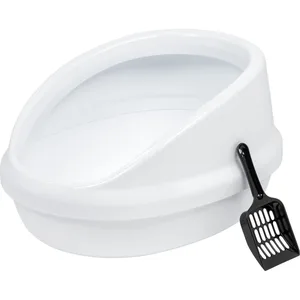
Cheap, functional litter boxes in every shape, including sizes large enough for cats most brands ignore. Nothing clever, nothing wrong.
Spend your attention on entry style and box count rather than on the brand. One per cat plus one spare, spread out, three inches deep, scooped daily. IRIS Open Top Cat Litter Box with Scatter Shield, XX-Large, Gray is the one to buy if you are unsure. This article is educational rather than veterinary advice.
IRIS litter box FAQ
Q: Are IRIS litter boxes good?
IRIS litter boxes are functional and affordable, costing about $30 to $80, and they cover every entry style including sizes large enough for big cats. They are basic plastic rather than designer furniture, which is reflected in the price.
Q: Which litter box entry style is best?
A high-back open pan suits most households: full access for any cat plus raised sides to catch spraying. Top entry controls tracking best but excludes kittens, senior, arthritic and overweight cats. Enclosed boxes with flaps are the style cats most often reject.
Q: What size litter box does my cat need?
Roughly one and a half times your cat’s body length, measured nose to base of tail. Most commercially sold boxes are too small for large breeds, which is why big cats often hang over the edge or avoid a box that looks fine.
Q: How many litter boxes do I need?
One per cat plus one spare, so two cats need three boxes. Spread them across different locations and floors, since three boxes side by side function as a single box from your cat’s point of view.

Hello and welcome to The Ideal Cat!
We are some passionate cat owners from different professions. We love our cats and have a lot of experience in how to care for our pets. We are incredibly excited to share our knowledge, experience, and research with you. So you can take good care of your loving cat. We will answer most of the common questions about owning cats, taking care of them, etc. If you have any question contact with us. Thanks for visiting! Enjoy the content.
