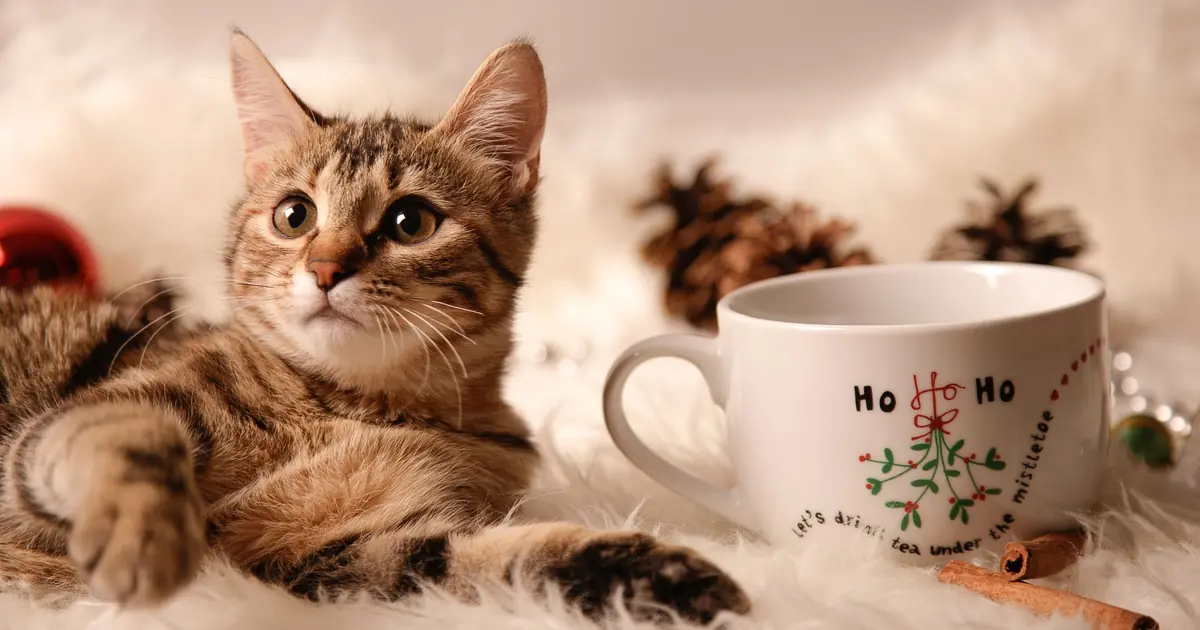
Picture this. You set your warm mug of tea on the coffee table, turn away for ten seconds, and spin back to find your cat’s tongue mid-dip. Now you’re wondering if you need to panic. So can cats drink tea, or is that little sip a problem?
Here’s the honest answer. Tea is a hard no for cats. Most teas carry caffeine, and caffeine is genuinely toxic to felines, not just “not great for them.” The good news is that a single lick of weak, cooled tea usually won’t hurt a healthy adult cat. But cats are small, they process caffeine poorly, and there’s no reason to make tea part of their world. Let’s break down why, what to watch for, and what to do if your cat drinks more than a taste.
- Caffeine is toxic to cats, and black, green, white, oolong, and matcha teas all contain it.
- Signs of caffeine poisoning in cats include restlessness, rapid heart rate, panting, tremors, and vomiting, often within 30 to 60 minutes.
- One or two licks of weak tea rarely harms a healthy adult cat, but a bowl’s worth or strong tea is a real risk.
- Herbal and decaf teas are not automatically safe, since many herbs like peppermint and citrus are toxic to cats.
- Cats never need tea. Fresh, clean water covers all their hydration needs.
Can cats drink tea?
No, cats should not drink tea. Caffeinated teas, including black, green, white, oolong, and matcha, all contain caffeine, which cats cannot process the way people do. Their bodies clear caffeine slowly, so even amounts that feel tiny to us can build up and cause trouble in a small animal.
Tea also brings along tannins, which can irritate a cat’s stomach, and some teas contain small amounts of theobromine, the same compound that makes chocolate dangerous for pets. Add milk or sugar to that tea and you’ve stacked on ingredients most cats can’t digest well, since adult cats are largely lactose intolerant. There’s simply no nutritional upside to tea for a cat. Whatever your cat needs, tea isn’t it.
Why is caffeine dangerous for cats?
Caffeine is dangerous for cats because they are far more sensitive to it than humans and metabolize it very slowly. Caffeine is a stimulant that speeds up the heart and the nervous system. In a 9-pound cat, a dose that a person would never notice can overstimulate the heart and brain.
According to the veterinary team at PetMD, caffeine poisoning ramps up quickly once a pet takes in enough. The most concentrated sources are the real danger: espresso, matcha powder, tea bags a cat might chew, and any caffeine pills or energy products left within reach. Brewed tea is more diluted, but a curious cat lapping from a full mug still adds up fast. Caffeine is the other reason we tell readers to skip letting cats near coffee too.
What are the symptoms of caffeine poisoning in cats?
Symptoms of caffeine poisoning in cats usually show up within 30 to 60 minutes of ingestion. Early signs are restlessness and hyperactivity, and they can escalate from there. If you know or suspect your cat drank tea and see any of these, treat it as urgent.
- Restlessness, pacing, or hyperactivity
- Rapid or pounding heart rate
- Heavy breathing or panting
- Vomiting (learn more about GI upset and why cats throw up after eating)
- Muscle tremors or twitching
- Agitation or unusual vocalizing
- In larger amounts, an erratic heartbeat and seizures
These signs mean the caffeine is affecting your cat’s heart and nervous system. Don’t wait to see if it passes. Call a vet.
Is herbal or decaf tea safe for cats?
Herbal and decaf teas are not automatically safe for cats. “Caffeine-free” solves only one problem. Many herbs used in tea are toxic to cats on their own, so a caffeine-free blend can still be risky.
Peppermint, eucalyptus, citrus peel, and lemongrass show up in popular herbal teas, and all of them can upset or harm cats. Even chamomile, often called soothing, is a gray area: Roman chamomile is considered toxic to cats, while German chamomile may be tolerated in tiny, diluted amounts under a vet’s guidance. Decaf tea still holds trace caffeine plus those stomach-irritating tannins. The ASPCA’s toxic plant database is a handy gut check before assuming any plant-based drink is fine. Honestly, the simplest move is to skip tea entirely. There’s no health benefit worth the guessing game.
Which teas are risky, and how do they compare?
Caffeinated teas carry the clearest risk to cats, but no tea is a good idea. Here’s how common types stack up so you can see the picture at a glance.
| Tea Type | Caffeine? | Risk to Cats |
|---|---|---|
| Black tea | Yes (high) | High: caffeine plus tannins |
| Green tea | Yes | High: caffeine, more concentrated in matcha |
| Matcha | Yes (very high) | Very high: powdered and concentrated |
| White / oolong tea | Yes | Moderate to high: still caffeinated |
| Decaf tea | Trace | Low caffeine, but tannins still irritate |
| Herbal tea (chamomile, peppermint, etc.) | Usually none | Varies: many herbs are toxic to cats |
My cat licked tea. Is a small amount a problem?
A single lick of weak, cooled tea is unlikely to poison a healthy adult cat, so a quick taste probably isn’t an emergency. Most poison-control guidance says one or two licks of tea or coffee rarely causes toxicity in an average-sized pet. Take a breath. Then keep an eye on your cat.
The picture changes with the amount, the strength, and the cat. A bowl’s worth of strong black tea, a chewed tea bag, or a lick of matcha is a different story. So is any tea in a kitten, a senior, or a cat with heart or kidney issues, since they have far less margin. When you’re unsure, don’t guess. Reach out to a professional, because caffeine acts fast and it’s easier to treat early. And going forward, the fix is simple: keep mugs out of reach and give your cat their own source of fresh, running water instead.
What should cats drink instead of tea?
Cats should drink water, full stop. Fresh, clean water is the only beverage a cat needs, and it does everything tea can’t: it hydrates without caffeine, tannins, or mystery herbs. Many cats drink too little on their own, so making water appealing matters.
Try a wide, shallow bowl to avoid whisker fatigue, refresh the water daily, and place bowls away from the litter box and food. A lot of cats drink more from moving water, which is why fountains are popular. Hydration also comes from meals, so a moisture-rich, complete and balanced diet helps top up the tank. Between good food and clean water, your cat is fully covered. No tea required.
What to do if your cat drank tea
If your cat drank more than a lick of tea, or drank any tea and seems off, call for help right away. Caffeine can affect the heart within an hour, so acting early beats waiting it out.
- Move the tea and any tea bags out of reach so your cat can’t drink more.
- Note what kind of tea it was, how strong, and roughly how much, plus the time.
- Watch for restlessness, a racing heart, panting, tremors, or vomiting.
- Call your veterinarian, an emergency vet, or a pet poison helpline. Animal poison control lines exist for exactly this and can guide you.
- Do not try to make your cat vomit at home unless a vet tells you to.
This article is educational and isn’t a substitute for veterinary care. For any suspected poisoning, a licensed vet or poison-control line should make the call. You can also read the Cornell Feline Health Center for trustworthy background on cat health.
Frequently asked questions about cats and tea
Q: Can cats drink green tea?
No, cats should not drink green tea. Green tea contains caffeine, which is toxic to cats, and matcha (powdered green tea) is even more concentrated. Even the antioxidants in green tea offer no proven benefit that outweighs the caffeine risk. Stick to fresh water.
Q: Is a little tea okay for cats?
A single lick of weak, cooled tea rarely harms a healthy adult cat, but tea is never something a cat needs. Larger amounts, strong tea, or matcha can cause caffeine poisoning. Kittens, seniors, and cats with heart or kidney conditions are more at risk, so it’s safest to avoid tea entirely.
Q: Is chamomile tea safe for cats?
Chamomile tea is a gray area, not a clear yes. Roman chamomile is considered toxic to cats, while German chamomile may be tolerated in tiny, diluted amounts under veterinary guidance. Because it can cause vomiting, diarrhea, or allergic reactions, talk to your vet before offering any chamomile.
Q: What happens if a cat drinks caffeine?
Caffeine overstimulates a cat’s heart and nervous system. Symptoms usually appear within 30 to 60 minutes and include restlessness, a rapid heart rate, panting, vomiting, and muscle tremors. In larger amounts, caffeine can cause an erratic heartbeat and seizures, which is why it’s treated as a poisoning emergency.
Q: Can cats drink decaf tea?
Decaf tea is still not recommended for cats. Decaffeinated tea contains trace caffeine plus tannins that can irritate a cat’s stomach. It also gives your cat nothing they need. Offer fresh water instead of any tea, caffeinated or not.
Q: Can cats drink iced tea or sweet tea?
No, cats should not drink iced tea or sweet tea. Both still contain caffeine, and sweet tea adds sugar that cats don’t handle well. Milk-based tea drinks add lactose, which most adult cats can’t digest. None of these belong in a cat’s bowl.
Q: How much tea is dangerous for a cat?
There’s no exact safe amount, and it depends on the tea’s strength and your cat’s size and health. One or two licks of weak tea rarely causes poisoning, but a bowl’s worth, strong tea, matcha, or a chewed tea bag can. When in doubt about how much your cat drank, call a vet or pet poison helpline.
Q: Why is my cat attracted to my tea?
Cats are often drawn to tea out of curiosity, the warmth, or the movement of steam and liquid, not because they crave caffeine. Some also like drinking from cups or moving water. Give your cat their own fresh water source, ideally running water, to satisfy that pull safely.

Hello and welcome to The Ideal Cat!
We are some passionate cat owners from different professions. We love our cats and have a lot of experience in how to care for our pets. We are incredibly excited to share our knowledge, experience, and research with you. So you can take good care of your loving cat. We will answer most of the common questions about owning cats, taking care of them, etc. If you have any question contact with us. Thanks for visiting! Enjoy the content.
