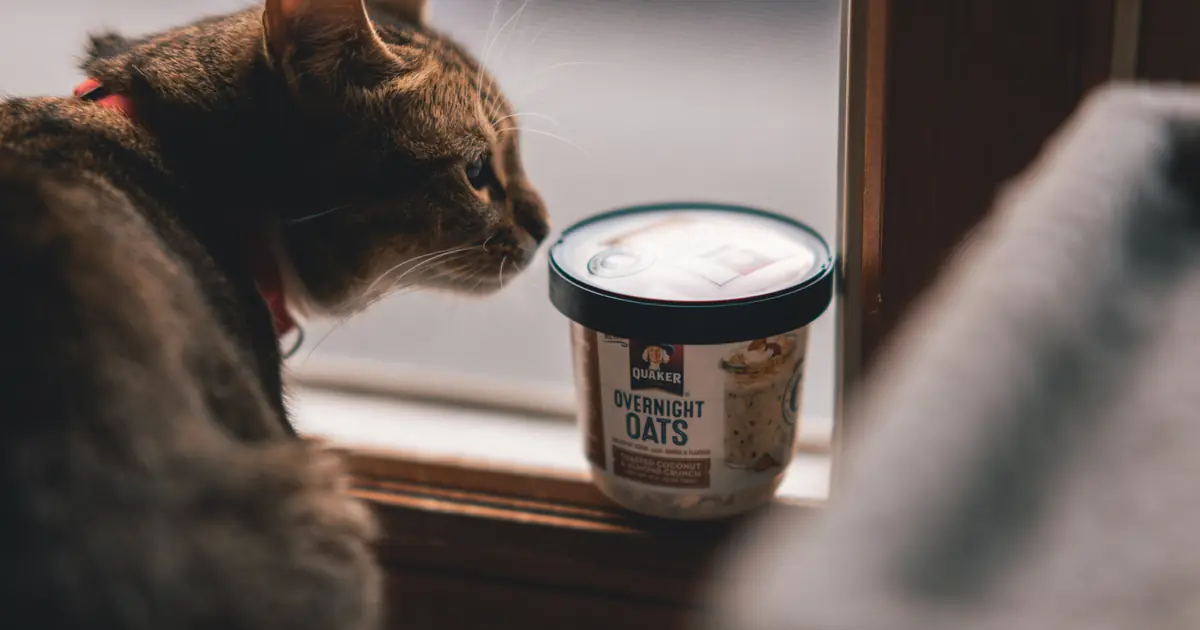
Picture this. You’re making a sandwich, you turn around for two seconds, and your cat has already stuck a curious tongue in the mayo jar. Now you’re standing there googling with a mayo-covered knife in your hand, wondering if you need to panic.
Good news first: you don’t. So can cats have mayo? Technically yes, in the sense that a small lick won’t hurt a healthy adult cat. But “won’t hurt in a lick” and “is a good idea” are two very different things. Mayonnaise offers your cat nothing worth having, and it can absolutely upset their stomach. Let’s break down exactly what’s going on.
- Mayonnaise is not toxic to cats, so a small accidental lick rarely causes serious harm in a healthy adult cat.
- Mayo is roughly 680 calories per 100 grams and mostly fat, while an average cat needs only about 250 calories a day.
- The high fat in mayo can trigger vomiting, diarrhea, and, in larger or repeated amounts, obesity and pancreatitis.
- Some mayo contains garlic or onion powder, which are genuinely toxic to cats even in small amounts.
- Mayonnaise is not a safe hairball remedy; vet-approved hairball gels and diets work better and carry less risk.
Is mayonnaise toxic to cats?
Mayonnaise is not toxic to cats in its plain form. The basic ingredients, oil, egg, and vinegar or lemon juice, are not poisons for a cat. So if your cat sneaks a lick off your plate, you’re not dealing with an emergency, and you don’t need to induce vomiting or rush to the clinic.
Here’s the catch. “Not toxic” is a low bar. Plain water clears that bar too. Mayo being non-poisonous doesn’t make it food your cat should eat. It’s a fatty, salty, calorie-dense human condiment with no protein worth counting and nothing a cat’s body actually needs. Cats are obligate carnivores, which means they thrive on animal protein, not spoonfuls of oil. For a proper look at what should be in the bowl, see our guide to what cats should actually eat.
Why is mayo a bad idea for cats?
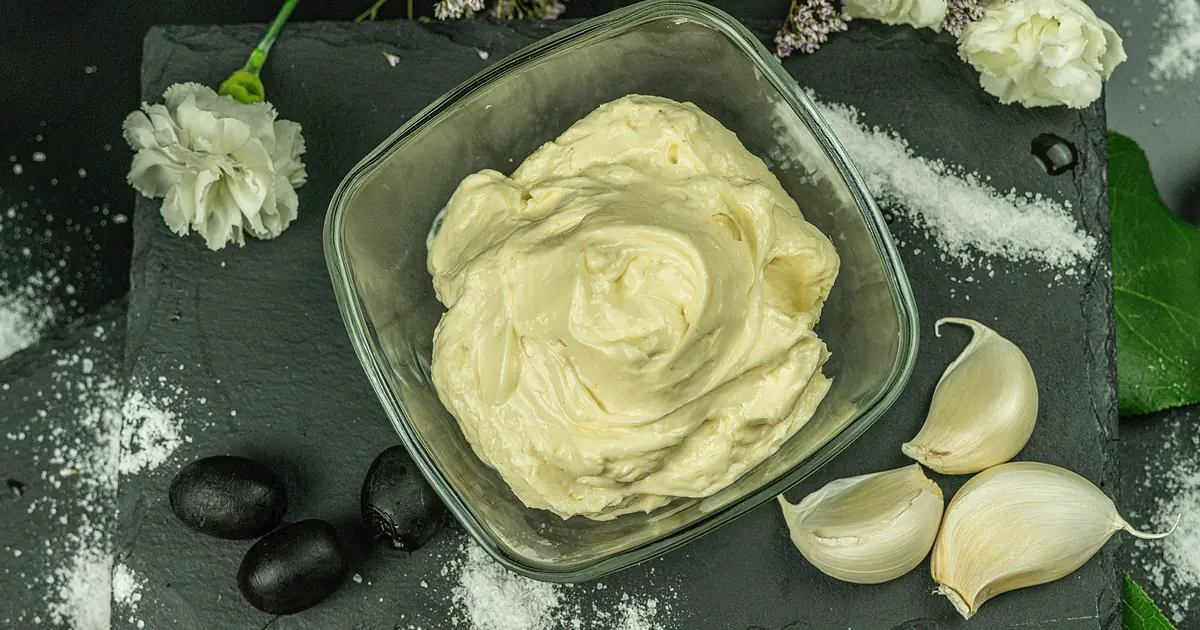
Mayo is a bad idea for cats because it’s almost pure fat with zero nutritional payoff. Mayonnaise runs around 680 calories per 100 grams, and the average cat needs only about 250 calories for the whole day. Even a tablespoon or two eats up a big chunk of that, and it’s all “empty” calories that crowd out real food.
That fat load is the real problem. A cat’s digestive system isn’t built for greasy human food, and a sudden hit of fat can cause vomiting or diarrhea within hours. Do it often, and the risks stack up. Here are the main ones:
- Stomach upset: Fat is hard for cats to digest quickly, so mayo can bring on nausea, drooling, vomiting, and loose stool.
- Weight gain: Those extra calories add up fast in a small animal, and feline obesity is a serious, common problem.
- Pancreatitis: High-fat foods can inflame the pancreas, a painful condition that sometimes needs hospital care.
- Hidden toxic seasonings: Many store-bought and homemade mayos include garlic or onion powder, both of which are toxic to cats and can damage red blood cells.
- Added salt: Mayo often carries more sodium than a cat should have, which isn’t great for the kidneys and heart.
Cats can also get an upset gut simply because their stomachs are sensitive, even though mayo itself contains no dairy. If your cat already struggles and throws up after eating, rich foods like mayo are exactly the kind of thing that sets them off. And if you’re wondering about other fatty, processed human foods, the same logic applies to things like salami and other cured meats.
What about the raw egg in mayo?
Raw egg is a second reason to keep mayo away from your cat, especially homemade versions. Traditional mayonnaise is emulsified with raw egg yolk, and raw egg carries a small risk of salmonella bacteria for both cats and the people in the house.
There’s a second, lesser-known issue. Raw egg whites contain a protein called avidin, which binds up biotin, a B vitamin cats need for healthy skin and coat. One lick won’t cause a deficiency, but it’s another mark against making mayo a regular thing. Most commercial jarred mayo uses pasteurized egg, which lowers the salmonella risk, but it’s still fatty, salty food your cat has no use for.
Does mayonnaise help cats with hairballs?
No, mayonnaise is not a reliable or safe hairball remedy, despite the popular home tip. The idea is that the oil acts like a lubricant to help a hairball slide through. In practice, vets discourage it, because you’re adding a fatty food to a digestive system that may already be irritated, which can make a queasy cat feel worse.
If hairballs are a recurring theme at your house, there are far better tools. Vet-formulated hairball gels, hairball-control diets with added fiber, and regular brushing to remove loose fur before your cat swallows it all beat a spoon of mayo. Frequent, hard-to-pass hairballs, or a cat that keeps retching without producing one, deserve a vet visit rather than a kitchen fix.
How much mayo is too much for a cat?
A tiny accidental lick is almost always harmless for a healthy adult cat, while a heaping spoonful or repeated feedings are where trouble starts. The difference comes down to dose. A trace amount usually passes without drama; a real serving delivers enough fat to upset the gut and enough calories to matter in a small body.
| Amount of mayo | What to expect |
|---|---|
| A quick lick or a smear on a finger | Almost always fine for a healthy adult cat; watch for mild tummy grumbles. |
| A teaspoon or more | Possible vomiting or diarrhea, especially in sensitive cats or kittens. |
| A tablespoon or repeated feeding | Higher risk of stomach upset, and over time weight gain or pancreatitis. |
| Mayo with garlic or onion | Treat as a toxin concern regardless of amount; call your vet. |
Kittens, senior cats, and cats with diabetes, pancreatitis, or a history of a sensitive stomach are the ones to be most careful with. In those cats, even a small amount of fatty food can cause an outsized reaction.
What should you give your cat instead?
Instead of mayo, reach for treats made for cats or simple, plain animal protein. Your cat’s tongue may be after the eggy, fatty taste, but you can satisfy that craving without the downsides.
Good swaps include a small piece of plain cooked chicken or turkey with no oil, salt, or seasoning, a bit of plain cooked egg, or a few flakes of plain cooked fish. Portion these as an occasional bonus, not a meal. If you’d rather grab something off the shelf, our roundup of better treat options than table scraps covers picks that are formulated for cats and easy to portion. Keep any treat to about 10% of your cat’s daily calories so the balanced diet stays the star.
What to do if your cat eats mayo, and when to call the vet
If your cat swallowed a small amount of plain mayo, you can relax and simply keep an eye on them for the next day or so. Offer fresh water and hold off on any other rich treats while their stomach settles. Most cats will be completely fine.
This article is educational and isn’t a substitute for veterinary care. Call your vet promptly if your cat ate mayo containing garlic or onion, ate a large amount, or shows any of these signs:
- Repeated vomiting or diarrhea that lasts more than a day
- Belly pain, hunching, or refusing to eat
- Lethargy, weakness, or hiding more than usual
- Pale gums or rapid breathing (possible sign of garlic or onion toxicity)
Frequently asked questions
Q: Can cats eat a little bit of mayonnaise?
A little bit of plain mayonnaise won’t poison a healthy adult cat, since mayo isn’t toxic. But it offers no nutrition and can cause mild stomach upset, so it’s best kept as a rare accident rather than a treat you offer on purpose.
Q: Is mayonnaise poisonous to cats?
Plain mayonnaise is not poisonous to cats. The concern is the high fat and calories, plus any added garlic or onion powder, which are genuinely toxic. Plain mayo in a small amount is a poor food choice, not a poison.
Q: Can mayonnaise help my cat pass a hairball?
Vets discourage using mayonnaise for hairballs. Adding fatty food to an irritated gut can make a cat feel worse. Vet-approved hairball gels, high-fiber hairball diets, and regular brushing are safer and more effective.
Q: Why does my cat love the taste of mayo?
Cats are often drawn to the fatty, eggy richness of mayonnaise rather than any real nutritional need. That attraction to fat is exactly why mayo is risky, so redirect your cat to plain cooked chicken or a cat-formulated treat instead.
Q: Can kittens have mayonnaise?
Kittens should not have mayonnaise. Their digestive systems are more sensitive than an adult cat’s, so even a small amount of high-fat food can cause vomiting or diarrhea. Kittens need a complete, balanced kitten food, not human condiments.
Q: What happens if my cat eats a lot of mayo?
A cat that eats a lot of mayo may develop vomiting, diarrhea, or belly pain from the fat load, and repeated feeding can lead to weight gain or pancreatitis. If symptoms last more than a day or the mayo contained garlic or onion, call your vet.
Q: Is there any healthy version of mayo for cats?
There’s no cat-healthy version of mayonnaise. Even light or olive-oil mayo is still fatty, salty, and nutritionally empty for cats. If you want to give something safe, offer a small piece of plain cooked chicken, egg, or fish instead.
Q: Can cats be allergic to mayonnaise?
True mayo allergies in cats are uncommon, but food sensitivities happen. Egg is a recognized feline allergen, so a cat could react to the egg in mayo with itching or digestive upset. Any allergy-like symptoms after eating mayo are worth a vet check.
So, can cats have mayo? The honest answer is that mayonnaise is harmless in a single lick, pointless as a treat, and a genuinely bad idea as a habit. Your cat gains nothing from it and risks an upset stomach, so keep the jar to yourself and reach for cat-safe food when your cat gives you those eyes. For deeper reading, the ASPCA’s list of people foods to avoid, PetMD’s cat nutrition hub, and the Cornell Feline Health Center are all reliable places to check before you share any human food with your cat.

Hello and welcome to The Ideal Cat!
We are some passionate cat owners from different professions. We love our cats and have a lot of experience in how to care for our pets. We are incredibly excited to share our knowledge, experience, and research with you. So you can take good care of your loving cat. We will answer most of the common questions about owning cats, taking care of them, etc. If you have any question contact with us. Thanks for visiting! Enjoy the content.
