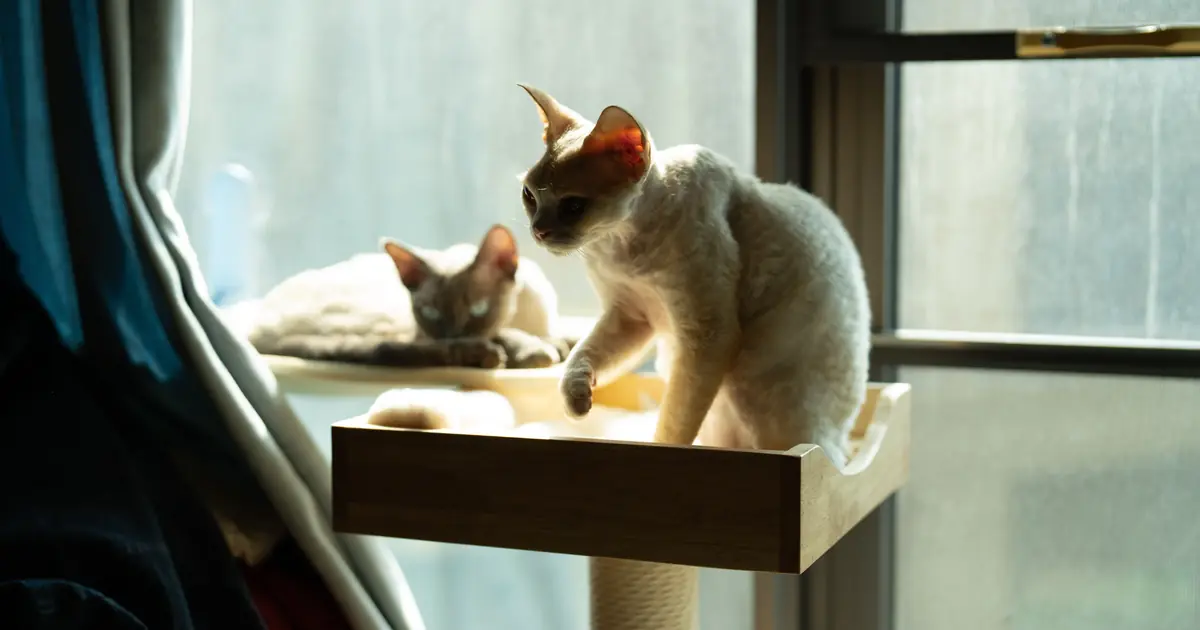
Look up “cat tree” online and you’ll see the same sticker shock: eighty, one hundred, sometimes two hundred dollars for a carpeted post with a couple of shelves glued on. Meanwhile you’ve got scrap wood in the garage and a cat who’s already using your bookshelf as a launch pad.
Building your own cat tree isn’t advanced woodworking. If you can measure, drill a hole, and drive a screw, you can build one this weekend for a fraction of retail, sized to your cat, your space, and your budget. This guide covers what you need, the design choices your cat actually cares about, a simple numbered build, and the safety details that keep it a hangout instead of a hazard.
- A stable base should be at least twice the width of the tallest post, so the tree can’t tip when your cat jumps or leans.
- Scratching posts should stand tall enough for a cat to stretch fully upright with front paws extended, and sisal rope wrapped tight with no gaps holds up best to daily use.
- A basic 2 to 3 level DIY cat tree typically costs $30 to $60 in materials, compared to $80 to $250 or more for a comparable store-bought tower.
- Cats scratch to shed the outer layer of their claws and to leave scent marks from glands in their paws, so a rough, grippy vertical surface is not optional, it’s the whole point.
- Tall or top-heavy trees should be anchored to a wall stud, the same way you’d secure a bookshelf in a home with kids.
What Do You Need for a DIY Cat Tree?
A basic DIY cat tree needs four categories of material: a base, structural posts, platforms, and coverings. You don’t need a workshop full of power tools, just a saw, a drill, and a few clamps to hold things steady while glue and screws set.
Materials List
- Base: 3/4-inch plywood or MDF, cut into a square or rectangle (18 to 24 inches per side for a small tree)
- Posts: 4×4 lumber, or 3 to 4 inch diameter PVC or Sonotube (concrete form tube) for a lighter build
- Platforms: 1/2 to 3/4-inch plywood, cut into circles, squares, or ovals
- Sisal rope: 3/8 to 1/2 inch natural sisal, sold in 100+ foot rolls for wrapping posts
- Carpet or fleece: for platforms and any cozy perches, cut to size
- Fasteners: deck screws or lag bolts, wood glue, a staple gun
- Tools: drill, saw (circular or jigsaw), tape measure, level, clamps, sandpaper
Skip anything with small removable parts, loose threads, or decorative trim that could come off in a cat’s mouth. Stick to low-pile carpet without a loose weave your cat’s claws could snag and unravel.
What Design Basics Do Cats Actually Want?
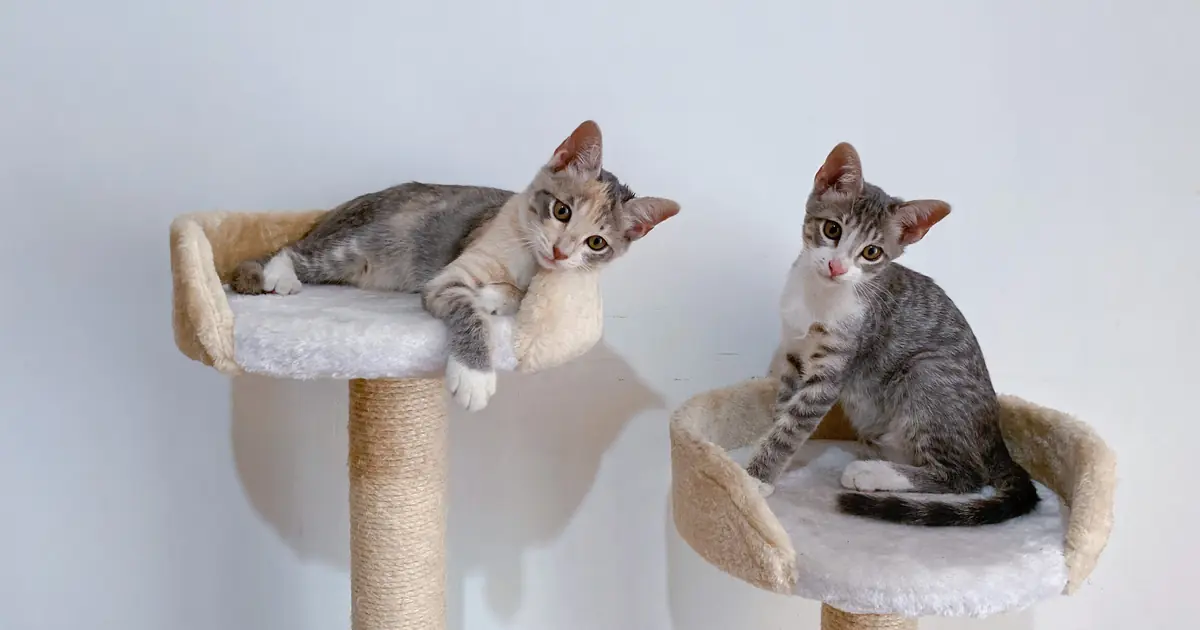
Cats want height, a base that won’t wobble, real scratching material, and at least one spot to hide. Every good cat tree design, homemade or store-bought, comes back to these same four things.
- Height: Cats gravitate to elevated space because it lets them watch their territory and feel safe from anything on the ground. One perch 4 to 5 feet up gives your cat a real vantage point.
- A wide, heavy base: This is where most homemade trees fail. A narrow or light base lets a full-grown cat tip the whole thing over jumping to a top perch. Build it at least twice as wide as the tallest post.
- Real sisal scratching posts: Carpet alone doesn’t cut it for most cats. Sisal rope, wrapped tightly with no slack, mimics tree bark and gives claws something to dig into.
- Cozy perches and a hidey box: Cats sleep 12 to 16 hours a day, much of it somewhere enclosed and slightly elevated. A box perch or covered platform gives your cat a den, not just a shelf.
- Multiple levels: Two or three heights let more than one cat use the tree at once without crowding, which matters in multi-cat homes.
Vertical space isn’t a luxury for cats, it’s a real behavioral need. According to the Cornell Feline Health Center, giving cats access to elevated, cat-friendly space supports their sense of security, especially where more than one cat shares the home. Still weighing build versus buy? Our guide to the best cat trees is worth a look before you commit to lumber and sisal.
How Do You Build a Simple DIY Cat Tree Step by Step?
A basic single-post or two-post cat tree comes together in seven steps over a weekend. Work through them in order, and let glue cure fully before moving to the next step.
- Cut and prep the base. Cut your plywood base to size (18 to 24 inches square for a small tree, larger for anything over 4 feet tall). Sand the edges smooth and round the corners so nobody catches a paw or a hip.
- Mount the posts. Drill pilot holes through the base into the bottom of each 4×4 or PVC post. Drive lag bolts or long deck screws through, backed by wood glue. Let it cure overnight before testing any weight.
- Attach the platforms. Cut your plywood platforms and attach them at your chosen heights with L-brackets or screws through the post. Check each one with a level. An uneven perch is uncomfortable and more likely to tip.
- Wrap the posts in sisal. Staple the rope’s end to the base, then wrap tightly upward with no gaps. Staple every few wraps to keep tension even, finishing with a hidden staple at the top.
- Cover platforms in carpet or fleece. Cut fabric slightly larger than each platform, wrap it around the edges, and staple or glue it underneath. Trim excess so nothing hangs loose for claws to snag.
- Secure everything and test stability. Before your cat touches it, push firmly on the top platform from several angles. If it rocks or feels light, add weight to the base or anchor the tree to a wall stud.
- Add toys and scent appeal. Hang a dangling toy from a platform edge and rub a little catnip into the sisal to help your cat notice the new tree faster.
If your cat is more of a shredder than a climber, pair the new tree with a look at why cats scratch the walls, since a well-placed post often solves that problem on its own.
What Are Cheap or No-Build Alternatives to a Cat Tree?
Repurposed furniture and wall-mounted perches give your cat vertical space without any carpentry. These work well in small apartments or as a stopgap before a bigger build.
- Repurposed bookshelves: An old ladder-style bookshelf, secured to the wall, becomes a set of climbing platforms. Add a folded towel to the top shelves.
- Wooden ladders: A small decorative ladder leaned against a wall and anchored at the top gives cats rungs to climb and sit on.
- Wall-mounted perches and steps: Floating shelves staggered up a wall let cats climb without taking any floor space, often the best option for small rooms.
- Window perches: A suction-cup or clamp-on window seat gives your cat height and a view for very little money.
None of these replace a dedicated scratching post, so pair any of them with a standalone sisal post if scratching is part of the problem. If your space is tight, our roundup of cute cat trees covers some compact, apartment-friendly builds and buys too.
DIY Cat Tree vs Store-Bought: Which Is Better?
A DIY cat tree wins on cost and customization, while a store-bought tree usually wins on speed and predictable durability. Which one is “better” really depends on how much time you have and how particular you are about size and placement.
| Factor | DIY Cat Tree | Store-Bought Tree |
|---|---|---|
| Cost | Roughly $30 to $60 for a basic 2 to 3 level build | $80 to $250+ depending on size and brand |
| Customization | Built to your exact space, cat size, and number of levels | Fixed dimensions, limited color and shape options |
| Durability | Depends entirely on your materials and joints | Generally consistent, backed by a warranty |
| Effort required | A weekend of cutting, drilling, and wrapping | Unbox and assemble in an hour or so |
If you own a large or heavy-bodied cat, like a Maine Coon, sizing matters more than usual. Our guide to the best cat tree for large cats breaks down the weight ratings and base sizes worth matching if you decide buying makes more sense than building.
How Do You Get Your Cat to Actually Use the New Tree?
Cats take to a new tree fastest when it’s placed near a window, rubbed with catnip, and rewarded with treats the first few times they climb it. Placement does more work than anything else here.
- Put it near a window. A view of birds or the front yard gives your cat a reason to climb up and stay up.
- Rub catnip into the sisal. Most cats respond within minutes, a fast way to draw attention to a brand-new object in the room.
- Reward early visits with treats. A treat on the first platform, then the second, helps a hesitant cat build confidence climbing higher.
- Leave the old scratching post nearby for a week or two. Cats are creatures of habit, and a familiar spot next to the new tree eases the transition.
This is about more than entertainment. International Cat Care notes that scratching serves several purposes at once: claw maintenance, muscle stretching, and scent marking that helps a cat feel secure in its own space. A tree that actually invites scratching (not just one that looks like it should) is what makes the weekend worth it. Pair it with a rotating toy too. Our list of best interactive cat toys can help if your cat loses interest in stationary objects fast.
Safety Note
This guide is educational, not a substitute for professional advice on your specific setup. Before your cat uses it, make sure the base is wide and heavy enough that the tree can’t tip, even with a full-grown cat jumping onto the top platform. Use only non-toxic glue, paint, and sealants rated safe for pets, and avoid loose strings, fringe, or small parts a cat could chew and swallow. Anchor tall or narrow trees to a wall stud. Sudden reluctance to jump or climb is worth mentioning to your vet, since it can point to joint pain rather than a dislike of new furniture.
Frequently Asked Questions
Q: How tall should a DIY cat tree be?
A good scratching post or main climbing section should be at least as tall as your cat standing fully upright on its hind legs with front paws stretched overhead, usually around 28 to 32 inches for an average adult cat. Taller multi-level trees of 4 to 6 feet give more climbing room but need a wider, heavier base to stay stable.
Q: What wood is safe for a cat tree?
Plain plywood, MDF, and standard pine or fir 4×4 lumber are all safe once sanded smooth and finished with a non-toxic, water-based sealant or paint. Avoid pressure-treated lumber, since the chemicals used in treatment aren’t meant for surfaces a cat will chew, scratch, or lick.
Q: How much does it cost to build a DIY cat tree?
A basic 2 to 3 level DIY cat tree typically runs $30 to $60 in materials, including plywood, a 4×4 post, sisal rope, and carpet or fleece. That compares to $80 to $250 or more for a similarly sized store-bought tower.
Q: What kind of rope should I use for scratching posts?
Natural sisal rope, 3/8 to 1/2 inch thick, is the standard choice because its rough, fibrous texture holds up to repeated clawing and mimics the bark cats scratch in the wild. Wrap it tightly with no gaps, since loose wraps unravel fast under daily use.
Q: Can I use PVC pipe instead of a 4×4 post?
Yes, PVC or Sonotube concrete form tubing works well as a lighter, cheaper alternative to solid lumber posts, especially for taller trees where a heavy post could make the top too top-heavy. Wrap it in sisal the same way you would a wood post, using construction adhesive to help the rope grip the smoother surface.
Q: How do I stop my DIY cat tree from tipping over?
Build the base at least twice as wide as the tree is tall, and add a second layer of plywood or a weighted bottom shelf for extra ballast. For any tree taller than about 4 feet, anchor it to a wall stud with an L-bracket as an added safety measure.
Q: Will my cat actually use a homemade cat tree?
Most cats will use a homemade tree just as readily as a store-bought one, as long as it has real sisal to scratch, a stable feel underfoot, and a good spot near a window. Placement and a little catnip on the first visit make a bigger difference than whether the tree came from a store or your garage.
Q: How long does it take to build a DIY cat tree?
A simple single or double-post tree with two to three platforms usually takes one full day of active work, spread across a weekend to allow glue and adhesive to cure between steps. More elaborate multi-level trees with several posts can take two full weekends.

Hello and welcome to The Ideal Cat!
We are some passionate cat owners from different professions. We love our cats and have a lot of experience in how to care for our pets. We are incredibly excited to share our knowledge, experience, and research with you. So you can take good care of your loving cat. We will answer most of the common questions about owning cats, taking care of them, etc. If you have any question contact with us. Thanks for visiting! Enjoy the content.
