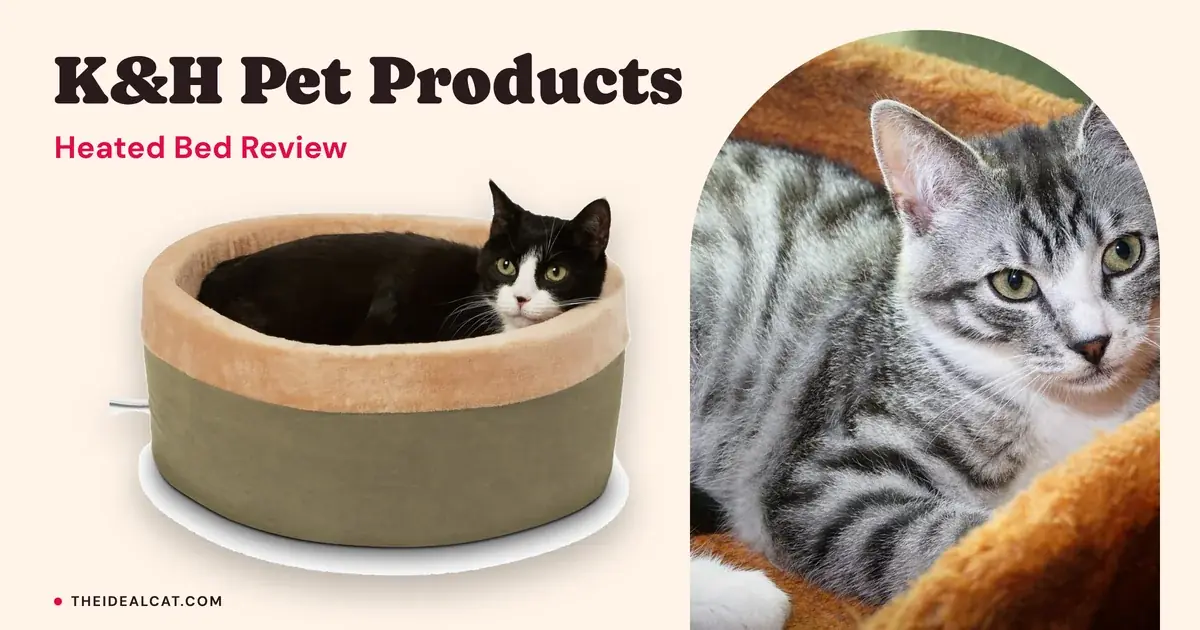
An electric bed your cat sleeps on all night, unsupervised, for years. It is a reasonable thing to be nervous about.
Here is a number that should help: the heater in the Thermo-Kitty Bed is rated at 4 watts. Leave it plugged in day and night for a full year and it uses roughly 35 kWh, which works out to around $6 at typical US electricity prices. That is less power than most LED bulbs draw.
The good news is that the difference between a safe heated bed and a risky one comes down to something printed on the box.
The other good news is that cats want to be warmer than you do, which is why yours keeps sitting on the radiator.
Which K&H heated bed suits your cat?
The six models split by shape far more than by heat.
| Model | Shape | Price | Pick it if |
|---|---|---|---|
| Thermo-Kitty Bed, Small | Round bed, foam base | $64.99 | You want the sensible default for an indoor cat. The cover comes off to wash. |
| Thermo-Kitty Deluxe Hooded, Large | Pillow bed, removable hood | $122.99 | Your cat is a senior or arthritic and likes to burrow into warmth. |
| Thermo-Lookout Cat Pod | Enclosed pod, peek window on top | $82.38 | Your cat sleeps best hidden away. The heater is removable for summer. |
| Thermo-Kitty Mat | Flat foam mat | $34.99 | You want to test whether your cat likes heat, or warm a spot it already uses. |
| Heated Amazin’ Kitty Pad | Flat pad | $26.74 | You want the cheapest second warm spot in the house. |
| Extreme Weather Kitty Pad & Cover | Rugged plastic pad, fleece cover | $72.99 | You care for an outdoor or barn cat. Put it inside a shelter, not out in the open. |
One correction to a common assumption: the Thermo-Lookout is not a window perch. It is a covered pod with a small window in the roof, so you can peek in without waking your cat.
Are heated cat beds safe?
Yes, a properly certified heated cat bed with a working internal thermostat is safe for a healthy adult cat. The safety comes from three design choices, and it is worth knowing what they are so you can check them on any brand.
- Low wattage. These beds draw very little power. They are designed to take the chill off a surface, not to produce heat you would notice with your hand.
- An internal thermostat. K&H says the surface idles 10 to 15°F above room temperature and warms toward the cat’s body temperature once the cat lies on it. It is not a dial you can turn up, which is the point.
- Independent certification. MET certification means the product was tested by an independent lab against government and industry standards. A box that says only that it contains safety-listed parts is not the same claim.
- A chew-resistant cord matters if your cat is a chewer, and cord chewing is the most realistic hazard with any electric pet product.
- A washable cover, because a bed that cannot be cleaned stops being used.
Never use a human heating pad. Human pads are designed to reach temperatures a person can monitor and move away from, and their thermostats can run hotter than a cat can safely tolerate. This is the most common way cats get burned by a well-meaning owner, and the AVMA covers comfort and care for older pets more broadly.
Who is at higher risk. A cat that can walk away from heat regulates itself. A very young kitten, a very old cat, a cat recovering from anaesthesia, and a cat with limited mobility may not move, and prolonged contact with even a mildly warm surface can cause damage. If your cat is in any of those groups, talk to your vet about whether supplemental heat is appropriate and check on the cat rather than leaving it all night unobserved.
Why cats want more heat than you do
A cat’s normal body temperature is about 100.5°F to 102.5°F, a couple of degrees above a human’s. Their thermoneutral zone, the ambient range where they burn no extra energy staying warm, sits meaningfully higher than the temperature most people set their thermostat to.
So a room that feels fine to you can be a room your cat is quietly spending calories to cope with. That is why cats find the sunbeam, the laptop, the radiator, and the one patch of carpet above the boiler pipe.
- Older cats feel it most. Ageing cats, meaning those past the point a cat is considered a senior, lose muscle mass and body fat, groom less, and often have arthritis, and all of that makes cold harder to tolerate.
- Arthritic joints are stiffer when cold. Warmth does not treat arthritis, but a warm bed is a genuine comfort measure for a cat that has it, and arthritis is far more common in older cats than most owners realise.
- Thin, short-haired and hairless cats have less insulation and seek heat sooner.
- Kittens cannot thermoregulate well in their first weeks, which is a veterinary matter rather than a shopping one.
- A cat suddenly seeking heat constantly when it never used to is worth a vet visit, since it can accompany illness, weight loss or hyperthyroidism.
The honest limit: a heated bed is a comfort item, not a treatment. If your cat has stopped jumping, is sleeping far more, or has lost weight, the bed is not the answer to that. The Cornell Feline Health Center covers what changes in older cats and when to act.
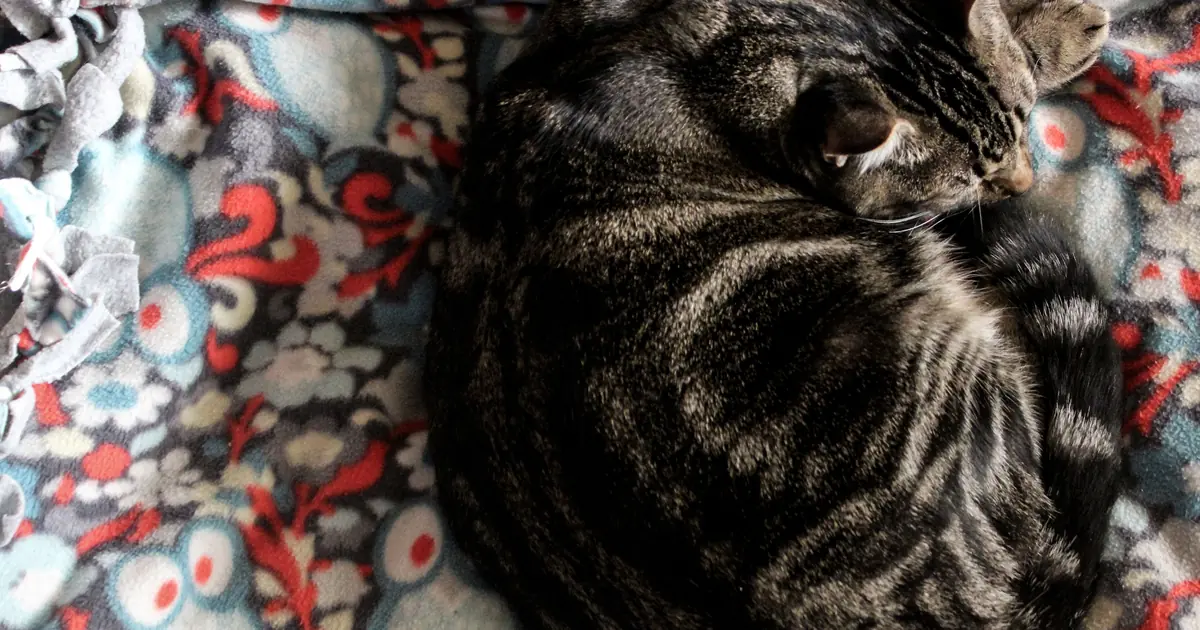
Getting a cat to actually use it
The most common complaint about heated beds is that the cat ignores it. That is nearly always a placement problem rather than a product problem.
- Put it where your cat already sleeps. Cats choose sleeping spots for safety and vantage first, warmth second. A warm bed in a bad location loses to a cold spot in a good one.
- Give it a few days to be discovered. Many cats avoid anything new for the first week, and pushing the point makes it worse.
- Put a familiar blanket on top so it smells right rather than smelling of packaging.
- Do not lift the cat onto it. Being placed somewhere is a reason to leave; finding it yourself is a reason to stay.
- Check it is actually on and warming. These beds are deliberately subtle, and a bed that feels cold to your hand may still be working exactly as designed.
- Raise it slightly off a cold floor if you can, because a cold surface underneath pulls heat straight out of the bed.
If your cat still refuses after a fortnight in the right spot, it is usually the shape rather than the heat. A flat mat suits cats that sprawl; a bolstered bed suits cats that curl. Our best cat beds guide compares the unheated options.
Is a K&H heated bed right for your cat?
Buy one if you have an older or arthritic cat, a thin or short-haired cat, or a cold house. The Thermo-Kitty Bed is the sensible default and the Deluxe Hooded is worth the extra for a senior. If you are looking after an outdoor or community cat through winter, the Extreme Weather pad belongs inside a shelter.
Skip it if your cat is a determined cord chewer, or if you would be leaving it running unattended with a cat that cannot move away from it. Compare in our best cat beds guide.
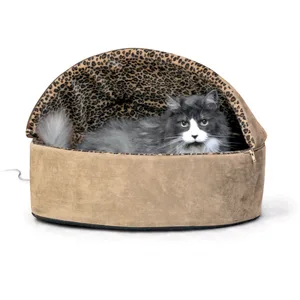
Sensible, well-certified heated beds from a brand that has been making them a long time, built around the right principle: warm to the cat’s temperature, not to a setting.
Check for MET certification, never substitute a human heating pad, and put the bed where your cat already sleeps rather than where you want it to. K&H Pet Products Thermo-Kitty Bed Indoor Heated Cat Bed, Sage, Small is the one to start with. This article is educational rather than veterinary advice, and a cat that has suddenly started seeking heat should be seen by a vet.
Heated cat bed questions
Q: Are heated cat beds safe to leave on all the time?
A heated bed with MET safety certification and a working internal thermostat is designed to be left plugged in, because it warms to roughly a cat’s body temperature rather than to a fixed hot setting. A bed without independent certification should not be left running unattended.
Q: What temperature should a heated cat bed be?
Around a cat’s normal body temperature, which is about 100.5°F to 102.5°F. A bed should never be set higher than that, which is why the good ones use a fixed internal thermostat instead of an adjustable dial.
Q: Can I use a human heating pad for my cat?
No. Human heating pads are designed to reach temperatures a person can monitor and move away from, and their thermostats can run hotter than a cat can safely tolerate. This is a common cause of accidental burns.
Q: What does MET certification mean on a pet bed?
MET certification means the product was tested by an independent laboratory against government and industry safety standards. It is a stronger claim than packaging that says only that the product contains safety-listed parts.
Q: Why does my cat always look for warm places?
A cat’s body temperature runs a couple of degrees above a human’s, and the ambient temperature at which they burn no extra energy is higher than most people set their heating to. A room that feels comfortable to you may be one your cat is spending calories to cope with.

Hello and welcome to The Ideal Cat!
We are some passionate cat owners from different professions. We love our cats and have a lot of experience in how to care for our pets. We are incredibly excited to share our knowledge, experience, and research with you. So you can take good care of your loving cat. We will answer most of the common questions about owning cats, taking care of them, etc. If you have any question contact with us. Thanks for visiting! Enjoy the content.
